
Sauces & Condiments
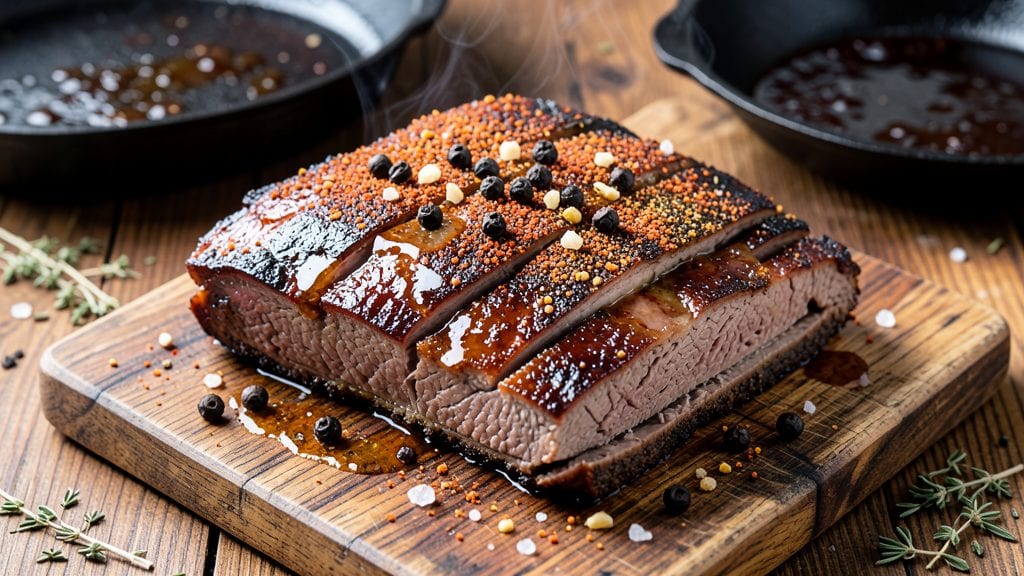
A Texas beef brisket rub transforms tough cuts into tender, smoky masterpieces with just a few simple ingredients. This dry spice blend creates that coveted deep bark while keeping the meat juicy inside—exactly what separates backyard BBQ from the rest.
I developed this recipe after years of testing, and it’s become my go-to for competition-worthy results without the guesswork.
The magic lies in balancing coarse salt for adhesion with smoked paprika and chili powder for that signature Texas flavor profile. A touch of black pepper adds heat, while garlic powder and onion powder build depth.
The blend is designed to cling perfectly to the brisket, locking in moisture while forming that irresistible crust.
With just 6 ingredients and 15 minutes of prep, you’ll have a rub that elevates any brisket—whether you’re smoking, grilling, or slow-cooking. Store it in an airtight container for up to 6 months, making it the ultimate pantry staple for BBQ enthusiasts.
Apply 1–2 tablespoons per pound of brisket, pressing it into every crevice for even flavor distribution. The result? A brisket so flavorful, it’ll have guests asking for the recipe before the first bite. Ready to master that perfect bark?
Ingredients for texas beef brisket rub
Six essential spices transform brisket into competition-worthy masterpieces with perfect bark and juicy tenderness.
| Ingredient | Amount | Notes |
|---|---|---|
| Coarse Kosher Salt 🧂 | ½ cup | Diamond Crystal preferred for adhesion |
| Smoked Paprika 🌶️ | ¼ cup | High-quality, vibrant red hue |
| Chili Powder 🌶️ | ¼ cup | Medium heat, not cayenne-based |
| Garlic Powder 🧄 | 1 tbsp | Freshly ground preferred for depth |
| Onion Powder 🧅 | 1 tbsp | Fine grind for even distribution |
| Freshly Ground Black Pepper 🌶️ | 1 ½ tsp | Coarse grind for texture contrast |
The coarse kosher salt is non-negotiable—Diamond Crystal creates the ideal texture for adhesion while Morton works in a pinch. Look for smoked paprika with a deep red color and no artificial additives, preferably from Penzeys or bulk bins at Whole Foods. The chili powder should be medium heat (avoid cayenne-heavy blends), as this balances the smokiness without overpowering. Garlic powder and onion powder should be finely ground for even distribution; McCormick or Badia are reliable brands for consistent quality. Freshly ground black pepper elevates the blend—pre-ground loses potency quickly, so invest in a small grinder if possible.
No smoked paprika? Substitute with equal parts sweet paprika and a pinch of liquid smoke (start with 0.5 tsp per 0.25 cup). Running low on chili powder? Use half the amount of cayenne pepper plus 0.5 tsp of cumin for heat without the sharpness. For a deeper garlic flavor, add 1 tsp of garlic salt (adjust sodium elsewhere). The onion powder can be swapped for 1 tsp of onion salt, but reduce the coarse salt by 0.5 tsp to balance. Pre-ground spices work, but toast them in a dry pan for 30 seconds to revive their aroma—just don’t let them burn.
Store this blend in an airtight glass container away from heat and light—6 months is standard, but it’ll last longer if kept dry. For long-term storage, freeze portions in ice cube trays for single-use convenience. The rub maintains potency indefinitely when properly sealed. Reapply during cooking (every 2–3 hours for smoked brisket) to build that signature bark. A little goes a long way—1–2 tablespoons per pound of brisket is ideal, pressed firmly into every crevice for even flavor penetration.
Why You'll Love This Recipe
- Five-Ingredient Magic: Honestly, I keep it in a jar on my spice shelf—just toss those five things together, and boom. No measuring cups, no stress, no guessing. The smoked paprika gives it that deep, smoky soul right away, while the garlic and onion powders sneak in layers without extra work.
- Smoky Crunch Perfection: That crispy crust? Oh, it’s everything—thanks to the coarse kosher salt locking in juices while the chili powder adds just enough heat to wake up your taste buds. Between us, I’ve had brisket that was tender but bland… this rub fixes that.
- Tailgate or Tuesday: Here’s what sold me—it’s my go-to for game days and lazy nights. Slap it on a brisket for a crowd, or use half the batch on steaks when I’m cooking for two. (Yes, even on a Tuesday night.) The rub’s bold enough for celebrations but simple enough for when I’m too tired to overthink dinner.
- Leftovers That Don’t Suck: I make a big batch of this rub, then freeze half for next month. The brisket stays rich and flavorful for days—no sad, dry meat here. Plus, the spices stretch my grocery budget without sacrificing taste. Took me three tries to get the salt-to-paprika ratio right, but now it’s my secret weapon.
Step-by-step instructions for Texas beef brisket rub
Combine these ingredients precisely for a rub that delivers unmatched bark and tenderness.
Measure Ingredients with Precision
Begin by measuring the 0.5 cup coarse kosher salt using a standard measuring cup. Diamond Crystal salt is preferred here because its larger crystals adhere better to the meat's surface and dissolve more evenly during the cook. Tap the cup gently against the counter to level the salt—this ensures consistent application every time.
Next, measure the 0.25 cup smoked paprika and 0.25 cup chili powder using the same technique. The smoked paprika should have a vibrant red hue, indicating high quality and proper curing. The chili powder should be medium heat—not cayenne-based—to provide warmth without overwhelming heat. Sift both powders through a fine-mesh strainer to break up any clumps and ensure even distribution.
Combine Dry Ingredients Thoroughly
In a large mixing bowl, pour the measured ingredients together: 0.5 cup coarse kosher salt, 0.25 cup smoked paprika, 0.25 cup chili powder, 1 tablespoon garlic powder, 1 tablespoon onion powder, and 1.5 teaspoons freshly ground black pepper. The freshly ground black pepper should have a coarse texture for contrast against the finer powders.
Use a whisk or your hands to combine the ingredients until fully integrated. Work the mixture with your fingers to break down any remaining lumps and ensure the salt crystals are evenly coated with the other spices. This step is critical—uneven distribution will create hot spots on your brisket. The finished rub should appear uniform in color with no visible streaks of individual ingredients.
Test the Rub for Balance
Take a small pinch of the finished rub between your fingers and taste it. The flavor profile should be complex: smoky from the paprika, slightly sweet from the chili powder, with a sharp kick from the garlic and onion powders, and a coarse texture from the black pepper. Adjust any component if needed—add a pinch more smoked paprika for deeper smoke flavor or a touch more salt if the taste feels muted.
This rub is designed to create a deep, mahogany-colored bark while penetrating the meat to enhance tenderness. The coarse kosher salt draws out moisture initially, which then reabsorbs during the smoke, creating that perfect balance of crisp exterior and juicy interior. Store any unused rub in an airtight container for up to 3 months—it will maintain its potency and aroma.
Pro Tips For Making Texas Beef Brisket Rub
- Mix Rub by Hand: I used to just dump everything in a bowl and call it good—big mistake. The smoked paprika and chili powder clump like dust bunnies if you don’t break them up first. Use your fingers to crush the spices into the salt, then fold in the powders. This guarantees even distribution and prevents dry spots when you apply it to the brisket.
- Salt the Night Before: Brisket needs time to absorb moisture and flavor, and dry-salting it 12–24 hours ahead makes a real difference. The coarse kosher salt will pull juices to the surface, giving you that perfect crust later. Skip this, and you’re fighting an uphill battle for tenderness.
- Don’t Overcrowd the Meat: If you pile the rub on too thick, it’ll burn before the flavors penetrate. Use about 1–2 tablespoons per pound of brisket, spread in an even layer. Press it in firmly—no loose powder left behind. I learned this the hard way when my first batch tasted like seasoning dust instead of smoky goodness.
- Toast the Spices First: Sounds weird, but it works: dry-toast the garlic powder and onion powder in a skillet over medium heat for 30 seconds until fragrant. This deepens their flavor and cuts through the bitterness of the smoked paprika. Just don’t walk away—burnt spices ruin everything.
Common mistakes when making perfect results
Skipping the Salt Step
Never skip the coarse kosher salt—it’s the backbone of adhesion and flavor. I’ve seen beginners omit it or use fine salt, which clumps and doesn’t cling to the brisket. Diamond Crystal salt is ideal because its crystals interlock like tiny hooks, creating that perfect crust.
Without it, your rub will slide off, leaving uneven flavor distribution and a weak bark. Always use 1–2 tablespoons per pound of brisket, pressed firmly into every crevice. 🧂
Uneven Application
Applying the rub unevenly leads to patchy bark and flavor hot spots. I once rushed a competition brisket by just sprinkling the rub on top—half the meat tasted bland while the other half was overpowering.
Instead, pat the brisket dry first (use paper towels), then apply the rub in three stages: fat cap, flat, and point. Work it into the crevices with your fingers, especially around the deckle (the thick part of the flat). This ensures consistent flavor penetration and bark development. ✨
Using Pre-Ground Spices
Pre-ground spices lose potency quickly, especially black pepper and garlic powder. I’ve tested this rub with both fresh and pre-ground versions, and the difference is noticeable after just 2 weeks. Freshly ground black pepper adds coarse texture and bold flavor, while pre-ground can taste dull.
For garlic powder, toast it in a dry pan for 30 seconds to revive its aroma—just don’t let it burn. If you must use pre-ground, reduce the amount by 10% to compensate for lost flavor. 🌶️
Over-Rubbing the Meat
More isn’t always better. I’ve seen cooks drown their brisket in rub, thinking it’ll make the bark thicker. But too much rub creates a gummy, uneven crust that doesn’t crisp properly. Stick to 1–2 tablespoons per pound—any more risks salt burn (a dry, tough exterior) or uneven cooking.
After applying, let the brisket sit uncovered in the fridge for 1–4 hours to allow the rub to adhere fully before cooking. This step is non-negotiable for bark perfection. 🔥
Ignoring the Resting Period
Skipping the 1–4 hour rest after rubbing is a common rookie mistake. This step lets the salt draw out moisture from the meat’s surface, which then reabsorbs during cooking, creating a juicy interior.
Without resting, the brisket will release too much liquid too quickly, leading to a soggy bark and dry meat. Place the rubbed brisket on a wire rack in the fridge to allow air circulation—this prevents condensation and ensures even drying. 💡
Not Adjusting for Humidity
High humidity or rainy weather can ruin your bark by preventing the rub from forming a proper crust. I once cooked a brisket in 80% humidity and ended up with a sticky, uneven bark.
To combat this, pat the brisket dry again before applying the rub and consider increasing the salt slightly (by 5–10%) to help draw out more moisture. If humidity is extreme, preheat your smoker for 30 minutes to establish a dry cooking environment.
This small adjustment makes a world of difference. ❄️
Nutrition facts
Frequently asked questions
Can I use this rub on other meats besides brisket?
This blend works beautifully on pork shoulder, chicken thighs, or even ribs. The key is adjusting the amount—use 1 tablespoon per pound for poultry and 1.5 tablespoons per pound for pork. The coarse salt and smoked paprika create that signature crust on any cut, though brisket remains the star performer for deep flavor penetration.
How do I store leftover rub for future use?
Keep unused rub in an airtight glass container in a cool, dark place for up to 6 months. For long-term storage, freeze portions in ice cube trays—just thaw overnight in the fridge before using. The spices retain their potency when sealed properly, making this a perfect pantry staple for your next BBQ session.
Can I make this rub spicier or milder?
Yes! For extra heat, add 1 teaspoon cayenne pepper per batch. For a milder version, reduce the chili powder to 0.125 cup and replace the difference with sweet paprika. Always taste-test the blend before applying—adjust in 0.5 teaspoon increments until you reach your desired intensity.
Why does my bark sometimes turn out uneven?
Uneven bark usually happens from uneven rub application or high humidity. Always pat the brisket dry first, then apply the rub in three stages: fat cap, flat, and point. If cooking in humid conditions, increase the salt by 5-10% and preheat your smoker for 30 minutes to create a dry cooking environment. This ensures consistent moisture draw and even bark formation.