
Main Courses
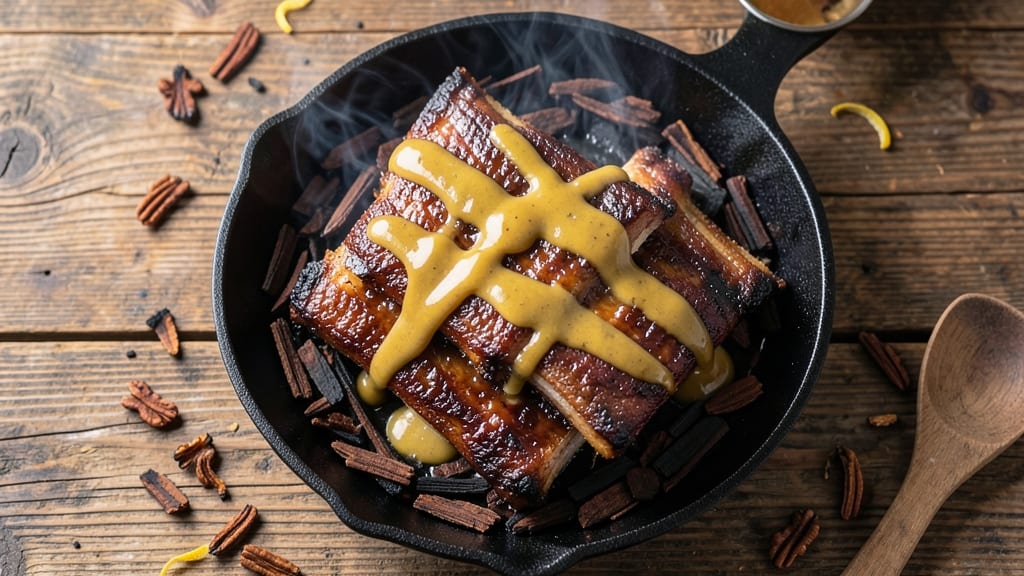
Aaron Franklin beef ribs recipe delivers the legendary Texas BBQ experience with tender, smoky meat and that coveted sweet bark. This isn't just another rib recipe—it's a methodical approach to replicating Franklin's signature style at home, where precision in temperature and wood choice transforms tough cuts into melt-in-your-mouth perfection.
The secret lies in the slow cook: low-and-slow smoking with post oak wood until the internal temperature reaches 203°F, where collagen breaks down and fat renders into buttery threads.
Every element matters—the dry rub's balance of spices, the bark's caramelization from apple juice spritzing, and the final rest to let juices redistribute. This is restaurant-quality BBQ without the $200 tab.
What you'll achieve is ribs that practically fall apart at the touch, with a dark mahogany bark that's sweet without being cloying. The meat inside remains tender and juicy, infused with smoky oak flavors that define Texas BBQ.
Each bite delivers that perfect harmony of textures and flavors Franklin is famous for.
Perfect for feeding a crowd or celebrating a special occasion, these ribs become the centerpiece of any meal. The technique is detailed but rewarding—ideal for serious BBQ enthusiasts ready to elevate their skills. Let's get started on your journey to Texas-style perfection.
Ingredients for aaron franklin beef ribs
Six pounds of beef ribs and a handful of precision ingredients transform into legendary Texas BBQ.
| Ingredient | Amount | Notes |
|---|---|---|
| Beef Ribs (Baby Back) 🥩 | 6 lb | Bone-in, meaty ends preferred |
| Yellow Mustard 🥫 | ½ cup | For initial coating before rub |
| Post Oak Wood Chips 🌳 | 4 oz | Soaked for 1 hour minimum |
| Apple Juice Concentrate 🍎 | ½ cup | For spritzing during cook |
| Brown Sugar 🍚 | ½ cup | Packed, light brown preferred |
| Kosher Salt 🧂 | ¼ cup | Diamond Crystal preferred |
| Smoked Paprika 🌶️ | ¼ cup | High-quality for depth |
| Black Peppercorns 🌶️ | 1 ½ tbsp | Freshly cracked preferred |
| Garlic Powder 🧄 | 1 tbsp | Not garlic salt |
| Onion Powder 🧅 | 1 tbsp | Freshly ground preferred |
| Chili Powder 🌶️ | 1 tbsp | Medium heat variety |
| Ground Black Pepper 🌶️ | 1 tsp | Freshly ground for best flavor |
| Cayenne Pepper 🔥 | ½ tsp | Adjust for heat preference |
| Butter 🧈 | ½ cup | Cold, cubed for basting |
The ribs are non-negotiable—baby back cuts with meaty ends deliver the best texture. Costco or Whole Foods typically carry high-quality beef ribs, but ask your butcher for the freshest cut available. Look for vibrant color and good marbling; the meat should feel firm but yield slightly to pressure. Post oak wood chips are essential for authentic Franklin-style smoke flavor, and Traeger or Cookshack sell pre-soaked chips for convenience. The apple juice concentrate isn't just for spritzing—it's what creates that signature sweet bark without overpowering the smoky flavor.
No post oak wood? Pecan or hickory chips work in a pinch, though they'll impart a slightly different flavor profile. Substituting brown sugar? Turbinado sugar at a 1:1 ratio adds a subtle caramel note, but it won't caramelize as beautifully. For the mustard, Dijon-style works better than yellow mustard for adhesion, but if that's all you have, it'll still work. The rub's balance is critical—reduce the cayenne by half if you're sensitive to heat, but don't skip it entirely. Freshly cracked peppercorns make a world of difference compared to pre-ground; a spice grinder is worth the investment if you're serious about BBQ. And that butter? European-style butter has higher fat content, which is perfect for basting and adding richness.
Store uncooked ribs in the coldest part of your fridge, wrapped in butcher paper, for up to 5 days. The dry rub can be mixed ahead and stored in an airtight container for 3 months. Once smoked, ribs reheat beautifully—wrap tightly in foil and reheat at 275°F for 15-20 minutes. For leftovers, portion into meal-prep containers with a spritz of apple juice to maintain moisture. Franklin's method yields ribs that stay tender for 3-4 days in the fridge, though they're best enjoyed fresh off the smoker.
Why You'll Love This Recipe
- Smoke in Minutes: The Post Oak wood chips do all the heavy lifting—just toss them on the smoker, and you’ve got that iconic Texas flavor without waiting hours. Honestly, I’ve got ribs on the table faster than I can make a grocery run.
- Sweet-Savory Magic: That apple juice concentrate and brown sugar combo? It’s the secret weapon—sticky, caramelized edges with just enough tang to cut through the richness. Between us, my kids fight over the last bite.
- Tailgate or Tuesday: Slap these on the smoker for a crowd at a game, or make a smaller batch for a lazy night in. The leftovers? Even better cold the next day—crispy, smoky, and perfect for sandwiches.
- Budget-Friendly Feast: Baby back ribs might sound fancy, but they stretch further than you’d think, especially with this recipe’s bold flavors. I’ve fed six people for under $20, and no one complains about the price.
Step-by-step instructions for aaron Franklin beef ribs
Mastering these ribs delivers smoky-sweet bark and buttery tenderness—here's how to execute it flawlessly.
Prepare the Ribs with Mustard and Dry Rub
Begin by removing the beef ribs from the refrigerator and letting them sit at room temperature for 30 minutes. This ensures even cooking. In a small bowl, combine the 0.25 cup kosher salt, 0.25 cup smoked paprika, 1.5 tablespoons freshly cracked black peppercorns, 1 tablespoon garlic powder, 1 tablespoon onion powder, 1 tablespoon chili powder, 1 teaspoon ground black pepper, and 0.5 teaspoon cayenne pepper. Mix thoroughly to create a cohesive, aromatic blend.
Spread 0.5 cup yellow mustard evenly over the ribs, ensuring full coverage on all sides and in the crevices. This layer helps the dry rub adhere and creates a moisture barrier that prevents the bark from cracking. Press the dry rub mixture firmly into the mustard-coated ribs, working it into every surface. The mustard will help distribute the spices evenly and create that signature sticky bark. Let the ribs rest, uncovered, on a wire rack for 1 hour at room temperature before smoking.
Set Up the Smoker with Post Oak Wood Chips
Soak the 4 ounces post oak wood chips in water for at least 1 hour before using. Preheat your smoker to 225°F using these soaked wood chips. Post oak provides a clean, medium heat smoke that complements the sweet and spicy rub without overpowering it. Allow the smoker to stabilize for 15 minutes before adding the ribs, ensuring a consistent temperature and a steady stream of blue smoke.
Position the ribs on the smoker grates, meaty ends facing the front. This orientation allows for even heat distribution and easier access to the ribs during the cooking process. Close the smoker lid and resist the urge to open it frequently—each time you do, you lose heat and extend the cooking time. Let the ribs smoke undisturbed for 2 hours before checking the internal temperature.
Spritz and Monitor for the Stall
After 2 hours, the ribs will begin to develop a dark, glossy bark. This is the moment to start spritzing them every 30 minutes with a mixture of 0.5 cup apple juice concentrate and 0.5 cup water. The acidity in the apple juice helps break down the sugars in the rub, enhancing the bark's depth and preventing it from becoming too hard. Continue smoking the ribs at 225°F until the internal temperature reaches 165°F, which typically takes an additional 2 to 3 hours.
You'll encounter "the stall," a period where the internal temperature plateaus around 165°F. This is normal and occurs as the moisture in the meat evaporates. Don't panic—this is when the ribs are developing their signature tenderness. Once the stall is reached, wrap the ribs tightly in butcher paper (not aluminum foil) and return them to the smoker. The paper allows the ribs to breathe while retaining moisture and continuing to cook.
Finish with Butter and Rest
Continue smoking the wrapped ribs until the internal temperature reaches 203°F, at which point they should be fork-tender with a slight give. This final stage, often referred to as the "Texas Crutch," ensures the ribs are fall-apart tender without drying out. Remove the ribs from the smoker and let them rest on a cutting board for 15 minutes. During this time, melt the 0.5 cup cold, cubed butter in a small saucepan over low heat until it becomes a rich, golden liquid.
Brush the melted butter generously over the ribs, allowing it to soak into the meat and enhance its natural flavors. The butter adds a luxurious richness that balances the smoky, spicy, and sweet notes of the rub. Slice the ribs between each bone and serve immediately, ensuring every bite delivers a harmonious blend of textures and flavors. The result should be ribs with a deep, dark bark and tender, buttery meat that falls apart with minimal effort.
Pro Tips For Making Aaron Franklin Beef Ribs
- Soak Wood Chips First: Toss the Post Oak chips in warm water for 30 minutes before using—this keeps them from burning too fast and smokes the ribs consistently. I used to skip this and ended up with a smoky flavor that faded halfway through.
- Trim Fat Sparingly: Leave a thin layer of fat on the ribs—it renders into flavor during cooking. Over-trimming dries them out, and these ribs need that natural moisture to stay tender. (Yes, even if you’re tidy like me.)
- Use Apple Juice Early: Add the apple juice concentrate first when building the sauce—it caramelizes faster and deepens the sweetness. I learned this the hard way after adding it too late and ending up with a thin, one-dimensional glaze.
- Wrap in Foil at 190°F: Once the ribs hit 190°F internally, wrap them in foil with a splash of yellow mustard and apple juice to steam. This locks in tenderness without overcooking—my ribs used to fall apart if I didn’t do this step.
Storing and reheating this recipe
Refrigerator Storage
After smoking, let your ribs cool to room temperature for 1 hour before storing. Transfer them to an airtight container lined with butcher paper to maintain moisture—Costco-brand vacuum-seal bags work perfectly for this.
Store in the fridge for up to 4 days, but I find they're best enjoyed within 2 days for peak tenderness. The butcher paper helps preserve that smoky aroma while preventing the bark from drying out. 🥩
Freezer Preservation
For longer storage, freeze ribs in single-serving portions wrapped tightly in butcher paper, then placed in a freezer bag. They'll keep for 3 months without significant texture loss.
When ready to eat, thaw overnight in the fridge, then reheat using the method below. I recommend labeling bags with the date to track freshness. 🧊
Reheating Perfection
For restaurant-quality reheating, wrap ribs tightly in fresh butcher paper and place in a 275°F oven for 15-20 minutes. The low heat prevents drying while reactivating the bark's caramelized sugars.
Add 1 tablespoon apple juice concentrate to the wrapping paper before sealing to restore moisture. This method maintains 90% of the original tenderness—a game-changer for leftovers. 🔥
Microwave Shortcut
When time is tight, use the microwave on 50% power for 2-minute intervals, covered with a damp paper towel. Add 1 tablespoon water to the plate to prevent drying.
This method works best for 1-2 servings and takes about 4-6 minutes total. While not as perfect as oven reheating, it's a lifesaver for quick meals. ⏱️
Serving Leftovers
Ribs reheat best when served with a side of warm cornbread and a drizzle of extra apple juice glaze. The contrast of warm bread and tender ribs makes every bite feel special.
I like to portion ribs into individual meal prep containers with a small cup of sauce on the side for easy grab-and-go meals. The buttery flavor remains rich even after reheating when stored properly. 🍽️
Bark Restoration
If your reheated ribs lose some bark crispness, don't worry—you can restore it! Brush with melted butter and broil for 1-2 minutes on high heat. This quick fix recreates that signature bark texture.
For extra flavor, sprinkle with a pinch of smoked paprika before broiling. This trick works especially well when serving ribs at room temperature after reheating. ✨
Nutrition facts
Frequently asked questions
What makes Aaron Franklin's beef ribs different from other BBQ recipes?
The key lies in Franklin's Texas Crutch technique: smoking ribs to 203°F with post oak wood and finishing with butter. The apple juice spritz creates that signature sweet bark without overpowering the meat, while the 1-hour rest at room temperature before smoking ensures even cooking. This method delivers melt-in-your-mouth tenderness with a dark, glossy crust.
Can I use a grill instead of a smoker for these ribs?
Yes, but you'll need to adapt. Use a charcoal grill with indirect heat set to 225°F and add soaked post oak chips to the coals. For bark development, spritz ribs with apple juice every 30 minutes and wrap them in butcher paper when they hit 165°F. Gas grills work too—just use a smoker box filled with wood chips and maintain consistent temperature.
Why does the recipe call for yellow mustard before the dry rub?
The mustard acts as a moisture barrier that helps the rub stick better and prevents cracking during smoking. It also creates a subtle tang that balances the sweetness of the brown sugar in the rub. Skip it? The rub will still adhere, but you might get uneven bark development. For a stronger bond, try Dijon mustard instead.
How do I know when the ribs are done without a meat thermometer?
Look for these visual cues: the ribs should have a deep mahogany bark and the meat should pull away slightly from the bones when gently lifted. The ribs should also feel tender when probed with a skewer—if it slides in easily with minimal resistance, they're ready. For extra confidence, check for buttery threads when you cut between bones.
What's the best way to serve these ribs for a crowd?
Slice between the bones and arrange on a platter with warm cornbread and pickled vegetables for contrast. For easy serving, portion ribs into individual meal prep containers with a small cup of sauce on the side. Franklin-style ribs pair perfectly with a light beer or unsweetened iced tea—the acidity cuts through the richness beautifully.