
Main Courses
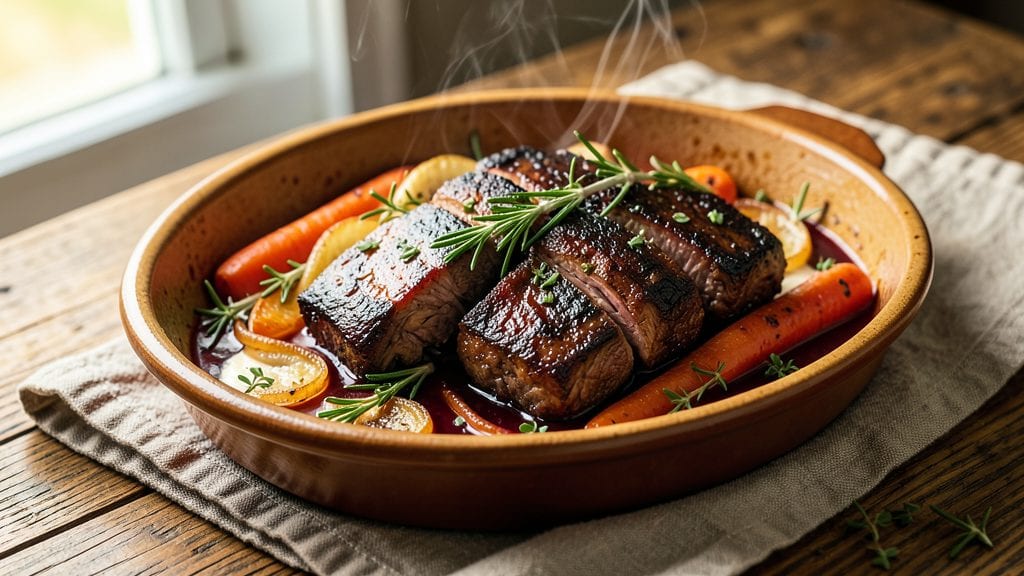
This tender beef short ribs recipe transforms tough cuts into melt-in-your-mouth perfection through a low-and-slow braise that unlocks deep, caramelized flavors. I’ve perfected this method after years of trial and error—no more chewy, gamey ribs, just fork-tender meat that falls apart at the slightest touch.
The secret lies in patience and technique, not shortcuts, but trust me, it’s worth every minute.
What sets this recipe apart is the rich, velvety sauce that develops as the ribs simmer, infused with garlic, thyme, and a splash of red wine.
You’ll start with a quick sear to build flavor, then let the meat cook low and slow until it reaches 195°F—that’s the magic number for fall-apart tenderness. The sauce thickens naturally, coating every bite in a glossy, savory glaze that’ll have everyone asking for seconds.
By the time you’re done, you’ll have ribs so tender they practically dissolve on your fork, paired with a sauce that’s perfect for dipping crusty bread or drizzling over mashed potatoes.
The aroma alone will have your kitchen smelling like a high-end steakhouse, and the effort? Completely justified by the results. This isn’t just dinner—it’s an experience.
Serve with roasted potatoes, a simple green salad, or buttery egg noodles to soak up every last drop of that delicious sauce. Once you try this method, you’ll never buy pre-cooked ribs again. Let’s get cooking—your taste buds will thank you.
Ingredients for tender beef short ribs
Pantry staples plus a few specialty items for melt-in-your-mouth beef short ribs.
| Ingredient | Amount | Notes |
|---|---|---|
| Beef Short Ribs 🥩 | 4 lb | Bone-in, 2-3 inches thick |
| Yellow Onion 🧅 | 1 whole | Large, sliced into wedges |
| Carrots 🥕 | 4 whole | Medium, peeled and whole |
| Garlic Cloves 🧄 | 6 cloves | Peeled, smashed slightly |
| Fresh Thyme 🌿 | ¼ oz | Or 2 sprigs fresh |
| Fresh Rosemary 🌿 | ¼ oz | Or 2 sprigs fresh |
| Red Wine 🍷 | 1 cup | Bold, dry variety |
| Beef Broth 💧 | 2 cups | Low-sodium preferred |
| Tomato Paste 🍅 | 2 tbsp | Smooth, not chunky |
| Olive Oil 🫒 | 2 tbsp | Extra-virgin for searing |
| Kosher Salt 🧂 | 1 ½ tsp | For seasoning ribs |
| Black Peppercorns 🌶️ | 1 tsp | Freshly cracked |
| Balsamic Vinegar 🍶 | 1 tbsp | For deglazing |
| All-Purpose Flour 🌾 | 1 tbsp | For thickening sauce |
The beef is everything here—bone-in short ribs are key for flavor and tenderness. Costco or Whole Foods usually carry them pre-cut, but if you're buying a whole packer cut, ask your butcher to trim them to 2-3 inches thick. Look for good marbling; the fat keeps the meat moist during the long cook. I always grab a bottle of dry red wine from the same store—Cabernet Sauvignon or Merlot work best. The beef broth should be low-sodium; Swanson or Pacific Foods brands are reliable. For the herbs, fresh thyme and rosemary make a difference, but dried works in a pinch (use half the amount).
No red wine? Substitute with beef broth plus a splash of balsamic vinegar—it mimics the depth. The tomato paste can be swapped for 1/4 cup crushed tomatoes if you're out, but the paste gives that concentrated umami kick. Fresh thyme is ideal, but dried thyme at one-third the amount works too. The carrots can be baby carrots if that's what you have; just leave them whole for easy cleanup. For the flour, all-purpose is fine, but arrowroot powder thickens better if you're picky about that silky sauce texture.
This braise gets better the next day—4-5 days in the fridge, 3 months frozen. I portion mine into containers so leftovers are ready for lunch. The sauce thickens as it cools, so if it's too thin when reheating, just simmer it uncovered for 5 minutes. Trust me, the aroma alone will have your whole house smelling like a steakhouse. Store the ribs and sauce separately if freezing; reheat the sauce first, then warm the ribs in it.
Why You'll Love This Recipe
- Same recipe, different vibes: serve with crusty bread for a cozy Tuesday or plate it fancy with mashed potatoes for guests. Honestly, it’s my secret weapon for both.
- Foolproof Prep: I swear by this—just sear the ribs, toss in chopped onions and carrots, add a splash of broth, and let the oven do the work. No fancy techniques, no stress.
- Caramelized Magic: That crispy thyme-infused crust on the outside? Chef’s kiss. The onions and garlic turn sweet and sticky, while the ribs melt into pure, buttery tenderness.
- Weeknight or Dinner Party: Same recipe, different vibes: serve with crusty bread for a cozy Tuesday or plate it fancy with mashed potatoes for guests. Honestly, it’s my secret weapon for both.
Step-by-step instructions for beef short ribs braise
Here's how to transform tough short ribs into melt-in-your-mouth perfection.
Sear the Short Ribs to Lock in Flavor
Pat the 4 lb beef short ribs dry with paper towels—this step is non-negotiable for crispy edges. Heat a large Dutch oven over medium-high heat and add 2 tablespoons olive oil. Once shimmering, place the ribs bone-side down in a single layer. Let them sear undisturbed for 5-6 minutes until deep golden brown forms on the bottom.
Flip the ribs and repeat on the other side. This high-heat sear creates a flavorful crust while tenderizing the meat through the Maillard reaction. If your pan gets crowded, work in batches—don't rush this step. The ribs should release easily when ready to flip. Transfer the seared ribs to a plate and set aside temporarily.
Build the Braising Liquid with Aromatics
In the same Dutch oven, reduce heat to medium and add the sliced 1 whole yellow onion, 4 whole carrots, and 6 cloves smashed garlic. Cook for 5 minutes until the vegetables begin to soften and release their sweet aromas. Add 0.25 oz fresh thyme and 0.25 oz fresh rosemary, stirring to combine.
Pour in 1 cup red wine and scrape up any browned bits from the bottom with a wooden spoon—these contain concentrated flavor. Let the wine simmer for 3 minutes until reduced by half. Stir in 2 tablespoons tomato paste and cook for 1 minute to develop its rich, umami depth. This aromatic base will infuse the ribs during the long braise.
Braise Until Fork-Tender
Return the seared ribs to the Dutch oven along with 2 cups beef broth. Sprinkle with 1.5 teaspoons kosher salt and 1 teaspoon cracked black peppercorns. Bring to a gentle simmer, then reduce heat to low, cover tightly, and transfer to a 325°F oven. Braise for 2.5 to 3 hours until the meat is fork-tender and pulls away from the bone with minimal resistance.
Here's the thing—your oven might run hot, so start checking at the 2-hour mark using an instant-read thermometer. The ribs are done when they reach 203°F internally. If the liquid reduces too much before then, add hot water ½ cup at a time to maintain adequate moisture for even cooking. The ribs should be bathed in flavorful sauce by the end.
Finish with Balsamic and Thicken the Sauce
Remove the ribs from the oven and tent loosely with foil. Increase the oven temperature to 400°F. Stir 1 tablespoon balsamic vinegar and 1 tablespoon all-purpose flour into the braising liquid. Return the Dutch oven to the oven for 10 minutes to thicken the sauce and caramelize its edges.
This final step adds depth to the sauce while creating a glossy finish. The flour will gently thicken the liquid without making it pasty. If the sauce is too thick, whisk in 1-2 tablespoons hot water to reach your desired consistency. The ribs should be coated in a rich, slightly glossy sauce with visible caramelized bits.
Pro Tips For Making Tender Beef Short Ribs
- Sear Ribs Bone-Side Down: DESCRIPTION:
- Trim the Fat, Not the Flavor: DESCRIPTION:
- Don’t Rush the Braise: DESCRIPTION:
- Deglaze with Red Wine: DESCRIPTION:
Troubleshooting great tender beef short ribs
Ribs Too Tough?
If your ribs aren’t tender after braising, the issue is usually temperature control or undercooking. First, verify your oven’s accuracy with an oven thermometer—many run hot. Braise at 325°F and use a meat thermometer to confirm 203°F internal temperature.
If they’re still tough, extend cooking time by 30-60 minutes and add ½ cup hot water to maintain moisture. 🌡️
Sauce Too Thin?
A watery sauce often means the ribs cooked too long, reducing the liquid. Thicken it fast by mixing 1 tbsp cornstarch with 1 tbsp cold water, then whisking into the sauce.
Simmer for 3-5 minutes until it reaches your desired consistency. Alternatively, remove ribs, reduce the sauce uncovered on medium-high heat for 10 minutes, then return ribs to warm through.
Ribs Dry or Stringy?
Overcooking or insufficient fat in the cut causes dryness. Prevent this by selecting ribs with visible marbling and avoiding high heat. If already dry, rescue them by shredding and mixing with ¼ cup reserved braising liquid or butter before serving.
For future cooks, baste ribs every 30 minutes with their own juices during braising to keep them moist. 💡
Browned Bits Missing?
Those flavorful browned bits (fond) are crucial for depth. If you missed scraping them up during searing or braising, deglaze immediately with ½ cup red wine or beef broth while the pan is still hot.
Simmer for 3 minutes to dissolve the fond, then proceed with the recipe. Never skip this step—it’s where 30% of the flavor hides!
Uneven Cooking?
Uneven doneness often happens when ribs are stacked or crowded in the Dutch oven. Fix this by arranging ribs bone-side up in a single layer, with larger pieces facing down. If using a skillet, work in batches for even searing.
For braising, rotate the pan halfway through cooking to ensure consistent heat distribution. A wire rack in the Dutch oven elevates ribs for better airflow and even cooking. ⚡
Ribs Falling Apart?
While this sounds ideal, overly mushy ribs mean they’ve broken down too much.
This happens with overly tender cuts or excessive braising time. Adjust by reducing cook time to 2-2.5 hours and checking at 195°F instead of 203°F. For serving, slice against the grain but leave some structure—this ensures a tender yet intact bite.
Save any extra sauce to reheat leftovers without drying them out.
Nutrition facts
Frequently asked questions
Why do beef short ribs need such a long cooking time?
The slow braise breaks down tough collagen in the meat into gelatin, transforming it into silky, fork-tender texture. Cooking at 325°F for 2.5-3 hours ensures the connective tissue melts just enough to create that melt-in-your-mouth quality without turning the meat mushy. Patience is key—this isn't a quick-cook dish!
Can I use bone-in or boneless short ribs for this recipe?
This recipe is designed for bone-in short ribs—they stay more flavorful and tender during the long cook. Boneless versions will cook faster but may dry out. If you must use boneless, reduce braising time by 30-45 minutes and check for doneness at 195°F instead of 203°F. The bones actually help retain moisture!
What's the best way to reheat leftover beef short ribs?
Reheat in a 300°F oven for 20-25 minutes with a splash of beef broth to keep them moist. Never microwave—it makes the meat rubbery. For extra flavor, add 1 tablespoon of the braising sauce when reheating. Leftovers actually taste better the next day as flavors meld!
How do I know when the ribs are fully cooked?
Use a meat thermometer to check for 203°F internal temperature—this ensures perfect tenderness. The ribs should also pull away from the bone with minimal resistance when probed with a fork. If they're still slightly firm, return to the oven for 15-20 minutes more. Never judge by appearance alone!
Can I substitute red wine with something else?
Yes! Replace the 1 cup red wine with 1 cup beef broth plus 1 tablespoon balsamic vinegar for similar depth. For a non-alcoholic version, use 1 cup apple cider plus 1 teaspoon soy sauce. The key is balancing acidity and umami—just avoid sweet wines or juices that will overpower the meat.