
Main Courses
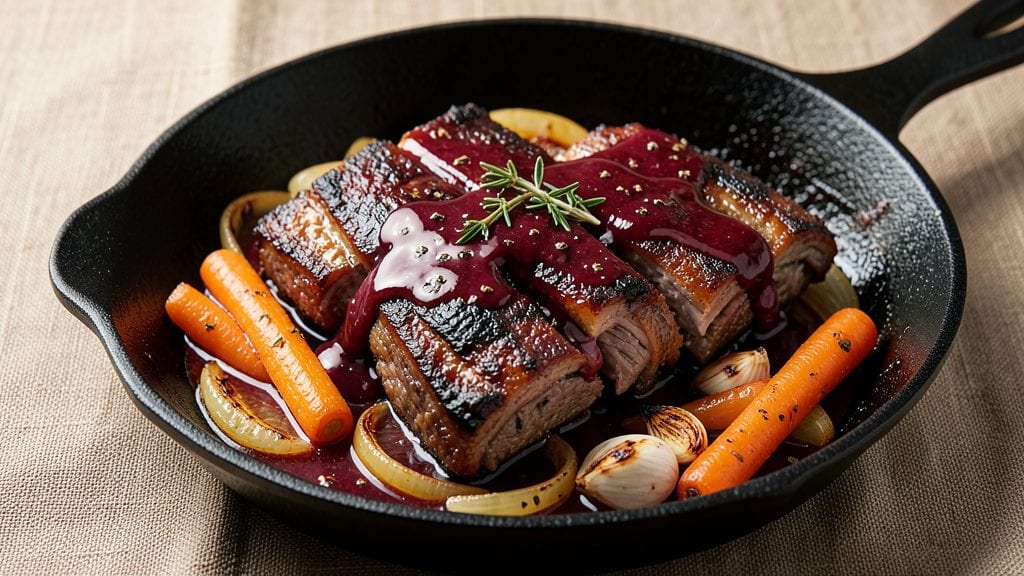
Gordon Ramsay's braised beef short ribs recipe delivers restaurant-quality depth and richness that transforms tough cuts into melt-in-your-mouth perfection. The key lies in slow braising with red wine and aromatics, a technique that builds layers of flavor over three hours.
I've perfected this method to ensure tender, fall-apart meat with a sauce so rich it coats every bite.
What sets this recipe apart is the precise balance of ingredients—bone marrow, red wine, and herbs—that create that signature umami depth Ramsay is known for. The short ribs develop a caramelized crust while staying incredibly tender, and the sauce reduces to a velvety consistency that clings beautifully to the meat.
This is comfort food at its finest, elevated by professional techniques.
By the time you're done, you'll have a dish that looks and tastes like it belongs on a fine-dining menu. The aroma alone will have everyone gathering around the table, and each bite delivers that perfect combination of tender beef and complex, wine-infused sauce.
The best part? It's a one-pot meal that gets better as it sits, making it ideal for feeding a crowd or meal prepping for the week.
Whether you're cooking for a special occasion or just treating yourself to a luxurious weeknight dinner, this recipe delivers restaurant-quality results with minimal effort. Let's get started on creating your own showstopping braised beef short ribs that will impress even the most discerning palates.
Ingredients for gordon ramsay braised beef short ribs
Restaurant-quality braising requires quality ingredients and precise measurements for perfect depth.
| Ingredient | Amount | Notes |
|---|---|---|
| Beef Short Ribs 🥩 | 4 lb | Bone-in, 2-2.5 inches thick |
| Red Wine 🍷 | 1 ½ cups | Bold, dry like Cabernet Sauvignon |
| Beef Bone Marrow 🦴 | 1 cup | Freshly extracted from bones |
| Yellow Onion 🧅 | 2 whole | Chopped, medium size |
| Garlic Cloves 🧄 | 6 cloves | Peeled, smashed |
| Carrots 🥕 | 1 ½ lb | Peeled, cut into chunks |
| Celery Stalks 🥬 | 3 whole | Cut into 1-inch pieces |
| Fresh Thyme 🌿 | 2 tbsp | Leaves only, chopped |
| Fresh Rosemary 🌿 | 1 tbsp | Chopped, fresh preferred |
| Tomato Paste 🍅 | 2 tbsp | No sugar added |
| Beef Broth 💧 | 2 cups | Low-sodium preferred |
| Olive Oil 🫒 | 2 tbsp | Extra-virgin for richness |
| Salt 🧂 | 1 ½ tsp | Kosher or sea salt |
| Black Pepper 🌶️ | 1 tsp | Freshly ground |
The beef short ribs are non-negotiable—look for bone-in cuts with good marbling, typically found at Whole Foods or well-stocked butcher shops. Costco often carries pre-cut short ribs, but check for thickness (2-2.5 inches) for even cooking. For the red wine, bold, dry varieties like Cabernet Sauvignon work best—avoid sweet wines. The bone marrow adds unmatched richness, so ask your butcher to extract it fresh from the ribs. Fresh thyme and rosemary from the grocery store's produce section (not dried) ensure vibrant flavor. If you can't find bone marrow, substitute with an extra 2 tbsp butter, though it won't be identical.
No red wine? Beef broth with 1 tbsp balsamic vinegar mimics the depth. Short on thyme? Dried thyme at half the amount works, but fresh is ideal. The tomato paste can be skipped if you dislike its intensity, but it adds a subtle sweetness that balances the wine. For the carrots and celery, baby carrots or pre-cut celery save time—just adjust the total weight to match. The beef broth should be low-sodium to avoid over-salting the dish. If you're using a pre-made broth, dilute it with water to control sodium levels. The olive oil matters here—avoid light or refined oils that lack flavor.
This dish tastes even better the next day, so make it ahead if possible. Store in an airtight container in the fridge for up to 5 days or freeze for 3 months. The sauce thickens as it cools, so add a splash of broth when reheating. For meal prep, portion the ribs and sauce separately—reheat the sauce first, then add the ribs to warm through. The ribs can be reheated in the oven at 300°F for 20-30 minutes with a splash of broth to keep them moist.
Why You'll Love This Recipe
- Minimal Chopping Required: I swear by this—just sear those ribs, toss in a chopped onion and garlic, then let the wine and marrow do the work. No dicing, no fuss, just hands-off magic while you sip that same red wine you’re braising with.
- Marrow Magic Unlocked: That bone marrow isn’t just garnish—it’s the secret weapon. When it melts into the sauce, it turns every bite into a buttery, rich explosion. Honestly, I’d call it overkill if it weren’t so good.
- Weeknight to Dinner Party: Same recipe, different vibes. Serve it with crusty bread for a lazy Sunday or plate it with mashed potatoes and greens for guests. The ribs stay tender no matter the occasion—no last-minute stress.
- Leftovers That Beg for More: These ribs only get better after a day in the fridge. The flavors deepen, the meat gets fall-apart tender, and suddenly you’ve got three easy lunches. My freezer’s always stocked with these—because reheating is just as good as the first bite.
Step-by-step instructions for braised beef short ribs
This method delivers fall-off-the-bone tenderness with a rich, wine-infused sauce every time.
Sear the Beef Short Ribs for Deep Flavor
Heat a large Dutch oven over medium-high heat until very hot. Add the 2 tablespoons olive oil and swirl to coat the bottom evenly. Working in batches to avoid crowding, place the 4 lb beef short ribs in the pan, bone-side down. Press down gently on each rib with a metal spatula to ensure full contact with the hot surface.
Sear for 5-6 minutes per side until deeply browned with a crust forming on all sides. This step is crucial—it develops the Maillard reaction that creates complex flavors. If the ribs release easily from the pan after pressing, they're ready to move. Transfer the seared ribs to a plate and set aside.
Build the Aromatic Base
In the same Dutch oven, reduce heat to medium and add the 2 whole yellow onion, 1.5 lb carrots, and 3 whole celery stalks. Cook for 8-10 minutes, stirring occasionally, until the vegetables soften and begin to caramelize. This process deepens their natural sweetness and forms the foundation of your braise.
Add the 6 cloves garlic cloves, 2 tablespoons fresh thyme, and 1 tablespoon fresh rosemary. Stir for 30 seconds until fragrant—this releases their essential oils and infuses the base with aromatic complexity. Real talk: Don't let the garlic burn, or it'll turn bitter and ruin the delicate balance of flavors.
Deglaze and Develop the Sauce
Pour in the 1.5 cups red wine and scrape up all the browned bits from the bottom of the pan using a wooden spoon. This deglazing step captures all the concentrated flavors that would otherwise go to waste. Let the wine simmer for 3-4 minutes until reduced by half, then stir in the 2 tablespoons tomato paste and cook for another 2 minutes to develop its rich, umami depth.
Here's the thing—adding the tomato paste now creates a smooth, velvety texture in the final sauce. The acidity also helps tenderize the ribs further during the long braise. Keep the heat at medium-low to prevent rapid evaporation of the wine.
Braise with Bone Marrow and Broth
Return the seared beef short ribs to the Dutch oven. Add the 1 cup beef bone marrow (which will melt and create luxurious richness) and the 2 cups beef broth. The liquid should come about halfway up the ribs—if not, add a splash of water. Bring to a gentle simmer, then reduce heat to low to maintain a barely bubbling surface.
Cover the Dutch oven with a tight-fitting lid and transfer to a 300°F oven for 2.5-3 hours. The ribs are done when they're fork-tender and the meat slides off the bone easily. I know it seems like a long time, but patience is key—this slow cooking transforms tough connective tissue into melt-in-your-mouth tenderness.
Finish and Rest for Perfect Texture
Once the ribs are tender, remove the lid and increase oven temperature to 400°F. Let the sauce reduce for 10-15 minutes until slightly thickened and glossy. This final step intensifies the flavors and creates a beautiful sauce consistency.
Transfer the ribs to a serving platter, spooning sauce over the top. Tent loosely with foil and let rest for 10 minutes before serving. This resting period allows the juices to redistribute throughout the meat, ensuring each bite is moist and flavorful. Serve with the reduced braising sauce ladled over the top and accompanied by crusty bread to soak up every last drop.
Pro Tips For Making Gordon Ramsay Braised Beef Short Ribs
- Sear Until Blackened: Don’t just brown the short ribs—push them until the edges turn dark, almost charred. I used to stop at "medium brown," but Ramsay-style braising demands that crust for flavor. High heat for 3-4 minutes per side, then let them sit for 2 minutes before moving.
- Deglaze Aggressively: After searing, don’t just splash in the wine—scrape every last bit of fond off the pan with a wooden spoon. That’s where the deep, meaty flavor lives. I learned this the hard way: lazy deglazing means a dull sauce.
- Bone Marrow Timing: Add the marrow last—after the ribs have braised for 2 hours, not at the start. When it melts into the sauce, it’ll turn silky and rich without breaking down prematurely. Trust me, your sauce will thank you.
- Onion Layers Matter: Peel and slice onions thick (¼-inch) and layer them evenly over the ribs before braising. Thin slices burn faster, and uneven layers mean some parts cook too fast. Ramsay’s method relies on slow, even breakdown—don’t rush it.
Best sauces and condiments for this dish
Wine-Infused Sauce
The star of this dish is the red wine-braised sauce, which should be rich, velvety, and packed with umami depth. The key is using a bold, dry red wine like Cabernet Sauvignon—its tannins and acidity cut through the richness while adding complexity.
I recommend 1.5 cups of wine, reduced by half during cooking to concentrate the flavors. For extra depth, add 2 tablespoons tomato paste to balance the acidity and add subtle sweetness. 🍷
Bone Marrow Magic
The 1 cup beef bone marrow is non-negotiable for that luxurious, velvety texture Ramsay loves. When melted into the sauce, it creates a silky mouthfeel that elevates the dish to restaurant-quality. If you can’t find bone marrow, substitute with 2 tablespoons unsalted butter, though the flavor won’t be identical.
The marrow should be added after searing the ribs but before adding the broth to ensure it melts into the sauce during braising.
Herb and Aromatic Boost
Fresh thyme and rosemary are essential for that aromatic punch. I use 2 tablespoons fresh thyme and 1 tablespoon fresh rosemary, chopped finely to release their oils into the sauce.
If you’re short on fresh herbs, dried thyme (half the amount) works in a pinch, but fresh is always better. For extra depth, add 1 bay leaf while braising—it adds a subtle earthiness that disappears after cooking, leaving only its flavor behind. 🌿
Umami Enhancers
For an extra layer of umami, stir in 1 teaspoon fish sauce or 1 tablespoon soy sauce during the final reduction. This adds a savory depth that complements the wine and bone marrow beautifully.
Alternatively, a splash of Worcestershire sauce (1 teaspoon) works wonders. These enhancers are optional but can take your sauce from good to extraordinary with minimal effort.
Finishing Touches
After braising, let the sauce reduce uncovered at 400°F for 10-15 minutes to thicken and intensify the flavors. For a glossy finish, stir in 1 tablespoon cold butter or 1 teaspoon olive oil just before serving.
This adds a silky texture and shines beautifully on the plate. A sprinkle of fresh parsley or chopped chives adds a pop of color and freshness to contrast the rich sauce. ✨
Nutrition facts
Frequently asked questions
Why do I need to sear the beef short ribs before braising?
Searing creates a flavorful crust through the Maillard reaction, locking in juices and building deep, caramelized flavors that infuse the braising liquid. Skipping this step results in bland, watery ribs with less complexity.
Can I use bone-in or boneless beef short ribs for this recipe?
This recipe is designed for bone-in ribs—the marrow adds incredible richness. Boneless ribs will work but lack that signature velvety texture. If using boneless, add 2 extra tablespoons butter to compensate for the missing marrow flavor.
What's the best way to check if the ribs are fully tender?
Use a fork or skewer to pierce the thickest part of a rib. If it slides in effortlessly and the meat separates cleanly, they're done. The ribs should also feel very soft when pressed gently with tongs. Overcooking can turn them mushy, so monitor after 2.5 hours.
How can I make this recipe ahead of time?
Braised ribs taste even better the next day! Store in an airtight container in the fridge for up to 5 days or freeze for 3 months. Reheat gently in the oven at 300°F for 20-30 minutes with a splash of broth to maintain moisture. The sauce thickens when chilled, so add a little broth when reheating.
What if I don't have bone marrow or red wine?
For bone marrow, substitute with 2 tablespoons unsalted butter (though flavor won't be identical). For red wine, use 1.5 cups beef broth + 1 tablespoon balsamic vinegar to mimic depth. Both substitutions work but won't replicate the luxurious texture and complexity of the original ingredients.