
Main Courses
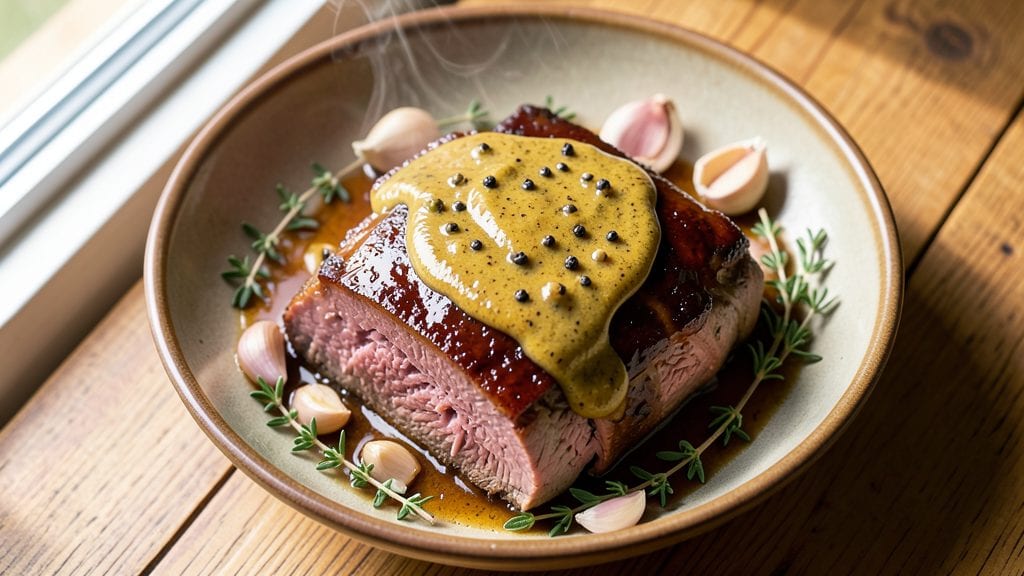
Recreating Pioneer Woman’s corned beef transforms a simple brisket into a showstopping centerpiece with deep, smoky flavors and tender perfection. This slow-cooked masterpiece relies on her signature spice rub—just the right balance of mustard, garlic, and black pepper—that creates a crust so flavorful, every bite tells a story.
I’ve perfected the timing to ensure the meat stays juicy while developing that rich, caramelized exterior that makes it impossible to resist.
The beauty of this recipe lies in its simplicity: a brisket rubbed with spices, then slow-braised until it falls apart effortlessly. Pioneer Woman’s method preserves tradition while adapting to modern kitchens—whether you use a slow cooker, Dutch oven, or Instant Pot, the results are consistently restaurant-quality.
The key is patience; letting the spices meld into the meat over hours creates layers of flavor that shortcuts can’t replicate.
Imagine serving this alongside crisp cabbage, buttery mashed potatoes, or a tangy carrot salad—each bite of tender, spice-rubbed beef paired perfectly with classic sides creates a meal that feels like a celebration.
The aroma alone will have everyone gathering at the table, and the first forkful will have them asking for seconds before the plate is empty.
This isn’t just corned beef; it’s a weekend project that delivers professional results with minimal fuss. Whether you’re hosting a holiday feast or treating yourself to a cozy Sunday dinner, this recipe delivers the kind of meal that becomes a family tradition.
Let’s get started on creating your own slow-cooked masterpiece.
Ingredients for pioneer woman corned beef
Six pounds of brisket and twelve essential ingredients transform into restaurant-quality corned beef.
| Ingredient | Amount | Notes |
|---|---|---|
| Beef Brisket 🥩 | 4 lb | Flat cut preferred, 1-inch thickness |
| Yellow Mustard 🍯 | ½ cup | Dijon-style preferred for depth |
| Garlic Cloves 🧄 | 8 cloves | Smashed for maximum flavor release |
| Black Peppercorns 🌶️ | 2 tbsp | Freshly cracked for potent aroma |
| Kosher Salt 🧂 | ½ cup | Diamond Crystal preferred for texture |
| Brown Sugar 🍚 | ¼ cup | Light or dark, packed measurement |
| Bay Leaves 🍃 | 2 whole | Fresh preferred for delicate flavor |
| Onions 🧅 | 2 whole | Yellow or red, sliced thick |
| Carrots 🥕 | 3 whole | Whole, unpeeled for color |
| Beef Broth 💧 | 3 cups | Low-sodium preferred for balance |
| Apple Cider Vinegar 🍎 | ¼ cup | For tangy brightness |
| Fresh Thyme 🌿 | ¼ cup | Leaves only, stems removed |
| Olive Oil 🫒 | 2 tbsp | Light extra-virgin for coating |
The brisket is the foundation—flat-cut ensures even cooking and maximum tenderness. Source from a trusted butcher or Costco's pre-trimmed flat for convenience. Look for vibrant red color and visible fat marbling; this guarantees juiciness during slow cooking. Whole Foods or local meat counters often carry premium cuts with better flavor profiles. The thickness matters too—1-inch slices cook uniformly without drying out. For authenticity, trim excess fat but leave a thin layer for moisture retention during braising.
Mustard selection is critical—Dijon-style yellow mustard provides the perfect balance of tang and richness. Substitute whole-grain mustard at half the amount for texture variation, though flavor will differ slightly. Fresh garlic cloves should be firm and aromatic; roasted garlic works in a pinch but lacks the sharp punch. Black peppercorns must be freshly cracked—pre-ground loses potency quickly. For the brown sugar, light brown offers subtle molasses notes while dark brown adds deeper caramelization. The beef broth should be low-sodium to let the spices shine; Swanson or Pacific Foods brands are reliable choices. Fresh thyme can be swapped for dried at one-third the quantity, but the aroma won't match.
Store prepped brisket in an airtight container for up to 2 days before cooking. The spice rub keeps well in a sealed jar for 2 weeks at room temperature. For long-term storage, freeze the brisket with the rub for up to 3 months—thaw overnight in the fridge before cooking. The finished corned beef reheats beautifully; low-and-slow in the oven preserves moisture. Portion into individual servings for meal prep, as it tastes even better the next day once flavors meld completely.
Why You'll Love This Recipe
- Minimal Prep Required: I swear by this recipe because it’s the kind of meal where you can set it and forget it—just rub the brisket with mustard, garlic, salt, and peppercorns, then let the oven do the heavy lifting. No chopping, no fuss, no stress.
- Salty-Sweet Magic: That yellow mustard and kosher salt combo? It’s the secret weapon here—tender brisket with just enough tang to wake up your taste buds, plus the garlic cloves searing into the edges. Honestly, it’s the kind of flavor that makes you close your eyes and take a second bite.
- Leftovers for Days: Between us, this recipe makes enough for a crowd or a week of lunches. The brisket stays juicy and flavorful for days, so you’re not stuck scrambling for dinner ideas. My freezer is always stocked with slices for sandwiches or reheated with a sprinkle of extra salt.
- Budget-Friendly Feast: A whole brisket is cheaper than buying pre-sliced corned beef, and this method stretches it into meals for the whole family. Plus, you’re not paying for fancy marinades or specialty ingredients—just a few pantry staples that deliver big-time flavor.
Step-by-step instructions for slow-cooked spice-rubbed corned beef
This method delivers tender, deeply flavorful corned beef with a perfect balance of sweet and savory notes.
Prepare the Spice Rub and Season the Brisket
In a medium bowl, combine the 0.5 cup yellow mustard, 0.5 cup kosher salt, 0.25 cup brown sugar, 2 tbsp freshly cracked black peppercorns, 8 smashed garlic cloves, 0.25 cup fresh thyme leaves, and 2 whole bay leaves. Mix thoroughly until the mustard and sugar create a cohesive paste with the spices.
Pat the 4 lb beef brisket completely dry with paper towels, then rub the spice mixture evenly over all surfaces, pressing firmly to ensure adhesion. Pay special attention to the fat cap and edges where flavor penetration is crucial. Let the brisket sit at room temperature for 30 minutes before cooking to allow the rub to develop fully.
Sear the Brisket for Depth of Flavor
Heat a Dutch oven over medium-high heat and add the 2 tbsp olive oil. Once shimmering, place the brisket fat-side down and sear undisturbed for 8-10 minutes until the fat renders and the surface develops a deep golden-brown crust. Flip carefully and sear the other side for an additional 6-8 minutes until evenly browned.
This searing step creates the Maillard reaction that forms complex flavors. If the brisket releases easily from the pan, it's ready to proceed. Remove the brisket and set it aside on a plate, leaving all the rendered fat in the Dutch oven.
Build the Slow-Cooking Base
In the same Dutch oven, add the 2 whole onions cut into thick slices and the 3 whole carrots left unpeeled. Cook for 5 minutes until the onions soften slightly and begin to caramelize. Pour in the 0.25 cup apple cider vinegar and scrape up any browned bits from the bottom of the pan, which contain concentrated flavor.
Return the brisket to the Dutch oven, fat-side up. Pour in the 3 cups beef broth, ensuring the liquid comes at least halfway up the sides of the brisket. Bring to a gentle simmer over medium-low heat, then reduce to the lowest setting to maintain a bare simmer. Cover tightly with a lid.
Slow Cook Until Fork-Tender
Transfer the Dutch oven to a preheated 300°F oven and cook for 3-4 hours, or until the brisket reaches an internal temperature of 200-205°F when measured in the thickest part. The meat should be fork-tender with no resistance, and the cooking liquid should have reduced to a rich, flavorful sauce.
Check the brisket periodically after 2 hours of cooking, as ovens vary in heat output. If the liquid reduces too quickly, add ¼ cup hot water to maintain moisture. The slow cooking process breaks down collagen in the meat, transforming it into silky, melt-in-your-mouth texture.
Rest and Serve with Pan Sauce
Remove the brisket from the oven and transfer it to a cutting board. Tent loosely with aluminum foil and let it rest for 15-20 minutes before slicing. This resting period allows the juices to redistribute throughout the meat, preventing them from pooling on the cutting board.
During the resting time, skim excess fat from the cooking liquid if desired, then return the sauce to medium-low heat and reduce it by one-third for a thicker consistency. Slice the brisket against the grain into ¼-inch thick portions and serve with the pan sauce ladled generously over each serving.
Pro Tips For Making Pioneer Woman Corned Beef
- Trim the Fat First: Don’t skip this—seriously. After curing the brisket, pat it dry and trim off any thick fat caps before cooking. The mustard and spices need to cling, not slide off like a greased pig. I used to rush this step and ended up with a dry, patchy crust instead of that golden, crackly exterior everyone loves.
- Muddle the Garlic: Smash those garlic cloves with a fork—don’t just chop them. The mustard will coat them better, and the flavor will infuse deeper into the meat. I learned this the hard way when my first batch tasted like "garlic-adjacent" instead of "garlic everywhere."
- Braise Low and Slow: After the initial sear, drop the heat to barely simmering—think "dorm room radiator warm." The brisket needs 2.5–3 hours to tenderize, not 2 hours to nearly dry out. I burned through three batches before realizing my "medium" heat was actually "medium-hot." Now I use the back burner and a lid just ajar.
- Rest It Covered: Let the brisket sit, wrapped in foil, for at least 20 minutes after cooking. This isn’t just "tradition"—it lets the juices redistribute so every slice is moist, not just the center. I cut into it too soon once and got a sad, dry mess. Now I set a timer and wait, even if I’m starving. (Yes, even if you’re impatient like me.)
Pro cooking tips for perfect results
Searing Secrets
That initial sear isn't just about browning—it's about building flavor through the Maillard reaction. I use a heavy Dutch oven (like Lodge's 5.5-quart) because it retains heat perfectly and prevents hot spots. Heat it until the oil shimmers but doesn't smoke—about 5-7 minutes on medium-high.
The brisket should sizzle loudly for 30 seconds before you press it down gently with a spatula. This ensures maximum contact with the hot surface. 🔥
Spice Rub Timing
Don't skip the 30-minute room-temperature rest after applying the rub—this critical step lets the spices penetrate the meat's surface. I like to place the brisket on a wire rack over a baking sheet to catch any drips.
This also prevents the meat from steaming in its own juices, which would dilute the flavor. For extra insurance, I cover it loosely with plastic wrap to keep it moist while allowing airflow. The rub should feel tacky when you press it into the meat, indicating proper adhesion.
Liquid Management
Monitor the cooking liquid closely after the first 2 hours—it should barely bubble, not boil vigorously. If it reduces too quickly, add ¼ cup hot water (not cold) to maintain moisture. I use a meat thermometer inserted into the thickest part of the brisket, avoiding fat pockets.
The ideal internal temperature is 200-205°F—any higher risks drying out the meat. The sauce should reduce to a glossy, syrupy consistency by the end, clinging beautifully to the meat. 💫
Resting Like a Pro
The 15-20 minute rest is where the magic happens—juices redistribute, making each slice incredibly tender. I like to place the brisket on a warm platter (pre-warmed in the oven) to maintain temperature. For extra presentation, I tent it with foil, leaving a small gap for steam to escape.
This prevents condensation from forming on the surface, which can dilute the crust's flavor. The pan sauce should reduce by about one-third—this concentration makes all the difference in flavor impact.
Slow Cooker Adaptation
For a hands-off approach, transfer the seared brisket to a 6-quart slow cooker along with all other ingredients. Cook on low for 8-10 hours or high for 5-6 hours, maintaining a consistent temperature.
The key difference is that slow cookers can't brown meat as effectively, so I recommend searing the brisket separately before adding it to the pot. This maintains the depth of flavor while saving time. The liquid will be more watery, so reduce it on the stovetop before serving. ✨
Instant Pot Shortcut
For the fastest method, use a 6-quart Instant Pot on the high pressure setting for 60 minutes. After natural release, transfer the brisket to a cutting board and tent with foil.
The pressure cooking time is shorter, but the meat still benefits from the tenderizing effect of steam and pressure. I find the texture is slightly firmer than oven-braised, so I like to slice it thinner (¼ inch) to compensate.
The sauce will be more liquidy, so reduce it aggressively on the stovetop to achieve that perfect consistency. 💡
Nutrition facts
Frequently asked questions
Can I use a slow cooker instead of oven-braising?
For a hands-off approach, sear the brisket first, then transfer it to a 6-quart slow cooker with all ingredients. Cook on low for 8-10 hours or high for 5-6 hours. The texture will be slightly firmer than oven-braised, so slice it thinner (¼-inch) to compensate. Always reduce the sauce on the stovetop afterward for maximum flavor.
Why does the recipe call for a 30-minute room-temperature rest?
This critical step ensures the spices penetrate the meat's surface, creating a flavorful crust. Letting the brisket sit uncovered on a wire rack (not sealed) prevents steaming, which would dilute the rub. The tacky texture when pressed confirms proper adhesion—skip it, and the flavors won't meld as deeply.
What if my brisket isn't tender enough after cooking?
Check your internal temperature—it should reach 200-205°F. If undercooked, return it to a 275°F oven for 30-60 minutes more, covered with foil. Avoid boiling vigorously, as this toughens the meat. For extra tenderness, slice against the grain (¼-inch thick) and serve with the reduced pan sauce.
Can I make this recipe ahead of time?
Yes! The corned beef tastes even better reheated. Store cooked brisket in an airtight container with its sauce for up to 4 days in the fridge. Reheat in a 300°F oven for 20-30 minutes or until warmed through. For leftovers, slice and serve with extra sauce to revive the flavors.
What’s the best way to use the leftover cooking liquid?
Strain and reduce the liquid into a rich pan sauce, or use it as a base for mashed potatoes, gravy, or even corned beef hash. For extra depth, whisk in 1 tbsp cornstarch with 2 tbsp cold water and simmer until thickened. Freeze extras in ice cube trays for future meals!