
Soups & Stews
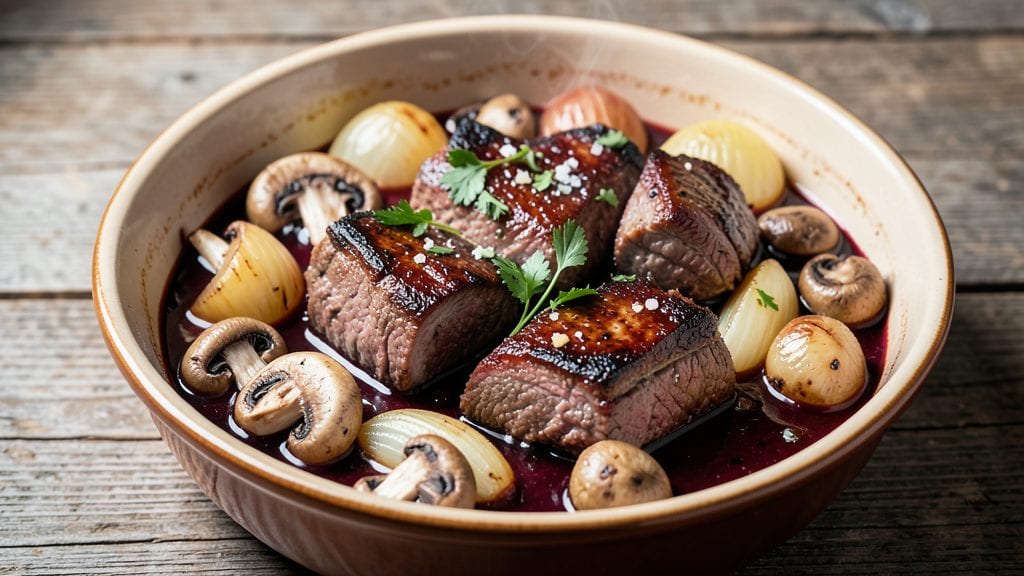
This Pioneer Woman beef bourguignon recipe transforms tough beef into melt-in-your-mouth tenderness through slow braising in rich red wine and herbs. The secret lies in proper searing and patient simmering—techniques that elevate simple ingredients into restaurant-quality comfort food.
My version keeps the classic method intact while offering modern shortcuts for busy weeknights.
The dish begins with beef chuck roast cut into chunks, browned to a deep golden crust that forms the flavor foundation. A splash of red wine deglazes the pan, capturing every savory bit, while mushrooms, onions, and garlic join the simmer.
After hours of gentle cooking, the result is fork-tender meat swimming in a velvety sauce with just the right balance of acidity and depth.
What makes this recipe special is its versatility—serve it over creamy mashed potatoes, with crusty bread for dipping, or alongside roasted vegetables. The aroma alone will have everyone gathering at the table, and the leftovers taste even better the next day.
This is the kind of dish that feels like a hug in a bowl.
For those short on time, I’ve included optional time-saving steps without sacrificing flavor. The key is never rushing the braising—patience is what turns good beef bourguignon into something extraordinary. Let’s get cooking!
Ingredients for pioneer woman beef bourguignon
Sixteen essential ingredients transform tough beef into restaurant-quality comfort food.
| Ingredient | Amount | Notes |
|---|---|---|
| Beef Chuck Roast 🥩 | 3 lb | Cut into 1.5-inch chunks, trimmed of fat |
| Dry Red Wine 🍷 | 2 cups | Bold variety like Cabernet Sauvignon or Merlot |
| Beef Broth 💧 | 2 cups | Low-sodium preferred, homemade or high-quality |
| Yellow Onions 🧅 | 2 whole | Sliced into 1/2-inch rounds, yellow or red |
| Garlic Cloves 🧄 | 6 cloves | Peeled, smashed but not minced |
| Cremini Mushrooms 🍄 | 16 oz | Whole, stems removed, or baby bella |
| All-Purpose Flour 🌾 | 2 tbsp | For dredging beef chunks |
| Olive Oil 🫒 | 2 tbsp | Extra-virgin for searing |
| Fresh Thyme 🌿 | 2 sprigs | Stems removed, leaves only |
| Fresh Rosemary 🌿 | 1 sprig | Woody stems removed, needles only |
| Salt 🧂 | 1 ½ tsp | Kosher or sea salt, to taste |
| Black Peppercorns 🌶️ | 1 tsp | Freshly cracked, not ground |
| Tomato Paste 🍅 | 2 tbsp | High-quality, not watery |
| Fresh Parsley 🌿 | ¼ cup | Chopped, for garnish only |
The beef chuck roast is non-negotiable—look for well-marbled cuts at your local butcher or Costco for the best value. If you can't find chuck, chuck-eye or short ribs work too, but trim excess fat. The red wine should be dry and bold—save your cheap cooking wine for emergencies. For the mushrooms, cremini or baby bella hold up best during braising, but any variety works. Fresh herbs like thyme and rosemary add depth, but dried works at one-third the amount if fresh isn't available.
No red wine? Substitute 1 cup beef broth plus 1 tbsp balsamic vinegar—it won't be identical, but still delicious. For the tomato paste, squeeze tubes from Trader Joe's are perfect—no waste, and they last months. If you're short on time, pre-cut the onions and mushrooms to save 10 minutes. The beef chunks should be 1.5 inches max—any larger won't cook evenly. For extra richness, add 1 tbsp butter with the herbs at the end of cooking.
This dish tastes even better the next day—plan ahead and make extra. Store in an airtight container in the fridge for 4-5 days, or freeze for 3 months in portion-sized containers. The sauce thickens as it cools, so add 1-2 tbsp broth if it's too stiff when reheating. Serve with crusty bread or mashed potatoes—the leftovers make perfect lunches for the week.
Why You'll Love This Recipe
- One-Pot Magic: I swear by this recipe because it’s one pan—no chopping boards, no extra dishes. Just brown the chuck roast, toss in onions and garlic, deglaze with wine, and let it slow-cook. My counter stays clear, and my husband still thinks I slaved over it.
- Wine-Lover’s Dream: That dry red wine isn’t just for show—it’s the star. The acidity cuts through the richness of the beef while the alcohol tenderizes it, leaving you with layers of depth. Honestly, I’d drink the leftovers if I didn’t need them for the next meal.
- Weeknight to Dinner Party: Serve it over mashed potatoes for a lazy Tuesday or plate it with crusty bread and a side salad for company. The same dish works for both—just adjust the portions. Between us, I’ve pulled this off for book clubs and family dinners without breaking a sweat.
- Budget-Friendly Luxury: A chuck roast stretches for days, and the wine adds sophistication without the restaurant price tag. I make this when I want to feel fancy but don’t want to spend a fortune. Plus, the leftovers reheat like a dream—richer even the second time around.
Step-by-step instructions for red wine-braised beef stew
A rich, slow-cooked masterpiece where tender beef meets earthy mushrooms in a velvety red wine sauce.
Sear the Beef for Deep Flavor
Pat the 3 lb beef chuck roast completely dry with paper towels—this ensures a proper sear. Cut it into 1.5-inch chunks, trimming any excess fat. Heat 2 tablespoons olive oil in a large Dutch oven over medium-high heat until shimmering.
Working in batches, add the beef chunks and sear for 3-4 minutes per side until deeply browned. Don't overcrowd the pan—this steams instead of sears. Transfer the browned beef to a plate as you work. You're building flavor here; every browned spot releases caramelized compounds that dissolve into the sauce later.
Build the Aromatic Base
In the same Dutch oven, add 2 whole yellow onions sliced into ½-inch rounds and cook for 5 minutes until softened and slightly golden. Add the 6 cloves garlic cloves (smashed but not minced) and cook for 30 seconds until fragrant—don't let them burn. Stir in 2 tablespoons tomato paste and cook for 1 minute to deepen the flavors.
Sprinkle the seared beef with 1.5 teaspoons salt and 1 teaspoon black peppercorns, then return it to the pot. Add 2 sprigs fresh thyme and 1 sprig fresh rosemary, stirring to coat the beef in the aromatic paste. This step creates the flavor foundation—every ingredient here contributes to the rich, complex taste you're building.
Deglaze and Simmer the Stew
Pour in 2 cups dry red wine and scrape up any browned bits from the bottom of the pot with a wooden spoon. This deglazing captures all the flavor you've built so far. Let the wine simmer for 5 minutes until reduced by half—you'll see the liquid thicken slightly and the alcohol cook off.
Add 2 cups beef broth and bring to a gentle simmer. Cover the pot and reduce heat to low, then transfer to a 325°F oven (or keep on the stovetop over low heat). Let it cook for 2 hours, stirring occasionally, until the beef is fork-tender and easily pulls apart. The liquid should have reduced to a rich, velvety consistency that coats the back of a spoon.
Finish with Mushrooms and Rest
Add the 16 oz cremini mushrooms (whole, stems removed) to the pot and cook for 10-15 minutes uncovered until they're tender and golden. The mushrooms should absorb the flavors of the braise while adding their own earthy depth. Taste and adjust seasoning with additional salt if needed.
Remove the pot from heat and let the stew rest for 10 minutes before serving. This resting period allows the flavors to meld and the juices to redistribute throughout the beef. Garnish with ¼ cup chopped fresh parsley just before serving to add a bright, fresh contrast to the rich, wine-braised meat.
Pro Tips For Making Pioneer Woman Beef Bourguignon
- SEAR THE ROAST IN BATCHES: I learned this the hard way—trying to sear a whole chuck roast at once just makes your pan steam instead of brown. Work in two batches: start with 1.5 inches of space between pieces, then return the first batch to the pan after the second is seared. The crust builds better this way, and your kitchen won’t smell like a sad, undercooked pot roast.
- SWEAT ONIONS LOW AND SLOW: High heat turns onions into a sad, gray mush before they even caramelize. Use medium-low instead, and resist the urge to stir constantly—just shake the pan every minute or two. After 10 minutes, they’ll release their juices and start to soften, setting the stage for that deep, sweet flavor the recipe depends on.
- DEGLAZE WITH WINE IMMEDIATELY: That golden brown crust on your pan? It’s flavor gold, and letting it sit turns it into a stubborn, burnt-on mess. As soon as you remove the roast, pour in the full cup of red wine and scrape like your life depends on it. No scraping? Your bourguignon will taste like it’s missing a soul.
- SKIP THE BROTH BOIL: Boiling the broth right off the bat turns it into a sad, watery shadow of itself. Instead, add it to the pot after the wine has reduced by half—around 10 minutes in. The heat will be lower, and the broth will absorb the deep flavors of the onions, garlic, and wine instead of just sitting there like a forgotten sidekick.
Essential equipment for this recipe
Dutch Oven Essentials
A 5-7 quart Dutch oven is non-negotiable for this recipe—I use my Lodge 5.5-quart because its heavy cast iron retains heat beautifully and handles the oven-to-stovetop transition seamlessly. The deep sides prevent spills during searing, and the tight lid creates the perfect environment for slow braising.
If you don’t own one, a Le Creuset stoneware Dutch oven is another excellent choice with enamel coating that’s easier to clean. 🔥
Precision Thermometer
Invest in a meat thermometer to avoid overcooking—my ThermoWorks Smoke has a probe that fits perfectly through the Dutch oven lid. The beef should reach 203°F internally for perfect tenderness.
Without one, you risk tough meat or a watery sauce. For budget options, the OXO Good Grips works well too. This tool is especially helpful if you’re new to braising.
Wooden Spoon & Tongs
A heatproof wooden spoon (I use Oxo Good Grips) is perfect for deglazing and stirring without scratching your Dutch oven. For searing beef, tongs help you flip chunks without losing precious rendered fat.
Avoid metal utensils during the wine reduction—they can react with the acidity. A silicon spatula also works well for scraping up browned bits during deglazing.
Chef’s Knife & Cutting Board
A sharp 8-inch chef’s knife (like Wüsthof Classic) is essential for evenly sized beef chunks and precise onion/mushroom prep. Pair it with a non-slip cutting board—I recommend Teakhaus bamboo for durability.
Pre-cutting ingredients saves time, but if you’re short on it, pre-sliced onions from the store work in a pinch (just blanch them first to soften).
Measuring Tools
For accurate measurements, use a stainless steel measuring cup (like OXO Good Grips) for liquids and a digital kitchen scale for the beef—3 lbs makes a difference in cooking time.
A fine-mesh strainer helps drain excess liquid from mushrooms if you prefer them drier. Don’t skimp on these basics; precision matters in braising. 💡
Optional Time-Savers
If you’re short on time, a slow cooker liner (like ThermaCell) makes cleanup easier, though it won’t brown the beef as well. For wine lovers, a wine funnel ensures no spills when deglazing.
And if you’re prepping ahead, vacuum-sealed bags preserve the beef for up to 3 days in the fridge before cooking. These extras aren’t mandatory but make the process smoother.
Nutrition facts
Frequently asked questions
Can I use a different cut of beef for this recipe?
Yes, but choose wisely! Chuck roast is ideal because it's well-marbled and tenderizes beautifully during braising. You can also use chuck-eye roast, short ribs, or even stew meat—just cut them into 1.5-inch chunks for even cooking. Avoid lean cuts like sirloin, as they won't become tender enough.
What if I don't have red wine? Can I substitute something else?
For a similar depth of flavor, mix 1 cup beef broth with 1 tablespoon balsamic vinegar or 1 teaspoon red wine vinegar. If you have grape juice, use 2 cups instead—it adds sweetness that balances the dish. Avoid cooking wine, as it's too salty and lacks complexity.
How do I know when the beef is fully tender?
Use a meat thermometer for precision—the beef should reach 203°F internally. If you don't have one, test with a fork: The meat should pull apart easily and look glossy, not dry. Overcooking can make it tough, so aim for 2 hours of braising time (longer if using larger chunks).
Can I make this recipe in a slow cooker?
Yes! Sear the beef first in a skillet, then transfer everything to the slow cooker. Cook on low for 6-7 hours or high for 4-5 hours, adding mushrooms in the last 30 minutes. The sauce may be thinner, so reduce it on the stovetop afterward or use a slow cooker liner to thicken it naturally.
Why is my sauce too thin or watery?
This usually happens if the beef wasn't seared properly or the liquid wasn't reduced enough. For future batches, simmer uncovered for 10-15 minutes at the end to thicken the sauce, or mix 1 tablespoon cornstarch with 2 tablespoons cold water and stir it in. Avoid adding extra broth—let the sauce reduce naturally.