
Main Courses
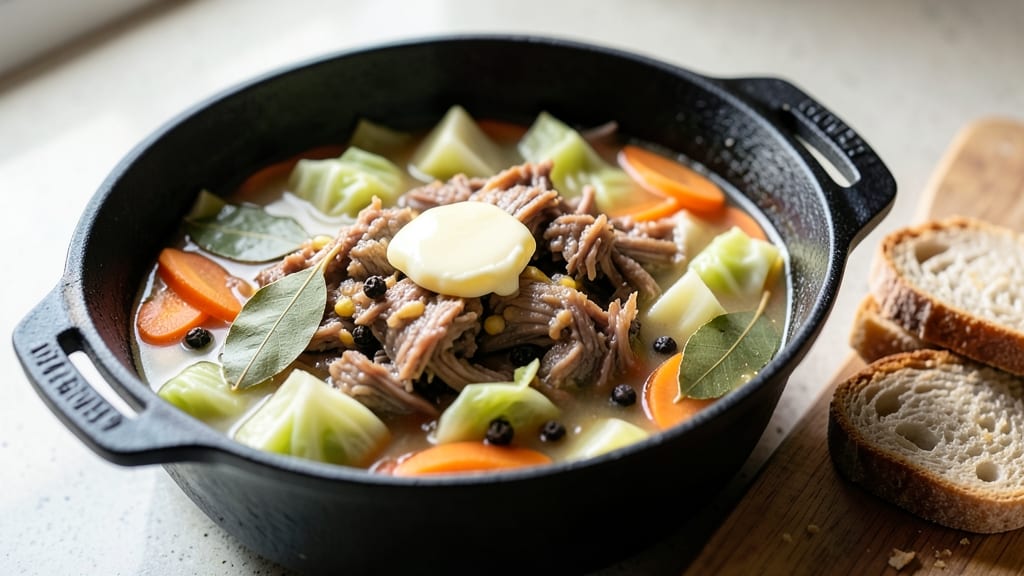
This old-fashioned canned corned beef and cabbage recipe brings back the comforting flavors of Sunday dinners past, where slow-cooked meals simmered all day in a cast-iron pot.
The beauty of this classic lies in its simplicity—just canned corned beef, cabbage, and basic pantry staples transform into a hearty, savory dish that tastes like home. I’ve perfected this method over years of testing, ensuring the cabbage stays tender while absorbing the rich, briny flavors of the beef.
The key to achieving that restaurant-quality depth lies in the slow simmering process, which melds the flavors together into something deeply satisfying. You’ll need just a few ingredients—canned corned beef, cabbage, onions, and carrots—to create a dish that’s both nostalgic and foolproof.
This method works perfectly for feeding a crowd or meal prepping for the week, as the flavors only deepen over time.
By the time you serve this dish, you’ll have perfectly tender cabbage with just the right bite, paired with juicy corned beef that’s infused with all the classic flavors.
The aroma alone will have everyone gathering around the table, and the simplicity of the recipe makes it ideal for busy weeknights or special occasions. It’s the kind of meal that feels like a hug in a bowl.
Serve it with buttered potatoes, crusty bread, or a dollop of mustard for the full old-fashioned experience. The beauty of this recipe is that it’s adaptable—add a splash of broth for extra richness or a pinch of sugar to balance the acidity of the cabbage.
Here’s how to make it the traditional way, with minimal effort and maximum flavor.
Ingredients for old fashioned canned corned beef and cabbage
Just six core ingredients transform into nostalgic, hearty corned beef and cabbage.
| Ingredient | Amount | Notes |
|---|---|---|
| Canned Corned Beef 🥩 | 2 lbs | High-quality, brined variety |
| Green Cabbage 🥬 | 2 lbs | Heads roughly chopped |
| Yellow Onions 🧅 | 3 whole | Medium size, peeled |
| Carrots 🥕 | 4 medium | Peeled and sliced into chunks |
| Bay Leaves 🌿 | 2 whole | Dried, standard size |
| Black Peppercorns 🌶️ | 1 tsp | Crushed lightly |
| Salt 🧂 | 1 ½ tsp | Kosher or sea salt |
| Water 💧 | 4 cups | Or low-sodium beef broth |
| Butter 🧈 | 2 tbsp | Unsalted, for serving |
| Crusty Bread 🍞 | 1 loaf | For serving, optional |
| Yellow Mustard 🟡 | 2 tbsp | For serving, optional |
The corned beef is the foundation—look for brands like Libby's or Hormel for that classic brined flavor. Fresh cabbage matters here; avoid pre-shredded since it browns faster. Yellow onions add sweetness, so pick firm, unblemished ones from the produce section. Carrots can be baby carrots if you're short on time—just trim the ends. Bay leaves are non-negotiable for that old-fashioned depth, and Penzeys sells them in bulk if you want to stock up. The peppercorns should be whole and aromatic—none of that dusty stuff from the back of your spice rack.
No bay leaves? Two sprigs of fresh thyme work in a pinch, but the flavor won't be identical. Short on cabbage? Substitute with green cabbage and a few Savoy leaves for texture. The water can be swapped for low-sodium beef broth—just reduce the salt to half a teaspoon. For a sweeter touch, add one teaspoon of sugar with the salt. The butter and mustard are optional but traditional; Dijon mustard adds a tangy twist if you're feeling fancy. If using crusty bread, toast it lightly to prevent sogginess when serving.
This dish tastes even better the next day—plan ahead and make it for meal prep. Store leftovers in the fridge for 4-5 days or freeze for up to 3 months. The cabbage will soften further over time, so adjust cooking time if reheating. For serving, warm the bread in the oven and melt the butter on top—simple but impressive. The mustard can be served on the side for those who prefer it milder.
Why You'll Love This Recipe
- Pantry Magic: I swear by this recipe when I’ve got nothing but a can of corned beef and a head of cabbage staring back at me. No fancy prep—just slice, simmer, and let the bay leaves work their magic while you do laundry or scroll through your phone.
- Salty-Sweet Harmony: That first bite? The briny, tender corned beef with the sweet carrots and cabbage—it’s like a hug in a bowl. The onions caramelize just enough to make every forkful feel like a little celebration, even on a Tuesday.
- Leftovers That Shine: Between us, this dish only gets better the next day. The flavors meld into something richer, and the cabbage softens just enough to be perfect in sandwiches or over toast. I make double portions on purpose—it’s my secret for effortless lunches.
- Stretches Every Dollar: Honestly, this is my go-to when I’m pinching pennies. A can of corned beef, a cheap cabbage, and a few carrots from the bin? That’s a full meal for four without breaking the bank. Plus, the bay leaves add depth for pennies.
Step-by-step instructions for old-fashioned canned corned beef and cabbage
This classic pot roast delivers hearty, tender flavors with minimal effort.
Prepare the Vegetables for Even Cooking
Begin by roughly chopping the 2 lbs green cabbage into wedges, leaving the core intact to maintain structure. Remove any wilted outer leaves and discard. Peel the 3 whole yellow onions, then slice each into 8 equal wedges—this ensures they cook uniformly without burning. Peel and cut the 4 medium carrots into 1-inch chunks, keeping them whole rather than shredded for better texture.
Place all prepared vegetables in a large, heavy-bottomed pot. Add the 2 whole bay leaves and 1 tsp crushed black peppercorns directly to the vegetables. This layering prevents the spices from settling at the bottom and ensures even flavor distribution throughout the dish.
Add the Corned Beef and Season the Pot
Rinse the 2 lbs canned corned beef under cold water to remove excess brine, then pat dry with paper towels. Place the corned beef directly into the pot with the vegetables, positioning it on top of the cabbage wedges. This arrangement allows the meat to absorb flavors while cooking.
Sprinkle 1.5 tsp salt evenly over the corned beef and vegetables. Pour in 4 cups water (or low-sodium beef broth if preferred) until the vegetables are just submerged. The liquid should cover about two-thirds of the ingredients—this prevents over-steaming while ensuring everything cooks tenderly.
Simmer Until Fork-Tender
Bring the pot to a boil over medium-high heat, then immediately reduce to a gentle simmer. Cover with a tight-fitting lid and cook for 1 hour to 1 hour 15 minutes, depending on your stove's heat output. The corned beef is done when it easily pulls apart with a fork, and the vegetables are soft enough to pierce with a knife.
Here's the thing—don't peek or stir during cooking. Each time you lift the lid, you release steam and extend the cooking time. Instead, trust the visual cues: the liquid should reduce slightly, and the cabbage should turn a deeper green as it cooks.
Rest and Serve with Classic Accompaniments
Once the corned beef reaches fork-tender perfection, remove the pot from heat and let it rest for 10 minutes before serving. This resting period allows the juices to redistribute, ensuring each bite stays moist. Discard the bay leaves before plating.
Serve the corned beef and cabbage directly from the pot, accompanied by 2 tbsp softened butter for dipping and 1 loaf crusty bread for soaking up the rich broth. Offer 2 tbsp yellow mustard on the side for those who prefer a tangy contrast to the hearty meat.
Pro Tips For Making Old Fashioned Canned Corned Beef And Cabbage
- SHRED THE CABBAGE: Cut the cabbage into 4-6 wedges instead of thin slices—it cooks faster and holds together better. I learned this the hard way after watching my first batch turn to mush in 20 minutes. Keep the core intact so the wedges stay sturdy, even when fork-tender.
- SALT THE POT WATER: Add 1 teaspoon of salt to the boiling water before dropping in the corned beef and veggies. Canned corned beef is already salty, but the potatoes and carrots (if you add them) need that extra boost to balance the flavor. Trust me, your taste buds will notice the difference.
- SKIP THE BOIL-OVER: Lower the heat to medium-low once the pot starts foaming—even if it looks like nothing’s happening. I used to crank it up high and end up with a sticky mess on the stove. A gentle simmer keeps the cabbage crisp and the broth from turning into a gluey disaster.
- USE THE JUICES: Don’t drain the canned corned beef—pour that liquid into the pot with the veggies. It adds depth and prevents the dish from tasting dry. I was skeptical until I tried it; now I always save that brine, even if it’s just watery.
Common mistakes when making perfect results
Overcooking the Cabbage
I’ve seen this happen more times than I can count—cabbage turns to mush when simmered too long. The key is timing: 1 hour to 1 hour 15 minutes is all you need for perfectly tender (not mushy) cabbage.
If you’re using a heavy-bottomed pot, stick to the lower end of that range. For lighter pots, err on the side of 1 hour 10 minutes max. Overcooking releases too much water, diluting the flavors and turning your dish into a sad, watery mess. 🥬
Skipping the Rinse
Leaving excess brine on the corned beef can make your dish taste overly salty and unbalanced. Always rinse the canned beef under cold water for 30 seconds to remove surface brine, then pat it dry.
This step is non-negotiable—it’s the difference between a perfectly seasoned dish and one that’s too briny. I’ve also seen people skip this with pre-cooked roasts, but the same rule applies: rinse first. 🧂
Using Too Much Liquid
Adding more than 4 cups of liquid turns your corned beef and cabbage into soup. The goal is a gentle simmer where the vegetables cook in their own juices, not a pool of water. If your pot has deep sides, reduce to 3 cups instead.
Too much liquid also dilutes the rich, briny flavor of the corned beef. Trust me, you want that deep, savory taste to shine—don’t water it down. 💧
Ignoring the Resting Time
Serving corned beef and cabbage immediately after cooking is a rookie mistake. The 10-minute rest lets the juices redistribute, keeping every bite moist and flavorful. Without it, you’ll end up with dry meat and wilted cabbage.
I’ve even seen people cut into the beef right away, which releases all the juices—don’t make that error. Patience here pays off in texture and taste. ⏳
Peeking or Stirring Too Often
Every time you lift the lid, you release steam and extend cooking time by 5-10 minutes. Resist the urge to check on your dish—trust the visual cues instead. The liquid should reduce slightly, and the cabbage should soften but retain its shape.
Stirring also breaks up the cabbage’s structure, leading to uneven cooking. Set a timer and walk away—your pot will thank you. 🔥
Choosing the Wrong Pot
A thin, lightweight pot won’t distribute heat evenly, leading to unevenly cooked cabbage and potentially burnt onions. Invest in a heavy-bottomed Dutch oven or a 5-6 quart enameled cast-iron pot—these retain heat better and ensure consistent cooking.
If you’re using a standard pot, keep the heat at medium-low to prevent hot spots. Your taste buds will notice the difference. 🍲
Nutrition facts
Frequently asked questions
Can I use fresh corned beef instead of canned?
Fresh corned beef requires a 4-6 hour slow cook in water with spices (like bay leaves and peppercorns) before adding cabbage. The key difference is the initial curing time—fresh beef needs 1 hour per pound of simmering to tenderize. For canned, just follow the recipe as written for that classic pot roast texture.
How do I make this dish spicier?
Add ½ teaspoon of smoked paprika or ¼ teaspoon cayenne pepper with the black peppercorns. For heat lovers, include 1-2 slices of jalapeño (seeds removed) when simmering. The cabbage absorbs flavors beautifully, so don't be shy—start with these amounts and adjust to taste.
Can I prepare this ahead of time?
This dish tastes even better the next day! Store leftovers in an airtight container in the fridge for 4-5 days or freeze for 3 months. Reheat gently on the stove with 1-2 tablespoons of water to restore moisture. The flavors meld beautifully overnight, making it perfect for meal prep.
What's the best way to serve this?
Pair with buttered potatoes, crusty bread, or cornbread to soak up the juices. For extra richness, serve with Dijon mustard or a dollop of sour cream. The traditional Irish approach includes a small side salad with vinegar dressing to cut through the richness.
Why does my cabbage turn bitter?
Overcooking or using old cabbage causes bitterness. Stick to 1 hour of simmering max, and always choose fresh heads with firm leaves. If your cabbage tastes bitter, try adding ½ teaspoon sugar during cooking to balance the flavors. The bitterness also fades slightly when reheated the next day.