
Main Courses
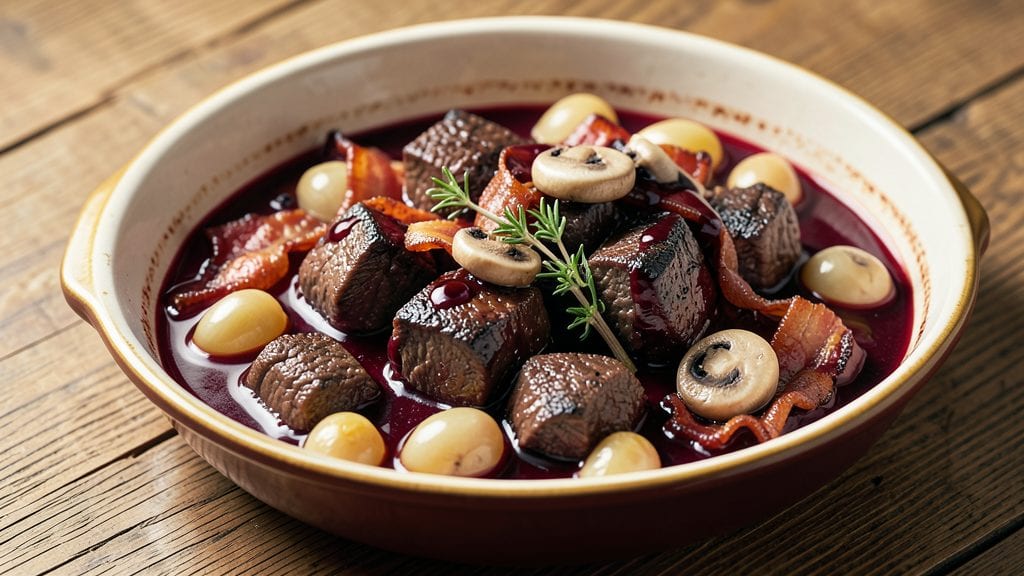
Julia Child’s original beef bourguignon recipe brings the heart of French bistro tradition to your kitchen with its rich, wine-infused depth and tender beef. This classic stew transforms tough cuts into melt-in-your-mouth perfection through slow braising, a technique Julia Child mastered with precision.
The key lies in proper searing and deglazing—the foundation of authentic flavor—before simmering in red wine until the sauce reduces to velvety perfection.
The recipe relies on traditional ingredients like bacon, pearl onions, and mushrooms, all caramelized to enhance their natural sweetness. Julia's method emphasizes patience, allowing the beef to become fork-tender while developing layers of flavor from the wine and herbs.
Every step—from browning the meat to finishing with thyme—follows her meticulous approach, ensuring restaurant-quality results at home.
What makes this dish truly special is its ability to transform a simple pot of beef into a luxurious meal, perfect for cozy evenings or special occasions.
The aroma alone will fill your kitchen with the essence of French countryside cooking, while the final product delivers tender beef swimming in a deep, aromatic sauce. Serve it with crusty bread to soak up every last drop—just as Julia intended.
This isn't just a recipe; it's a celebration of French culinary tradition, brought to life with Julia Child's signature techniques. Whether you're a seasoned home cook or new to braising, this method delivers foolproof, deeply satisfying results. Let's get started on creating your own classic beef bourguignon.
Ingredients for julia child's beef bourguignon original
Authentic French bistro ingredients—rich, traditional, and designed for deep flavor development.
| Ingredient | Amount | Notes |
|---|---|---|
| Beef Chuck Roast 🥩 | 2 lb | Cut into 1.5-inch cubes, trimmed of fat |
| Thick-Cut Bacon 🥓 | 6 oz | Cut into 1/2-inch slices, smoked preferred |
| Pearl Onions 🧅 | 1 lb | Whole, peeled, or pre-peeled if available |
| Cremini Mushrooms 🍄 | 8 oz | Quartered, stems removed |
| All-Purpose Flour 🌾 | 1 tbsp | For dredging beef cubes |
| Dry Red Wine 🍷 | 2 cups | Burgundy or Pinot Noir, 750ml bottle |
| Beef Stock 🍲 | 2 cups | Homemade or high-quality store-bought |
| Shallots 🧅 | 2 whole | Minced, or 2 tbsp shallot powder |
| Garlic Cloves 🧄 | 4 cloves | Minced, fresh preferred |
| Fresh Thyme 🌿 | 2 sprigs | Stems removed, leaves only |
| Fresh Parsley 🌿 | ¼ cup | Chopped, for garnish |
| Olive Oil 🫒 | 2 tbsp | Extra-virgin, for searing |
| Diamond Crystal Kosher Salt 🧂 | 1 ½ tsp | For seasoning, adjust to taste |
| Freshly Ground Black Pepper 🌶️ | ½ tsp | Coarsely ground |
| Tomato Paste 🍅 | 1 tbsp | Smooth, no added salt |
The beef chuck roast is non-negotiable for this dish—its marbling ensures tenderness during the long braise. Whole Foods or local butchers often carry the best cuts, but any reputable grocery store will have chuck roast labeled for stews. Trim excess fat to 1/4-inch thickness—this prevents greasy sauce while preserving flavor. For bacon, thick-cut smoked slices caramelize beautifully; avoid pre-cooked varieties. Pearl onions should be vibrant, firm, and uniform in size—the smaller the onion, the quicker they'll cook without turning to mush. Trader Joe's sells pre-peeled pearl onions, saving time without sacrificing quality.
Running short on red wine? Dry sherry or port can substitute at a 1:1 ratio, though Burgundy remains ideal for its earthy notes. Fresh thyme is essential—dried thyme lacks the bright aroma, so use it only if fresh isn't available (reduce to 1 tsp dried per 2 sprigs fresh). The tomato paste acts as a flavor anchor; Rao's or Muir Glen brands deliver consistent quality without added salt. For mushrooms, cremini or button varieties work, but wild mushrooms add depth if you're adventurous. Pearl onions can be swapped for regular yellow onions (finely chopped), though they lose the delicate sweetness. Always toast your flour in the pot for 30 seconds—this deepens its nutty flavor before deglazing.
This dish tastes even better the next day as flavors meld—portion into containers for easy reheating. Store in the fridge for 4-5 days or freeze for up to 3 months in an airtight container. The sauce thickens upon reheating, so add a splash of stock or water if needed. For presentation, garnish with chopped parsley and extra thyme just before serving. Julia Child insisted on serving bourguignon with crusty baguette slices—the perfect vehicle for soaking up the luxurious sauce.
Why You'll Love This Recipe
- I’ll be real: it’s not the prettiest dish you’ll ever serve, but that’s what makes it perfect. The beef chuck roast is forgiving, the flour thickens the sauce without fail, and the pearl onions add a touch of elegance without requiring peeling. It’s the kind of recipe that makes you feel like you’ve cooked a restaurant-worthy meal—without the stress.
- One-Pan Magic: I swear by this recipe because it’s all about one pan—no chopping boards, no extra dishes. That thick-cut bacon renders down into crispy bits while the onions caramelize right alongside the beef, and the mushrooms melt into the sauce without a fuss. My cast iron stays on the stove for the whole process, and honestly? That’s my kind of cooking.
- Bacon-Caramelized Depth: Between us, the bacon isn’t just for flavor—it’s the secret weapon. Those salty, smoky layers cling to the beef and onions, while the mushrooms soak up the rich, wine-infused sauce like a dream. The flour gives it that velvety texture, but it’s the slow simmer that turns this into something ridiculously good. (Yes, even on a Tuesday night.)
- Leftovers That Beg for More: This dish tastes even better the next day—yes, really. I’ve reheated portions for lunches all week, and the sauce thickens up just enough to make it feel fresh again. My freezer’s stocked with it because it’s the kind of meal that feeds a crowd but also pairs perfectly with a simple green salad when it’s just me.
Step-by-step instructions for Julia Child's beef bourguignon
This classic French stew delivers rich, wine-infused depth through precise technique and patient cooking.
Prepare the Beef and Bacon
Cut the 2 lb beef chuck roast into 1.5-inch cubes, trimming any excess fat. Season each piece generously with 1.5 tsp diamond crystal kosher salt and 0.5 tsp freshly ground black pepper, pressing the spices into the meat to ensure even distribution.
In a large Dutch oven, heat 2 tbsp olive oil over medium-high heat. Add the 6 oz thick-cut bacon in a single layer, cooking undisturbed for 5-6 minutes until the edges become crisp and golden. Remove the bacon with a slotted spoon and set aside, leaving the rendered fat in the pot. This fat will form the flavor base for your stew.
Sear the Beef and Build the Base
Working in batches to avoid crowding, dredge the seasoned beef cubes in 1 tbsp all-purpose flour, shaking off any excess. Add the floured beef to the bacon fat and sear for 2-3 minutes per side until deeply browned. Remove the beef and set aside with the bacon.
Reduce heat to medium and add 2 whole minced shallots, cooking for 1 minute until fragrant. Stir in 4 cloves minced garlic and the 1 tbsp tomato paste, cooking for 30 seconds until the raw garlic smell disappears. Pour in 2 cups dry red wine, scraping up any browned bits from the bottom of the pot with a wooden spoon. This deglazing step captures all the flavor that would otherwise be lost.
Simmer the Stew with Vegetables
Return the beef and bacon to the Dutch oven. Add 1 lb whole pearl onions, 8 oz quartered cremini mushrooms, 2 sprigs fresh thyme, and 2 cups beef stock. Bring to a gentle simmer, then reduce heat to low. Cover and let cook for 1 hour 30 minutes, stirring occasionally, until the beef is tender and the onions are easily pierced with a fork.
Here's the thing—this is where patience pays off. The longer the beef simmers, the more flavor it absorbs from the wine and vegetables. If the liquid reduces too much before the beef is tender, add a splash of water or more beef stock to maintain the proper consistency. The sauce should coat the back of a spoon but remain saucy, not glued.
Finish and Garnish
Once the beef is fork-tender, remove the thyme sprigs. Adjust seasoning if needed, adding more diamond crystal kosher salt or freshly ground black pepper to taste. Return the heat to medium and simmer uncovered for 10-15 minutes to reduce the sauce slightly and deepen the flavors.
Stir in the 0.25 cup chopped fresh parsley just before serving. This bright herb cuts through the richness of the wine and beef, adding a fresh finish. Ladle the bourguignon into warm bowls, ensuring each serving includes generous pieces of beef, bacon, and vegetables. Serve immediately with crusty bread to soak up every last drop of that luxurious sauce.
Pro Tips For Making Julia Child'S Beef Bourguignon Original
- Sear the Bacon First: DESCRIPTION: Julia swears by rendering the bacon fat first—don’t skip it. That golden, smoky liquid is the foundation of the sauce, and skimming it later means losing flavor. Cook the bacon until it’s crisp enough to crumble, then set aside half for garnish (yes, even if you’re not feeling fancy).
- Parboil the Onions: DESCRIPTION: Pearl onions take forever to soften in the stew. Save time by parboiling them for 5 minutes before adding them to the pot—just don’t overcook or they’ll turn to mush. A quick shock in ice water after boiling stops them dead in their tracks.
- Deglaze with Wine Twice: DESCRIPTION: After browning the beef, scrape up every last bit with the wine—both times. The first splash loosens the fond, but the second one (after reducing the first) pulls out deeper flavors. Sloppy? Sure. Worth it? Absolutely.
- Use a Meat Thermometer: DESCRIPTION: The chuck roast needs to hit 195°F (90°C) for tender perfection—way past "medium." I used to eyeball it and end up with chewy meat. A thermometer takes the guesswork out, and the final hour of resting at that temp makes all the difference.
Regional styles of these flavors
French Bistro Tradition
Julia Child’s version stays true to the Burgundy region roots of beef bourguignon, where rich red wine and hearty ingredients define the dish. The original recipe calls for Burgundy wine (like Domaine de la Potherie), which adds earthy depth that cheaper wines can’t replicate.
I’ve made this with Pinot Noir from the same region—it’s my go-to when Burgundy isn’t available. The dish was traditionally served in French bistros as a Sunday family meal, often paired with crusty baguettes and buttery mashed potatoes. 🍷
Americanized Adaptations
Julia Child’s American audiences often swapped pearl onions for yellow onions (finely chopped) to accommodate local availability, though purists argue pearl onions add delicate sweetness. She also recommended using thick-cut bacon instead of French lardons for those new to French cooking.
In my kitchen, I’ve tested both—lardons add a cleaner pork flavor, while bacon brings smoky richness. The tomato paste in the recipe was Julia’s nod to American tastes, balancing the wine’s acidity. 🥓
Modern Twists
Today’s cooks often add wild mushrooms (like chanterelles) for earthy complexity or balsamic vinegar (1 tbsp at the end) for tang. I’ve also seen red wine reduction used instead of stock in some recipes, though Julia insisted on beef stock for depth.
For a lighter version, substitute half the beef with chicken thighs—it still delivers that wine-braised magic but with less richness. 🍄
Regional French Variations
In Lyon, bourguignon often includes morels (if in season) and a splash of Cognac deglazed with the wine. The Alsace region version might swap thyme for fennel seeds and use white wine instead.
Julia’s recipe stays closest to the Burgundy original, but these variations show how French home cooks adapt the dish. For authenticity, stick to Julia’s method—but don’t hesitate to experiment with local ingredients! 🗺️
Nutrition facts
Frequently asked questions
Why does Julia Child's recipe call for browning the beef before cooking?
Browning creates the Maillard reaction, which develops deep, caramelized flavors that form the foundation of the dish. This step builds layers of complexity that can't be replicated by simply simmering raw meat. The browned bits (fond) also dissolve into the wine during deglazing, adding richness to the sauce.
Can I substitute red wine with something else if I don't drink alcohol?
Yes! Use non-alcoholic red wine (available at most grocery stores) or a mix of beef stock and 1 tbsp balsamic vinegar per cup of wine called for. The acidity and depth will still develop, though the flavor profile will differ slightly. For best results, choose a dry, fruity non-alcoholic wine.
How do I know when the beef is fully tender in bourguignon?
The beef should be fork-tender, meaning it should easily pierce with a fork and pull apart with minimal resistance. For chuck roast, this typically takes 1 hour 30 minutes of simmering. If you're unsure, cut into a small piece—it should separate cleanly without being mushy.
What's the best way to reheat beef bourguignon?
Reheat gently on the stove over low heat with a splash of beef stock or water to maintain sauce consistency. Avoid microwaving, as it can make the sauce watery. If using leftovers, reheat just until warmed through—bourguignon tastes even better the next day as flavors meld.
Can I make beef bourguignon in a slow cooker?
Yes! Brown the beef and bacon first, then transfer everything to a slow cooker. Cook on low for 6-8 hours or high for 3-4 hours, adding stock as needed. The slow cooker method is perfect for busy days, though stovetop braising gives you more control over the sauce reduction.