
Soups & Stews
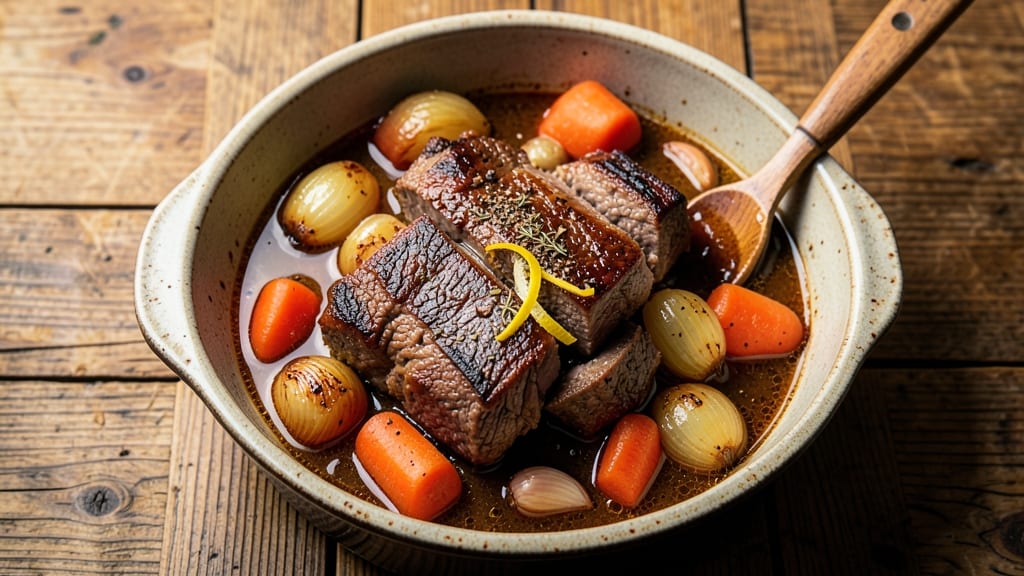
Gordon Ramsay's beef and ale stew transforms tough cuts into melt-in-your-mouth perfection through slow braising and caramelized fond. This recipe delivers restaurant-quality depth with rich, hearty flavors that come from searing beef, deglazing with ale, and simmering until tender.
The secret lies in patience—letting the stew develop layers of complexity over hours rather than rushing the process.
The foundation begins with properly seared beef, which creates a deep, flavorful crust that dissolves into the sauce as it simmers. Deglazing the pan with ale captures every last bit of browned goodness, forming the base for a sauce that's both robust and balanced.
When done right, the stew should have a velvety texture with tender beef that practically falls apart at the touch.
What sets this recipe apart is the caramelized fond at the bottom of the pot—a rich, glossy layer of concentrated flavors that transforms an ordinary stew into something extraordinary. Serving it with crusty bread to soak up every last drop ensures no flavor goes to waste.
The aroma alone will have everyone gathering at the table, eager for a taste of this slow-braised masterpiece.
Pair it with roasted root vegetables or a simple green salad to round out the meal, and consider a bold red wine to complement the deep, malty notes of the ale.
This isn’t just a stew—it’s a comforting, flavor-packed centerpiece that proves slow cooking is worth every minute. Let’s get started on creating your own version of this classic dish.
Ingredients for beef and ale stew gordon ramsay
Sixteen ingredients transform tough beef into restaurant-quality stew with deep, caramelized fond.
| Ingredient | Amount | Notes |
|---|---|---|
| Beef Chuck Roast 🥩 | 3 lb | Trimmed of excess fat, cut into 1.5-inch cubes |
| Yellow Onions 🧅 | 2 whole | Medium size, chopped into 1/2-inch pieces |
| Carrots 🥕 | 4 whole | Medium size, peeled and cut into 1-inch chunks |
| Garlic Cloves 🧄 | 6 cloves | Peeled and lightly crushed |
| Dark Ale Beer 🍺 | 2 cups | Bold, malty flavor preferred (e.g., Guinness) |
| Beef Broth 💧 | 4 cups | Low-sodium preferred, homemade or high-quality |
| Tomato Paste 🍅 | 2 tbsp | Smooth, not chunky |
| Fresh Thyme 🌿 | 2 sprigs | Or 1 tsp dried thyme |
| Fresh Rosemary 🌿 | 1 sprig | Woody stems removed |
| Bay Leaves 🌿 | 2 whole | Dried, standard size |
| Olive Oil 🫒 | 2 tbsp | Extra-virgin for searing |
| All-Purpose Flour 🌾 | 1 tbsp | For dusting beef |
| Salt 🧂 | 1 ½ tsp | Kosher or sea salt, coarse grain |
| Black Pepper 🌶️ | 1 tsp | Freshly ground preferred |
| Worcestershire Sauce 🍶 | 1 tbsp | Vegan version if needed |
The beef is non-negotiable—chuck roast delivers that perfect fall-apart texture. Costco or Whole Foods carry excellent cuts, but any well-marbled chuck will work. Trim excess fat (leave some for flavor) and cut into uniform 1.5-inch cubes. For the ale, Guinness or a malty brown ale adds the rich, toasty notes Ramsay loves. If you can't find dark ale, substitute beef broth with 1 tbsp molasses—it mimics the depth. The carrots and onions should be chopped evenly so they cook at the same rate as the beef. Fresh herbs? Buy sprigs from the grocery store's produce section—they'll last longer than pre-chopped.
No dark ale? Stout or porter works too, just avoid light lagers. Worcestershire sauce missing? Soy sauce plus a pinch of sugar gets you close. Fresh thyme and rosemary are ideal, but dried at one-third the amount is fine in a pinch. The tomato paste can be pre-made (just check for no added salt) or homemade—San Marzano tomatoes are the gold standard. For the flour, King Arthur or Bob's Red Mill brands work perfectly for dusting. The key to this stew is patience—don't rush the searing or simmering, even if it means an extra hour. The fond at the bottom? That's where the magic happens.
This stew tastes even better the next day as flavors meld. Store in an airtight container for up to 5 days in the fridge, or freeze for 3 months. For reheating, add a splash of water or broth to prevent drying. The caramelized fond? Deglaze the pot with a splash of ale or broth to scrape up every last bit of flavor. Serve with crusty bread—it's practically mandatory. Double the batch if you can; leftovers make the best lunches for days.
Why You'll Love This Recipe
- Minimal Chopping Required: I swear by this trick—just rough-chop the onions and carrots, no fancy dicing. The beef chuck roast forgives everything, and the ale does the heavy lifting of tenderizing while you sip your drink.
- Ale Magic Happens: That dark ale isn’t just flavor—it’s the secret weapon. The maltiness caramelizes into the beef, while the bitterness cuts through the richness. Honestly, I’d argue it’s better than wine in this dish.
- Weeknight Crowd-Pleaser: Between us, this is the one dish I make when friends drop by unannounced. It’s hearty enough for meat lovers but satisfying for everyone, and the leftovers? Even better the next day.
- Budget-Friendly Luxury: A chuck roast stretches for days, and ale’s cheaper than fancy stock. I’ve fed my family three meals from one pot—crispy beef sandwiches, mashed potato topping, even a shepherd’s pie. Frugal? Yes. Delicious? Absolutely.
Step-by-step instructions for beef and ale stew
Master this rich, slow-braised stew with a caramelized fond that builds deep flavor layer by layer.
🍳 Step 1: Sear the Beef for Maximum Flavor
Heat the 2 tablespoons olive oil in a heavy Dutch oven over medium-high heat until shimmering. Pat the 3 lb beef chuck roast dry with paper towels—this ensures a proper sear. Working in batches, add the beef cubes to the pot and sear for 2-3 minutes per side until deeply browned. You want that dark golden crust forming on all sides.
This step is critical. The Maillard reaction happening here creates the foundation of your stew's flavor. If your pan isn't hot enough, the beef will steam instead of sear. Transfer the browned beef to a plate and set aside temporarily. I like to keep it warm by tenting loosely with foil while I prep the vegetables.
👨🍳 Step 2: Build the Flavor Base with Vegetables and Aromatics
In the same Dutch oven, add the 2 whole yellow onions and 4 whole carrots cut into chunks. Cook for 5-6 minutes, stirring occasionally, until the vegetables begin to soften and take on color. Add the 6 cloves garlic cloves and cook for another 30 seconds until fragrant—don't let them burn, or they'll turn bitter.
Here's where the magic starts. Sprinkle the 1 tablespoon all-purpose flour over the vegetables and stir to coat them evenly. Cook for 1 minute to toast the flour slightly—this helps thicken the stew and adds nutty depth. Remove the vegetables and set them aside with the beef.
🔥 Step 3: Create the Fond and Deglaze with Beer
Return the Dutch oven to medium heat and pour in the 2 cups dark ale beer. Scrape up all those browned bits from the bottom of the pot with a wooden spoon—this is your fond, packed with concentrated beef flavor. Let the beer simmer for 3-4 minutes until reduced by about half.
Stir in the 2 tablespoons tomato paste and cook for 1 minute to meld the flavors. Add the 4 cups beef broth, 1.5 teaspoons salt, 1 teaspoon black pepper, and 1 tablespoon Worcestershire sauce. Bring to a gentle simmer, then return all the beef and vegetables to the pot.
⏰ Step 4: Slow-Braise Until Tender
Bring the stew to a boil, then reduce heat to low and cover partially with a lid. Let it simmer gently for 2.5-3 hours—this is where patience pays off. The beef should become fork-tender, falling apart easily when pierced with a fork. Stir occasionally to prevent sticking, and if the liquid reduces too much, add a splash of water or broth.
About 30 minutes before the stew is done, add the 2 sprigs fresh thyme, 1 sprig fresh rosemary, and 2 whole bay leaves. These herbs will infuse the stew with aromatic depth. The stew is ready when the beef reaches 203°F internally and the flavors have melded beautifully.
🥘 Step 5: Finish and Serve with Perfect Texture
Remove the bay leaves and adjust the seasoning if needed. For a richer finish, let the stew reduce uncovered for 5-10 minutes on the stovetop to thicken slightly. Serve immediately with crusty bread or over mashed potatoes to soak up every last drop of that rich, malty ale-infused sauce.
The result should be a velvety stew with tender beef that practically melts in your mouth, surrounded by caramelized vegetables and a sauce that's deeply flavorful from the slow braising process. This is the kind of dish that tastes even better the next day—just reheat gently on the stove.
Pro Tips For Making Beef And Ale Stew Gordon Ramsay
- SEAR THE ROAST FIRST: The stew’s depth starts with a proper sear—don’t skip it. Get your Dutch oven screaming hot, pat the chuck dry, and walk away for 3-4 minutes per side. I used to rush this, and the flavor was always half-baked (literally).
- CHOP ONIONS SMALLER THAN YOU THINK: Gordon Ramsay’s version relies on those onions breaking down into sweet, jammy bits. Dice them into ¼-inch pieces—no bigger—and toss them in the pot before browning the meat. Trust me, they’ll disappear faster than you expect.
- DON’T SKIP THE BEER REDUCTION: After adding the ale, simmer uncovered for 10-15 minutes until it’s reduced by about a third. This concentrates the flavor and thickens the sauce—skipping it leaves you with a thin, watery mess. (Yes, even if you’re impatient like me.)
- BROWN THE GARLIC LAST: Add the minced garlic only in the final 30 seconds of cooking. Burnt garlic ruins everything, and since you’re not simmering the stew after this point, there’s no time to fix it. Sauté it until it smells like heaven, not like a campfire.
Essential equipment for perfect results
Dutch Oven
A heavy Dutch oven is non-negotiable for this recipe—it distributes heat evenly and retains it during the long braising process. I swear by the Le Creuset 5.5-quart for its durability and even heat conduction, but a Lodge cast iron Dutch oven works just as well and is more budget-friendly.
Avoid non-stick or lightweight pots—they can't handle the high heat needed for searing or maintain steady temperatures during simmering. 🔥
Meat Thermometer
Invest in a precision meat thermometer to ensure your beef reaches the perfect 203°F internal temperature. The ThermoWorks Smoke is my go-to because it has dual probes—one for monitoring the pot's temperature and another for the beef.
A basic instant-read thermometer like the Taylor Precision works too, but I find the digital probes more reliable for long braises. Never guess—overcooking turns tender beef into dry, chewy rubber.
Wooden Spoon
A heat-resistant wooden spoon is essential for deglazing and scraping up the caramelized fond from the bottom of the pot. I prefer olive wood or maple because they're gentle on non-stick coatings (though we're not using those here) and won't scratch your Dutch oven.
Avoid metal utensils during deglazing—they can scratch the fond off too aggressively. A long-handled spoon also helps prevent burns when working with hot liquids.
Fine-Mesh Strainer
For straining the finished stew to achieve a silky-smooth sauce, use a fine-mesh strainer or chinois. The OXO Good Grips is my favorite because it's sturdy and easy to clean. If you don't have one, a cheesecloth-lined colander works in a pinch.
Straining isn't mandatory, but it elevates the presentation and texture—especially if you're serving the stew as a first course or for special occasions. 💫
Kitchen Timer
Set a kitchen timer for the 2.5-3 hour braising time—this ensures you don't overcook the beef or forget about it. I use a digital countdown timer with a loud alarm because I tend to get distracted while cooking.
Pro tip: Set it for 30 minutes before the end to remember adding the fresh herbs. A timer also helps you monitor the simmering process so you can adjust heat as needed to maintain a gentle bubble.
Crusty Bread
While not a cooking tool, crusty bread is the perfect companion for serving your stew. Look for a baguette or sourdough with a thick crust—it soaks up the rich sauce beautifully. I recommend toasting it in the oven at 375°F for 5-7 minutes until golden and crisp.
For an extra touch, brush the warm bread with garlic-infused olive oil before serving. The contrast of the crusty bread against the velvety stew is what makes this dish feel like a true restaurant experience. 🥖
Nutrition facts
Frequently asked questions
Can I substitute the dark ale with another type of beer?
The dark ale is essential for its malty, roasted flavors that create the stew's depth. If you must substitute, use a stout or porter—avoid light lagers or pilsners, as they lack the richness. For non-beer options, mix 4 cups beef broth with 1 tbsp molasses to mimic the caramelized notes. The beer's bitterness balances the richness, so don't skip it entirely!
Why does the beef need to sear so thoroughly?
The sear creates a Maillard reaction, which develops deep, complex flavors through browning. This crust dissolves into the stew during simmering, creating a rich, umami-packed sauce. Skipping this step results in bland, watery beef. Work in batches to avoid crowding the pan—rush it, and you'll steam instead of sear!
How do I fix tough or chewy beef after cooking?
If your beef is still tough, it likely didn't braise long enough. For future attempts, extend simmering to 3-4 hours and check the internal temperature (203°F). If already overcooked, try shredding the beef and mixing it with the sauce—this distributes moisture. For next time, use chuck roast (not round or sirloin) and cut into 1.5-inch cubes for even cooking.
Can I make this stew in a slow cooker?
Yes! Brown the beef first in a skillet, then transfer everything to a 6-quart slow cooker. Add all ingredients and cook on low for 8 hours or high for 5-6 hours. The texture will be slightly softer, but the flavors will still meld beautifully. Just avoid overfilling—leave room for the stew to thicken as it cooks.
What’s the best way to reheat leftovers?
Reheat gently on the stove over low heat with a splash of beef broth or water to prevent drying. Avoid microwaving—it turns the sauce rubbery. For best results, reheat just until warm (165°F) and let it sit covered for 5 minutes to reabsorb flavors. Leftovers taste even better the next day!