
Main Courses
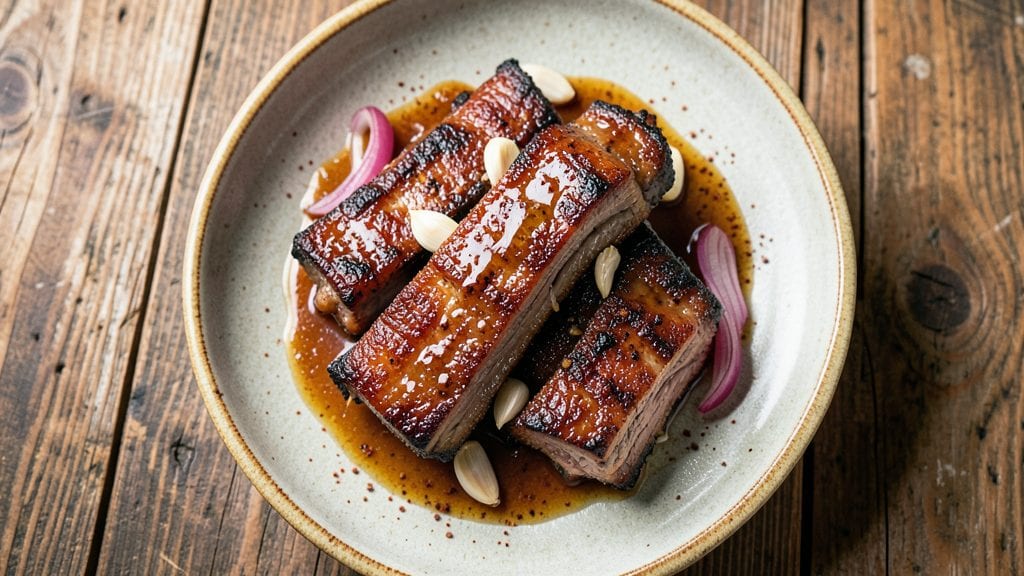
This country boneless beef ribs recipe delivers the same soul-soothing joy—fall-apart tender, smoky, and juicy in just three hours. This country-style recipe transforms tougher cuts into melt-in-your-mouth perfection through a precise blend of marinating and slow cooking.
The secret lies in a simple yet effective marinade that tenderizes the meat while infusing it with bold, rustic flavors.
After a few hours of marinating, the ribs are seared to lock in those flavors before a slow braise or smoky cook that breaks down the collagen, resulting in ribs that practically dissolve on the tongue.
What you’ll end up with is a dish that balances smoky depth with savory richness—every bite is a testament to how a little patience and the right technique can turn a simple cut of beef into a showstopper.
The method ensures restaurant-quality results at home, making it perfect for weekend gatherings or impressing guests.
Serve these ribs with creamy mashed potatoes and a crisp green salad to round out the meal. The combination of textures and flavors creates a complete dining experience that’s both comforting and elegant.
Ingredients for country boneless beef ribs
Twelve ingredients transform tough beef into restaurant-worthy country-style ribs with smoky tenderness.
| Ingredient | Amount | Notes |
|---|---|---|
| Country-Style Boneless Beef Ribs 🥩 | 2 ½ lb | Tougher cut, 1-1.5" thick slices |
| Extra-Virgin Olive Oil 🫒 | ¼ cup | For searing and marinade |
| Yellow Onion 🧅 | 1 whole | Diced, 1/2 cup yield |
| Garlic Cloves 🧄 | 6 cloves | Minced, fresh preferred |
| Apple Cider Vinegar 🍎 | ¼ cup | For tenderizing marinade |
| Kosher Salt 🧂 | 1 ½ tbsp | Diamond Crystal preferred |
| Black Peppercorns 🌶️ | 1 ½ tsp | Freshly cracked, coarse |
| Smoked Paprika 🌶️ | 1 ½ tsp | For authentic smoky depth |
| Ground Cumin 🌿 | 1 tsp | Toasted for warmth |
| Fresh Rosemary 🌿 | ¼ cup | Chopped, stems removed |
| Fresh Thyme 🌿 | ¼ cup | Leaves only, chopped |
| Beef Broth 🥫 | 1 ½ cups | Low-sodium preferred |
| Honey 🍯 | 2 tbsp | Wildflower for depth |
| Balsamic Vinegar 🍷 | 1 tbsp | For balanced acidity |
The beef ribs are the foundation—look for country-style boneless beef ribs with visible marbling at your butcher shop or Costco's meat section. These cuts are typically pre-sliced into 1-1.5" thick portions, perfect for even cooking. If your butcher doesn't carry them pre-cut, request chuck roast cut into 1.5" slices yourself. The marbling (fat within the meat) is crucial for moisture during the slow cook. For the fresh herbs, Trader Joe's often has affordable bundles, but even a small sprig of each from your grocery store's produce section works. The smoked paprika should be labeled 'smoked'—avoid regular paprika, which lacks the depth. Penzeys carries excellent quality if you're willing to splurge, but the store-brand at Walmart or Target is perfectly adequate for home cooking.
No fresh rosemary? Substitute 1 tsp dried rosemary but reduce other herbs slightly to maintain balance. Running short on beef broth? Chicken broth plus 1 tsp soy sauce mimics the umami profile. The apple cider vinegar can be swapped for white vinegar in a pinch, though it lacks the subtle sweetness. For the honey, agave nectar works in a 1:1 ratio if you prefer vegan options, though it lacks the floral notes. The balsamic vinegar adds complexity—if unavailable, red wine vinegar provides acidity but lacks the caramelized depth. For the olive oil, stick to extra-virgin for searing; cheaper oils may burn before reaching the ideal temperature. The kosher salt should be Diamond Crystal or similar coarse salt—table salt lacks the grain structure needed for proper seasoning.
Marinate the ribs for at least 4 hours (overnight is ideal) in the refrigerator to maximize tenderness. Store any unused beef broth in an airtight container for up to 6 months in the freezer. The fresh herbs can be chopped and stored in ice cube trays with a little olive oil, then frozen for up to 3 months. Leftover ribs reheat beautifully—wrap tightly in foil and bake at 300°F for 20 minutes. For meal prep, portion into glass containers with a splash of broth to maintain moisture. These ribs also freeze exceptionally well—up to 3 months when vacuum-sealed or tightly wrapped in foil and plastic wrap.
Why You'll Love This Recipe
- One-Pan Magic: I swear by this recipe because it’s that simple—just toss the ribs, onions, and garlic in a skillet with olive oil, let it caramelize, then finish with a splash of vinegar. No flipping, no fussing, no extra dishes. (Yes, even on a Tuesday night.)
- Tangy Garlic Kiss: That apple cider vinegar at the end? It’s the secret weapon—brightens the rich beef, cuts through the fat, and leaves you with a balance that’s ridiculously good. The garlic? It clings to every bite like a warm hug.
- Leftover Goldmine: Between us, these ribs taste even better the next day—reheated with a little extra oil, they’re crispy on the edges and tender inside. I make a double batch on Sundays so I can throw them in lunches all week without sacrificing flavor.
- Budget-Friendly Feast: You’re getting a hearty, restaurant-worthy meal for a fraction of the cost. Country-style ribs are cheaper than their bone-in cousins, and the onions/garlic/vinegar stretch the ingredients further. Plus, the leftovers? Free meals for days.
Step-by-step instructions for country boneless beef ribs
Mastering these ribs delivers melt-in-your-mouth tenderness with minimal effort.
Prepare the Tenderizing Marinade
In a medium bowl, combine the 0.25 cup extra-virgin olive oil, 0.25 cup apple cider vinegar, 1.5 tablespoons kosher salt, 1.5 teaspoons black peppercorns, and 1.5 teaspoons smoked paprika. Whisk until the salt and spices dissolve completely, creating a homogeneous liquid. This marinade works twofold—it breaks down the tough connective tissue while infusing the meat with deep flavor.
Next, add the 1 whole yellow onion (finely diced) and 6 cloves garlic cloves (minced). Stir well to distribute the marinade evenly. The acidity in the vinegar and the mechanical action of whisking begin tenderizing the beef immediately. Let this mixture sit at room temperature for 10 minutes to allow the aromatics to release their oils.
Sear the Ribs for Depth of Flavor
Pat the 2.5 lb country-style boneless beef ribs dry with paper towels—this step is non-negotiable for achieving crispy edges. Arrange the ribs in a single layer in a large skillet, working in batches if needed. Heat the skillet over medium-high heat until it's smoking hot, then add the ribs without any additional oil.
Sear for 3-4 minutes per side until the meat develops a deep mahogany crust. You'll notice the ribs release easily from the pan when they're ready to flip—this indicates proper browning. Transfer the seared ribs to a plate and set aside. The rendered fat in the pan will form the flavor base for the sauce, so don't wipe it clean.
Build the Herb-Infused Sauce
In the same skillet (with the flavorful browned bits), add the 0.25 cup fresh rosemary (chopped) and 0.25 cup fresh thyme (leaves only). Toast the herbs over medium heat for 1 minute until fragrant—this releases their essential oils and intensifies their flavor. Pour in the 1.5 cups beef broth, scraping up any stuck bits with a wooden spoon.
Simmer the broth for 5 minutes until it reduces by about one-third, creating a concentrated flavor base. Stir in the 2 tablespoons honey and 1 tablespoon balsamic vinegar, then return the seared ribs to the skillet. The combination of sweet and acidic elements balances the richness of the beef while keeping the meat tender.
Braise Until Fork-Tender
Transfer the ribs and sauce to a Dutch oven or heavy pot with a tight-fitting lid. Bring to a gentle simmer over medium-low heat, then reduce heat to maintain a bare simmer. Cover and cook for 2-2.5 hours until the ribs are fork-tender—the meat should pull apart easily with minimal resistance, and the connective tissue should have broken down completely.
Check the internal temperature periodically using an instant-read thermometer. The ribs are ready when they reach 203°F—this ensures maximum tenderness without drying out. If the sauce reduces too much during cooking, add 2-3 tablespoons water to maintain moisture, but avoid over-diluting the flavors.
Rest and Serve
Remove the ribs from the pot and let them rest on a cutting board for 10 minutes before serving. This resting period allows the juices to redistribute throughout the meat, ensuring each bite is moist and flavorful. The sauce can be served alongside the ribs or drizzled directly over them for maximum impact.
Slice the ribs against the grain into ½-inch thick portions for easier eating and better texture. The finished dish should deliver a harmonious blend of smoky, sweet, and herby flavors with melt-in-your-mouth tenderness. Serve with crusty bread or roasted vegetables to soak up the delicious sauce.
Pro Tips For Making Country Boneless Beef Ribs
- SEAR IN TWO BATCHES: I learned this the hard way—trying to sear boneless beef ribs in one go just means they steam instead of brown. Split the ribs into two batches, give them space in the pan, and let that olive oil get hot enough to sizzle. The crust on these ribs is what makes them taste like a restaurant dish, not a weeknight experiment.
- MINCE THAT ONION: Skip the big chunks unless you want mushy bits in your sauce. Finely mince that yellow onion—think rice-sized pieces—so it dissolves into the vinegar and oil while the ribs cook. You’re not making onion rings here, you’re building flavor.
- DON’T RUSH THE VINEGAR: Apple cider vinegar isn’t just a flavor booster—it’s the acid that tenderizes the ribs while they cook. Let it simmer with the onions and garlic for at least 5 minutes before adding the ribs, even if you’re eager to eat. Patience here means less chewy, more melt-in-your-mouth meat.
- SAUTE THE GARLIC LAST: After the onions soften and the vinegar mellows, toss in those garlic cloves whole—yes, whole. Let them sizzle for 30 seconds until fragrant, then crush them right in the pan with a wooden spoon. This keeps them from burning while maximizing their punch. (And no, you can’t skip this—trust me.)
Storing and reheating your country boneless beef ribs
Refrigerator Storage
Store leftover ribs in an airtight glass container with a splash of their braising liquid to maintain moisture. Keep them refrigerated for up to 4 days—the flavors deepen as the spices meld over time.
I like using Pyrex storage containers because they’re microwave-safe and stackable. Always let the ribs cool completely before sealing to prevent condensation buildup, which can make the meat soggy. 🥩
Freezer Preservation
For long-term storage, wrap ribs tightly in plastic wrap followed by foil to block air exposure. Place them in a freezer-safe bag with the sauce, leaving ½ inch headspace for expansion.
These ribs stay tender for up to 3 months when frozen. I recommend vacuum-sealing for maximum freshness—Cuisinart vacuum sealers work perfectly. Label bags with the date to track freshness. ❄️
Reheating Methods
For stovetop reheating, place ribs in a skillet over medium-low heat with 2 tablespoons beef broth to prevent drying. Cover and cook for 8-10 minutes, stirring occasionally, until reaching 165°F internal temperature.
This method preserves texture better than microwaving. For quick meals, microwave covered portions for 2-3 minutes on 50% power, then finish with a splash of broth. 🔥
Sauce Revitalization
The braising sauce thickens when cooled—simply add 1-2 tablespoons water and warm gently on the stovetop. For extra richness, whisk in 1 teaspoon butter or a splash of beef broth. I often reheat sauce separately to drizzle over freshly sliced ribs for maximum flavor impact.
Store sauce in the fridge for up to 5 days or freeze in ice cube trays for portion control. 💡
Meal Prep Tips
Prep ribs for the week by portioning into single-serving containers with sauce. Reheat individual portions in the microwave for 3-4 minutes on high power, then broil for 2 minutes to crisp the edges.
For meal prep, freeze ribs in portion-sized bags—thaw overnight in the fridge before reheating. This keeps the meat tender and ready for quick lunches. 📅
Reviving Dried-Out Ribs
If ribs seem dry after reheating, place them in a skillet with ¼ cup beef broth and cover for 5 minutes on low heat. The steam will restore moisture without overcooking.
For extra tenderness, add 1 tablespoon honey or apple cider vinegar to the broth to mimic the original marinade’s balance of sweet and acid. 💫
Nutrition facts
Frequently asked questions
What cut of beef makes the best country-style boneless ribs?
Look for chuck roast or short ribs cut into 1-1.5" thick portions. These cuts have just enough connective tissue to become tender when braised, while staying boneless for easy serving. Your butcher can slice them for you if they don't carry pre-cut versions.
Can I make these ribs in a slow cooker instead of a Dutch oven?
After searing, transfer everything to a 6-quart slow cooker and cook on low for 6-7 hours or high for 4-5 hours. The ribs will still become fork-tender, though they'll absorb more sauce. Add ½ cup broth if the sauce gets too thick during cooking.
Why do my ribs turn out tough instead of tender?
Most likely, they didn't cook long enough. Country-style ribs need to reach 203°F internal temperature—use a meat thermometer to check. Also ensure you're slicing against the grain and not overcooking by keeping the heat medium-low during braising. The marinade time matters too—4+ hours is ideal for maximum tenderness.
What's the best way to serve these ribs for a dinner party?
Slice them into ½-inch thick portions and arrange on a platter with the sauce drizzled over the top. Serve with creamy mashed potatoes, roasted root vegetables, and a crusty bread for soaking up the sauce. For presentation, garnish with fresh rosemary sprigs and a sprinkle of cracked black pepper.
Can I substitute beef broth with something else?
Yes! Use chicken broth plus 1 tsp soy sauce for similar umami depth, or red wine (reduce by half first) for richer flavor. Avoid water—it lacks the essential fat and collagen needed for tenderizing. For extra richness, add 1 cup beef stock to the sauce at the end.