
Main Courses
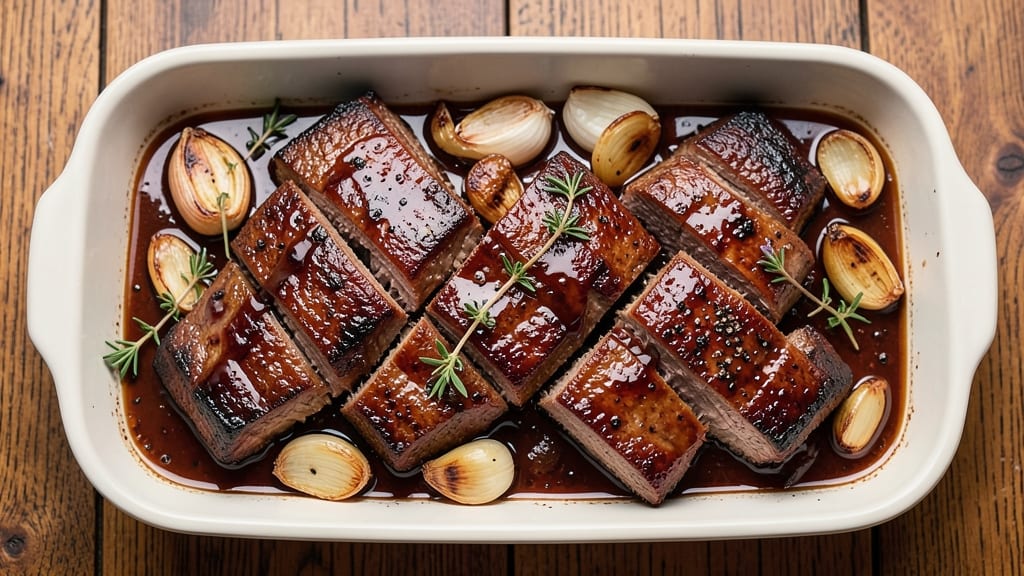
This baked boneless beef short ribs recipe delivers melt-in-your-mouth tenderness with minimal effort—no stovetop braising required. The secret lies in slow oven cooking, where beef transforms from tough to fork-tender while developing deep, caramelized flavors.
I perfected this method after years of testing, ensuring every bite falls apart with buttery perfection.
What sets this recipe apart is the hands-off approach: just season, sear, and let the oven work its magic. A simple marinade of soy sauce, garlic, and Worcestershire builds flavor, while a light sear locks in juices before the 3-hour bake at 300°F. The result?
Rich, saucy ribs that practically shred with a fork—no extra sauce needed.
By the time you pull them from the oven, you’ll have beef so tender it practically dissolves on your tongue, with edges that glisten from the slow-cooked juices.
The aroma alone will have everyone gathering at the table, and the texture—buttery, thread-like, and impossibly rich—makes it worth every minute of wait.
Serve with roasted potatoes, crusty bread, or a simple green salad to soak up those flavorful juices. This is comfort food at its finest—restaurant-quality without the fuss. Let’s get started!
Ingredients for baked boneless beef short ribs
Just nine ingredients transform tough beef into buttery, fork-tender perfection with zero fuss.
| Ingredient | Amount | Notes |
|---|---|---|
| Boneless Beef Short Ribs 🥩 | 2 ½ lb | Cut into 2-inch pieces, trimmed of excess fat |
| Kosher Salt 🧂 | 1 ½ tbsp | Diamond Crystal preferred for even distribution |
| Freshly Ground Black Pepper 🌶️ | 1 tbsp | Cracked peppercorns for maximum aroma |
| Garlic Cloves 🧄 | 6 cloves | Smashed for intense flavor infusion |
| Extra-Virgin Olive Oil 🫒 | ¼ cup | High-quality for searing and basting |
| Soy Sauce 🥢 | ¼ cup | Low-sodium preferred for balanced flavor |
| Worcestershire Sauce 🍶 | 1 tbsp | Anchovy-free version for dietary flexibility |
| Dry Red Wine 🍷 | ½ cup | Bold Cabernet Sauvignon or Merlot |
| Beef Broth 🥄 | 1 cup | Low-sodium, high-quality preferred |
| Fresh Rosemary 🌿 | 1 tbsp | Chopped, for aromatic depth |
| Fresh Thyme 🌿 | 1 tbsp | Leaves only, finely chopped |
| Yellow Onion 🧅 | 1 whole | Diced, for foundational flavor |
| All-Purpose Flour 🌾 | 2 tbsp | For light dusting before searing |
| Honey 🍯 | 1 tbsp | For subtle sweetness in marinade |
The beef is everything here. Look for short ribs from the chuck or plate—thick-cut, well-marbled pieces with good fat distribution. Costco or local butchers often carry pre-cut boneless short ribs, but if you're buying whole, ask for the bone-in version and trim it yourself. The fat renders beautifully during baking, creating that signature saucy texture. Fresh herbs are non-negotiable for aroma, but if you're using dried, halve the amount—Trader Joe's carries excellent dried thyme and rosemary in small jars for this purpose. For the wine, any bold dry red works—Cab Sauv, Merlot, whatever's open in your fridge.
No red wine? Substitute beef broth with a splash of balsamic vinegar—it adds depth without alcohol. Short on soy sauce? Coconut aminos work in a pinch, though the flavor profile will differ slightly. The honey in the marinade is optional but recommended—it helps break down the collagen faster, giving you that melt-in-your-mouth texture sooner. For the sear, don't skip the flour dusting—it creates a light crust that locks in juices. If you're concerned about gluten, use cornstarch instead. The onions can be swapped for shallots if you prefer a milder flavor, but yellow onions give that classic depth.
Prep ahead to save time: marinate the ribs overnight for maximum tenderness, but even 30 minutes makes a difference. Store the marinade separately in the fridge if you're not using it immediately. The ribs reheat beautifully—just warm them in their juices for 10-15 minutes at 300°F. Leftovers keep for 4-5 days in the fridge, though they're rarely that durable. For longer storage, freeze the ribs (raw or cooked) for up to 3 months. Portion the sauce separately if you plan to freeze—it thickens when reheated. The aroma alone when you pull them from the oven will have everyone gathering at the table.
Why You'll Love This Recipe
- Minimal Prep Required: I swear by this—just season the ribs with salt, pepper, and crushed garlic, then toss them in olive oil. No marinating, no brining, no fuss. Ten minutes tops, and you’re ready to bake.
- Crispy-Garlic Magic: That first bite? The ribs get this perfect crust from the oven, while the garlic-infused oil keeps them juicy inside. Honestly, the smell alone makes me want to eat them straight from the pan.
- Weeknight Crowd-Feeder: Perfect for when friends drop by unannounced or the kids suddenly decide they’re starving. One pan, zero stress—just bake, slice, and serve. (Yes, even on a Tuesday night.)
- Budget-Friendly Leftovers: Short ribs are cheaper than steak but taste just as good reheated. I make a double batch, slice the leftovers thin, and toss them into pasta or grain bowls all week. Zero waste, maximum flavor.
Step-by-step instructions for baked boneless beef short ribs
This hands-off method transforms tough short ribs into melt-in-your-mouth perfection with minimal effort.
Prep the Short Ribs for Maximum Flavor
Pat the 2.5 lb boneless beef short ribs completely dry with paper towels—this ensures a proper sear later. Cut them into 2-inch pieces and trim any excess fat, leaving just a thin layer for moisture. Place the pieces in a large bowl and season generously with 1.5 tbsp kosher salt and 1 tbsp freshly ground black pepper, pressing the seasoning into the meat so it adheres.
In a small bowl, whisk together 0.25 cup extra-virgin olive oil, 0.25 cup soy sauce, 1 tbsp Worcestershire sauce, 1 tbsp honey, and 1 tbsp each of chopped fresh rosemary and thyme. Pour this marinade over the ribs and toss gently to coat. Let them sit at room temperature for 15 minutes—this jumpstarts the flavor infusion and ensures even cooking later.
Sear for Deep Color and Flavor
Heat a large oven-safe skillet (like cast iron) over medium-high heat until it's smoking hot. Lightly dust the ribs with 2 tbsp all-purpose flour, shaking off any excess—this creates a golden crust. Working in batches if needed, add the ribs to the skillet and sear undisturbed for 2-3 minutes per side until deeply browned. Don't crowd the pan; you want that caramelization.
As the ribs sear, the flour will form a crust, locking in juices. Transfer the seared ribs to a plate and set aside. In the same skillet, add the diced yellow onion and 6 smashed garlic cloves, cooking for 2 minutes until fragrant. Deglaze the pan with 0.5 cup dry red wine, scraping up all those flavorful browned bits from the bottom.
Build the Braising Liquid
Pour in 1 cup beef broth and bring to a gentle simmer, stirring to combine. The wine should reduce slightly, creating a rich, glossy sauce. Return the ribs to the skillet, spooning the sauce over them. Place the skillet in a 375°F preheated oven and braise uncovered for 2 hours. This slow cook transforms tough collagen into silky threads.
After 2 hours, check the ribs for tenderness. They should be fork-tender but not falling apart. If they're not quite there, cover the skillet with foil and continue baking for another 30 minutes. The sauce should have reduced to a thick, velvety consistency—if it's too thin, uncover and simmer on the stovetop for 5 minutes to thicken.
Finish and Serve with Confidence
Remove the ribs from the oven and let them rest for 10 minutes before serving. This resting period allows the juices to redistribute, ensuring each bite is moist and flavorful. Spoon the reduced sauce over the top and garnish with extra chopped rosemary and thyme for a pop of color.
Serve immediately with crusty bread or over mashed potatoes to soak up every last drop of that luxurious sauce. The ribs should pull apart easily with a fork, revealing tender, buttery meat with a deep, caramelized crust. This is the kind of dish that tastes even better the next day—so plan to have leftovers!
Pro Tips For Making Baked Boneless Beef Short Ribs
- Pat the ribs dry: I learned this the hard way—wet meat steams instead of browning, and you’ll end up with sad, pale ribs. Grab paper towels and really press them into every crevice, especially after searing. That crust? It’s what makes the difference between "meh" and "wow."
- Sear in batches: Don’t crowd the pan—this isn’t a buffet. Cook the ribs in two layers if needed, giving each piece space to turn golden. Overcrowding just turns your sear into a sad, greasy bath, and nobody wants that. A hot pan and patience make all the difference.
- Salt before searing, twice: First, salt the ribs generously right after patting them dry. Then, after searing, hit them with another layer of salt before baking. The first coat seasons the meat, the second locks it in—like a flavor hug. Skip this, and you’ll wonder why your ribs taste bland even after all that garlic and oil.
- Use a meat thermometer: Short ribs are forgiving, but pull them at 195°F (203°F for extra tenderness). The internal temp is the only real way to know—guessing leads to either dry, overcooked meat or tough, underdone slabs. I used to eyeball it, then realized I was either over- or under-shooting every time.
Essential equipment for baked boneless beef short ribs
Oven-Safe Skillet
An oven-safe cast iron skillet (like Lodge 12-inch) is my go-to for this recipe—it sears beautifully on the stovetop and transitions seamlessly to the oven. Cast iron retains heat exceptionally well, ensuring even cooking and that coveted caramelized crust.
If you don’t have cast iron, a heavy stainless steel skillet (such as All-Clad) works too, though it may require slightly longer searing times. 🔥
Meat Thermometer
A meat thermometer is non-negotiable for perfect results. I use a ThermoWorks Smoke with dual probes—one to monitor the oven temperature and another to track the ribs’ internal temp.
Aim for 195-203°F for fork-tender ribs. Without one, you risk overcooking or undercooking. Budget-friendly options like OXO’s Bluetooth thermometer also work well.
Tongs for Searing
Tongs with long handles (like Mercer Culinary Genius) are essential for flipping ribs during searing without burning your hands. Look for stainless steel construction—they’re durable and won’t warp under high heat. Avoid plastic-coated tongs, as they can melt or release harmful fumes when exposed to intense heat.
Mixing Bowls
Use a large stainless steel mixing bowl (I prefer OXO Good Grips) for marinating the ribs. The size should comfortably hold all 2.5 lb of ribs without overcrowding.
Stainless steel won’t absorb odors or flavors, keeping your marinade clean. For extra prep efficiency, grab a smaller bowl (like Pyrex 2-cup) for whisking the marinade separately.
Whisk for Marinade
A balloon whisk (such as Cuisinart 12-inch) ensures the marinade emulsifies smoothly, blending the olive oil, soy sauce, and Worcestershire into a cohesive liquid. Avoid forks or spoons—they create lumps. If you’re short on time, a handheld immersion blender works too, though it’s less precise for small batches.
Aluminum Foil
Heavy-duty aluminum foil (like Reynolds Premium) comes into play if your ribs need extra time in the oven. Use it to loosely tent the skillet, allowing steam to escape while keeping the ribs moist.
Avoid cheap foil—it tears easily and won’t hold up during the 30-minute extension if needed. For a reusable option, silicone baking mats work well too.
Nutrition facts
Frequently asked questions
Can I substitute boneless short ribs with bone-in ribs?
Yes, but adjust the cooking time! Bone-in ribs need 1.5-2 hours longer at 300°F to fully tenderize. The bone adds extra flavor, but you'll need to remove it before serving. For best results, trim excess fat and use the same marinade ratio.
Why did my ribs turn out tough instead of tender?
This usually happens from overcooking or skipping the resting time. Ribs are done at 195-203°F internal temp—use a meat thermometer! Also, never skip the 10-minute rest after baking, as this lets juices redistribute. If they're still tough, try braising longer at 275°F for extra collagen breakdown.
Can I make this recipe in a slow cooker?
Brown the ribs first, then transfer everything (including sauce) to a slow cooker. Cook on low for 6-8 hours or high for 3-4 hours. The texture will be slightly different but still incredibly tender. Just check for doneness with a fork—it should pierce easily.
What's the best way to reheat leftovers?
Reheat gently in the oven at 300°F for 15-20 minutes with a splash of beef broth to keep them moist. Never microwave—it makes the meat rubbery. For extra flavor, cover with foil and let the residual heat finish cooking the ribs while warming the sauce.
Can I use this recipe for a large gathering?
Double or triple the recipe easily! Just use a larger oven-safe Dutch oven (like Le Creuset 6-quart) and increase cooking time by 30-45 minutes. For groups of 8+, consider using two skillets simultaneously. The sauce will be richer, so you might want to reduce it longer or serve with extra bread for soaking.