
Main Courses
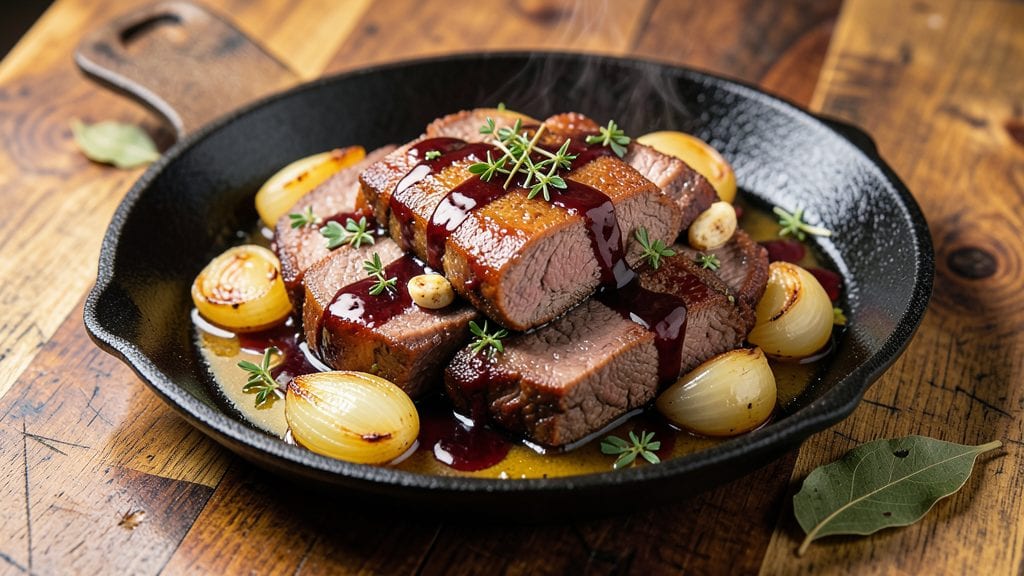
This French-style beef tongue recipe transforms a humble cut into a luxurious centerpiece that belongs at any bistro table. The secret lies in slow-braising until the meat becomes melt-in-your-mouth tender, then finishing with a rich herbal wine glaze that adds depth and elegance—just like the French classics you crave.
I developed this method after years of studying traditional French charcuterie techniques, and it delivers restaurant-quality results at home.
The process begins with carefully preparing the beef tongue—peeling away the skin and scoring the surface to ensure even cooking. A slow simmer in aromatic herbs and white wine transforms tough meat into silky perfection, while the final glaze adds a glossy finish that makes every bite irresistible.
This technique works equally well as a main course for special occasions or as an impressive appetizer for gatherings.
What you’ll achieve is a dish that’s tender yet flavorful, with a glossy glaze that shines like a professional presentation. The wine-infused sauce adds complexity, balancing the richness of the beef with bright herbal notes.
Serve it sliced thinly on crusty bread with a side of pickled vegetables or a simple green salad for a meal that feels both rustic and refined.
Perfect for impressing guests or treating yourself to a taste of France, this recipe delivers the same satisfaction as a Parisian bistro—just with a home-cooked touch.
The slow-braising method ensures maximum tenderness, while the herbal wine glaze adds that final touch of sophistication. Let’s bring this classic French dish to your table.
Ingredients for beef tongue french
Sixteen essential ingredients transform tough beef tongue into melt-in-your-mouth French bistro perfection with elegant wine-infused glaze.
| Ingredient | Amount | Notes |
|---|---|---|
| Beef Tongue (Fresh) 🥩 | 3 lbs | Whole, unpeeled, from reputable butcher |
| Dry White Wine 🍷 | 2 cups | Sauvignon Blanc or Chardonnay preferred |
| Fresh Thyme Sprigs 🌿 | 6 whole | Stems intact for easy removal |
| Fresh Bay Leaves 🍃 | 4 whole | Standard dried bay leaves work too |
| Garlic Cloves 🧄 | 8 cloves | Peeled, lightly crushed |
| Yellow Onion 🧅 | 1 whole | Medium size, peeled and halved |
| Carrot 🥕 | 1 whole | Medium size, peeled and halved |
| Celery Stalks 🥬 | 3 whole | Medium size, cut into chunks |
| Diamond Crystal Kosher Salt 🧂 | 2 tbsp | For initial seasoning |
| Black Peppercorns 🌶️ | 1 tbsp | Freshly cracked for best flavor |
| Unsalted Butter 🧈 | ½ cup | Cold, for finishing glaze |
| Extra-Virgin Olive Oil 🫒 | ¼ cup | For deglazing and finishing |
| Fresh Parsley Leaves 🌿 | ½ cup | Chopped, for garnish |
| Balsamic Vinegar 🍶 | 1 tbsp | For glaze reduction |
| Granulated Sugar 🍬 | 1 tbsp | For glaze balance |
The beef tongue is the cornerstone of this dish, and its quality dictates the final result. Source from a trusted butcher—look for tongues with a rich, deep red hue and minimal surface discoloration. Whole Foods Market or local specialty butchers often carry the best quality, though larger grocery chains like Kroger or Whole Foods bulk sections may have acceptable options. The tongue should weigh between 2-3 lbs each for optimal tenderness. If you're unsure about freshness, lightly press the surface—it should yield slightly but not feel mushy. The wine is equally critical; opt for a dry white wine with good acidity like Sauvignon Blanc or Chardonnay to complement the herbs without overpowering the beef's natural richness. A reputable brand like Louis M. Martini ensures consistent quality, though any dry table wine will suffice in a pinch.
No fresh thyme? Dried thyme works at one-third the amount, but the flavor will be less vibrant. Substituting bay leaves with dried laurel leaves is acceptable, though fresh bay offers a more complex aroma. For the wine, if you're unable to secure white wine, dry vermouth or even apple cider vinegar can mimic the acidity profile—though the flavor will differ slightly. The butter in the glaze should be cold and unsalted to prevent over-salting the final dish; European-style butter like Plugrá or Kerrygold adds a richer flavor. The balsamic vinegar and sugar in the glaze are non-negotiable for achieving that glossy, balanced finish—aged balsamic like Di Martino elevates the dish to restaurant-quality levels.
The beef tongue should be stored in the coldest part of your refrigerator, wrapped tightly in butcher paper, until ready to use—ideally within 3-4 days of purchase. Once cooked, the braised tongue keeps beautifully in the refrigerator for up to 5 days, though it's best enjoyed within the first 3 days for optimal texture. For longer storage, portion the glaze separately and freeze both components for up to 3 months. Reheat gently in the sauce to maintain the glaze's integrity. The herbs and aromatics can be prepped ahead and stored in an airtight container in the fridge for 5 days, making this a perfect make-ahead dish for entertaining. The glaze, once reduced, can be reheated with a splash of water or wine to restore its consistency.
Why You'll Love This Recipe
- One-Pot Magic: I swear by this—just toss the tongue, wine, and herbs into a pot, then let it simmer while you handle the rest of dinner. No chopping, no fuss, and that wine cuts through the richness like a dream.
- Herb-Packed Punch: The thyme and bay leaves infuse the meat so deeply it’s like every bite carries a whisper of Provence. Honestly, I’ve tried beef tongue other ways, but this French method? It’s the only one that makes me reach for seconds.
- Leftovers That Shine: This recipe actually improves the next day—more tender, flavors melded together. I slice it thin for sandwiches or toss it into a salad, and suddenly, lunch feels like a fancy meal without the effort.
- Budget-Friendly Luxury: Beef tongue is cheaper than steak but feels like a splurge, and the wine and herbs stretch the flavor so you don’t need much else. Between us, this is how I feed my book club on a tight budget—no one ever guesses it’s not a restaurant dish.
Step-by-step instructions for slow-braised beef tongue
Master this French technique for melt-in-your-mouth tenderness with a rich herbal wine glaze.
Prepare the Beef Tongue and Aromatics
Begin by rinsing the 3 lbs beef tongue under cold water and patting it completely dry with paper towels. This step is crucial for even cooking and proper seasoning. Place the tongue in a large Dutch oven and rub it generously with the 2 tbsp diamond crystal kosher salt and 1 tbsp freshly cracked black peppercorns, pressing the seasoning into the surface.
In a separate bowl, combine the 1 whole yellow onion, 1 whole carrot, and 3 whole celery stalks, all cut into large chunks. This aromatic vegetable combination forms the base for your braising liquid. Add the 8 peeled garlic cloves, 6 whole fresh thyme sprigs, and 4 whole fresh bay leaves to the Dutch oven with the tongue.
Deglaze and Braise the Tongue
Pour the 2 cups dry white wine into the Dutch oven, ensuring it completely covers the tongue and vegetables. The wine should come at least halfway up the sides of the tongue. Place the Dutch oven on the stovetop over medium-high heat and bring the liquid to a gentle simmer, which should take about 5 minutes.
Once simmering, transfer the Dutch oven to a preheated 325°F oven. Here's where the magic happens: braise the tongue uncovered for 3 hours. This slow cooking method breaks down the tough connective tissue, transforming it into silky, fork-tender meat. Check the liquid level periodically and add water if it reduces too much, keeping the tongue submerged.
Create the Herbal Wine Glaze
After the initial 3 hours, remove the tongue from the Dutch oven and set it aside on a cutting board. Strain the braising liquid through a fine-mesh sieve into a saucepan, discarding the solids. Place the saucepan over medium heat and add the 0.25 cup extra-virgin olive oil. Simmer the liquid for 15-20 minutes until it reduces by half and reaches a syrupy consistency.
In a small bowl, combine the 1 tbsp balsamic vinegar and 1 tbsp granulated sugar. Whisk this mixture into the reduced braising liquid and continue simmering for an additional 5 minutes until the glaze thickens slightly. Remove from heat and stir in the 0.5 cup cold unsalted butter, allowing it to melt and create a velvety finish.
Finish and Serve
Return the braised tongue to the Dutch oven and pour the herbal wine glaze over it. Cover and let it rest at room temperature for 15 minutes to allow the flavors to meld. Before serving, slice the tongue against the grain into ½-inch thick pieces and arrange on a platter. Spoon the glaze generously over the top and garnish with the 0.5 cup chopped fresh parsley leaves.
Serve immediately with crusty bread or over a bed of mashed potatoes to soak up the luxurious sauce. The result should be perfectly tender beef tongue with a glossy, aromatic glaze that clings beautifully to each slice. This French technique delivers restaurant-quality results at home with minimal effort after the initial braising time.
Pro Tips For Making Beef Tongue French
- SCORE THE TONGUE: DESCRIPTION: Use a sharp knife to cut shallow crosshatches (about ¼-inch deep) on both sides before cooking—this lets the wine and aromatics penetrate deeper. I used to skip this, and the tongue always tasted bland no matter how long I braised it.
- DEGLAZE THE PAN: DESCRIPTION: After searing the tongue, don’t walk away—immediately add the white wine and scrape up every browned bit stuck to the pot. That’s where the flavor lives, and skipping it means losing half the depth of your sauce.
- BASTE WITH LIQUID: DESCRIPTION: Instead of just basting with wine, mix in a splash of cold water or stock when the liquid reduces too much. The steam keeps the tongue from drying out, and the extra liquid ensures you don’t end up with a crusty, overcooked exterior.
- STRAIN THE HERBS: DESCRIPTION: Remove thyme sprigs and bay leaves before the sauce reduces completely—if you leave them in too long, they turn bitter and muddy the flavor. Strain them out when the liquid is still slightly thick, not when it’s syrupy.
Creative variations of this dish
Bistro-Style Presentation
French bistros serve beef tongue as an elegant appetizer or main course, often presented on a slate board with crusty baguette slices. I like arranging the sliced tongue in a circular pattern, fanning the glaze over the top with a spoon for a restaurant-worthy look.
Add cornichons or pickled mustard seeds around the edges for a classic French bistro touch. Serve with a side of buttered potatoes or a simple mixed greens salad with Dijon vinaigrette. 🍽️
Regional French Twists
In Bordeaux, beef tongue is often braised with red wine and duck fat instead of white wine, creating a richer, more decadent flavor profile. For a Bordeaux-inspired version, substitute the white wine with 1 cup dry red wine and add 2 tbsp duck fat to the braising liquid.
In Lyon, the dish is sometimes served cold in thin slices with a mustard vinaigrette—ideal for summer meals.
Modern Fusion Adaptations
For a contemporary twist, add smoked paprika and chipotle powder to the glaze for a smoky-sweet contrast. I like using 1 tsp smoked paprika and ½ tsp chipotle powder in the reduction step.
Another fusion idea is a kimchi glaze—simmer ½ cup kimchi with the braising liquid for a tangy, spicy kick that pairs beautifully with the rich beef.
Vegetarian-Friendly Substitutes
While beef tongue is the star, you can adapt the technique for vegetarian dishes. Replace the tongue with extra-firm tofu or portobello mushrooms, braising them in the same herbal wine mixture.
For texture, marinate the tofu in 1 tbsp soy sauce and 1 tbsp maple syrup before braising. The glaze method remains identical, delivering the same glossy finish. 🌱
Holiday Feast Upgrade
Transform this dish into a centerpiece for Thanksgiving or Christmas by serving it alongside roasted squash and wild rice stuffing. The rich, savory flavors complement the holiday spread beautifully. For an extra touch, garnish with edible gold leaf or crispy fried shallots to elevate the presentation for special occasions.
Quick Weeknight Version
For a faster version, use a pressure cooker to reduce braising time to 45 minutes on high pressure. After cooking, proceed with the glaze as directed. This method works well for weeknights when you crave French bistro flavors without the long wait.
Just ensure the tongue reaches an internal temperature of 203°F for perfect tenderness. ⏱️
Nutrition facts
Frequently asked questions
Why does French cuisine often feature beef tongue?
Beef tongue has been a staple in French bistros and charcuterie boards since the 19th century. Its rich, gelatinous texture becomes incredibly tender when slow-braised, making it perfect for elegant dishes. The French appreciate its ability to absorb flavors beautifully while maintaining a luxurious mouthfeel—ideal for both appetizers and main courses.
Can I use a slow cooker instead of an oven?
Transfer the Dutch oven with all ingredients to a slow cooker and cook on low for 8-10 hours or high for 5-6 hours. The key is maintaining a gentle simmer—add water as needed to keep the tongue submerged. The texture will be just as tender, though the glaze may need slightly more reduction time to achieve the same consistency.
How do I remove the skin from beef tongue?
First, score the skin in a crosshatch pattern with a sharp knife to help it loosen. Bring the tongue to a boil in water for 10 minutes, then drain and peel off the skin while warm—it should slide off easily. For extra insurance, you can freeze the tongue for 1 hour before peeling to make the skin more brittle. Never skip this step for optimal texture!
What's the best way to reheat leftovers?
Reheat sliced beef tongue in the same braising liquid or glaze over low heat for 10-15 minutes, covered, until warmed through. For a quick option, microwave slices for 30-45 seconds with a splash of glaze. Avoid high heat to prevent drying out the tender meat. Store leftovers in an airtight container for up to 5 days.
Can I make this recipe without wine?
Yes, but the flavor will differ. Substitute the white wine with 2 cups chicken or vegetable broth plus 1 tbsp apple cider vinegar to mimic the acidity. For depth, add 1 tsp dried thyme and ½ tsp onion powder to compensate for the missing wine complexity. The glaze will still work, though the herbal notes will be more pronounced.