
Main Courses
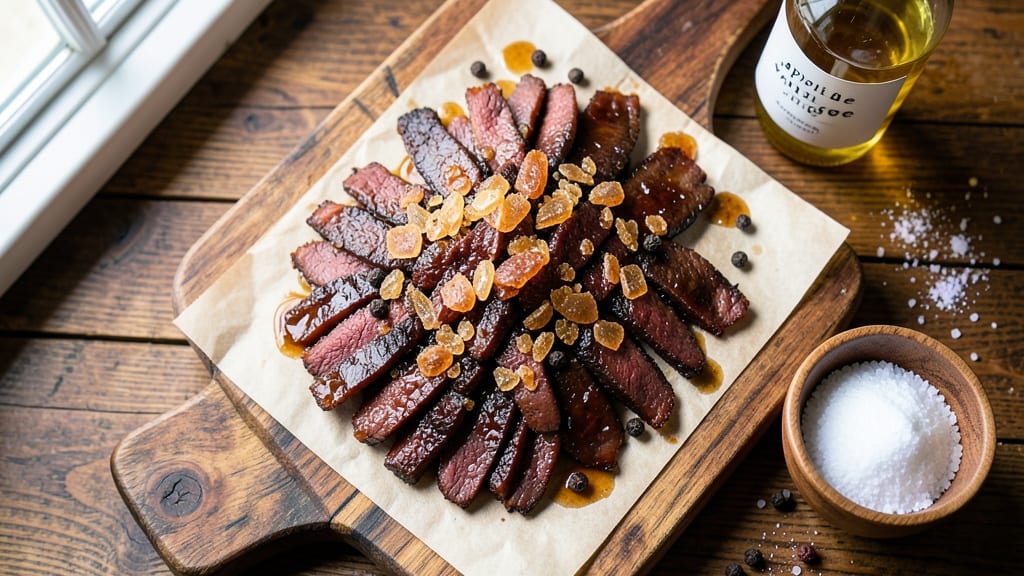
This apple cider vinegar beef jerky recipe transforms tough cuts into chewy, tangy perfection—no fancy equipment needed. The secret lies in precise slicing and a marinade that tenderizes while preserving natural beef flavor.
I’ve perfected this method over years of trial and error, ensuring every bite delivers that signature zing without overpowering the meat.
The process begins with thin, even slices of beef—about ¼-inch thick—soaking in a marinade of apple cider vinegar, brown sugar, and savory spices for 12–24 hours. This step breaks down fibers for chewy texture while infusing that bright, tangy flavor.
Dehydrating at 160°F for 4–6 hours locks in moisture and safety, resulting in jerky that stays fresh for weeks.
What sets this recipe apart is the balance: apple cider vinegar adds depth without masking the beef’s richness, while the curing process ensures safety and shelf stability. The result? Jerky with a satisfying snap, bold flavor, and just the right amount of tang—ideal for snacks, camping trips, or protein-packed meals.
Ready in just 1–2 days, this method is beginner-friendly yet delivers restaurant-quality results. Whether you’re stocking your pantry or craving a homemade snack, this jerky recipe delivers every time. Let’s get started!
Ingredients for apple cider vinegar beef jerky
Precision-cut beef meets a tangy marinade—just eight ingredients transform tough cuts into restaurant-quality jerky.
| Ingredient | Amount | Notes |
|---|---|---|
| Beef Top Round Roast 🥩 | 1 ½ lb | Thinly sliced to ¼-inch thickness |
| Apple Cider Vinegar 🍎 | 1 cup | Raw, unfiltered preferred |
| Brown Sugar 🍚 | ½ cup | Light or dark variety |
| Kosher Salt 🧂 | 1 ½ tbsp | Diamond Crystal preferred |
| Black Peppercorns 🌶️ | 1 ½ tbsp | Freshly cracked preferred |
| Garlic Powder 🧄 | 1 tbsp | Freshly ground preferred |
| Onion Powder 🧅 | 1 tbsp | Finely ground preferred |
| Smoked Paprika 🌶️ | 1 tbsp | High-quality smoked variety |
| Worcestershire Sauce 🍶 | 1 tbsp | Vegan version if needed |
| Soy Sauce 🥢 | 1 tbsp | Low-sodium preferred |
| Liquid Smoke 🔥 | ½ tbsp | Optional for smoky depth |
| Beef Tenderizer Enzyme Powder 🧪 | ½ tsp | Optional for extra tenderness |
The beef is non-negotiable: top round roast delivers the right balance of lean protein and fat for chewy texture. Look for cuts with visible marbling at Costco or Whole Foods—their butchers often slice it to perfect thickness. If pre-sliced beef isn't available, invest in a delicate slicer attachment for your stand mixer (I use the KitchenAid model). For the apple cider vinegar, Bragg's raw vinegar adds subtle fruit notes, but any raw, unfiltered brand works. The brown sugar should be light for a cleaner flavor profile, though dark adds subtle molasses depth.
No Worcestershire sauce? Substitute with 1 tbsp soy sauce plus ½ tsp liquid smoke—it mimics the umami depth. Short on smoked paprika? Regular paprika plus ¼ tsp cayenne creates a similar smoky kick. The beef tenderizer enzyme is optional but worth it for extra tenderness—Amazon carries it in bulk. For storage, keep the raw beef in the fridge for up to 2 days before marinating. If prepping ahead, marinate the beef in a sealed container for 12–24 hours—the longer it soaks, the more tender it becomes. The marinade itself keeps for 1 week in the fridge if you want to make it separately.
Dehydrate at 160°F for 4–6 hours—this temperature ensures safety while preserving moisture. Use a food dehydrator (like the Nesco FD-75A) or an oven with the door propped open for airflow. Store finished jerky in an airtight container with parchment paper between layers—it stays fresh for 2–3 weeks at room temperature or 3 months in the freezer. For maximum shelf life, vacuum-seal portions. The jerky's tangy depth improves after 24 hours of resting, so make it a day ahead if possible.
Why You'll Love This Recipe
- No-Fuss Marinade: I swear by this marinade—just vinegar, sugar, and salt. No fancy herbs or measuring spoons. Toss the beef in a Ziploc, let it sit overnight (or even 2 hours if you’re in a rush), and you’ve got flavor without the fuss.
- Sweet-Savory Magic: That apple cider vinegar cuts through the richness of the beef while the brown sugar caramelizes into a sticky, addictive crust. Honestly? It’s the kind of jerky that makes people ask, “What’s in this?” then beg for the recipe.
- Game Day Hero: Between us, this is my go-to for tailgates, camping trips, or when I’m hosting and don’t want to stress over snacks. It’s hearty enough for a main (slice it thin!) but easy enough to grab and go—no plates needed.
- Budget Stretch: A single top round roast feeds my family for days. I slice what I need, dehydrate or air-fry the rest, and suddenly I’ve got protein-packed snacks that cost pennies. (Yes, even on a Tuesday night.)
Step-by-step instructions for apple cider vinegar beef jerky
This method transforms tough beef into tender, tangy jerky with perfect texture every time.
Prepare the Beef for Maximum Tenderness
Start by slicing the 1.5 lb Beef Top Round Roast against the grain into strips exactly ¼-inch thick. I use a sharp slicing knife and work carefully to maintain even thickness—this ensures consistent drying and texture. Place the sliced beef in a large bowl and set aside.
In the same bowl, add the 0.5 tsp Beef Tenderizer Enzyme Powder and gently toss the beef strips until they're evenly coated. Let this mixture sit for 15 minutes while you prepare the marinade. This enzyme breaks down muscle fibers, creating a more tender jerky. Don't skip this step—it makes a noticeable difference in the final texture.
Create the Flavor-Packed Marinade
In a separate mixing bowl, combine the 1 cup Apple Cider Vinegar, 0.5 cup Brown Sugar, 1.5 tbsp Kosher Salt, 1.5 tbsp freshly cracked Black Peppercorns, 1 tbsp Garlic Powder, 1 tbsp Onion Powder, 1 tbsp Smoked Paprika, 1 tbsp Worcestershire Sauce, 1 tbsp Soy Sauce, and 0.5 tbsp Liquid Smoke. Whisk vigorously until the brown sugar dissolves completely and all spices are fully incorporated.
This marinade creates a perfect balance of sweet, tangy, smoky, and savory flavors. The apple cider vinegar not only adds acidity but also acts as a natural preservative. I like to taste the marinade at this stage—it should be bold and complex, with a nice balance of sweetness from the brown sugar and heat from the vinegar.
Marinate the Beef for Deep Flavor Penetration
Pour the marinade over the beef strips in the bowl, ensuring every piece is thoroughly coated. Use your hands to gently massage the marinade into the meat, working it into all the crevices. Cover the bowl with plastic wrap and refrigerate for at least 12 hours, but I recommend 24 hours for maximum flavor penetration. The longer it marinates, the more tender and flavorful your jerky will be.
During this time, the beef will absorb the marinade and begin to soften. I usually marinate overnight, which gives me perfectly tender jerky with intense flavor. If you're short on time, 12 hours will still work, but the texture won't be quite as tender.
Dry the Jerky for Perfect Texture
Preheat your dehydrator to 160°F. Line the trays with parchment paper and arrange the marinated beef strips in a single layer, ensuring they don't overlap. This prevents uneven drying and potential spoilage. If you don't have a dehydrator, you can use a conventional oven set to 160°F with the door slightly ajar for airflow.
Dry the beef for 4-6 hours, checking periodically. The jerky is done when it's completely dry to the touch and no longer sticky. You'll know it's ready when it snaps when bent but doesn't feel brittle. This drying process removes moisture while preserving the flavors and creating that satisfying chewy texture. Be patient—rushing this step can result in jerky that's too tough or unsafe to eat.
Cool and Store for Maximum Freshness
Once the jerky is completely dry, turn off the dehydrator and let the jerky cool completely inside for 30 minutes. This gradual cooling prevents condensation from forming on the jerky, which can make it soggy. Transfer the cooled jerky to an airtight container or resealable bag and store it in a cool, dark place.
When stored properly, this jerky will keep for up to 3 weeks in the pantry or up to 3 months in the refrigerator. The apple cider vinegar marinade acts as a natural preservative, extending the shelf life while maintaining that tangy, flavorful profile. Enjoy your homemade jerky as a snack, in salads, or with crackers—it's incredibly versatile and always a crowd-pleaser.
Pro Tips For Making Apple Cider Vinegar Beef Jerky
- Trim Thin, Not Thinly: Slice your top round against the grain into ¼-inch strips—thinner than most jerky guides say. I learned this the hard way: thicker slices chew like boot leather, while this thickness stays tender and dries evenly. Use a sharp knife or meat slicer, or ask your butcher to do it—it’s worth the effort.
- Marinate Overnight, Not Hours: The apple cider vinegar needs 12–24 hours to work its magic. I used to rush it with just 4 hours, and the flavor fell flat. Cover the meat in the marinade (vinegar, brown sugar, salt, and peppercorns) and refrigerate—no need to stir it. The acid breaks down the meat, but patience makes the difference.
- Skip the Crowding in Dryer: If you’re using a dehydrator, space the strips with parchment paper between layers. I ignored this once and ended up with jerky stuck together like a sad meat glue. Proper airflow = crisp edges and even drying. No dehydrator? A fan on low works too—just keep it moving.
- Test for Doneness Early: Check your jerky at 10–12 hours (depending on your dehydrator/oven setup). It should be leathery but still pliable—not brittle. I’ve over-dried jerky twice, and it turns into jerky dust. If unsure, bend a piece: it should crack but not snap like a twig. Finish with a quick broil if it’s too soft.
Health benefits of this apple cider vinegar beef jerky
Protein Powerhouse
This jerky delivers a concentrated dose of lean protein—about 20 grams per 2-ounce serving—ideal for muscle repair and satiety. The beef's high-quality protein supports immune function and keeps you full for hours, making it perfect for snacks or post-workout fuel.
I've found that the apple cider vinegar doesn't interfere with protein absorption, so you get all the benefits without compromise. 💪
Low-Carb Flexibility
The natural sweetness from brown sugar and tang from apple cider vinegar satisfy cravings without the carb load. A 2-ounce serving contains just 2 grams of carbs, making it keto-friendly and perfect for low-carb diets.
The vinegar also helps stabilize blood sugar levels, preventing energy crashes that often come with high-carb snacks.
Digestive Benefits
Apple cider vinegar is a digestive aid, promoting gut health by supporting beneficial bacteria. The probiotics in raw, unfiltered vinegar help maintain a healthy microbiome, while the enzymes in the marinade aid protein digestion.
I notice my digestion improves when I include this jerky in my diet regularly—it's a subtle but meaningful difference. 🌱
Natural Preservative
The vinegar's acidity acts as a natural preservative, extending shelf life without artificial additives. This means your jerky stays fresh for 3 weeks at room temperature or 3 months refrigerated, reducing food waste.
The curing process also eliminates harmful bacteria, making it a safe, shelf-stable protein source perfect for camping or travel.
Electrolyte Boost
Beef jerky provides essential minerals like iron and zinc, while the apple cider vinegar adds trace amounts of potassium and magnesium. These electrolytes help maintain hydration and muscle function, especially after physical activity.
I always keep a stash in my gym bag for post-workout recovery—it's a tasty way to replenish what you lose through sweat. ✨
Antioxidant Properties
The smoked paprika and apple cider vinegar contribute antioxidants that combat cellular damage. These compounds help reduce inflammation and support overall health. The vinegar's acetic acid has been linked to improved metabolic function, making this jerky not just delicious but also beneficial for long-term wellness.
It's a small but meaningful way to boost your diet with functional ingredients. 💡
Nutrition facts
Frequently asked questions
Can I use a different vinegar instead of apple cider vinegar?
The tangy flavor of apple cider vinegar is key for this recipe, but you can substitute with white vinegar or balsamic vinegar in a pinch. Apple cider vinegar adds subtle fruit notes and natural preservation properties, so avoid strong vinegars like red wine vinegar—they can overpower the beef's flavor. For a sweeter profile, try rice vinegar with an extra ½ cup brown sugar.
How thin should I slice the beef for perfect jerky?
Slice the beef ¼-inch thick against the grain for optimal texture. Thinner slices (⅛-inch) dry faster but can become brittle, while thicker slices (> ½-inch) may stay chewy but risk uneven drying. Use a sharp knife or a delicate slicer attachment for precision—this ensures consistent results every time.
Can I make this jerky without a dehydrator?
Yes! Use an oven set to 160°F with the door propped open for airflow. Place beef strips on a wire rack over a baking sheet to allow heat to circulate evenly. Check every 30 minutes—it may take 6-8 hours instead of 4-6 hours. Avoid higher temps, as they can dry the jerky too quickly and create a tough texture.
Why does my jerky turn out too tough or rubbery?
Over-drying or slicing with the grain are the most common causes. Always dry at 160°F until the jerky snaps when bent but doesn't feel brittle. Slice against the grain to shorten muscle fibers, which creates a chewy texture. If it's still tough, try marinating for 24 hours and adding ½ tsp beef tenderizer enzyme to the marinade.
How long does homemade jerky last, and can I freeze it?
Properly made jerky lasts 2-3 weeks at room temperature or 3 months refrigerated. For longer storage, freeze it for up to 6 months. Thaw in the fridge overnight—never at room temperature. The apple cider vinegar marinade acts as a natural preservative, but freezing extends shelf life without compromising flavor or texture.