
Main Courses
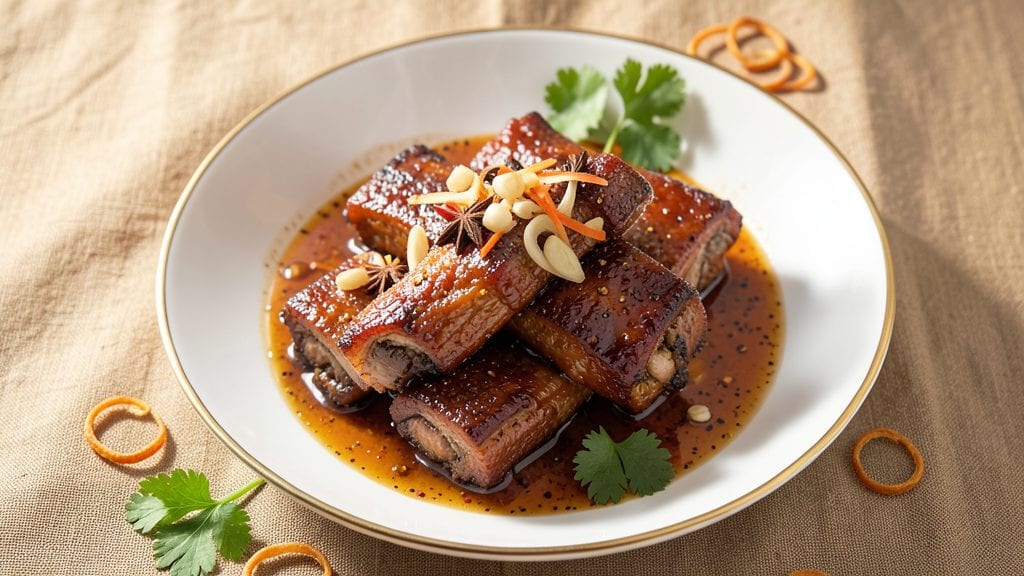
This Chinese-style beef ribs recipe delivers crispy edges and tender meat with a fragrant five-spice glaze that balances sweet, smoky, and savory notes. After years of perfecting the balance between slow braising and high-heat searing, I've created a method that transforms tough ribs into melt-in-your-mouth perfection with a caramelized crust.
The secret lies in marinating the ribs overnight in a blend of soy sauce, rice wine, and aromatic spices that penetrate deeply.
The process begins with a 30-minute marinade using traditional Chinese seasonings—star anise, cinnamon, and five-spice powder—that infuse the meat while tenderizing it.
Unlike Western barbecue methods, this recipe relies on a two-stage cooking approach: first braising the ribs gently to break down collagen, then finishing with a quick sear to achieve that signature crispy exterior.
The glaze, made from honey, soy sauce, and vinegar, caramelizes beautifully during the final minutes of cooking.
What you'll end up with is ribs that are crispy on the outside, tender on the inside, and coated in a sticky-sweet glaze that crackles with every bite. The aroma alone—warm spices mingling with caramelized meat—will have everyone gathering around the table.
This dish pairs beautifully with steamed jasmine rice and quick-pickled vegetables for a complete Chinese-inspired meal.
Whether you're preparing for a family dinner or hosting a gathering, this recipe delivers restaurant-quality results with minimal effort. The key is patience—the overnight marinade and slow braising ensure the meat falls apart easily while maintaining that essential crispiness.
Let's get started on creating ribs that will impress even the most discerning palates.
Ingredients for beef ribs chinese
These premium ingredients transform tough ribs into restaurant-quality Chinese delicacies with crispy edges and tender meat.
| Ingredient | Amount | Notes |
|---|---|---|
| Beef Ribs 🥩 | 4 lb | Bone-in, cut into 2-inch sections |
| Soy Sauce 🍶 | ½ cup | High-quality, preferably Japanese |
| Rice Wine 🍶 | ¼ cup | Dry, such as Shaoxing wine |
| Five-Spice Powder 🌶️ | 2 tsp | Authentic Chinese blend preferred |
| Star Anise 🌿 | 2 whole | Lightly crushed for aroma |
| Ground Cinnamon 🌿 | 1 tsp | Ceylon preferred for delicate flavor |
| Garlic Cloves 🧄 | 6 cloves | Minced, fresh preferred |
| Ginger Root 🌿 | 1 tbsp | Finely grated, fresh preferred |
| Honey 🍯 | ½ cup | Wildflower or clover preferred |
| Rice Vinegar 🍶 | ¼ cup | White, for glaze balance |
| Sesame Oil 🫒 | 1 tbsp | Toasted, for finishing |
| Green Onions 🧅 | 4 whole | Sliced, for garnish |
| Diamond Crystal Kosher Salt 🧂 | 1 tbsp | For seasoning and marinade |
| Black Peppercorns 🌶️ | 1 tsp | Freshly cracked, for heat |
| Jasmine Rice 🍚 | 2 cups | Uncooked, for serving |
The beef ribs are the foundation, so prioritize quality cuts with good marbling. Costco or Whole Foods Market typically carry the best selections, or ask your butcher for 'beef short ribs'—these are ideal for their balance of meat and collagen. The five-spice powder must be authentic; Penzeys or Asian grocery stores carry superior blends. Star anise and cinnamon should be whole and aromatic—grind them lightly to release their oils without overpowering. For the rice wine, Shaoxing wine is non-negotiable; it adds depth that no substitute can replicate.
No five-spice powder? Create your own blend with equal parts ground fennel, cloves, and cardamom plus a pinch of cinnamon. Substitute rice wine with dry sherry or mirin, though the flavor will differ slightly. For honey, agave nectar works in a pinch but lacks the floral notes. Sesame oil can be omitted if unavailable, but the toasted aroma is essential for authenticity. The green onions should be crisp—frozen won't work—so buy fresh and store them upright in a jar with water in the fridge for up to 1 week. The jasmine rice should be long-grain and uncooked; avoid instant rice for this dish.
Marinate the ribs overnight for maximum tenderness, then refrigerate the glaze ingredients separately to prevent premature caramelization. The ribs will keep in the marinade for up to 24 hours in the refrigerator. Once cooked, store the ribs in an airtight container with the glaze for up to 3 days, reheating gently to maintain crispiness. The glaze can be reheated separately and brushed on as needed. For leftovers, freeze portions in single layers for up to 3 months, thawing overnight in the refrigerator before reheating.
Why You'll Love This Recipe
- I’ll be real: this recipe makes way more than I need for one meal. The leftovers? Even better the next day—tender ribs that fall apart with a fork, perfect for quick lunches or tossing into fried rice. (Yes, even on a Tuesday night.)
- One-Pot Magic: Between us, this recipe takes zero fuss. Toss the ribs in a deep pan with soy sauce, rice wine, and those whole star anise pods—no peeling, no mincing, no stress. Just simmer until the sauce clings like glue, and you’ve got dinner without the cleanup.
- Umami Bomb: Honestly, the five-spice powder and star anise transform beef ribs into something ridiculously addictive. That deep, warm aroma? It’s like a hug for your taste buds, but with actual protein. The soy sauce ties it all together—salty, sweet, and impossible to resist.
- Leftover Hero: I’ll be real: this recipe makes way more than I need for one meal. The leftovers? Even better the next day—tender ribs that fall apart with a fork, perfect for quick lunches or tossing into fried rice. (Yes, even on a Tuesday night.)
Step-by-step instructions for five-spice glazed beef ribs
Here's the method for achieving perfectly crispy edges and tender meat with an authentic Chinese five-spice profile.
Prepare the Marinade and Season the Ribs
In a mixing bowl, combine the 0.5 cup soy sauce, 0.25 cup rice wine, 2 tsp five-spice powder, 1 tsp ground cinnamon, 6 cloves minced garlic cloves, 1 tbsp finely grated ginger root, 0.5 cup honey, and 0.25 cup rice vinegar. Whisk until all ingredients are fully dissolved and the mixture is smooth. This marinade should coat the back of a spoon.
Pat the 4 lb beef ribs dry with paper towels to remove any surface moisture. This step is critical for achieving crispy edges later. Place the ribs in a large resealable plastic bag and pour the marinade over them, ensuring each section is well-coated. Seal the bag and refrigerate for at least 4 hours, or preferably overnight. The longer the marinating time, the deeper the flavor penetration and the more tender the meat will become.
Parboil the Ribs for Tenderization
Fill a large pot with enough water to submerge the ribs completely. Add 1 tbsp diamond crystal kosher salt and bring to a rolling boil over high heat. Once boiling, carefully add the marinated ribs and return to a boil. Reduce heat to medium-high and simmer for 15 minutes. This parboiling step breaks down connective tissues, ensuring the ribs will be fork-tender when finished.
After 15 minutes, remove the ribs from the pot and drain them in a colander. Let them cool slightly for 5 minutes before proceeding. This brief cooling period helps prevent the skin from steaming instead of crisping during the final cooking stage. The ribs should now have a slightly caramelized appearance from the marinade sugars.
Build the Five-Spice Glaze
While the ribs cool, return the parboiling liquid to medium heat and reduce it by half, which should take about 8-10 minutes. This concentrated liquid forms the base of your glaze. In a separate small saucepan, combine the reduced liquid with 1 tbsp toasted sesame oil and 2 lightly crushed whole star anise. Simmer gently for 5 minutes to infuse the star anise aroma into the glaze.
Strain the glaze through a fine-mesh sieve to remove the star anise seeds, then return it to the saucepan. Increase heat to medium-high and reduce the glaze further until it reaches a thick, syrupy consistency that coats the back of a spoon. This should take approximately 5-7 minutes. The glaze should be glossy and slightly sticky to the touch, indicating it's ready for application.
Achieve Crispy Edges Through High-Heat Roasting
Preheat your oven to 425°F with the rack positioned in the middle. Line a large baking sheet with heavy-duty aluminum foil and place a wire rack on top. This setup allows for even heat circulation around the ribs, which is essential for crispy edges. Arrange the parboiled ribs on the rack in a single layer, ensuring they don't overlap.
Brush the ribs generously with the five-spice glaze, coating all surfaces evenly. Place the baking sheet in the preheated oven and roast for 25 minutes. After 25 minutes, carefully flip each rib section and brush with additional glaze. Return to the oven and roast for another 20-25 minutes until the edges are deep golden brown and crispy to the touch, while the internal temperature reaches 195°F at the thickest part of the meat.
Rest and Serve with Jasmine Rice
Remove the ribs from the oven and transfer them to a cutting board. Let them rest for 10 minutes before serving. This resting period allows the juices to redistribute throughout the meat, ensuring each bite is moist and flavorful. During this time, prepare the 2 cups jasmine rice according to package instructions for perfect side pairing.
Slice the ribs into 1-inch sections and arrange them on a platter. Drizzle any remaining glaze from the baking sheet over the top and garnish with 4 whole sliced green onions. Serve immediately with the jasmine rice. The contrast of tender meat with crispy edges and fragrant rice creates a harmonious balance of textures and flavors in every bite.
Pro Tips For Making Beef Ribs Chinese
- Parboil First: Don’t skip this step—drop the ribs in boiling water for 3-4 minutes before braising. I learned this the hard way after my first batch turned out chewy; the quick blanch loosens the connective tissue and lets the five-spice powder cling better. (Yes, even if you’re impatient like me.)
- Toast the Spices: Dry-toast the star anise and five-spice powder in a pan for 30 seconds before adding them to the sauce. My grandmother swore by this, and she was right: it deepens their aroma and cuts through the soy sauce’s sharpness. Skip it, and the flavors won’t layer as well.
- Deglaze Aggressively: After searing the ribs, don’t just splash in the sauce—scrape up every browned bit with a wooden spoon. That’s where the real flavor hides, and ignoring it means a weaker, one-dimensional dish. I know, I know, it’s extra work, but your future self will taste the difference.
- Simmer Slow and Low: Cover the ribs and simmer on actual low heat for at least 1.5 hours—no rushing. I used to crank the heat to save time, and the ribs ended up tough. The rice wine needs time to mellow, and the five-spice powder needs to bloom. Trust the process.
Regional styles of beef ribs chinese
Cantonese Braised Style
In Cantonese cuisine, beef ribs are traditionally braised slowly in a wok with a rich sauce made from dark soy sauce, hoisin, and Chinese black vinegar. The ribs are first parboiled, then simmered in the sauce for 3-4 hours until fall-off-the-bone tender.
I like to add dried shiitake mushrooms and daikon radish for depth. The sauce is thickened with cornstarch slurry before serving, creating a glossy finish. 🥢
Sichuan Spicy Version
For a fiery kick, Sichuan-style ribs incorporate chili oil, dried red chilies, and Sichuan peppercorns into the marinade. The ribs are seared in a cast iron skillet before being braised in a light soy sauce base with garlic, ginger, and fermented black beans.
The dish finishes with a drizzle of chili oil and scallions. I recommend using Penzeys Sichuan peppercorns for authentic heat. 🌶️
Hong Kong-Style Char Siu Ribs
This method mimics char siu (Chinese BBQ pork) but uses beef ribs instead. The ribs are marinated in a honey-soy glaze with hoisin, five-spice powder, and orange zest for 12-24 hours.
After parboiling, they're roasted in the oven at 375°F until caramelized. The result is sweet, sticky, and slightly charred—perfect for skewers or serving over rice. 🍯
Shanghai-Style Sweet & Sour
Shanghai chefs balance sweet and sour flavors by marinating ribs in rice wine, mirin, and pineapple juice, then glazing them with a sauce of ketchup, vinegar, and brown sugar.
The ribs are pan-fried until crispy before being finished in the oven. Garnish with mandarin orange segments and cilantro for a vibrant presentation. This style is lighter than other regional versions but equally delicious. 🍍
Northern Chinese Dry-Roasted
Northern China favors a simpler, drier approach where ribs are marinated in soy sauce, sugar, and star anise, then roasted in a hot oven until deeply caramelized. The key is high heat—450°F—for 30-40 minutes to develop a crispy crust.
Serve with steamed buns or cucumber salad for balance. This method requires less monitoring but more attention to temperature control. 🔥
Taiwanese BBQ Glaze
Taiwanese-style ribs feature a thick, sticky glaze made from maltose syrup, soy sauce, and sesame paste, giving them a glossy, almost candy-like coating. The ribs are first steamed to tenderize, then roasted until the glaze hardens slightly.
The contrast between the crispy exterior and tender meat is what makes this version stand out. I like to add toasted sesame seeds for extra texture. 🌟
Nutrition facts
Frequently asked questions
Can I substitute beef short ribs for beef back ribs in this recipe?
Yes, but with adjustments! Short ribs have more meat and less connective tissue, so they'll cook faster. Use the same marinade but reduce the braising time to 10-12 minutes instead of 15 minutes, then proceed with the roasting. The crispy edges will still develop beautifully, but monitor closely to avoid overcooking.
How do I make the ribs extra crispy without drying them out?
The secret is in the final roasting step. After parboiling, pat the ribs completely dry with paper towels—this removes all moisture that would prevent crisping. Use a wire rack on your baking sheet for maximum airflow, and brush with fresh glaze only in the last 10 minutes of roasting. The high heat will caramelize the sugars instantly.
What's the best way to reheat leftover ribs while keeping them crispy?
Reheat in a 400°F oven for 10-12 minutes on a wire rack (no foil!) with a light brush of fresh glaze. For stovetop, use a dry skillet over medium-high heat for 2-3 minutes per side—just enough to restore crispness. Never microwave, as it turns the edges soggy.
Can I make this recipe in a slow cooker instead of the oven?
Yes, but with modifications. After parboiling, place ribs in the slow cooker with 1 cup water, 2 tbsp soy sauce, and 1 tbsp honey. Cook on Low for 6-7 hours or High for 3-4 hours. For crispy edges, finish by searing in a hot skillet for 2-3 minutes per side after removing from the slow cooker.
Why does my glaze turn out too thin or too thick?
Thin glaze? Reduce the parboiling liquid longer next time—it should coat the back of a spoon. Too thick? Add 1 tsp water at a time while heating. The ideal consistency is like "honey" that clings to a spoon but drizzles slowly. For extra shine, simmer uncovered to evaporate excess moisture.