
Main Courses
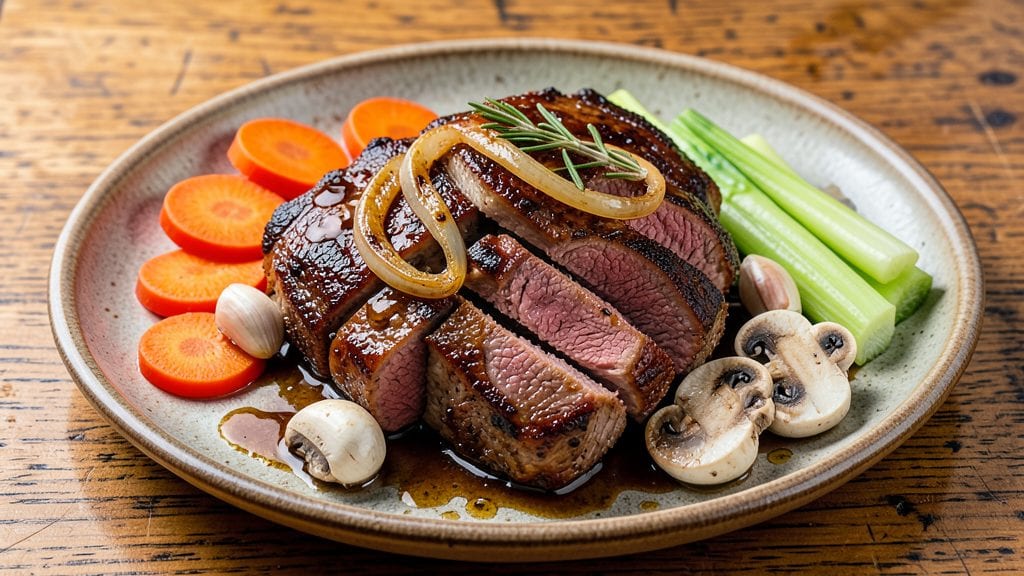
This beef Philadelphia recipe transforms tough cuts into melt-in-your-mouth bites bathed in a velvety mushroom gravy—exactly what makes this classic comfort dish unforgettable.
After years of perfecting the technique, I’ve cracked the code for achieving that signature tender texture and rich, savory sauce at home, whether you’re using a Dutch oven or slow cooker.
The secret lies in slow braising, which breaks down collagen for that signature fall-apart tenderness while developing deep, caramelized flavors.
What sets this recipe apart is the balance between traditional methods and modern convenience. You’ll start with a proper sear to develop flavor, then slow-cook the beef until it’s fork-tender, all while building a gravy from scratch that coats every bite.
The creamy mushroom element adds body and earthy depth, making this more than just a simple stew—it’s a restaurant-quality meal that’s surprisingly easy to recreate. For those short on time, the slow cooker adaptation delivers identical results with minimal effort.
The result is a dish where each bite offers perfect harmony: tender beef that practically dissolves on the tongue, paired with a gravy that’s rich yet balanced, neither too heavy nor too light.
This is the kind of meal that transforms a weeknight dinner into something special—warm, comforting, and deeply satisfying. The best part? It reheats beautifully, making it ideal for meal prep or feeding a crowd.
Serve it with buttered egg noodles, crusty bread, or roasted potatoes to soak up every last drop of that creamy gravy. Whether you’re recreating a childhood favorite or discovering this classic for the first time, this recipe delivers the hearty, tender beef and velvety sauce you’ve been craving.
Let’s get cooking—your taste buds will thank you.
Ingredients for beef philadelphia
Sixteen ingredients, one unforgettable dish—where tender beef meets velvety mushroom gravy magic.
| Ingredient | Amount | Notes |
|---|---|---|
| Beef Chuck Roast 🥩 | 3 lb | With good marbling for tenderness |
| Yellow Onion 🧅 | 2 whole | Medium size, sliced into half-moons |
| Carrots 🥕 | 4 whole | Medium size, peeled and cut into chunks |
| Celery Stalks 🌿 | 4 whole | Trimmed and cut into 1-inch pieces |
| Garlic Cloves 🧄 | 6 cloves | Fresh, smashed for deeper flavor |
| White Mushrooms 🍄 | 16 oz | Fresh, sliced for creamy gravy |
| All-Purpose Flour 🌾 | 2 tbsp | For thickening gravy |
| Beef Broth 💧 | 4 cups | Low-sodium preferred |
| Dry Red Wine 🍷 | 1 cup | Bold variety like Cabernet Sauvignon |
| Heavy Cream 🥛 | 1 cup | Full-fat for richness |
| Worcestershire Sauce 🍶 | 2 tbsp | For umami depth |
| Kosher Salt 🧂 | 1 ½ tsp | Diamond Crystal preferred |
| Black Peppercorns 🌶️ | 1 tsp | Freshly cracked |
| Bay Leaves 🌿 | 2 whole | Dried, removed before serving |
| Thyme Sprigs 🌿 | 4 whole | Fresh, stems removed |
The beef is non-negotiable here. Chuck roast with visible marbling breaks down beautifully, while sirloin or ribeye will stay tough. I always grab mine from Costco when possible—they sell it pre-cut, saving time. If buying whole, trim excess fat but leave some for flavor. For mushrooms, cremini or baby bella add extra depth, but white works too. The key is freshness—mushrooms should feel firm and smell earthy, not musty. Trader Joe's sells pre-sliced options that work in a pinch.
No red wine? Beef broth with a splash of balsamic vinegar mimics the acidity perfectly. Fresh thyme is ideal, but dried at one-third the amount gets you close. The Worcestershire sauce can be swapped for soy sauce or fish sauce if needed (though Worcestershire adds that signature tang). For the gravy, all-purpose flour is your friend—it thickens beautifully, but if you're gluten-free, cornstarch works. The beef broth? Homemade is best, but low-sodium store-bought cuts it if you're short on time. Just remember to taste as you go—this dish needs balance.
This reheats like a dream—honestly, it tastes better the next day as flavors meld. Store leftovers in an airtight container for up to 5 days in the fridge, or freeze portions for 3 months. I like to portion it into individual containers so I can grab a meal on busy mornings. The gravy thickens as it cools, so just add a splash of broth or water when reheating. For serving, keep the gravy warm separately—it coats everything perfectly when spooned over the beef.
Why You'll Love This Recipe
- One-Pot Magic: I swear by this recipe when I’m too tired to deal with multiple pans. Toss the beef, onions, carrots, and celery into a Dutch oven with broth, throw it in the oven, and walk away—no stirring, no stress, just hands-off perfection.
- Garlic-Caramelized Magic: That slow-cooked chuck roast? It turns tender enough to melt, while the onions and garlic develop this deep, sweet, almost jammy flavor. Honestly, the aroma alone makes my kitchen smell like a holiday dinner.
- Leftover Heaven: This recipe actually improves the next day. The beef gets even more fork-tender, and I repurpose it into sandwiches, tacos, or pasta—no one ever complains when I pull this out for lunch.
- Budget-Friendly Feast: A chuck roast stretches across meals, and the veggies (onion, carrots, celery) are cheap staples. Between us, this is how I feed my family for days without breaking the bank—plus, it’s the kind of meal that makes grocery shopping feel worth it.
Step-by-step instructions for slow-cooked beef with creamy mushroom gravy
Here's how to transform a tough cut into melt-in-your-mouth beef with velvety mushroom gravy.
Sear the Beef Chuck Roast for Deep Flavor
Pat the 3 lb beef chuck roast dry with paper towels—this ensures maximum browning. Heat a Dutch oven over medium-high heat and add just enough oil to coat the bottom. Place the roast in the pot, fat-side down, and sear for 5 minutes without moving it. You'll see the fat begin to render and the meat develop a deep golden crust.
Flip the roast and sear the other side for another 5 minutes. The goal is to create a flavorful crust that will dissolve into the sauce later. Remove the roast and set it aside—it'll continue cooking in the oven. Here's the thing—don't skip this searing step. It builds layers of flavor that slow cooking alone can't achieve.
Sauté the Vegetables for Aromatic Base
In the same Dutch oven, add 2 whole yellow onion sliced into half-moons, 4 whole carrots cut into chunks, and 4 whole celery stalks cut into 1-inch pieces. Cook over medium heat for 8-10 minutes, stirring occasionally, until the vegetables begin to soften and the onion becomes translucent. You'll notice the vegetables release their juices and the aroma fills your kitchen.
Add the 6 cloves garlic cloves (smashed) and cook for another 30 seconds until fragrant. Then stir in the 16 oz white mushrooms sliced into pieces. Cook for 5-6 minutes until the mushrooms release their moisture and begin to brown. This vegetable medley forms the aromatic foundation of your gravy, so don't rush this step—properly cooked vegetables prevent a watery sauce later.
Build the Flavor-Packed Sauce
Sprinkle the 2 tbsp all-purpose flour over the vegetables and stir vigorously for 1 minute to coat everything evenly. This creates a roux that will thicken your sauce beautifully. Immediately pour in the 1 cup dry red wine and scrape up all the browned bits from the bottom of the pot—this is where all the flavor hides. Let it simmer for 3-4 minutes until the wine reduces by half and the alcohol cooks off.
Add the 4 cups beef broth, 2 tbsp Worcestershire sauce, 1.5 tsp kosher salt, 1 tsp black peppercorns, 2 whole bay leaves, and 4 whole thyme sprigs. Stir well and return the seared beef chuck roast to the pot, placing it fat-side up. The broth should come about halfway up the roast—this ensures even cooking and maximum flavor absorption.
Slow Cook Until Fork-Tender
Transfer the Dutch oven to a preheated 300°F oven. Cover with a tight-fitting lid and cook for 3-3.5 hours. The slow cooking process is where the magic happens—the connective tissue breaks down, transforming tough muscle into tender, melt-in-your-mouth beef. About halfway through cooking, check the internal temperature with a meat thermometer. When it reaches 170°F, your beef is nearly done.
Remove the roast from the pot and let it rest for 15 minutes on a cutting board. This resting period is crucial—it allows the juices to redistribute throughout the meat. While it rests, skim any excess fat from the cooking liquid and strain the sauce through a fine-mesh sieve to remove the vegetables and herbs. Return the strained sauce to the pot and bring it to a gentle simmer over medium-low heat.
Finish with Creamy Richness
Stir the 1 cup heavy cream into the strained sauce and simmer for 5-7 minutes until the sauce thickens slightly and becomes luxuriously creamy. The sauce should coat the back of a spoon but still be pourable. Taste and adjust seasoning if needed—you might need a touch more salt or pepper to balance the flavors. Here's where the dish comes together: tender beef meets velvety mushroom gravy in perfect harmony.
Slice the rested beef chuck roast against the grain into ½-inch thick slices. Serve the beef topped with the creamy mushroom gravy over mashed potatoes, egg noodles, or crusty bread. Each bite delivers the promised tenderness with that rich, creamy sauce clinging to every piece—this is what makes this dish so special.
Pro Tips For Making Beef Philadelphia
- Sear the Chuck First: After browning the beef chuck roast in batches, don’t rush the sear—let the oil get hot enough to sizzle like bacon. The deeper caramelization on the outside is what makes this dish taste like it came from a restaurant, not just a slow cooker.
- Chop Onions Like a Pro: Dice those yellow onions into even ¼-inch pieces—no need for perfect uniformity, but avoid tiny bits that dissolve into mush. My grandmother’s trick: Slice them first, then cut perpendicular stacks for consistency. (Yes, it’s faster than you think.)
- Skip the Overcrowded Pot: If your Dutch oven is packed with onions, carrots, and celery, the veggies will steam instead of brown. Cook them in batches or use a larger pot—you’ll get real color and flavor, not sad, pale vegetables.
- Deglaze with Beer or Broth: After removing the beef, don’t just add water to the browned bits. A splash of dark beer or rich beef broth pulls out way more flavor—it’s the difference between "good" and "wow." Use about ½ cup and scrape hard.
Troubleshooting great beef philadelphia
Gravy Too Thin?
If your sauce ends up too watery, it’s usually because the vegetables weren’t cooked long enough to release their starches. Next time, sauté the onions, carrots, and celery for 12-15 minutes until deeply caramelized—this builds natural thickness.
For an instant fix, mix 1 tbsp cornstarch with 2 tbsp cold water, stir into the simmering sauce, and cook for 2-3 minutes until thickened. 💡
Beef Still Tough?
Undercooked beef is almost always the result of insufficient slow cooking time or incorrect temperature. Aim for 3 hours at 300°F—any lower slows collagen breakdown. If your beef still feels firm, return it to the oven for another 30-60 minutes while checking internal temp with a meat thermometer.
It should reach 203°F for perfect tenderness. Pro tip: Use a chuck roast with visible marbling—it’s the only cut that delivers true fork-tender results.
Mushrooms Turning Mushy?
Overcooking mushrooms is the #1 reason they lose their texture. Sauté them for only 5-6 minutes until they release moisture but still hold their shape. For extra creaminess without mushiness, try cremini mushrooms—they’re denser than white mushrooms.
If you accidentally overcook them, strain the sauce and blend the mushrooms with ¼ cup heavy cream before returning to the pot for a silky texture.
Wine Flavor Disappearing?
The alcohol in wine burns off during cooking, but the flavors remain if you reduce the liquid properly. After adding wine, simmer uncovered for 3-4 minutes until reduced by half—this concentrates the flavors. For deeper wine notes, use a bold red like Cabernet Sauvignon instead of lighter varieties.
If you’re avoiding wine, substitute with ½ cup beef broth + 1 tbsp balsamic vinegar for similar acidity and depth.
Sauce Too Heavy?
Heavy cream can make the gravy too rich if not balanced properly. To lighten it, stir in ¼ cup warm beef broth before simmering. For a tangy contrast, add 1 tsp lemon juice at the end.
If the sauce still feels overwhelming, serve it on the side so guests can add it to their liking—this also prevents soggy sides like mashed potatoes.
Slow Cooker Version Issues?
When adapting to a slow cooker, liquid levels matter most. Use 3 cups broth (instead of 4) and cook on Low for 8 hours or High for 5-6 hours. If the sauce separates, whisk in 1 tbsp cold water and 1 tsp cornstarch until smooth.
For creaminess, stir in the heavy cream during the last 30 minutes of cooking—adding it too early can cause curdling. 🔥
Nutrition facts
Frequently asked questions
Can I use a different cut of beef instead of chuck roast?
Chuck roast is ideal for its marbling and collagen content, but you can try beef short ribs or chuck shoulder for similar tenderness. Avoid lean cuts like sirloin—they won't break down properly. If substituting, increase cooking time by 30-60 minutes and check for 203°F internal temperature.
How do I make this in a slow cooker?
Sear the beef as directed, then transfer everything to a slow cooker with 3 cups broth (instead of 4). Cook on Low for 8 hours or High for 5-6 hours. Add heavy cream only in the last 30 minutes to prevent curdling. The creamy gravy will thicken as it cools—stir before serving.
What's the best way to reheat leftovers?
Reheat in a skillet over medium-low heat with 2 tbsp beef broth to loosen the gravy. Cover and warm for 5-7 minutes, stirring occasionally. For microwave reheating, cover with a damp paper towel and heat in 1-minute intervals until steaming. The dish actually tastes better reheated as flavors meld!
Can I make this dish dairy-free?
Yes! Replace the heavy cream with 1 cup full-fat coconut milk for richness, or use ½ cup cashew cream (blended soaked cashews + water). For thickness, use 1 tbsp cornstarch instead of flour. The gravy will still be velvety but with a nutty undertone.
Why does my beef sometimes turn out dry?
Overcooking or slicing against the grain incorrectly causes dryness. Always rest the beef for 15 minutes after cooking—this redistributes juices. Slice against the grain (perpendicular to muscle fibers) for tender bites. If it's still dry, simmer the beef in ½ cup reserved cooking liquid for 5-10 minutes before serving.