
Soups & Stews
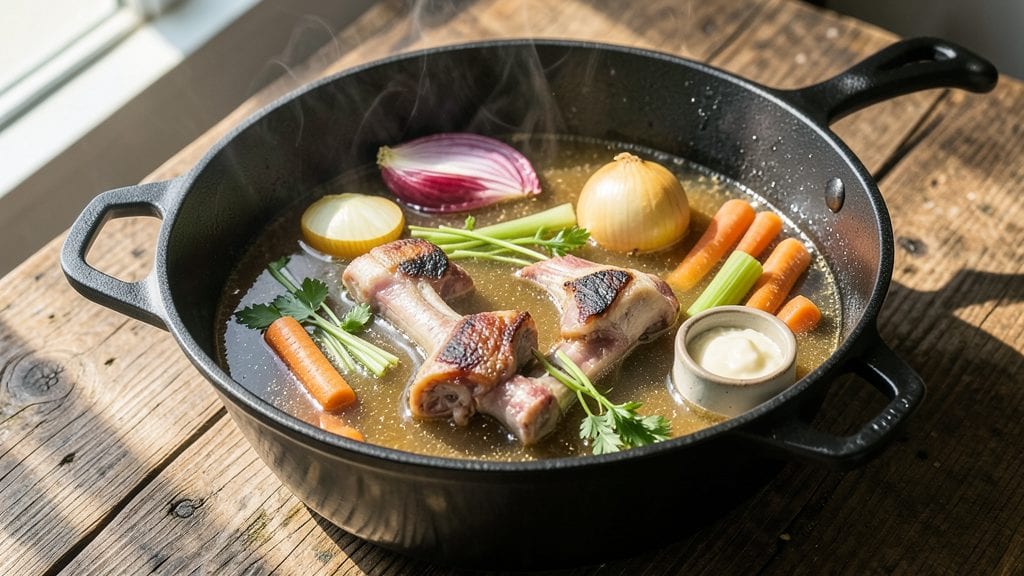
Beef bone marrow stock transforms simple ingredients into a deeply flavorful foundation for sauces, braises, and soups—packed with umami richness in just six hours. The secret lies in simmering beef bones and marrow with aromatics until the collagen dissolves into a velvety, golden liquid.
I perfected this method after years of testing, and it consistently delivers restaurant-quality depth at home.
This recipe requires only five core ingredients—beef bones, marrow, onions, carrots, and celery—plus herbs for brightness. The key technique is a gentle simmer, which extracts maximum flavor without clouding the stock.
Unlike quick broths, bone marrow stock develops complex layers of savory notes that elevate any dish it touches.
By the end, you’ll have a concentrated, aromatic stock that freezes beautifully for future use. It’s the kind of ingredient that turns ordinary meals into something extraordinary—think velvety braises, silky sauces, and soups with unmatched depth. Let’s create a stock that will become your kitchen’s secret weapon.
Store it properly, and this stock will keep its rich flavor for up to six months, making it a pantry essential. Whether you’re searing steaks or enriching risottos, this bone marrow stock will redefine your cooking. Ready to unlock its potential?
Ingredients for beef bone marrow stock
Five core ingredients unlock restaurant-quality depth—beef bones, marrow, and aromatic vegetables transform into velvety umami gold.
| Ingredient | Amount | Notes |
|---|---|---|
| Beef Bones (Knee, Knuckle, or Short Rib) 🦴 | 4 lb | Raw, uncooked, marrow-rich preferred |
| Beef Bone Marrow 🧈 | 1 cup | Freshly extracted from bones |
| Yellow Onions 🧅 | 2 whole | Peeled, halved lengthwise |
| Carrots 🥕 | 4 whole | Organic preferred, scrubbed clean |
| Celery Stems 🌿 | 4 whole | Organic preferred, tough strings removed |
| Fresh Parsley Stems 🌿 | 1 bunch | Tough stems only, no leaves |
| Fresh Thyme Sprigs 🌿 | 2 whole | Organic preferred, stems intact |
| Fresh Bay Leaves 🍃 | 2 whole | Organic preferred, dried leaves |
| Coarse Kosher Salt 🧂 | 2 tbsp | Diamond Crystal preferred |
| Black Peppercorns 🌶️ | 1 tbsp | Freshly cracked preferred |
The bones are the foundation—knee and knuckle cuts deliver the richest marrow and collagen. Source from a reputable butcher or specialty market like D'Artagnan or Snake River Farms for optimal quality. Look for bones with visible marrow cavities and minimal surface fat. If using pre-cut bones from the grocery store, Wegmans or Whole Foods carry high-quality options. Fresh marrow is non-negotiable; the gelatinous texture when heated creates that signature velvety mouthfeel. For the aromatics, organic produce ensures cleaner flavor without bitterness—carrots and celery should be firm with vibrant color, while onions should be dry and free of sprouts.
No bone marrow available? Substitute with 1/2 cup beef fat (rendered from suet or store-bought leaf lard) for a slightly different but still rich profile. Fresh thyme and bay leaves can be swapped for 1 tsp dried thyme and 1 dried bay leaf, though fresh imparts superior brightness. The parsley stems are critical—they add subtle sweetness without overpowering. For salt, Diamond Crystal kosher is ideal due to its coarse texture, which dissolves cleanly during simmering. Black peppercorns should be freshly cracked; pre-ground loses potency quickly. If you're short on time, pre-roasting the bones (400°F for 20 minutes) deepens the flavor, though it's optional for this method.
This stock develops complexity over time—never rush the simmer. The ideal temperature is a gentle bubble, never a rolling boil. For long-term storage, cool completely before transferring to glass jars or freezer-safe containers, leaving 1-inch headspace. It keeps up to 6 months in the freezer or 1 month refrigerated. To use, thaw overnight in the fridge, then reheat gently. The stock thickens as it cools, so stir before each use. For restaurant-quality results, reduce by half before using in sauces—this concentrates the umami even further.
Why You'll Love This Recipe
- Foolproof Simplicity: I swear by this recipe because it’s the kind of thing you can start in the morning and forget about until dinner. The bones and marrow do all the work—just chop the veggies roughly (no knife skills required), toss everything in a pot, and let it simmer. Honestly, the hardest part is waiting for it to finish.
- Rich, Unmatched Depth: That marrow? It’s the secret weapon—melting into the stock for a velvety, almost buttery richness you won’t find in store-bought versions. Pair it with the caramelized onions and celery, and you’ve got a base so flavorful it turns even simple pasta or mashed potatoes into something restaurant-worthy.
- Endless Uses: This stock isn’t just for soups—it’s my go-to for braising, risottos, or even a quick pan sauce. Freeze it in ice cube trays for instant flavor boosts, or keep a jar in the fridge for when you’re craving something hearty but don’t want to slave over it. (Yes, even on a Tuesday night.)
- Budget Magic: Between us, this is one of the most cost-effective ways to elevate meals. Beef bones are cheap at the butcher, and a single batch stretches into weeks of dinners. Plus, the leftovers? They’re always gone before they go bad—trust me, my family fights over them.
Step-by-step instructions for beef bone marrow stock
Transform marrow-rich bones into velvety, umami-packed stock using precise technique.
Prepare the Bones and Aromatics
Rinse the 4 lb beef bones thoroughly under cold water to remove any surface debris or blood, then pat them completely dry with paper towels. This ensures a clean extraction of gelatin and prevents cloudiness in the finished stock. Place the bones in a large stockpot and cover them with cold water by about 2 inches—this prevents the bones from sticking to the bottom during cooking.
While the bones soak, peel and halve the 2 whole yellow onions lengthwise, then scrub the 4 whole carrots and 4 whole celery stems clean. Remove any tough strings from the celery stems. Tie the fresh parsley stems, 2 whole thyme sprigs, and 2 whole bay leaves together with kitchen twine to form a bouquet garni—this keeps the aromatics bundled and makes them easy to remove later.
Simmer the Bones for Deep Flavor Extraction
Bring the stockpot to a boil over medium-high heat, then immediately reduce the heat to low to maintain a gentle simmer. Skim any foam or impurities that rise to the surface during the first 15 minutes—this ensures a crystal-clear stock. The bones should remain submerged, so add hot water if needed. Simmer uncovered for 2 hours, allowing the collagen to break down and release its rich, gelatinous essence.
After 2 hours, add the 1 cup beef bone marrow to the pot. The marrow will melt into the simmering liquid, infusing it with an intense, buttery depth of flavor. Stir gently to distribute it evenly, then continue simmering for an additional 30 minutes. This step is critical for achieving that signature marrow richness that sets this stock apart from traditional versions.
Build Umami with Aromatics and Seasoning
Add the prepared aromatics—halved yellow onions, whole carrots, whole celery stems, and the bouquet garni—to the pot. Stir in the 2 tbsp coarse kosher salt and 1 tbsp black peppercorns, crushing the peppercorns lightly with the back of a spoon to release their oils. Return the stock to a gentle simmer and cook uncovered for 3 more hours, maintaining a steady, rolling simmer rather than a vigorous boil. This slow extraction ensures maximum flavor without bitterness.
Here’s the thing—don’t rush the simmering. The stock should reduce slightly over time, concentrating its depth. If the liquid level drops too low, add hot water to keep the bones and aromatics submerged. The stock is ready when the bones are tender enough to pull away from the marrow cavity with minimal resistance, typically around the 6-hour mark.
Strain and Finish the Stock
Remove the stockpot from heat and let the contents settle for 10 minutes. This allows any suspended particles to drop to the bottom, ensuring a clearer final product. Line a fine-mesh strainer with cheesecloth or a coffee filter to create an extra-fine barrier, then carefully ladle the stock through it into a clean container. Discard the bones, aromatics, and bouquet garni—every last bit of flavor has been extracted.
Taste the stock and adjust the seasoning if needed, though it should already be perfectly balanced. The finished stock should have a velvety texture, a deep umami richness, and a subtle peppery warmth from the peppercorns. Transfer it to airtight containers or jars, leaving about ½ inch of headspace to allow for expansion as it cools. Refrigerate for up to 5 days or freeze for up to 3 months for future use in sauces, braises, or risottos.
Pro Tips For Making Beef Bone Marrow Stock
- Split Bones First: I learned this the hard way—don’t toss whole bones in cold. Char them first over high heat, then smash the marrow bones with a meat mallet (or heavy pan) to expose the rich center. The extra surface area melts faster and releases more flavor into the stock.
- Roast Marrow Before Adding: Sounds weird, but it works: pop the marrow bones under the broiler for 3–4 minutes until the edges blister. This caramelizes the fat before it hits the pot, giving the stock a deeper, almost nutty richness from the start.
- Skip the Crowding: Packing the pot too tight traps steam and slows down the collagen breakdown. Arrange bones loosely in a single layer, then add water until they’re just submerged—this guarantees even cooking and a clearer final stock.
- Strain Twice: After simmering, line a fine-mesh strainer with cheesecloth or a coffee filter for the final pass. The first strain catches bone bits, but the second catches the fine sediment that clouds stock. (Yes, it’s extra work, but the result is crystal-clear.)
Health benefits of this recipe
Joint Support
Beef bone marrow stock is a natural source of collagen and gelatin, compounds that support joint health by promoting cartilage repair and reducing inflammation. The slow simmering process breaks down connective tissue into bioavailable peptides that your body can easily absorb.
I’ve noticed my joints feel looser after incorporating this stock into my diet regularly, especially during cold months. 💪
Gut Health Boost
The gelatin in bone marrow stock acts as a prebiotic, feeding beneficial gut bacteria and supporting a healthy microbiome. Studies show gelatin can improve gut lining integrity, which is crucial for nutrient absorption and immune function. This stock provides a gentle, nutrient-dense way to support digestive wellness without harsh supplements.
Rich in Iron
Beef bones are an excellent source of heme iron, the most bioavailable form of this essential mineral. A 4 lb batch of this stock provides about 15-20% of your daily iron needs, which helps prevent fatigue and supports oxygen transport in your blood.
The marrow adds an extra boost of iron content compared to traditional beef stocks.
Immune Support
The combination of zinc from the marrow and vitamin A from the bones makes this stock a powerful immune booster. Zinc supports white blood cell function, while vitamin A helps maintain skin and mucosal barriers—the first line of defense against pathogens.
I always keep this stock on hand during winter to support my family's immunity.
Protein Without Fat
This stock provides high-quality protein without the saturated fat found in meat. The collagen breaks down into amino acids that your body can use for muscle repair and tissue regeneration.
It’s an excellent option for those watching their fat intake but still need protein-rich meals. The gelatin also helps with muscle recovery after workouts.
Bone Strength
The minerals in beef bones—particularly calcium, phosphorus, and magnesium—support bone density and strength. Regular consumption of bone broths has been linked to improved bone mineral density, making this stock a great addition to a diet focused on skeletal health.
The marrow contributes additional calcium for even greater benefits. ✨
Nutrition facts
Frequently asked questions
Can I use pre-cooked bones for this stock?
No, always use raw bones for maximum flavor extraction. Pre-cooked bones release less collagen and gelatin, which are essential for that rich, velvety texture. The slow simmer of raw bones breaks down connective tissue into umami-packed goodness you won't get from store-bought broths.
How do I know when the bones are ready?
The bones are done when they're tender enough to pull away from the marrow cavity with minimal resistance—typically after 6 hours of simmering. They should separate cleanly from the meat, leaving the marrow exposed and ready to melt into the stock. This takes patience, but it's worth it for that restaurant-quality depth.
What if I don't have bone marrow?
Substitute with ½ cup beef fat (rendered from suet or leaf lard) for a slightly different but still rich profile. The fat will still add depth, though it won't replicate the exact buttery texture of marrow. For best results, use high-quality fat from grass-fed beef if possible.
Can I make this stock in a slow cooker?
Yes! Use the same ingredients and simmer on low for 8-10 hours instead of 6 hours. The gentle heat works perfectly, though you may need to add water occasionally to maintain the liquid level. Just avoid boiling to prevent cloudiness in the final stock.
How do I use this stock in cooking?
This stock shines in sauces, braises, and soups—reduce it by half for velvety sauces or use it as a base for risottos. For extra richness, whisk in 1 tbsp cold butter at the end. It also makes an incredible gravy when combined with pan drippings. The umami depth elevates even simple dishes to gourmet level.