
Soups & Stews
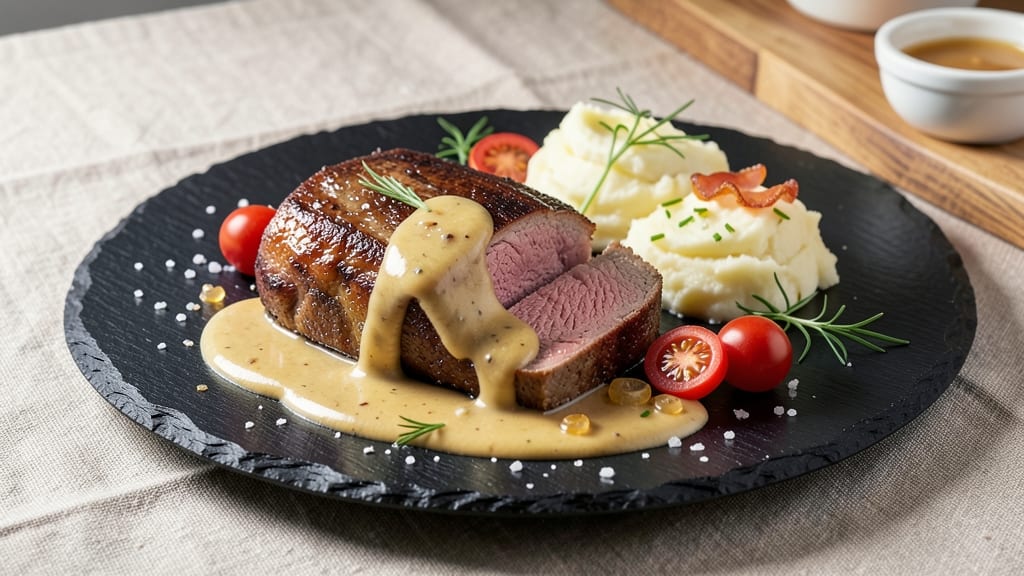
This beef bearnaise recipe transforms simple ingredients into a velvety, golden sauce that elevates any protein dish. The secret lies in carefully emulsifying butter into a rich wine-vinegar reduction, creating a sauce that's both elegant and deeply flavorful.
Mastering the technique ensures a glossy finish and perfect balance of tangy, herby notes.
What sets this bearnaise apart is its foolproof emulsification process, where melted butter gradually blends into the reduction while maintaining a silky texture. No special equipment is needed—just patience and attention to temperature control.
The sauce's depth comes from shallots, white wine, and fresh herbs, which infuse the butter with layers of flavor.
Once perfected, this bearnaise delivers restaurant-quality results that pair beautifully with steak, fish, or even roasted vegetables. The glossy sheen and rich mouthfeel make it a showstopper for special occasions or weeknight dinners alike. The key is keeping everything warm and moving quickly during the emulsification.
For best results, prepare this sauce just before serving to maintain its velvety consistency and vibrant color. A small batch yields generous portions, so scale as needed. The technique may seem intimidating at first, but with practice, it becomes second nature—transforming ordinary meals into something extraordinary.
Ingredients for beef bearnaise
Nine ingredients create a restaurant-worthy bearnaise with velvety texture and herbed wine complexity.
| Ingredient | Amount | Notes |
|---|---|---|
| Unsalted Butter 🧈 | 1 cup | Cold, cubed for emulsification |
| Shallots 🧅 | ½ cup | Finely minced, about 4-5 cloves |
| Dry White Wine 🍷 | ½ cup | Bold, dry variety like Sauvignon Blanc |
| White Wine Vinegar 🍶 | ¼ cup | High-quality, aged vinegar |
| Fresh Tarragon 🌿 | ¼ cup | Chopped, stems removed |
| Fresh Chives 🌱 | 2 tbsp | Finely chopped for garnish |
| Diamond Crystal Kosher Salt 🧂 | ½ tsp | For seasoning reduction |
| Ground Black Pepper 🌶️ | ¼ tsp | Freshly cracked for heat |
| Heavy Cream 🥛 | ¼ cup | Optional, for extra richness |
The butter must be cold and cubed—this ensures proper emulsification when gradually incorporated into the reduction. European-style unsalted butter, like Plugrá or President, works best due to its higher fat content. Shallots, not onions, provide the subtle sweetness without overpowering the sauce. Freshly minced shallots release more flavor than jarred versions, so take the time to chop them finely. For the white wine, Sauvignon Blanc or Chardonnay adds bright acidity that balances the richness. Avoid sweet wines—they'll throw off the sauce's delicate equilibrium. Tarragon is non-negotiable here; its anise-like flavor is essential to authentic bearnaise.
No white wine? Dry vermouth or chicken stock works in a pinch, but the flavor profile will differ. Substitute red wine vinegar for white wine vinegar only if you're making a red wine reduction. Fresh herbs are critical—dried tarragon at half the amount lacks the aromatic punch. For extra richness, heavy cream can be whisked in at the end, but traditional bearnaise relies solely on butter. If your sauce breaks during emulsification, whisk in a splash of hot water to stabilize it. The key is patience: add butter slowly while maintaining a gentle simmer.
This sauce must be made fresh—it doesn't reheat well without breaking. Keep all ingredients at room temperature before starting, but store the butter in the fridge until ready to use. Prep all components ahead of time, but assemble the sauce just before serving to maintain its glossy sheen. Once complete, transfer to a warm bowl and cover with plastic wrap pressed directly onto the surface to preserve its texture. The sauce will keep for 2 hours at room temperature or 3 days refrigerated, though flavor peaks immediately after preparation.
Why You'll Love This Recipe
- No Wine Waste: I use the leftover shallots and tarragon stems for scrambled eggs the next morning—no scraps, just flavor. That rich wine reduction? Perfect for drizzling over roasted veggies or even a simple grilled cheese.
- Crowd-Pleaser Sauce: This isn’t just for steak. Slather it on grilled chicken, toss it with pasta, or even dollop it over mashed potatoes. The buttery tarragon shines everywhere, and guests will ask for the recipe before dessert.
- Foolproof Emulsion: I’ve burned sauces before, but bearnaise is forgiving. The butter keeps it silky even if it separates—just whisk it back together. No tempering stress, no last-minute panic.
- Weeknight Luxury: Twenty minutes tops, and you’ve got restaurant-quality sauce. Between us, that’s how I pretend I’m a fancy chef when my kids are begging for dinner. Plus, the leftovers keep for days in the fridge.
Step-by-step instructions for perfect beef bearnaise
Mastering this classic sauce requires patience and precision—here's how to build a silky, flavorful bearnaise every time.
Create the Tarragon Vinegar Reduction
In a small saucepan, combine the 0.5 cup dry white wine and 0.25 cup white wine vinegar over medium-high heat. Bring to a simmer and reduce by half—this should take about 5-7 minutes—until the liquid measures roughly 0.3 cup. The aroma should be concentrated and herbaceous, with the wine's acidity mellowing into a balanced base.
While reducing, finely mince the 0.5 cup shallots (about 4-5 cloves) and 0.25 cup fresh tarragon, removing stems. Once the reduction reaches the target volume, remove from heat and stir in the shallots and tarragon. Let steep for 10 minutes—this infuses the aromatic compounds into the liquid. Strain through a fine-mesh sieve into a heatproof bowl, pressing gently on the solids to extract maximum flavor. Discard the solids.
Emulsify the Butter
Place the strained reduction in a clean saucepan and warm over low heat until steaming but not boiling. Meanwhile, cube the 1 cup unsalted butter and chill in the freezer for 10 minutes—this ensures proper emulsification later. The butter should be cold but not rock-hard.
Add the 0.5 tsp diamond crystal kosher salt and 0.25 tsp ground black pepper to the warm reduction. Whisk in the 0.25 cup heavy cream (if using) and bring the mixture to 160°F—just below a simmer. Remove from heat and let sit for 2 minutes to stabilize.
Temper and Emulsify the Sauce
With the sauce still warm, place the bowl over a pot of barely simmering water (double boiler method) to maintain 160°F. Add the cold cubed butter one piece at a time, whisking vigorously after each addition. This gradual incorporation prevents the butter from melting too quickly and breaking the emulsion. The sauce should thicken noticeably as each cube melts, creating a glossy, velvety texture.
Continue whisking until all butter is incorporated and the sauce reaches a pourable consistency—it should coat the back of a spoon. If the sauce separates, immediately whisk in 1 teaspoon of the warm reduction to re-emulsify. The final texture should be silky, with no visible butter flecks. Remove from heat and cover with plastic wrap to prevent a skin from forming.
Finish and Garnish
Let the bearnaise rest for 10 minutes to allow flavors to meld. Taste and adjust seasoning—add a pinch more salt if needed, or a splash of white wine vinegar for brightness. Just before serving, stir in the 2 tbsp finely chopped fresh chives for a fresh herbal finish. The sauce should be rich, with layers of wine, vinegar, and tarragon complexity balanced by the buttery smoothness.
Serve immediately over perfectly cooked beef—this sauce loses its luster if reheated. For best results, keep the bearnaise warm in a thermos set to 160°F while plating. The emulsion will hold for 1-2 hours at this temperature, maintaining its signature glossy sheen and velvety mouthfeel.
Pro Tips For Making Beef Bearnaise
- Sweat Shallots Slow: I learned this the hard way—rushing the shallots turns your bearnaise into vinegar soup. Use medium-low heat and let them cook for 8-10 minutes until translucent and just starting to caramelize. No browning, just softness—this keeps the sauce from tasting sharp and one-dimensional.
- Strain the Tarragon: Fresh tarragon is the soul of bearnaise, but whole stems make the sauce look messy. After simmering the reduction, strain it through a fine-mesh sieve lined with cheesecloth. You’ll end up with a silky texture and no chewy bits—trust me, your guests won’t even notice you skipped garnishing.
- Whisk Butter in Fast: The moment you remove the sauce from heat, add the butter in one go and whisk like your life depends on it. If you drizzle it in slowly, you’ll end up with butter blobs instead of a velvety emulsion. Keep the pot off the heat—this isn’t a race, but don’t dawdle either.
- Use Cold Butter: I was skeptical until I tried it: pulling the unsalted butter straight from the fridge (not the door shelf) and cutting it into small cubes guarantees it melts smoothly. Warm butter? You’ll get grainy lumps in your sauce. Cold butter = restaurant-quality finish every time.
Serving suggestions for this recipe
Classic Pairings
This bearnaise shines brightest with medium-rare steak—its buttery richness perfectly complements the tender meat. I always serve it over filet mignon or ribeye, letting the sauce pool beautifully in the sear marks.
For a lighter option, try it with pan-seared scallops or halibut—the sauce's tangy notes cut through delicate fish proteins. 🍽️
Unexpected Vegetable Pairings
Don't limit bearnaise to meat! It elevates roasted asparagus or grilled eggplant with its herby depth. I drizzle it over creamy polenta or warm mashed potatoes for an unexpected twist. Even seared mushrooms become luxurious with this sauce—just a light coating transforms them into a restaurant-worthy side.
Bread Service
For an elegant touch, serve warm crusty baguette slices alongside your main dish. The bearnaise's richness pairs beautifully with the bread's crunch, creating a perfect balance. I like to toast the bread lightly and brush it with a thin layer of the sauce before serving—it's like edible gold! 🍞
Wine Pairings
Stick with dry white wines like Chardonnay or Sauvignon Blanc—they mirror the sauce's citrusy brightness. For red wine lovers, a light Pinot Noir works surprisingly well.
Avoid heavy reds or sweet whites—they'll clash with the bearnaise's tangy, herby profile. A crisp Sancerre is my go-to choice for the perfect match.
Garnish Finishing Touches
Before serving, add a sprinkle of fresh chives or tarragon leaves for a pop of color and freshness. A few crispy fried shallots (store-bought or homemade) add crunch contrast.
For a smoky touch, finish with a pinch of smoked salt—it enhances the sauce's depth without overpowering it. These small details elevate the presentation dramatically.
Nutrition facts
Frequently asked questions
Can I make bearnaise sauce ahead of time?
Fresh bearnaise is best made just before serving to maintain its glossy texture and silky emulsion. However, you can prep the tarragon-vinegar reduction up to 2 days ahead and store it refrigerated. Reheat gently before adding the butter. The sauce itself keeps for 2 hours at room temperature or 3 days refrigerated, but reheating may cause separation. For events, make it in small batches and keep warm in a thermos set to 160°F.
Why did my bearnaise sauce break/separate?
Sauce separation usually happens from one of three issues: adding butter too quickly, overheating, or temperature fluctuations. Always add cold butter cubes one at a time while whisking vigorously. Keep the mixture at a steady 160°F—never boiling. If it separates, whisk in 1 teaspoon of warm reduction to re-emulsify. For extra insurance, chill the butter longer (15-20 minutes) before adding.
What's the best white wine for bearnaise?
Use a bold, dry white wine with good acidity—Sauvignon Blanc or Chardonnay work perfectly. Avoid sweet or oaky wines like Riesling or Chardonnay with heavy oak aging. The wine should have noticeable citrus or herbal notes to complement the tarragon. If you can't find white wine, dry vermouth makes a decent substitute, though the flavor will differ slightly.
Can I substitute tarragon in bearnaise?
Tarragon is essential for authentic bearnaise—its anise-like flavor defines the sauce. If unavailable, try a mix of ½ teaspoon fennel seeds (toasted and ground) plus 1 tablespoon fresh dill for a similar aromatic profile. Avoid using only basil or thyme—they won't replicate tarragon's unique character. For a milder version, you could use ½ the tarragon plus 1 tablespoon fresh chervil, but the flavor will be less complex.
How do I fix bearnaise that's too thin?
If your sauce is too thin, simmer it gently for 2-3 minutes to reduce excess liquid. For a quicker fix, whisk in 1 tablespoon cold butter (cut into small pieces) while off heat—this helps thicken the emulsion. Avoid adding flour or cornstarch, as these will alter the sauce's delicate texture. If the sauce is still too runny after thickening, it may need more reduction time next time—aim for a thicker base reduction before emulsifying.