
Soups & Stews
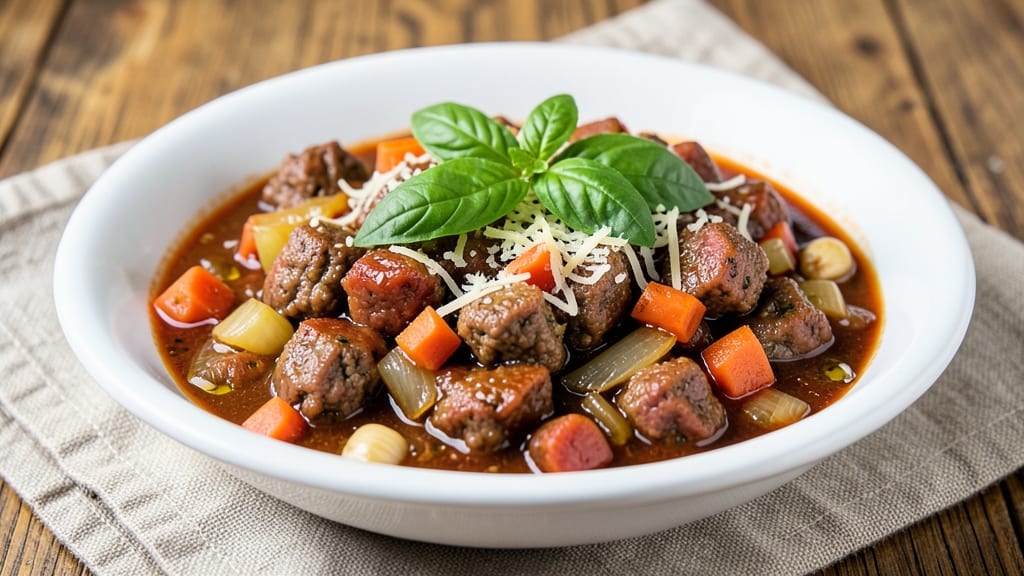
This beef and sausage bolognese recipe delivers restaurant-quality depth with rich umami flavors that cling to every forkful. 🔥 The secret lies in slow-browning the meat—creating a flavorful crust that dissolves into the sauce—and simmering it for hours to develop complex, layered tastes.
This isn’t your grandmother’s quick sauce; it’s a labor of love that transforms simple ingredients into something extraordinary.
What sets this recipe apart is the perfect balance of beef and sausage—lean ground beef for structure and Italian sausage for fat and flavor. The sauce builds slowly, starting with a rich base of onions, garlic, and tomatoes, then deepening as the meat renders and the wine (or stock) reduces.
No shortcuts here; this is about patience and technique, resulting in a sauce so velvety it coats pasta like a second skin.
The final result is a dish that’s equal parts comforting and sophisticated: tender, hand-cut pasta twirled in a sauce that’s rich yet bright, with just enough acidity to cut through the richness.
The aroma alone will have everyone gathering at the table, and the first bite delivers on that promise of deep, satisfying flavor. This is the kind of bolognese that makes you want to slow down and savor every spoonful.
Whether you’re feeding a family or planning a dinner party, this recipe scales beautifully. The sauce freezes well, so you can prep ahead and enjoy the process without the last-minute rush. Let’s get started on creating a bolognese that tastes like it’s been simmering all day—even if it hasn’t.
Ingredients for beef and sausage bolognese
Sixteen ingredients, hours of simmering, one unforgettable sauce. Here's what you'll need.
| Ingredient | Amount | Notes |
|---|---|---|
| Lean Ground Beef 🥩 | 1 ½ lb | 80/20 fat ratio preferred |
| Italian Sweet Sausage 🌭 | 1 lb | Casings removed, crumbled |
| Yellow Onions 🧅 | 2 large | Diced, about 2 cups |
| Garlic Cloves 🧄 | 6 cloves | Peeled, minced |
| Carrots 🥕 | 3 medium | Diced, about 1 cup |
| Celery Stalks 🧅 | 3 whole | Diced, about 1 cup |
| Canned San Marzano Tomatoes 🍅 | 2 cans | 28 oz each, crushed |
| Dry Red Wine 🍷 | 1 cup | Bold variety like Cabernet |
| Beef Stock 💧 | 2 cups | Homemade or high-quality |
| Tomato Paste 🍅 | ½ cup | Smooth, no sugar added |
| Olive Oil 🫒 | ½ cup | Extra-virgin for richness |
| Fresh Rosemary 🌿 | ½ tsp | Chopped, or 1 tbsp dried |
| Fresh Thyme 🌿 | 1 tsp | Leaves only, or 1 tbsp dried |
| Salt 🧂 | 1 ½ tsp | Kosher or sea salt |
| Ground Black Pepper 🌶️ | 1 tsp | Freshly ground preferred |
The meat is where the magic starts. Lean ground beef gives structure, while the Italian sausage adds fat and richness—don't skimp here. I grab mine from Costco when I'm doing a big batch, but the regular supermarket stuff works fine. Look for 80/20 fat ratio in the beef—it renders better and adds flavor. The sausage should be sweet, not spicy, unless you're going for a different vibe. For the San Marzano tomatoes, skip the fancy imported ones if needed—just grab the good stuff at Trader Joe's or any grocery store. The key is no added sugar or salt in the paste.
No red wine? Beef stock with a splash of balsamic works in a pinch. Fresh herbs are ideal, but dried works at one-third the amount. The carrots and celery can be swapped for fennel or mushrooms if you're feeling adventurous. For the tomato paste, squeeze tubes from Trader Joe's are perfect—they keep forever and you won't waste half a can. The olive oil matters here—use something fruity and peppery, not the cheap stuff. If you're prepping ahead, the sauce actually tastes better the next day once everything melds together.
This sauce reheats beautifully—just warm it gently on the stove. Keeps for 5 days in the fridge, freezes for 3 months. I portion mine into containers so lunches are sorted for the week. The beef stock can be made in bulk and frozen, saving you time later. For the herbs, store fresh ones in damp paper towels in a baggie to keep them fresh longer. If you're making this for a crowd, double the batch—it's worth it.
Why You'll Love This Recipe
- One-Pot Magic: I swear by this—just brown the beef and sausage, toss in the onions, garlic, and carrots, then let the tomato sauce do the work. Minimal chopping, zero fuss, and still tastes like you slaved over it.
- Sweet & Savory Boom: That Italian sausage? It’s the star—brings a smoky-sweet punch that cuts through the richness of the beef. Honestly, the first time I made this, my husband asked for seconds before the plate was even empty.
- Leftovers That Beg: This sauce improves overnight, so I always double it. Freeze half for lazy nights, or toss it into pasta the next day—still hearty, still packed with flavor, and zero takeout temptation.
- Budget-Friendly Feast: Ground beef and sausage stretch for miles with onions and carrots bulking it up. I feed my family of four for under $15, and somehow, it always feels like a fancy dinner. (Yes, even on a Tuesday night.)
Step-by-step instructions for beef and sausage bolognese
Here's how to build rich, meaty sauce that clings perfectly to pasta.
🍳 Step 1: Brown the Meat for Deep Flavor
Heat the 0.5 cup olive oil in a large Dutch oven over medium-high heat. Add the 1.5 lb lean ground beef and crumbled 1 lb Italian sweet sausage, breaking it apart with a wooden spoon. Let it cook undisturbed for 3-4 minutes until the meat releases from the bottom and turns deep brown—this is where all the umami magic happens.
I press down gently with the spoon to break up any large clumps, but I don't stir constantly. The goal is to develop that beautiful crust on the bottom. Once browned, transfer the meat to a plate and set aside—you'll use those flavorful browned bits later.
👨🍳 Step 2: Sauté the Vegetable Base
In the same Dutch oven, reduce heat to medium and add the 2 large diced yellow onions, 6 minced garlic cloves, 3 diced carrots, and 3 diced celery stalks. Cook for 8-10 minutes until the vegetables soften and the onions turn translucent. You want them to caramelize slightly—that sweetness balances the rich meat flavors.
Here's the thing—don't rush this step. The vegetables should release their moisture and reduce down to about ½ cup of liquid. If they're still releasing a lot of water, cook them a few minutes longer. This forms the flavor foundation of your sauce.
🍳 Step 3: Build the Sauce with Wine and Tomatoes
Pour in the 1 cup dry red wine and scrape up all those browned bits from the bottom of the pot with a wooden spoon. Let it simmer for 3-4 minutes until mostly evaporated. This deglazing step captures all the meaty flavors that would otherwise stick to the pan.
Add the 2 cans crushed San Marzano tomatoes, 0.5 cup tomato paste, 2 cups beef stock, 0.5 tsp chopped fresh rosemary, 1 tsp fresh thyme, 1.5 tsp salt, and 1 tsp freshly ground black pepper. Stir well to combine, then return the meat to the pot. Bring to a gentle simmer over medium-low heat.
⏰ Step 4: Simmer Until Rich and Thick
Partially cover the Dutch oven and let the sauce simmer gently for 1.5-2 hours. Stir occasionally to prevent sticking, but don't over-stir—this can make the sauce too smooth. You're looking for a sauce that coats the back of a spoon but still has some body to it.
I like to check the sauce after 1 hour—if it's too thin, uncover it and simmer uncovered for the remaining time. The sauce should reduce enough that it clings beautifully to pasta without being gluey. Taste and adjust seasoning if needed—sometimes you need a little more salt or a splash of wine to balance the flavors.
🍝 Step 5: Finish with Pasta Pairing
While the sauce simmers, cook 12 oz pasta (like pappardelle or tagliatelle) in salted boiling water until al dente—about 1 minute less than package instructions. Reserve ½ cup pasta water before draining.
Toss the drained pasta with the Bolognese sauce, adding a splash of reserved pasta water if needed to loosen it. The sauce should coat each strand perfectly. Serve immediately with extra grated Parmesan if desired—this rich, meaty sauce tastes even better the next day, but it's worth the wait!
Pro Tips For Making Beef And Sausage Bolognese
- CRANK THE HEAT FIRST: Start browning the beef and sausage over medium-high heat—no, not medium, medium-high—until they’re deeply browned, not just cooked through. I used to rush this step, and the sauce ended up tasting flat. Those browned bits? They’re the flavor foundation.
- SWEAT THE ONIONS LOW: Caramelize the onions for at least 10 minutes before adding anything else—yes, even if you’re eager to move on. Low heat, no lid, and a splash of water if they stick. Skimp here, and your bolognese will taste raw.
- DON’T SKIP THE CARROT GRATE: Finely grate the carrots (no need to peel) and cook them with the onions—they’ll soften into the sauce without needing extra attention. I tried chopping them once, and they stayed stubbornly chunky. Grated, they melt right in.
- REST THE MEAT HALFWAY: After browning, let the beef and sausage sit off-heat for 5 minutes before adding the onions. This keeps them from releasing too much liquid at once, so your sauce doesn’t turn into a sad, watery mess. (Your future self will notice.)
Dietary considerations for these flavors
Gluten-Free Adaptations
This bolognese is naturally gluten-free if you use gluten-free beef stock and check your tomato paste for hidden gluten. I always verify labels on San Marzano tomatoes and tomato paste—some brands add wheat fillers.
For extra insurance, I use Caulipower gluten-free pasta (it holds up beautifully to the rich sauce). The texture stays al dente and the sauce clings perfectly. 🌟
Low-Carb Options
Skip the pasta entirely and serve this bolognese over zucchini noodles or shirataki noodles for a low-carb twist. I've also had great success with cauliflower rice as a base—just sauté it first to remove excess moisture.
The sauce's richness shines when paired with these lighter options. For a heartier meal, serve it with roasted Brussels sprouts or a side salad.
Dairy-Free Considerations
The traditional recipe is dairy-free, but if you're serving it with cheese, opt for nutritional yeast or dairy-free Parmesan like Violife. The sauce's depth comes from the meat and tomatoes, so no dairy is needed.
For extra richness, stir in 1 tablespoon olive oil at the end—it mimics the creaminess without any dairy. Always check labels on your beef stock and tomato paste for hidden dairy additives.
Allergen-Friendly Swaps
For nut allergies, avoid any added nuts (some tomato pastes contain them). For seafood allergies, stick to the original recipe—just ensure your beef stock is made without seafood-based flavorings. If you're avoiding pork, substitute the Italian sausage with chicken sausage or extra beef.
I've also seen great results using turkey sausage for a lighter option that still delivers big flavor. 💡
Protein Alternatives
Vegetarians can swap the beef and sausage for mushrooms and lentils—I use cremini mushrooms and brown lentils for texture. For a meatier texture, try plant-based ground "meat" like Beyond Meat or Impossible.
The cooking method stays the same—brown the "meat" first to develop those deep flavors. The sauce will still be rich and satisfying, just with a different protein profile.
Nutrition facts
Frequently asked questions
Can I make this beef and sausage sauce without wine?
Replace the 1 cup red wine with 1 cup beef stock plus 1 tablespoon balsamic vinegar for acidity. The key is maintaining that same 3-4 minute simmer to deglaze the pan and capture the meaty flavors. The sauce will still develop depth—just with a slightly different profile.
How do I prevent the sauce from becoming too thick or gluey?
This happens when the sauce reduces too much. If it starts looking thick, add 1-2 tablespoons of reserved pasta water or beef stock while simmering. The sauce should coat the back of a spoon but still be loose enough to cling to pasta. Stirring occasionally (but not constantly) helps maintain texture.
What's the best pasta shape for this rich meat sauce?
Wide, flat noodles work best—pappardelle, tagliatelle, or fettuccine are ideal. Their broad surfaces catch and hold the sauce beautifully. For extra texture, try pappardelle with ribbons or rigatoni with ridges. Avoid thin strands like spaghetti—the sauce will slide off too easily.
Can I make this ahead of time?
This sauce tastes even better the next day! Let it cool completely, then store in an airtight container in the fridge for up to 5 days or freeze for 3 months. Reheat gently on the stove with a splash of water to restore moisture. The flavors meld and deepen overnight—perfect for meal prep.
Why does my bolognese taste bland compared to restaurant versions?
Restaurant bolognese often uses slow-cooked meat (like chuck roast) and simmers for 4+ hours. For home cooking, try these fixes: brown the meat longer (until deeply caramelized), use high-quality tomatoes (San Marzano), and add a pinch of sugar (½ tsp) to balance acidity. A splash of red wine reduction at the end adds complexity too.