
Soups & Stews
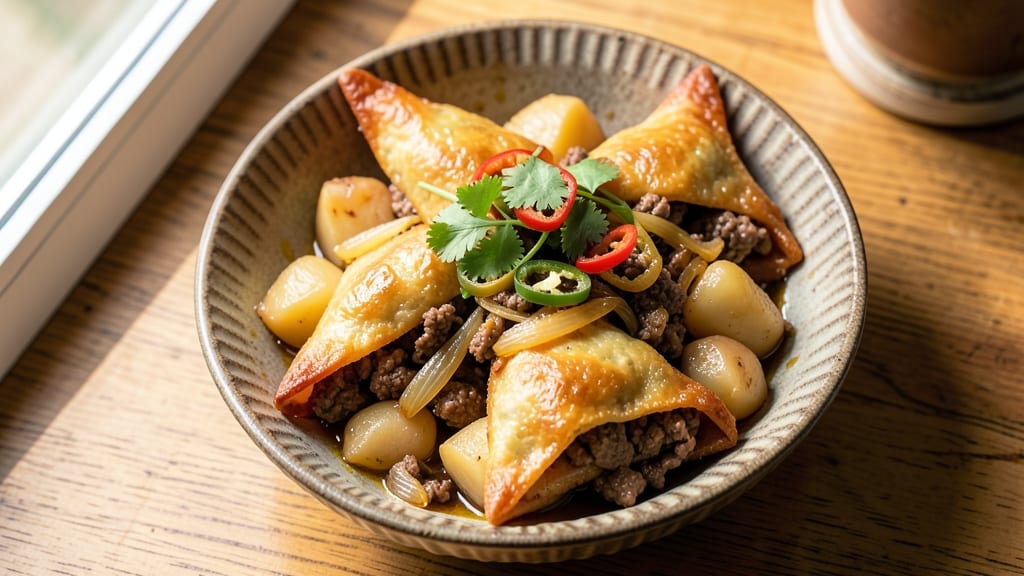
This beef and potato samosa recipe delivers the perfect balance of crispy pastry and flavorful spiced filling that makes every bite irresistible. The secret lies in a well-seasoned mixture of tender beef and potatoes wrapped in a delicate, golden-brown crust that stays crisp even after serving.
I've perfected this technique over countless batches, ensuring the filling stays moist while the pastry achieves that signature crunch.
What sets this recipe apart is the layered approach—starting with a properly spiced beef and potato filling that cooks just until tender, then assembling it with precision into triangular pastry pockets.
The dough is rolled thin and cut with care to maintain that signature samosa shape, while a light brush of oil before frying ensures maximum crispiness. This isn't just a recipe; it's a method that transforms simple ingredients into something extraordinary.
The result is a dish that's equally satisfying as a snack or a main course—golden, flaky pastry encasing a savory filling of perfectly seasoned beef and potatoes. Each bite delivers a satisfying crunch followed by warm, aromatic spices that linger.
The crispy exterior gives way to tender filling, creating a contrast that's impossible to resist. Once you try this version, store-bought samosas will never measure up.
Whether you're serving these as appetizers for a party or a hearty snack for yourself, this recipe delivers consistent results every time. The key is patience—allowing the dough to rest and the filling to develop its flavors fully.
With these steps, you'll achieve restaurant-quality samosas in your own kitchen, complete with that coveted crispy texture and rich, spiced filling that makes them unforgettable.
Ingredients for beef and potato samosa
Twelve ingredients transform into golden, crispy samosas with tender spiced filling inside.
| Ingredient | Amount | Notes |
|---|---|---|
| Lean Ground Beef 🥩 | 1 ½ lb | 80% lean for tenderness |
| Russet Potatoes 🥔 | 3 medium | Peeled and diced small |
| Yellow Onions 🧅 | 2 large | Finely chopped |
| Fresh Ginger 🌿 | 1 inch | Grated finely |
| Garlic Cloves 🧄 | 6 cloves | Minced finely |
| Garam Masala 🌶️ | 1 ½ tbsp | Store-bought or homemade |
| Ground Cumin 🌶️ | 1 tbsp | Toasted for depth |
| Ground Coriander 🌿 | 1 tbsp | Freshly ground preferred |
| Turmeric Powder 🧂 | ½ tsp | Bright yellow color |
| Red Chili Powder 🌶️ | 1 tsp | Adjust for heat preference |
| Salt 🧂 | 1 ½ tsp | Kosher or sea salt |
| All-Purpose Flour 🌾 | 3 cups | For dough, plus extra |
| Unsalted Butter 🧈 | ½ cup | Cold, cubed for dough |
| Ice Water 💧 | ½ cup | For dough elasticity |
| Vegetable Oil 🫒 | 2 cups | For deep frying |
The beef and potatoes form the heart of these samosas, so quality matters. Ground beef with 80% lean content stays tender during frying—avoid anything leaner than that. For potatoes, Russet varieties hold their shape best when diced small. Whole Foods or local Indian markets often carry pre-grated ginger and garam masala, saving you time. If using fresh ginger, peel it thoroughly—those fibrous bits can make the filling gummy. The onions should be sweet, not bitter, so choose yellow or red varieties from the grocery store's fresh produce section.
No garam masala? Mix 1 tsp each of cumin, coriander, cinnamon, cardamom, and cloves for a close substitute. Fresh ginger too fibrous? Powdered ginger at half the amount works in a pinch. For the dough, King Arthur flour yields the best results—its protein content creates that signature flaky texture. Short on butter? Vegetable shortening gives similar crispiness. The filling can be prepped ahead and refrigerated for up to 2 days, but assemble the samosas just before frying to maintain that perfect crunch.
The dough must rest at least 30 minutes before rolling—this relaxes the gluten for easier handling. Store unused dough wrapped in plastic in the fridge for up to 3 days or freeze for 3 months. Leftover filling keeps 4 days refrigerated or 3 months frozen. For frying, maintain oil temperature at 350°F—use a thermometer for precision. Deep-fat fryers are ideal, but a heavy pot works too. Drain samosas on a wire rack, not paper towels—they'll stay crisp longer.
Why You'll Love This Recipe
- One-Pot Wonder: I swear by this recipe because it’s all about minimal cleanup. The beef browns right in the same pot where the potatoes soften—no extra pans, no extra dishes. Just one sheet pan, one spatula, and you’re done.
- Spice Without Stress: Between us, I’m not a big fan of complicated spice blends. This recipe nails it with just ginger, garlic, and a pinch of salt—deep, warm flavors that make the potatoes melt in your mouth while the beef stays tender. Honestly, that crispy edge with the creamy center? Chef’s kiss.
- Weeknight Workhorse: I make these for everything—lazy Mondays, game days, even as a side when I’m roasting chicken. The leftovers reheat perfectly, and they’re hearty enough to stretch into lunches. (Yes, even on a Tuesday night.)
- Budget-Friendly Powerhouse: Ground beef and russets are cheap staples, but they feel like a restaurant dish. I’ve fed six people for under $15 with this—no fancy ingredients, just smart prep. My daughter picks out the onions first, but she still asks for seconds.
Step-by-step instructions for beef and potato samosa
Follow these precise steps to achieve a perfectly crispy exterior and flavorful filling every time.
Prepare the Spiced Beef and Potato Filling
In a large skillet, heat 1 tablespoon of the vegetable oil over medium heat. Add the 1.5 lb lean ground beef and cook, breaking it apart with a wooden spoon, until it loses its raw color—about 5-6 minutes. The beef should be fully browned but not dried out.
Push the beef to one side of the pan and add the 2 large finely chopped yellow onions. Cook them for 3-4 minutes until they soften and become translucent. Add the 1 inch finely grated fresh ginger and 6 cloves minced garlic cloves, cooking for 1 minute until fragrant.
Return the beef to the center of the pan and stir in the 3 medium diced russet potatoes. Cook for 5 minutes until the potatoes begin to soften. Sprinkle in the 1.5 tbsp garam masala, 1 tbsp ground cumin, 1 tbsp ground coriander, 0.5 tsp turmeric powder, 1 tsp red chili powder, and 1.5 tsp salt. Stir well to coat all ingredients evenly.
Reduce the heat to low and cover the pan. Let the mixture simmer for 15-20 minutes, stirring occasionally, until the potatoes are completely tender and the filling has thickened. Remove from heat and let it cool completely before filling the samosas—this prevents the dough from becoming soggy.
Make the Samosa Dough and Rest
In a large mixing bowl, combine the 3 cups all-purpose flour and 0.5 tsp salt. Cut in the 0.5 cup cold cubed unsalted butter using a pastry cutter or your fingers until the mixture resembles coarse crumbs with pea-sized butter pieces remaining.
Gradually add the 0.5 cup ice water, mixing gently with a fork or your hands until the dough just comes together. Avoid overmixing—you want a slightly rough texture. Knead the dough on a lightly floured surface for 3-4 minutes until smooth and elastic. If it feels too sticky, add 1 tablespoon more flour.
Shape the dough into a disk, wrap it in plastic wrap, and refrigerate for at least 30 minutes. This resting period relaxes the gluten, making it easier to roll out thin sheets for crispy samosas. For best results, let it rest overnight—this enhances the flavor and texture significantly.
Roll and Cut the Dough
Preheat your oven to 350°F for later use. On a lightly floured surface, roll out the chilled dough to about ⅛-inch thickness. Use a 4-inch round cutter to cut out circles—you should get about 12 circles from the dough.
For each circle, fold it in half to create a semicircle. Then, fold each corner toward the center to form a cone shape, sealing the edges tightly with a bit of water or egg wash. Press gently to flatten the base slightly—this helps the samosa stand upright when frying. Repeat with all dough circles.
Fill each cone with about 2 tablespoons of the cooled beef and potato filling, pressing down gently to compact it. Fold the top edges inward to seal completely, creating a triangular shape. Use a bit of water or egg wash to seal any gaps—this prevents filling from leaking during frying.
Fry Until Golden and Crispy
Heat 2 cups vegetable oil in a deep fryer or heavy pot to 350°F. Use a thermometer to monitor the temperature—it should remain steady. Fry the samosas in batches of 3-4 at a time, being careful not to overcrowd the pan. This ensures even cooking and maintains the oil temperature.
Fry for 4-5 minutes until the samosas turn a deep golden brown color. They should float to the surface when ready—this is your visual cue that they're fully cooked. Use a slotted spoon to remove them and drain on a paper towel-lined plate. The exterior should be crispy, while the interior remains warm and flavorful.
Serve the samosas immediately while they're still hot and crispy. For extra flavor, sprinkle with additional garam masala or serve with a side of mint chutney or tamarind sauce. The contrast of the crispy exterior and tender, spiced filling makes these samosas truly irresistible.
Pro Tips For Making Beef And Potato Samosa
- Boil Potatoes Until Fork-Tender: I used to overcook them into mush, but samosa filling needs texture—boil russets until they’re soft enough to mash but still hold their shape when pressed. Cut them into even 1-inch chunks first, or some will turn to glue while others stay raw.
- Brown the Beef Slowly: Low and slow prevents greasy filling. Cook the ground beef on medium heat, breaking it into small pieces with a spoon—don’t rush it. If it’s still pink at 160°F, let it sit off the heat for 2 minutes. Trust the thermometer, not the color.
- Grind Ginger-Garlic Paste Fine: Skip the food processor shortcut—hand-grinding with a mortar and pestle (or a sharp knife) releases more flavor. The paste should be smooth enough to blend into the filling without grit. I learned this the hard way when my lazy grinding left a chalky aftertaste.
- Chill the Filling Before Folding: Stuffing warm filling into samosa dough is a disaster—it melts the edges. Spread the beef-potato mix on a plate and refrigerate for 20 minutes. Cold filling stays put, and your crispy triangles won’t turn into soggy blobs. (Yes, even if you’re impatient like me.)
Regional styles of these flavors
North Indian Style
In North India, samosas are often made with a slightly thicker dough and a filling that includes fried onions and green chutney as a topping. The dough here is often enriched with a bit of yogurt (about ¼ cup) for extra tenderness.
For a true North Indian experience, add ½ cup fried onions to the filling and serve with a side of green chutney made from cilantro, mint, green chilies, and lemon juice. 🌶️
South Indian Variations
South Indian samosas often feature a lighter, crispier dough and a filling that includes grated coconut (about ¼ cup) and curry leaves (about 10 leaves) for a distinct flavor. The spices might include a touch of mustard seeds (about ½ tsp) and asafetida (a pinch) for depth.
These samosas are typically served with a tamarind chutney or a spicy coconut sauce. The dough is often rolled slightly thinner to ensure extra crispiness.
Pakistani Twist
Pakistani samosas often incorporate minced ginger and garlic into the dough itself for added flavor, and the filling might include boiled eggs (about 2 hard-boiled eggs, chopped) for extra richness. The dough is sometimes brushed with egg wash before frying to achieve an even deeper golden color.
Serve with a side of raita (yogurt with cucumber and mint) to balance the richness of the samosas. 🥚
Bangladeshi Style
In Bangladesh, samosas are often made with a filling that includes mustard oil (about 1 tablespoon) for a distinct flavor profile. The dough is slightly softer and often brushed with garlic-infused oil before frying.
The filling might also include shredded cabbage (about ½ cup) for added texture. These samosas are typically served with a side of date chutney or a tangy lime pickle to cut through the richness.
Fusion Adaptations
For a modern twist, try adding smoked paprika (about ½ teaspoon) to the filling for a smoky depth, or swap out the beef for chicken thighs (about 1.5 lbs) for extra juiciness.
You can also experiment with a cheese-stuffed variation by adding ½ cup shredded mozzarella to the filling—it melts beautifully during frying. These fusion samosas work well as appetizers for gatherings or as a unique lunch option. 💫
Nutrition facts
Frequently asked questions
Can I make the samosa dough ahead of time?
Yes! The dough can be prepared 1 day in advance and stored wrapped in plastic in the refrigerator. Let it sit at room temperature for 15-20 minutes before rolling to make it easier to handle. For long-term storage, freeze the dough for up to 3 months—thaw overnight in the fridge before using.
What's the secret to keeping the samosas crispy?
The key is frying at the right temperature (350°F) and not overcrowding the pan. Use a thermometer to monitor oil heat, and fry in batches of 3-4 samosas at a time. Drain on a wire rack (not paper towels) to prevent steam from making them soggy. A light brush of oil on the dough before frying also helps!
Can I bake these samosas instead of frying?
Brush the assembled samosas with oil, then bake at 400°F for 15-18 minutes until golden. For extra crispiness, broil for 2-3 minutes at the end. The texture will be slightly different (less crispy than fried), but still delicious. Just be careful—baked samosas burn easily!
How do I prevent the filling from leaking?
Make sure your filling is completely cool before assembling, and pack it tightly into the pastry. Seal edges with a thin egg wash or water, pressing firmly as you fold. Avoid overfilling—2 tablespoons per samosa is perfect. If you notice leaks during frying, it's usually because the dough wasn't sealed properly.
What's the best way to reheat leftover samosas?
For best results, reheat in a 350°F oven for 5-7 minutes to restore crispiness. Avoid microwaving—it makes the pastry soggy. If you must use the microwave, cover with a damp paper towel for 20-30 seconds (but expect less crunch). Store leftovers in an airtight container for up to 2 days.