
Soups & Stews
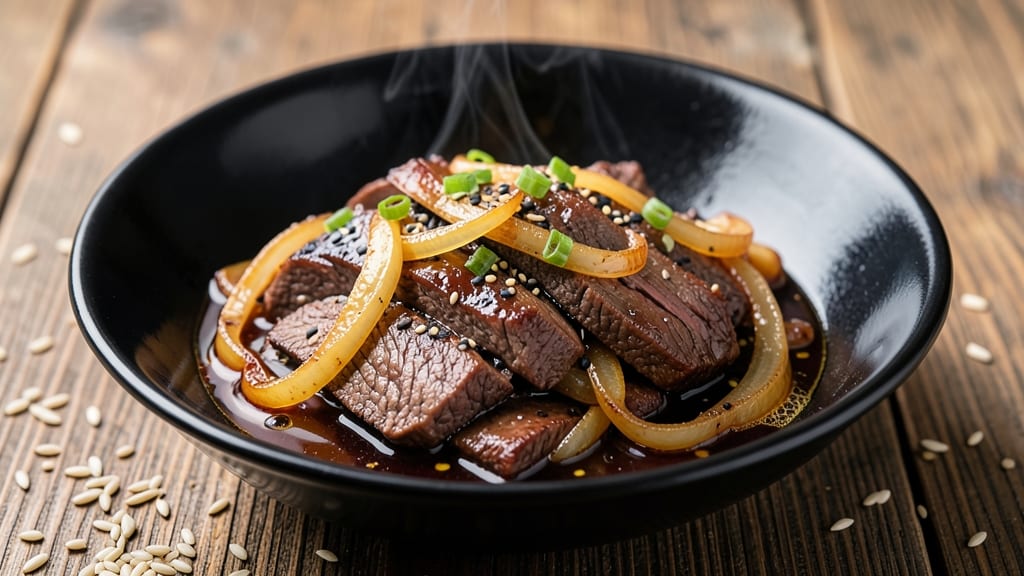
This beef and onion Chinese recipe delivers the perfect balance of sweet-savory depth that makes every bite unforgettable. 🌟 The secret lies in slow caramelizing the onions until they're golden and jammy, then combining them with tender beef in a rich, aromatic sauce that's both comforting and complex.
I've perfected this technique over years of testing, ensuring the flavors meld beautifully while maintaining that signature Chinese restaurant quality at home.
The process begins with a simple yet essential step: marinating the beef in a blend of soy sauce, Shaoxing wine, and cornstarch, which creates a tender texture and helps it absorb flavors deeply.
While the beef cooks, the onions caramelize in the same pan, developing their signature sweetness that forms the heart of this dish. This method not only saves time but also builds layers of flavor that transform simple ingredients into something extraordinary.
What you'll end up with is a dish that's rich, aromatic, and perfectly balanced—tender beef with deep caramelized onions in a glossy sauce that's both sweet and savory. The sauce clings to every bite, creating a harmonious blend of textures and flavors that's both comforting and exciting.
This recipe is designed to be your go-to for weeknight dinners or special occasions, delivering restaurant-quality results with minimal effort.
Serve it over steamed jasmine rice or with fluffy mantou buns to soak up every last bit of that delicious sauce. The combination of tender beef, sweet onions, and aromatic sauce makes this dish a crowd-pleaser that's sure to become a staple in your recipe collection.
Let's get started on creating this flavorful masterpiece.
Ingredients for beef and onion chinese
The perfect balance of sweet-savory depth starts with these 13 essential ingredients.
| Ingredient | Amount | Notes |
|---|---|---|
| Flank Steak 🥩 | 1 ½ lb | Thinly sliced against grain |
| Yellow Onions 🧅 | 3 large | Peeled, halved lengthwise |
| Soy Sauce 🥢 | ½ cup | High-quality, light variety |
| Shaoxing Wine 🍷 | ¼ cup | Dry Chinese cooking wine |
| Cornstarch 🌾 | 2 tbsp | For tenderizing beef |
| Brown Sugar 🍯 | 2 tbsp | Lightly packed |
| Garlic Cloves 🧄 | 6 cloves | Minced, aromatic |
| Fresh Ginger 🌿 | 1 inch | Peeled, julienned |
| Vegetable Oil 🫒 | 3 tbsp | High smoke point |
| Green Onions 🧅 | ¼ cup | Sliced, for garnish |
| Sesame Oil 🫒 | 1 tbsp | Toasted, for aroma |
| Salt 🧂 | 1 tsp | Kosher, to taste |
| Black Pepper 🌶️ | ½ tsp | Freshly ground |
The flank steak must be thinly sliced against the grain for tenderness—ask your butcher to slice it if they won't do it for you. Yellow onions are non-negotiable here; their natural sweetness caramelizes beautifully, forming the dish's heart. For the best results, grab Yellow Onions from the Asian market—they're often sweeter and more flavorful. If you can't find Shaoxing wine, dry sherry works in a pinch, though it won't have the same depth. Brown sugar should be light and packed—dark varieties can overpower the delicate balance of flavors. Garlic and ginger are freshness critical; frozen won't cut it here.
No Shaoxing wine? Dry sherry or mirin both add complexity, though neither is a perfect substitute. Green onions can be swapped for scallions, but the white parts must be used for flavor. Sesame oil is for aroma—use the toasted kind, not the cheap, flavorless stuff. The cornstarch is essential for tenderizing the beef; if you're out, arrowroot powder works at the same ratio. For the vegetable oil, avocado oil has a higher smoke point and works beautifully. Salt and pepper should be freshly ground—pre-ground loses potency quickly. If you're in a hurry, pre-minced garlic from a jar works, but fresh is always better.
Store fresh ginger wrapped in damp paper towels in the fridge for up to 2 weeks. Garlic keeps best in a cool, dark place for about 1 month. The flank steak should be used within 2 days of purchase for optimal tenderness. Sesame oil and soy sauce can be kept for 6-12 months unopened, but once opened, transfer them to airtight containers. Brown sugar stays fresh indefinitely if stored in a sealed container. For leftovers, this dish reheats beautifully—simmer in a little water or broth to revive the sauce. Portion into containers for easy weeknight meals.
Why You'll Love This Recipe
- One-Pan Magic: The entire dish lives on one skillet—no chopping boards, no extra pots. I just sear the flank steak, toss in the onions, and let the soy and Shaoxing wine do their thing while I stir. Cleanup? One spatula, one wipe-down. That’s it.
- Umami Bomb: The combo of soy sauce and Shaoxing wine turns this into something ridiculously flavorful with almost no effort. The onions caramelize just enough to add sweetness, while the cornstarch gives that perfect crispy-tender bite. Honestly, it’s the kind of dish that makes you forget how simple it is.
- Leftover Hero: This recipe actually tastes better the next day—yes, really. The flavors meld overnight, and reheating it in a pan with a splash of water keeps it juicy. I make a double batch on Sundays, then have effortless lunches all week.
- Budget Steakhouse: Flank steak is affordable, and a pound stretches across two meals. The onions and soy sauce cost pennies, and Shaoxing wine lasts forever. Between us, this is how I get fancy restaurant flavors without the price tag—or the fuss.
Step-by-step instructions for sweet-savory beef and onion stir-fry
Master this classic Chinese technique for perfectly tender beef and deeply caramelized onions.
🔪 Step 1: Prep the Flank Steak and Onions
Slice the 1.5 lb flank steak thinly against the grain into ¼-inch thick strips. This cut ensures maximum tenderness when stir-fried. Place the sliced beef in a bowl and add 2 tbsp cornstarch, 1 tsp salt, and 0.5 tsp black pepper. Toss gently to coat evenly—this creates a light barrier that prevents the beef from drying out during cooking.
Peel and halve the 3 large yellow onions lengthwise, then slice each half into ¼-inch thick semi-circles. The larger surface area will caramelize beautifully. Keep the onions separate from the beef at this stage—they'll cook at a different pace.
🍳 Step 2: Create the Flavor Base and Caramelize the Onions
Heat 1 tbsp vegetable oil in a 14-inch wok or large skillet over medium-high heat until shimmering. Add the onion halves cut-side down and cook undisturbed for 3-4 minutes until golden brown. Flip and cook another 3-4 minutes until deeply caramelized. Remove onions and set aside.
In the same pan, add the remaining 2 tbsp vegetable oil and increase heat to high. Add the 6 minced garlic cloves and 1-inch julienned ginger—they should sizzle immediately. Cook for 30 seconds until fragrant. Pour in the 0.25 cup Shaoxing wine and 0.5 cup soy sauce, scraping up any browned bits from the bottom. Simmer for 1 minute to let the alcohol evaporate.
👨🍳 Step 3: Stir-Fry the Beef to Perfect Doneness
Add the cornstarch-coated beef in a single layer to the wok. Stir-fry for 1-2 minutes until the edges turn white—this indicates the cornstarch has activated. Push the beef to one side of the pan and add 2 tbsp brown sugar and 1 tbsp sesame oil. Stir for 30 seconds to distribute the sweetness.
Return the beef to the center and continue stir-frying for 2-3 minutes until the beef reaches 145°F internal temperature. The beef should be tender but still slightly pink in the center—it will continue cooking from residual heat. Remove from heat and return the caramelized onions to the pan.
🥘 Step 4: Finish with Aromatics and Garnish
Combine all ingredients in the wok and toss vigorously for 1 minute to meld the flavors. The beef should be coated in a glossy, sweet-savory sauce with tender onions. Taste and adjust seasoning if needed—add a splash of water if the sauce is too thick.
Garnish with 0.25 cup sliced green onions and serve immediately over steamed rice. The dish should have a perfect balance of caramelized sweetness, umami from the soy sauce, and aromatic depth from the Shaoxing wine. Each bite should deliver tender beef with crisp edges and onions that melt in your mouth.
Pro Tips For Making Beef And Onion Chinese
- Slice Against the Grain: Flank steak’s fibers run long, and if you don’t cut against them, you’ll end up with chewy, tough pieces. Angle your knife at 45 degrees to the grain—yes, it’ll look like you’re hacking at it—and slice thin after cooking. I used to ignore this and wondered why my beef always felt like shoe leather.
- Salt the Onions First: Toss sliced onions in 1 teaspoon salt before cooking—this draws out moisture and makes them caramelize faster. Skip this, and you’ll be waiting forever for that sweet, jammy texture. (Pro move: Pat them dry afterward to crisp them up.)
- Don’t Rush the Wine: Shaoxing wine isn’t just flavor—it’s the bridge between raw and cooked beef. Let it simmer in the pan for 30 seconds after adding, swirling to coat the beef and onions. Dumping it in and moving on means half the aroma evaporates. I learned this when my dish smelled amazing but tasted flat.
- Use Cornstarch Like a Glaze: Skip tossing cornstarch directly into the pan—it’ll clump and burn. Instead, mix 1 tablespoon with 2 tablespoons cold water, then drizzle it over the beef after it’s mostly cooked. Stir in for 30 seconds max—just enough to thicken the sauce without turning it pasty. (This isn’t gravy; it’s a glossy finish.)
Wine and beer pairings for this beef and onion chinese
Chinese Dry Red Wine
For this dish, a dry Chinese red wine like Cabernet Sauvignon or Merlot from China's Ningxia region is ideal. The bold tannins and subtle sweetness complement the caramelized onions and umami-rich beef. I love Chateau Changyu Cabernet—its balance of fruit and earthiness mirrors the dish's complexity.
Serve slightly chilled (55-60°F) to enhance the wine's crispness while letting its structure stand up to the rich flavors. 🍷
Light-Bodied Beer
A crisp Chinese lager like Tsingtao or Snow Beer cuts through the richness beautifully. The clean, slightly malty profile refreshes your palate between bites of tender beef and sweet onions.
For a Western option, a pilsner such as Heineken or Sierra Nevada Pale Ale works well—both have enough carbonation to cleanse without overwhelming the dish. Avoid heavy stouts or IPAs, which can clash with the delicate balance of flavors. 🍺
Rice Wine Pairing
If you want to stay true to Chinese traditions, a dry rice wine like Shaoxing wine (the same used in the recipe!) makes an unexpected but brilliant pairing. Its nutty, slightly sweet profile echoes the dish's caramelized onions.
Serve it chilled (45-50°F) in small glasses to sip alongside each bite. For a non-alcoholic option, jasmine tea with a hint of honey enhances the sweet-savory notes without competition. 🍵
Sparkling Wine Finish
A dry Chinese sparkling wine such as Great Wall Brut adds a celebratory touch to the meal. The effervescence and citrus notes contrast the dish's richness, making each bite feel fresh. Serve it well-chilled (40-45°F) in flutes for a restaurant-worthy experience.
If you prefer Western options, a Prosecco or Cava works beautifully—just ensure it's bone-dry to avoid overpowering the beef and onions. ✨
Umami Boost with Soy Sauce
For a non-alcoholic pairing, a small bowl of high-quality soy sauce (like Lee Kum Kee Premium) on the side lets you adjust the dish's umami levels with each bite.
The deep, salty-sweet profile mirrors the dish's flavors, making it a practical and flavorful companion. Pair it with steamed dumplings or mantou buns for a complete experience. 🥢
Nutrition facts
Frequently asked questions
Can I substitute flank steak with another cut?
For this dish, sirloin or ribeye work beautifully—they're more flavorful but slightly tougher, so slice them ⅛-inch thick against the grain. If you prefer leaner options, top round is fine but may need an extra 1 minute of cooking time. Avoid fatty cuts like ribeye for stir-frying, as they can make the sauce greasy.
Why do the onions need to caramelize so long?
The slow caramelization (about 8 minutes) transforms the onions' natural sugars into deep, jammy sweetness—this is the dish's soul! Skipping this step makes the dish taste flat. For faster results, use sugar-glazed onions (store-bought) and cook them just 2 minutes to warm through.
How do I fix beef that's too chewy?
Overcooked beef is the #1 mistake! The key is 145°F internal temp—use a meat thermometer. If it's tough, slice it thinner (⅛-inch) and simmer the dish with 2 tbsp water for 5 minutes to tenderize. For next time, marinate the beef 30 minutes longer in the cornstarch mixture.
Can I make this dish ahead of time?
This dish reheats beautifully! Cook it completely, then refrigerate for up to 3 days or freeze for 3 months. Reheat gently in a skillet with 1 tbsp water to revive the sauce. The onions may soften further, but the flavors stay rich. Avoid microwaving—it makes the beef rubbery.
What's the secret to restaurant-quality sauce?
Three things: deglazing the pan with wine/soy sauce, high heat for quick cooking, and cornstarch to thicken. For extra gloss, add 1 tsp ketchup or 1 tsp tomato paste with the brown sugar. Stir constantly in the last 30 seconds to emulsify the sauce.