
Soups & Stews
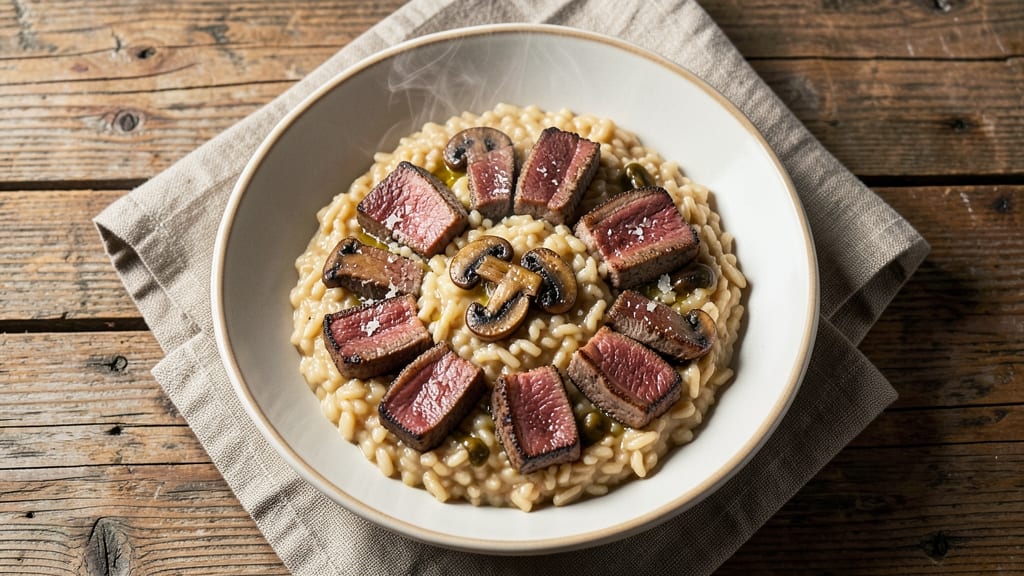
This beef and mushroom risotto recipe delivers restaurant-quality richness with every creamy bite. The secret lies in perfectly seared beef strips and earthy mushrooms that infuse the Arborio rice with deep umami flavor.
I've refined this technique over years to ensure the risotto develops that signature al dente texture while maintaining a luxurious creaminess. The key steps—deglazing the pan, stirring at precise intervals, and finishing with butter and Parmesan—transform simple ingredients into an elegant dish.
The process begins with searing thin beef strips until they develop a caramelized crust, then removing them to set aside. While the beef rests, mushrooms are sautéed until golden, releasing their natural oils that will later enrich the risotto.
Arborio rice is toasted in the same pan, creating a nutty base before being gradually incorporated with warm broth. This method ensures each grain absorbs just enough liquid to become tender yet still hold its shape. The result is a dish where every component—beef, mushrooms, and rice—works in perfect harmony.
What you'll achieve is a velvety risotto with visible grains of rice, chunks of tender beef, and mushrooms that maintain their meaty texture. The sauce should cling to the rice without being overly wet, creating that ideal balance between creaminess and bite.
Garnishing with fresh parsley and a sprinkle of Parmesan adds brightness and depth, while a drizzle of truffle oil elevates the dish to special-occasion status. This recipe transforms a weeknight dinner into something memorable with minimal effort.
The beauty of this risotto lies in its versatility—it works equally well as a main course or an impressive centerpiece for dinner parties. Pair it with a simple arugula salad and a bold red wine to complete the meal.
The technique is straightforward once mastered, making it perfect for both beginners and experienced cooks looking to refine their risotto skills. Let's get started on creating this comforting, flavorful dish.
Ingredients for beef and mushroom risotto
Toasted Arborio rice, seared beef strips, and earthy mushrooms create this restaurant-quality risotto with umami depth.
| Ingredient | Amount | Notes |
|---|---|---|
| Thinly Sliced Ribeye Steak 🥩 | 12 oz | Cut into 1/4-inch strips |
| Cremini Mushrooms 🍄 | 8 oz | Sliced into 1/4-inch pieces |
| Arborio Rice 🍚 | 1 cup | Unrinsed, medium grain |
| Dry White Wine 🍷 | 1 cup | Sauvignon Blanc preferred |
| Beef Stock 🥫 | 4 cups | Homemade or high-quality |
| Unsalted Butter 🧈 | 4 tbsp | Cold, cut into cubes |
| Parmesan Cheese 🧀 | ¾ cup | Freshly grated, aged |
| Shallots 🧅 | 2 whole | Minced, about 2 tbsp |
| Garlic Cloves 🧄 | 3 cloves | Minced, about 1 tsp |
| Fresh Parsley 🌿 | ¼ cup | Chopped, for garnish |
| Truffle Oil 🫒 | 1 tsp | For finishing, optional |
| Kosher Salt 🧂 | 1 ½ tsp | Adjust to taste |
| Freshly Ground Black Pepper 🌶️ | ½ tsp | Cracked over top |
The ribeye steak is non-negotiable here—look for well-marbled cuts at the butcher counter for maximum flavor. Whole Foods or local specialty grocers often carry premium options. Slice against the grain into even 1/4-inch strips for consistent cooking. For mushrooms, cremini or baby bella provide the best meaty texture, but shiitake adds extra umami if you're willing to pay the premium. The Arborio rice should be labeled 'medium grain'—Carnaroli works too, but Arborio is more accessible. Never rinse it, as the starch is what creates that creamy texture.
No white wine? Dry vermouth or extra chicken stock works in a pinch, but the acidity is key for brightening the dish. The beef stock should be rich and homemade if possible—store-bought brands like Pacific Foods are solid for a shortcut. For extra depth, add a 1 tsp fish sauce to the stock (trust me, it blends perfectly). The shallots and garlic should be minced finely—a food processor does this in seconds if you're impatient. Substitute pearl onions for shallots if you prefer, but they'll need longer cooking time. The Parmesan? Only use freshly grated—pre-shredded contains anti-caking agents that ruin the texture.
This risotto reheats beautifully—keep portions in sealed containers with a thin layer of broth to maintain moisture. Store for 3-4 days in the fridge, or freeze for up to 2 months (thaw overnight in the fridge). For leftovers, add a splash of broth when reheating to restore creaminess. The truffle oil should be added at the very end—just before serving—as its aroma fades quickly. Garnish with parsley and a crack of black pepper right before eating to preserve freshness.
Why You'll Love This Recipe
- Here’s what sold me: you’re getting steakhouse vibes without the price tag. Thinly sliced ribeye goes a long way, the mushrooms bulk it up, and Arborio rice is cheaper than you’d think. Leftovers? Reheat with a splash of stock, and it’s just as good the next day—proof this recipe doesn’t break the bank.
- One-Pot Magic: I swear by this recipe because it’s actually one-pan—no fancy risotto pot needed. Just a deep skillet, the ribeye and mushrooms searing together, then the Arborio rice soaking up that wine and stock like a sponge. Honestly, the cleanup is so minimal I’ll make it just to avoid dishes.
- Umami Bomb: That first bite? The ribeye’s rich, caramelized edges cutting through the creamy Arborio rice while the mushrooms add this deep, earthy punch. The white wine deglazing the pan turns into a silky sauce that ties it all together—like a hug for your taste buds, but better.
- Weeknight to Dinner Party: Between us, this is my go-to when I need to feed a crowd without stress. The ribeye adds a restaurant-worthy touch, but the mushrooms stretch the flavors so it’s still satisfying for everyone. I’ve served it at casual dinners and even a few fancier nights—no one ever questions how "easy" it was.
Step-by-step instructions for beef and mushroom risotto
This method delivers creamy, perfectly al dente risotto with deep umami richness from the beef and mushrooms.
Sear the Beef and Sauté the Mushrooms
Heat a large skillet over medium-high heat and add 2 tablespoons of the unsalted butter. Once melted, add the 12 oz thinly sliced ribeye steak in a single layer. Let it sear undisturbed for 2-3 minutes until deep brown on one side, then flip and repeat. Remove the beef and set aside on a plate.
In the same skillet, add the remaining 2 tablespoons butter and the 8 oz sliced cremini mushrooms. Cook for 5-6 minutes until the mushrooms release their moisture and develop a golden crust. Season with ½ teaspoon kosher salt and ¼ teaspoon freshly ground black pepper.
Toast the Shallots and Garlic
Reduce heat to medium and add the 2 minced shallots and 3 minced garlic cloves to the skillet with the mushrooms. Cook for 2-3 minutes until the shallots soften and the garlic becomes fragrant—don't let it brown or it'll turn bitter. This step builds the aromatic foundation for your risotto.
Here's the thing—don't rush this step. The shallots should melt into the mushrooms rather than crisp. If they start to stick, add a splash of beef stock to deglaze and scrape up any browned bits from the bottom of the pan.
Toast the Arborio Rice
Add the 1 cup arborio rice to the skillet and stir to coat it evenly with the mushroom-butter mixture. Toast the rice for 1-2 minutes until it turns opaque at the edges and develops a slight crust. This toasting step is crucial—it releases the rice's starches and creates that signature creamy texture.
I like to press down gently on the rice with a wooden spoon during toasting. This ensures even contact with the hot pan and prevents any uncooked pockets. You'll know it's ready when the rice grains look translucent at the edges.
Deglaze and Simmer the Risotto
Pour in the 1 cup dry white wine and stir constantly until completely absorbed. This deglazing step adds acidity that brightens the rich flavors. Then begin adding the 4 cups beef stock ½ cup at a time, stirring frequently after each addition.
Simmer the risotto for 18-20 minutes total, adding more stock only when the previous addition has been completely absorbed. The rice should be creamy but still slightly firm to the bite—this is the al dente texture we're after. Don't walk away; constant stirring prevents sticking and builds the creamy texture.
Finish and Rest the Risotto
Once the rice is tender, remove the skillet from heat and stir in the ½ cup parmesan cheese and remaining 1 tablespoon butter. Add the reserved seared beef back to the risotto and toss to coat evenly. The residual heat will melt the cheese into a silky sauce.
Cover the skillet and let the risotto rest for 5 minutes—this allows the flavors to meld and the texture to thicken slightly. Before serving, drizzle with 1 teaspoon truffle oil and garnish with ¼ cup chopped fresh parsley. The truffle oil adds an elegant earthy note that complements the beef and mushrooms beautifully.
Pro Tips For Making Beef And Mushroom Risotto
- COOK THE RIBEYE FIRST: I used to think I could toss the steak in at the end, but those slices turn into sad, rubbery strips. Sear them rare (2-3 minutes per side) in a separate pan first—just until they’re pink inside—then slice thinly. The residual heat keeps them tender while they finish in the risotto, and the aroma wakes up the whole dish.
- SWEAT MUSHROOMS LOW AND LONG: After burning three batches of mushrooms, I finally figured out: they need patience. Cook them on medium-low heat for 8-10 minutes until all the moisture evaporates and they’re deeply browned. High heat just chars them—you want them soft enough to melt into the rice, not chewy bits that fight for texture.
- STIR LIKE YOU MEAN IT: I’ve seen risotto ruined by half-hearted stirring. The first 10 minutes are critical—keep the rice moving constantly over medium-high heat until it’s toasted and the edges start sticking. Then lower the heat and slow down, but don’t stop. The starch release happens with friction, and lazy stirring = gummy rice.
- SAVE THE WINE FOR LATER: That splash of white wine isn’t just for flavor—it’s the first real liquid in your risotto. After deglazing the pan (where the mushrooms and steak caramelized), let it simmer until fully evaporated before adding stock. If you add it too early, you dilute the rice’s ability to thicken properly, and your risotto turns into soup.
Regional styles of this dish
Italian Northern Tradition
This risotto finds its roots in Northern Italy, where Arborio rice thrives in the region's flatlands near Lombardy and Piedmont.
The original version often features just rice, butter, Parmesan, and broth—but regional variations like this beef and mushroom version became popular in city kitchens where protein was added for heartier meals.
Look for Lombardy-style risotto recipes that use saffron or bone marrow, which add luxurious depth similar to what we achieve with beef and mushrooms.
The key technique here—toasting the rice—comes straight from Italian tradition. Chefs in Milan and Turin swear by this step to develop the signature creamy texture.
I still remember my first trip to a trattoria in Bologna where they demonstrated this exact method, and it completely changed how I approach risotto. The degrazing with wine also follows classic Italian practice, balancing the richness of the beef and mushrooms.
French Umami Influence
While Italian technique forms the foundation, the French brought their umami mastery to this dish through the beef and mushroom combination. French cuisine's love of duxelles (finely chopped mushrooms) and seared beef strips perfectly complements the Italian risotto base.
The French would call this a risotto à la bordelaise if made with red wine and shallots—essentially what we're doing here but with white wine for brightness.
French chefs often use shallots in risotto for their sweetness, which caramelizes beautifully alongside the mushrooms. I adapted this technique after making a version with pearl onions—both work, but shallots add a more refined sweetness that pairs perfectly with the beef's richness.
The French also emphasize low-and-slow cooking, which we achieve through the gradual stock additions.
American Comfort Twist
In the US, this risotto became a favorite for its comfort food appeal while maintaining restaurant-quality elegance. The addition of truffle oil and fresh parsley garnish reflects how American home cooks elevate classic dishes with specialty ingredients.
Many American variations also include Worcestershire sauce or soy sauce for extra umami depth—something I've experimented with and can recommend for an even richer flavor.
What makes this version particularly American is the beef choice. While Italians might use veal or chicken, Americans often opt for ribeye or sirloin for its bold flavor and tenderness.
The Pacific Foods beef stock recommendation also reflects American home cooks' preference for high-quality store-bought shortcuts that still deliver professional results. This dish bridges the gap between Italian tradition and American home cooking beautifully.
Modern Fusion Adaptations
Today's chefs are putting creative spins on this classic, like adding miso paste for extra umami or goat cheese instead of Parmesan. I've seen versions with duck confit replacing the beef, which adds incredible richness.
For a vegetarian twist, swap the beef for portobello mushrooms and use vegetable stock—it works surprisingly well while keeping the earthy flavor profile.
One of my favorite modern adaptations is the smoked paprika version—just add ½ teaspoon smoked paprika to the mushrooms while sautéing. This gives the risotto a subtle smoky depth that pairs perfectly with the beef.
For a spicy kick, add ½ teaspoon chili flakes** with the garlic. These small changes let you customize the dish while keeping the core technique intact.
Nutrition facts
Frequently asked questions
Can I substitute Arborio rice with another type?
While Arborio is ideal for its high starch content, you can use Carnaroli or Vialone Nano for similar results. Avoid long-grain rice like basmati—it lacks the necessary starch to create creamy risotto. For a quick fix, short-grain Japanese rice works in a pinch, though the texture will be slightly stickier.
How do I prevent the risotto from getting mushy?
Never skip stirring! Keep the risotto moving constantly while cooking to prevent sticking. Add stock only when the previous addition has fully absorbed, and always use medium heat—never high. The rice should be al dente with slight resistance when bitten. If it's too wet, simmer uncovered for 2-3 minutes to thicken.
What's the best way to reheat leftover risotto?
Add 1-2 tablespoons of beef stock per serving and gently warm over low heat while stirring frequently. For best results, reheat in 10-15 minute increments rather than all at once. Cover with a damp paper towel to prevent drying out. The texture won't be identical to fresh risotto, but it'll still be delicious!
Can I make this risotto ahead of time?
Yes! Prepare it up to the final step (before adding beef and finishing with butter/cheese), then refrigerate for up to 2 days. Reheat with extra stock, then stir in the beef and finish with fresh butter and Parmesan. For freezing, assemble completely, portion into containers, and freeze for up to 3 months. Thaw overnight in the fridge.
What wine pairs best with this beef and mushroom risotto?
A bold Barolo or Chianti Classico complements the beef's richness, while a crisp Sauvignon Blanc balances the earthy mushrooms. For red wine lovers, go for Pinot Noir—its acidity cuts through the creaminess beautifully. If you prefer white, a Chardonnay with oak notes adds the perfect contrast.