
Main Courses
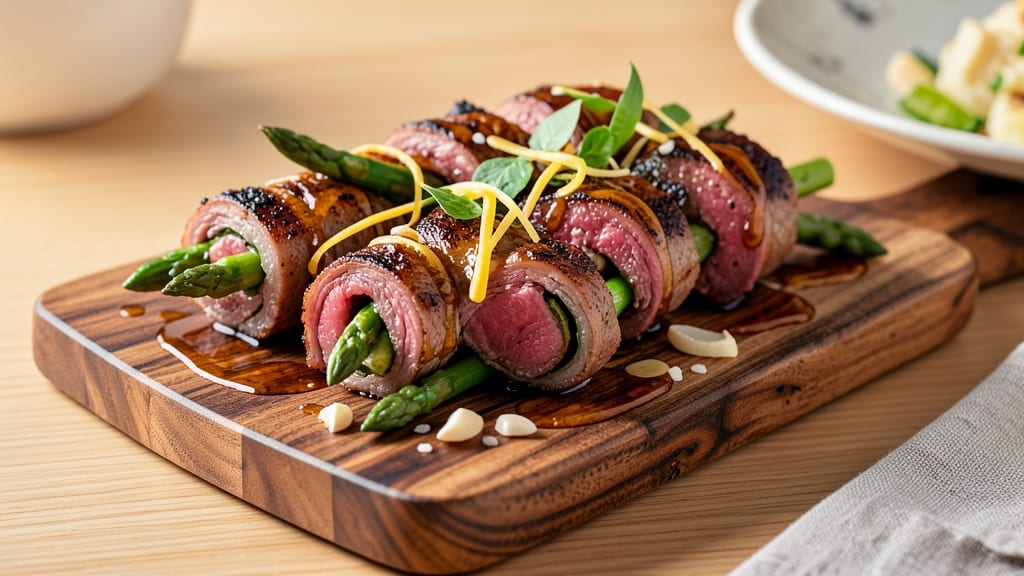
This beef and asparagus negimaki recipe transforms traditional Japanese flavors into a wok-seared masterpiece that balances crisp-tender beef and bright asparagus in perfect harmony. 💛 The secret lies in marinating the beef with soy, ginger, and garlic—creating a silky-sweet crust—while blanching the asparagus to preserve its vibrant green and crisp snap.
What sets this dish apart is the fusion of techniques: quick searing for beef and a delicate glaze that ties everything together.
The recipe begins with thinly sliced beef marinated for at least 30 minutes, ensuring maximum flavor penetration. Meanwhile, asparagus is blanched just until tender-crisp, then tossed in a light soy-ginger glaze that enhances its natural sweetness.
The dish is finished with a quick wok sear, where the beef develops a caramelized crust while the asparagus maintains its vibrant color and texture. This method delivers restaurant-quality results in under 45 minutes, making it ideal for weeknight dinners or special occasions.
What you’ll end up with is a visually stunning dish that’s as impressive to serve as it is to eat. The beef remains tender and juicy, while the asparagus adds a satisfying crunch and bright acidity.
The glaze ties everything together, creating a balance of sweet, savory, and umami that’s hard to resist. Serve it over steamed rice or with a side of miso soup for a complete meal that feels both elegant and approachable.
This recipe is perfect for those who love the fusion of Japanese and Western flavors, offering a dish that’s both familiar and exciting. The technique is straightforward, but the result is anything but ordinary—proof that even a simple protein and vegetable can become a showstopper with the right approach.
Ingredients for beef and asparagus negimaki
Thinly sliced beef and vibrant asparagus meet silky soy harmony in this restaurant-quality negimaki.
| Ingredient | Amount | Notes |
|---|---|---|
| Ribeye Steak 🥩 | 1 ½ lb | Thinly sliced against grain |
| Fresh Asparagus 🌱 | 1 lb | Medium spears, trimmed |
| Soy Sauce 🍶 | ½ cup | Japanese-style preferred |
| Fresh Ginger 🌿 | 2 tbsp | Finely grated, aromatic |
| Garlic Cloves 🧄 | 4 cloves | Minced, aromatic |
| Sesame Oil 🫒 | 1 tbsp | Toasted for aroma |
| Rice Vinegar 🍶 | 2 tbsp | Seasoned preferred |
| Honey 🍯 | 1 tbsp | Light, for glaze |
| Neutral Oil 🫒 | 2 tbsp | Avocado or vegetable |
| Sesame Seeds 🌾 | 1 tbsp | Toasted for garnish |
| Diamond Crystal Kosher Salt 🧂 | 1 tsp | For seasoning |
| Freshly Ground Black Pepper 🌶️ | ½ tsp | For finishing |
| White Rice 🍚 | 2 cups | Uncooked, long-grain |
The ribeye is non-negotiable—thinly sliced against the grain for maximum tenderness. Look for well-marbled cuts at Whole Foods or your local butcher; the fat renders beautifully during searing. Asparagus should be bright green and firm, with no woody stems. Trim the bottoms just before cooking to preserve crispness. For the marinade, Japanese soy sauce (like Kikkoman) elevates the dish—substituting regular soy adds depth but lacks that authentic umami punch. Fresh ginger and garlic should be aromatic and vibrant; if your ginger smells musty, toss it.
No Japanese soy sauce? Substitute with a mix of tamari and a splash of mirin—it’s not identical, but close. For honey, agave nectar works too, though it adds a slightly different sweetness profile. The sesame oil is purely for aroma—use sparingly, as it’s potent. If you can’t find toasted sesame seeds, lightly toast regular seeds in a dry pan for 2 minutes. The rice vinegar should be seasoned; plain vinegar will taste harsh. For the glaze, balance the sweetness—start with 1 tbsp honey and adjust to taste after cooking.
Marinated beef keeps 3-4 days in the fridge, covered tightly. Asparagus is best used fresh but can be blanched ahead and stored in ice water for up to 2 days. The glaze ingredients last 6 months in the pantry, but once mixed, use within 1 week. For meal prep, cook the beef and asparagus separately, then assemble just before serving to maintain texture. Reheat gently in a skillet over low heat—never microwave, or the asparagus will turn mushy.
Why You'll Love This Recipe
- One-Pan Magic: I swear by this recipe when I don’t want to dirty a dozen dishes. Just sear the ribeye, toss in the asparagus, and let the garlic and ginger work their flavor spell—minimal cleanup, maximum satisfaction.
- Umami Bomb: That ribeye—still juicy with a caramelized crust—wrapped around tender asparagus? The soy sauce and ginger do something alchemical to the flavors. It’s the kind of dish that makes you pause mid-bite and think, “Wait, why don’t I eat this more?”
- Weeknight to Weekend: Honestly, this works for everything. Too tired for effort? Throw it together in 25 minutes. Hosting friends? It feels fancy but takes no stress. Even my picky husband doesn’t complain—though he’ll still ask for extra steak.
- Leftovers That Don’t Suck: Most meals turn sad after day two, but this? The flavors actually deepened in my fridge. Reheat the slices with a quick pan sear, and it’s like eating it fresh again. (Yes, even on a Tuesday night.)
Step-by-step instructions for beef and asparagus negimaki
Master this Japanese wok-seared dish where tender beef meets crisp asparagus in a silky soy glaze.
🍳 Step 1: Prepare the Marinated Beef
Slice the 1.5 lb ribeye steak thinly against the grain into ¼-inch strips. In a bowl, combine the ½ cup soy sauce, 2 tbsp rice vinegar, 1 tbsp honey, 2 tbsp finely grated fresh ginger, and 4 minced garlic cloves. Add the beef strips and toss to coat completely. Let marinate for at least 30 minutes (or up to 2 hours) at room temperature—this ensures maximum flavor penetration and tender texture.
Here's the thing—don't skip the room temperature step. Cold beef releases less juice during cooking, leading to dry results. You'll see the strips develop a glossy sheen from the marinade, which is your signal they're ready. Reserve ¼ cup marinade for later use in the sauce.
👨🍳 Step 2: Cook the Perfect White Rice
Rinse the 2 cups white rice under cold water until the water runs clear, then drain well. Combine with 4 cups water in a pot and bring to a boil. Once boiling, reduce heat to low, cover, and simmer for 15 minutes. Turn off heat and let sit covered for 10 minutes—this steaming method creates fluffy, individual grains perfect for soaking up the negimaki sauce.
I press down gently on the rice after cooking to check doneness—it should feel tender but still have slight resistance. If it's too wet, tent with foil for an extra 5 minutes to evaporate excess moisture. Warm rice is crucial for serving, as cold rice absorbs sauce unevenly.
🔥 Step 3: Wok-Sear the Beef and Asparagus
Heat a wok or large skillet over high heat until smoking, then add 2 tbsp neutral oil. Working in batches, add the marinated beef and sear for 1-2 minutes until deep brown and just cooked through. Remove and set aside. In the same pan, add 1 tbsp sesame oil and 1 lb trimmed asparagus spears, tossing for 2-3 minutes until bright green and slightly charred.
This high-heat searing creates the signature negimaki crunch while keeping the beef juicy. Don't overcrowd the pan—work in batches if needed. The asparagus should blister slightly at the edges, adding texture contrast to the tender beef. Keep both components warm while you prepare the sauce.
🥘 Step 4: Create the Silky Soy Glaze
Return the wok to medium-high heat and add the reserved ¼ cup marinade. Whisk in 1 tbsp toasted sesame oil and 1 tbsp honey, simmering for 1-2 minutes until slightly thickened. Season with 1 tsp kosher salt and ½ tsp black pepper, then toss in the 1 tbsp toasted sesame seeds. The sauce should coat the back of a spoon with a glossy sheen.
This is where the magic happens—the honey and sesame oil create a perfect balance of sweet and nutty depth. If the sauce thickens too much, add 1 tbsp water to achieve the right consistency. The glaze should cling to both beef and asparagus without being overly syrupy.
🍽️ Step 5: Assemble and Serve
Combine the seared beef and asparagus in the wok with the sauce, tossing gently to coat evenly. Serve immediately over the fluffy white rice, garnishing each portion with an extra sprinkle of toasted sesame seeds. The contrast of silky sauce, tender beef, and crisp asparagus creates a perfect bite every time.
For optimal presentation, arrange the components in the center of the plate with rice surrounding them. The vibrant green asparagus against the deep brown beef creates visual appeal that matches the flavor complexity. Serve with additional soy sauce on the side for those who prefer extra umami intensity.
Pro Tips For Making Beef And Asparagus Negimaki
- SEAR THE STEAK FIRST: I learned this the hard way—don’t toss the ribeye into the negimaki mix raw. Sear it rare (2-3 minutes per side for medium-rare) in a screaming-hot pan with a splash of oil before slicing. The crust locks in flavor and keeps the beef juicy when it hits the soy-ginger marinade later.
- TRIM ASPARAGUS LIKE A PRO: Skip the woody ends by snapping them instead of cutting—hold the stalk near the base and bend until it snaps cleanly. For this recipe, blanch the spears for exactly 90 seconds in salted water before chilling in ice baths. Overcooking turns them mushy; undercooking makes them bitter.
- DON’T OVERMIX THE WRAPS: After stuffing the asparagus and beef into the negimaki (rice-straw wraps), resist the urge to twist them too tightly. A loose, slightly uneven roll keeps the filling from bursting when seared. Brush the outside with a light coat of soy-ginger glaze—too much makes them soggy.
- UPGRADE WITH GINGER-GARLIC OIL: Instead of just marinating, make a quick infusion: heat 1 tablespoon neutral oil with 1 minced garlic clove and ½ teaspoon grated ginger until fragrant (30 seconds). Drizzle this over the finished negimaki just before serving—it adds depth without overpowering the soy. (Yes, even if you’re impatient like me.)
Dietary considerations for beef and asparagus negimaki
Gluten-Free Adaptations
This recipe naturally accommodates gluten-free diets by using Japanese-style soy sauce (like Kikkoman) instead of regular soy sauce, which often contains wheat. For extra safety, choose a certified gluten-free soy sauce brand like San-J Tamari.
The rice vinegar and honey components are already gluten-free, so no substitutions are needed there. Always double-check labels on sesame oil and seeds to ensure they're processed in gluten-free facilities. 🌱
Low-Carb Options
Skip the rice entirely and serve the beef and asparagus over cauliflower rice for a low-carb version. I like to use pre-riced frozen cauliflower rice (like Green Giant) to save time. The dish still delivers rich flavors without the carb load.
For an even lower-carb approach, omit the rice and serve the beef and asparagus with a side of blistered shishito peppers or a simple avocado salad.
Dairy-Free Considerations
This recipe is naturally dairy-free, but always verify that your sesame oil and seeds are processed in facilities free from dairy cross-contamination. If you're serving alongside miso soup (a common pairing), use a dairy-free miso variety.
The honey in the glaze can be replaced with maple syrup for a vegan option, though the flavor profile will shift slightly. The beef and asparagus components remain completely dairy-free as written. ✨
Allergen Awareness
Sesame is a common allergen, so clearly label this dish if serving to guests with allergies. The recipe contains toasted sesame seeds and sesame oil, which must be omitted for those with sesame allergies. For nut allergies, ensure your honey is processed in a nut-free facility.
The beef and asparagus themselves are allergen-free, making this a safe option for many dietary restrictions when modifications are made. Always ask guests about specific allergies before serving.
Protein Swaps
For a vegetarian version, replace the beef with extra-firm tofu (pressed and sliced) or shiitake mushrooms (sliced and marinated). The tofu should be marinated for at least 1 hour to absorb flavors, while mushrooms work well with just 30 minutes.
For seafood lovers, salmon or scallops sear beautifully in this recipe—simply reduce the marinating time to 15 minutes to avoid overcooking delicate proteins. 🥩
Nutrition facts
Frequently asked questions
Can I substitute regular soy sauce for Japanese soy sauce?
You can, but Japanese soy sauce (like Kikkoman) adds deeper umami flavor. Regular soy sauce works in a pinch, though it may taste slightly saltier. For best results, use tamari or a mix of tamari and mirin—this combo mimics the authentic flavor profile more closely. The rice vinegar and honey won't need adjusting.
How do I prevent the beef from becoming tough?
Slice the beef thinly against the grain and marinate for at least 30 minutes at room temperature. High heat searing for just 1-2 minutes keeps it tender. Overcooking is the real culprit—remove the beef when it's deep brown but still slightly pink inside.
What's the best way to store leftovers?
Store components separately: beef and asparagus in airtight containers for 3-4 days. Reheat gently in a skillet over low heat with a splash of water to prevent drying. Never microwave—it turns the asparagus mushy. The rice can be reheated separately.
Can I make this recipe ahead of time?
Prep the marinade and chop ingredients the night before. Cook the beef and asparagus separately, then store them in the fridge. Assemble and sear just before serving to maintain texture. The sauce can be made ahead and reheated—just add 1 tbsp water if it thickens too much.
Why does my asparagus turn mushy?
Overcooking is the most common mistake. Blanch asparagus for just 2-3 minutes until bright green and slightly crisp. For the wok sear, cook at high heat for 2-3 minutes max—it should blister slightly but remain tender. Keep it separate from the beef until the final toss to preserve texture.