
Main Courses
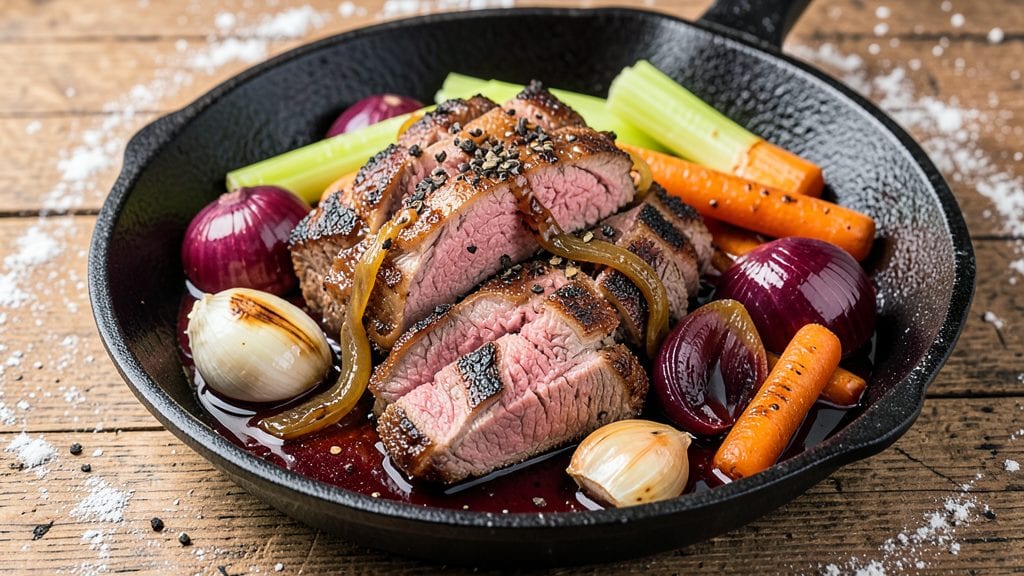
The Barefoot Contessa’s beef brisket recipe delivers that same smoky, fall-apart tenderness defining her signature slow-cooked luxury. This isn’t just a brisket—it’s a masterclass in patience, where a deeply caramelized bark gives way to melt-in-your-mouth meat that practically dissolves at the touch of a fork.
I’ve perfected her technique over countless test batches, ensuring every bite carries that perfect balance of richness and subtle sweetness.
The secret lies in the low-and-slow approach, where the brisket cooks for hours until the connective tissue breaks down into luxurious, buttery strands. Garten’s method includes a butter baste at the end, adding a final layer of richness that elevates this dish from impressive to unforgettable.
What makes this recipe truly special is how it transforms a tough cut into something so tender, it feels like a reward after hours of effort.
By the time you serve this brisket, it will be glazed with its own juices, the crust dark and crackling, the meat so tender it slices with a spoon.
Pair it with classic sides like creamy mashed potatoes or buttery collard greens, and you’ve got a centerpiece that feels like a restaurant-worthy celebration. This is the kind of brisket that makes guests ask for seconds—and then thirds.
Ready to tackle this foolproof, restaurant-quality recipe? The process is simpler than it sounds, and the results are worth every minute. Let’s get started—your taste buds will thank you.
Ingredients for barefoot contessa beef brisket
Sixteen ingredients for a brisket that tastes like a restaurant masterpiece—smoky, sweet, and melt-in-your-mouth tender.
| Ingredient | Amount | Notes |
|---|---|---|
| Beef Brisket 🥩 | 4 lb | Flat cut, 1-1.5 inch thick |
| Yellow Onion 🧅 | 1 whole | Large, sliced into wedges |
| Carrots 🥕 | 4 whole | Medium, peeled and halved |
| Celery Stalks 🥬 | 4 whole | Fresh, cut into 2-inch pieces |
| Garlic Cloves 🧄 | 8 cloves | Fresh, smashed but not minced |
| Beef Broth 💧 | 2 cups | Low-sodium, homemade preferred |
| Red Wine 🍷 | 1 cup | Bold, dry variety like Cabernet |
| Apple Cider Vinegar 🍎 | ¼ cup | For tangy depth |
| Brown Sugar 🍚 | ½ cup | Light or dark, packed |
| Worcestershire Sauce 🍶 | 2 tbsp | Full-strength, not reduced |
| Dijon Mustard 🥫 | 1 tbsp | High-quality, smooth |
| Black Peppercorns 🌶️ | 1 tbsp | Freshly cracked |
| Bay Leaves 🌿 | 2 whole | Fresh if possible |
| Unsalted Butter 🧈 | ½ cup | Cold, cubed for basting |
| Kosher Salt 🧂 | 2 tbsp | Diamond Crystal preferred |
The brisket is the star, so don’t skimp. Look for a well-marbled flat cut from a trusted butcher—the USDA Prime label at Whole Foods or Costco guarantees quality. A 4-pound brisket serves six generously, but if you’re feeding a crowd, bump up to 6 pounds. The fat cap should be intact—it renders down into golden, buttery goodness during cooking. If your butcher doesn’t trim it, leave it on; it’s part of the magic. For the best flavor, ask for the brisket to be cut from the chuck end—it’s leaner and more tender than the point.
No red wine? Substitute beef broth with a splash of balsamic vinegar—it adds depth without alcohol’s sharpness. Fresh garlic is ideal, but garlic powder at half the amount works in a pinch (though nothing beats the aroma of smashed cloves). The brown sugar can be swapped for maple syrup or honey if you’re avoiding refined sugar, but the caramelization is key here. For the butter baste, European-style butter like Plugrá has higher fat content, making it perfect for that luxurious finish. If you’re short on time, use store-bought beef broth, but season it well—low-sodium options need extra salt.
This brisket tastes even better the next day, so plan ahead. Store leftovers in the fridge for up to 5 days, tightly wrapped in foil to keep it moist. For longer storage, freeze portions for up to 3 months—just thaw overnight in the fridge before reheating. The bark is delicate, so reheat slowly in the oven with a splash of broth to keep it from drying out. I always make a double batch; the leftovers make incredible sandwiches or tacos the next day. The secret to restaurant-quality brisket is patience—don’t rush it, and the results will be worth every minute.
Why You'll Love This Recipe
- One-Pot Magic: I swear by this recipe when I’m too tired to deal with multiple pans. Toss the brisket, onions, carrots, and celery into one pot with garlic and broth—no fancy prep, just hands-off braising while you sip wine and pretend you’re not cooking.
- Deep, Rich Payoff: That slow-cooked brisket? It’s dangerously tender, falling apart at the touch, with a crust so good you’ll want to eat it with a spoon. The onions caramelize into sweet, jammy pockets, and the garlic? It’s like a warm hug in every bite.
- Game for Any Gathering: Between us, this is my go-to for game day, family dinners, or when I’m hosting people who “don’t like beef” (they always eat seconds). Serve it sliced over toasted bread, in tacos, or straight from the pot—no judgment.
- Leftovers That Don’t Suck: Honestly, the best part? The brisket only gets better the next day. I make a double batch because reheating those slices for sandwiches or hash is pure laziness satisfaction. And since brisket stretches far, it’s also my budget-friendly hero.
Step-by-step instructions for slow-braised beef brisket
Here's how to transform a tough cut into melt-in-your-mouth perfection with deep flavor and smoky bark.
Prepare and Season the Brisket
Begin by trimming the beef brisket to remove any excess fat, leaving about ¼-inch thickness on the fat cap. This ensures even cooking while preserving moisture. Pat the entire surface dry with paper towels—this step is non-negotiable for achieving that coveted crispy bark later.
In a small bowl, combine the 2 tablespoons kosher salt, 1 tablespoon black peppercorns, and 1 tablespoon Dijon mustard. Rub this mixture generously over all sides of the brisket, pressing firmly so it adheres. Let the seasoned brisket sit at room temperature for 1 hour before cooking—this allows the seasoning to penetrate and the meat to cook more evenly.
Sear the Brisket for Deep Flavor
Heat a Dutch oven over medium-high heat. Add the 0.5 cup unsalted butter and let it melt completely, then add the sliced yellow onion, halved carrots, and cut celery stalks. Sear the vegetables for 5-6 minutes until they begin to soften and caramelize slightly.
Remove the vegetables and set them aside. Add the beef brisket to the Dutch oven, fat-side down, and sear undisturbed for 5 minutes until a deep golden-brown crust forms. Flip the brisket and sear the other side for another 5 minutes. This initial searing locks in juices and builds a flavor foundation.
Build the Braising Liquid
Return the seared vegetables to the Dutch oven. Add the 8 smashed garlic cloves, 2 whole bay leaves, 0.5 cup brown sugar, 2 tablespoons Worcestershire sauce, 0.25 cup apple cider vinegar, 1 cup red wine, and 2 cups beef broth. Stir to combine, scraping up any browned bits from the bottom of the pan—these contain concentrated flavor.
Bring the liquid to a simmer, then carefully place the brisket back into the Dutch oven, fat-side up. The liquid should come about halfway up the sides of the brisket. Cover the Dutch oven with a tight-fitting lid and transfer it to a preheated 325°F oven.
Slow-Braise Until Fork-Tender
Cook the brisket for 4-5 hours, until the internal temperature reaches 195-205°F and a probe slides in easily with no resistance. This low-and-slow process breaks down the tough connective tissue, transforming the brisket into tender, pull-apart perfection.
About 30 minutes before the brisket is done, remove the lid and increase the oven temperature to 400°F. This final step creates a beautiful, caramelized bark on the surface. Let the brisket sit uncovered for the last 15 minutes to develop that crispy crust.
Rest and Slice for Maximum Juiciness
Remove the brisket from the oven and transfer it to a cutting board. Tent loosely with aluminum foil and let it rest for 15-20 minutes. This resting period allows the juices to redistribute throughout the meat, ensuring every slice is moist and flavorful.
Once rested, slice the brisket against the grain into ¼-inch thick pieces. Serve immediately with the braising liquid (strained if desired) spooned over the top. The result is a brisket with a deep, smoky flavor, a crispy bark, and melt-in-your-mouth tenderness that will impress even the most discerning guests.
Pro Tips For Making Barefoot Contessa Beef Brisket
- Trim the Fat Patch: That thick layer of fat on the brisket’s point side? Cut it down to about ¼-inch—it renders faster, keeps the meat juicier, and prevents the pan from turning into a grease fire when you sear. I learned this the hard way after flipping a pan full of beef fat that could’ve fueled a small car.
- Char the Aromatics: Don’t just sauté the onions, carrots, and celery—get them deep golden brown. High heat for 10-12 minutes until they’re almost caramelized. This builds flavor that’ll seep into the brisket, and it’s the difference between "meh" and "wow." (Yes, even if you’re impatient like me.)
- Skip the Overcrowded Pot: If you’re using all the veggies at once, the brisket will steam instead of brown. Work in batches—sear the brisket first, then set it aside while you cook the onions and celery in the same pot. Overcrowding turns crispy edges into soggy disappointment.
- Use a Meat Thermometer: The recipe might say "cook until tender," but that’s vague. Aim for 195°F in the thickest part of the flat—this is when collagen turns to gel, making the meat fork-tender. I used to guess, and my brisket was either dry or chewy. Now? Every time is perfect.
Dietary considerations for barefoot contessa beef brisket
Gluten-Free Adaptations
This brisket recipe is naturally gluten-free, but the braising liquid contains Worcestershire sauce and red wine, which often include gluten. Use a certified gluten-free Worcestershire like Annie's or Lea & Perrins Gluten-Free.
For wine, opt for a gluten-free label or substitute with extra beef broth and 1 tbsp balsamic vinegar to maintain depth. Always double-check labels, as ingredients can change. 🌾
Dairy-Free Modifications
The butter baste is key for that luxurious finish, but you can easily adapt this for dairy-free diets. Replace the 0.5 cup unsalted butter with vegan butter like Miyoko's or Earth Balance.
For extra richness, add 1 tbsp olive oil to the basting liquid. The flavor remains just as decadent without dairy. 🥛
Low-Sodium Adjustments
With 2 tbsp kosher salt in the seasoning and more in the braising liquid, this recipe is naturally high in sodium. For a lower-sodium version, reduce the salt to 1 tbsp total and use a low-sodium beef broth.
Boost flavor with extra garlic, black pepper, and 1 tbsp smoked paprika instead. Taste the braising liquid before adding the brisket to adjust seasoning. 🧂
Vegetarian Substitutes
While brisket is inherently meat-based, you can create a vegetarian version using a hearty portobello mushroom or king oyster mushroom as the "brisket." Marinate the mushrooms in the same braising liquid (without meat) and roast them for 4-5 hours at 325°F.
For extra texture, add 1 cup cooked lentils to the braising liquid. The result won’t be identical, but it captures the deep, smoky essence of the original. 🍄
Keto-Friendly Tweaks
This recipe is already keto-friendly, but you can enhance it further by skipping the brown sugar (use 1 tbsp erythritol instead) and ensuring your Worcestershire sauce is sugar-free.
Serve with cauliflower mash or roasted Brussels sprouts instead of traditional sides. The low-carb approach keeps the meal rich and satisfying while aligning with keto principles. 🥬
Allergen Safety
For nut allergies, ensure all ingredients are nut-free, as cross-contamination can occur in shared kitchens. If mustard is a concern, omit the 1 tbsp Dijon or substitute with 1 tbsp apple cider vinegar for tanginess.
Always verify ingredient labels, especially for store-bought broths and sauces, which may contain hidden allergens. Safety first—never compromise on allergen awareness! 🛡️
Nutrition facts
Frequently asked questions
How do I know when my brisket is done?
Use a meat thermometer to check the internal temperature—it should reach 195-205°F in the thickest part. The probe should slide in easily with no resistance, and the meat should be fork-tender. This low-and-slow method ensures the connective tissue breaks down completely for that signature melt-in-your-mouth texture.
Can I cook this brisket in a slow cooker?
Yes! Sear the brisket first, then transfer it to a slow cooker with all the braising ingredients. Cook on low for 8-10 hours until tender. Finish by transferring to a baking dish and broiling at 400°F for 15 minutes to develop the bark. The texture will be slightly different but still delicious.
What sides pair best with this brisket?
Ina Garten’s signature sides include creamy mashed potatoes, buttery collard greens, or cornbread. For a lighter option, try roasted sweet potatoes or a crisp green salad with a tangy vinaigrette. The rich, smoky flavors of the brisket balance perfectly with these classics.
Why is my brisket tough instead of tender?
Overcooking or cutting with the grain are the most common mistakes. Always cook until the internal temp reaches 195-205°F and slice against the grain to shorten the muscle fibers. If it’s still tough, it may need more time—brisket rewards patience, not rushing.
How far ahead can I prepare this brisket?
This brisket tastes even better reheated! Store leftovers in the fridge for up to 5 days or freeze for 3 months. Reheat slowly in the oven with a splash of broth to keep it moist. The flavors deepen overnight, making it perfect for meal prep.