
Tips
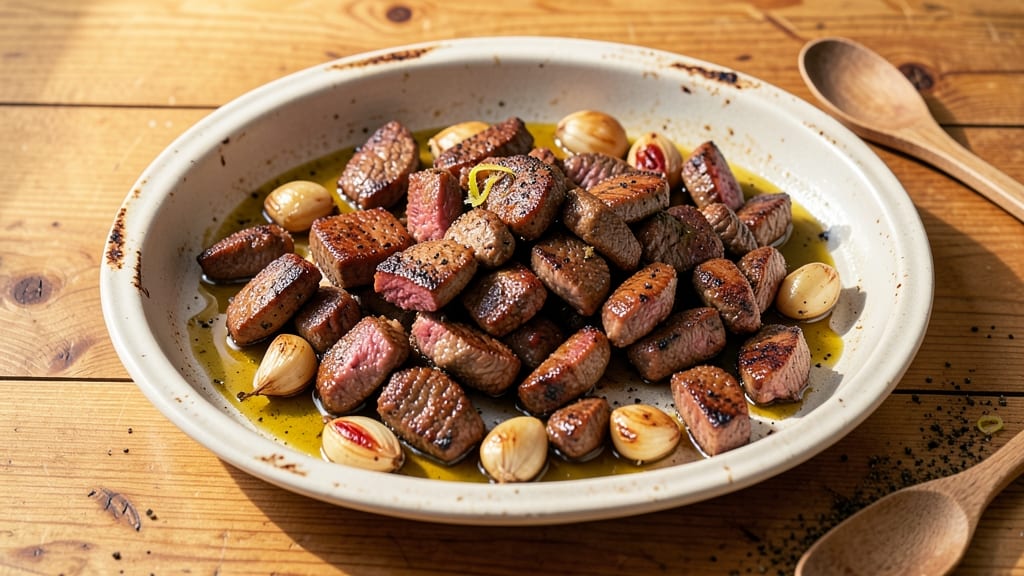
Baked beef tips deliver restaurant-quality flavor with minimal effort—juicy, caramelized bites that stay tender despite oven cooking. The secret lies in proper seasoning and a high-heat sear before baking, which locks in moisture while developing deep, savory crusts. This method transforms simple beef tips into a weeknight centerpiece without requiring fancy techniques.
What sets this recipe apart is the balance between simplicity and depth—just five core ingredients create layers of flavor through proper timing and technique. Start with a quick sear in a hot pan to develop fond, then finish in the oven for even cooking.
The result is beef that's juicy throughout with caramelized edges that add texture and richness.
By the time you're done, you'll have perfectly cooked beef tips that pair beautifully with roasted potatoes, garlic green beans, or a fresh salad. The recipe scales easily for crowds while maintaining that same restaurant-quality texture and flavor.
Ready in just 30 minutes, it's the kind of dish that makes weeknight dinners feel special.
The beauty of this method is its versatility—use it for quick weeknight meals, potlucks, or even meal prep. The beef stays tender when reheated, making it perfect for leftovers. Here's how to achieve perfectly juicy, caramelized beef tips every time.
Ingredients for baked beef tips
Five core ingredients transform simple beef tips into restaurant-quality bites with caramelized edges and juicy centers.
| Ingredient | Amount | Notes |
|---|---|---|
| Beef Tips 🥩 | 1 ½ lb | Chuck roast, cut into 1.5-inch pieces |
| All-Purpose Flour 🌾 | ½ cup | For dredging beef tips |
| Kosher Salt 🧂 | 1 ½ tsp | Diamond Crystal preferred for balance |
| Freshly Ground Black Pepper 🌶️ | 1 tsp | Cracked peppercorns preferred |
| Garlic Cloves 🧄 | 4 cloves | Minced, for seasoning blend |
| Extra-Virgin Olive Oil 🫒 | 2 tbsp | High smoke point preferred |
| Unsalted Butter 🧈 | 2 tbsp | Cold, for searing |
| Beef Broth 💧 | ½ cup | Low-sodium preferred |
| Red Wine 🍷 | ¼ cup | Dry, like Cabernet Sauvignon |
| Fresh Thyme Leaves 🌿 | ¼ cup | Chopped, for aromatic depth |
| Fresh Rosemary 🌿 | 1 sprig | Chopped, for herbal notes |
| Tomato Paste 🍅 | 1 tbsp | San Marzano preferred |
| Balsamic Vinegar 🍶 | 1 tbsp | For depth of flavor |
| Red Bell Pepper 🌶️ | 1 whole | Sliced, for garnish |
| Fresh Parsley 🌿 | ¼ cup | Chopped, for garnish |
The beef selection is critical—chuck roast delivers that coveted fall-apart texture when cut into 1.5-inch pieces. Most butchers will trim and portion it for you, though Costco and Whole Foods carry pre-cut beef tips in the frozen section. Look for pieces with visible marbling to ensure tenderness. For the seasoning blend, Diamond Crystal kosher salt dissolves more easily than table salt, creating a cleaner flavor profile. Freshly cracked peppercorns add complexity that pre-ground pepper simply can't match—worth the 30-second grind.
No red wine? Substitute with beef broth and an extra splash of balsamic vinegar—the acidity bridges the flavor gap. Fresh thyme and rosemary can be swapped for one teaspoon each of dried thyme and rosemary, though the flavor will be less vibrant. For tomato paste, San Marzano is the gold standard due to its sweetness and low acidity, but any quality paste will work. The olive oil should have a high smoke point—avoid extra-virgin if you're searing at high heat, as it can break down. For the red bell pepper garnish, any color works, but roasted pepper strips add an extra layer of sweetness that complements the caramelized beef.
Beef tips can be prepped a day ahead—season and refrigerate in an airtight container for up to 24 hours, though searing should happen fresh. The finished dish reheats beautifully—simply warm in a skillet with a splash of beef broth for 3-4 minutes to restore moisture. Store leftovers in the fridge for 4 days or freeze for 3 months. For meal prep, portion into single-serving containers with a side of roasted vegetables—each serving will have that restaurant-quality texture and flavor. The caramelized fond at the bottom of the pan? That's pure flavor gold—deglaze with broth and use as a quick sauce.
Why You'll Love This Recipe
- No-Fuss Flour Coat: I swear by the simple flour-and-pepper toss—no marinades, no fancy prep. Just pat the beef dry, sprinkle that kosher salt like you mean it, and let the oven work its magic. Five minutes of hands-on time, and the rest? Pure set-and-forget.
- Garlic Kiss Magic: That one crushed clove tucked into the pan while baking? It infuses the beef with this unreal depth—savory, slightly sweet, like a whisper of Italian grandma’s kitchen. Honestly, I’ve tried pre-minced garlic, but fresh? Night and day.
- Weeknight Workhorse: Toss these on a sheet pan with roasted potatoes or toss them into a salad the next day. My kids ask for them after school snacks, and my husband sneaks seconds at dinner. It’s the one dish that never feels like a chore to repeat.
- Budget-Friendly Feast: A pound of beef tips stretches across three meals for my family—leftovers reheat beautifully in a pan or straight from the fridge. Between us, this is how I feed four people well without draining my wallet. (Yes, even on a Tuesday night.)
Step-by-step instructions for baked beef tips
Here's the professional technique to achieve tender, caramelized beef tips with rich depth of flavor.
Season and Dredge the Beef Tips
In a large bowl, combine the 0.5 cup all-purpose flour, 1.5 teaspoons kosher salt, and 1 teaspoon freshly ground black pepper. Add the 1.5 lb beef tips and toss gently to coat evenly. Let the seasoned beef sit for 5 minutes to allow the salt to penetrate the surface.
Next, transfer the beef to a wire rack set over a baking sheet. This elevation prevents steaming, which is crucial for achieving that perfect crust. I like to space them about 1 inch apart so they brown properly without crowding. Let them rest at room temperature for 15 minutes before baking—this ensures even cooking throughout.
Preheat and Sear the Beef
Preheat your oven to 425°F with the rack positioned in the upper third. In a large oven-safe skillet, heat 2 tablespoons extra-virgin olive oil and 2 tablespoons cold unsalted butter over medium-high heat until the butter foams but doesn't brown. Add the beef tips in a single layer and sear for 2-3 minutes per side until deeply browned.
Here's the thing—don't move the beef during the first minute. Let it develop that golden crust. You'll know it's ready to flip when it releases easily from the pan. Transfer the skillet to the preheated oven and bake for 10 minutes to render fat and begin cooking through.
Deglaze and Build the Sauce
Remove the skillet from the oven and reduce heat to medium. Add 4 minced garlic cloves and cook for 30 seconds until fragrant. Pour in 0.25 cup red wine and scrape up all the browned bits from the bottom—this is where all the flavor hides. Let the wine reduce by half, about 2 minutes.
Stir in 0.5 cup beef broth, 1 tablespoon tomato paste, 1 tablespoon balsamic vinegar, 0.25 cup chopped fresh thyme leaves, and 1 chopped sprig fresh rosemary. Return the beef to the skillet and spoon the sauce over the top. The beef should be mostly submerged in the sauce to prevent drying.
Finish Baking and Garnish
Return the skillet to the oven and bake for 10-12 minutes until the beef reaches an internal temperature of 145°F and the sauce has thickened slightly. The beef tips should be fork-tender with a deep caramelized glaze. If the sauce thickens too much, add 1-2 tablespoons water to loosen it.
Remove from the oven and let rest for 5 minutes. Garnish with 0.25 cup chopped fresh parsley and 1 sliced red bell pepper for color contrast. Serve immediately with crusty bread or over mashed potatoes to soak up every last bit of that rich, herbed sauce.
Pro Tips For Making Baked Beef Tips
- Pat the beef dry: The flour won’t stick properly if the meat’s damp—wipe each tip with a paper towel before dredging. I learned this the hard way when my first batch turned into a soggy mess instead of crispy bites.
- Use a meat thermometer: Beef tips hit 145°F (63°C) for medium-rare—guessing leads to overcooked rubber. I was skeptical until I tried it; now I never risk dry, tough meat again.
- Don’t overcrowd the pan: Cook in batches if needed—too many tips steam instead of sear. After burning three batches, I finally figured out that patience here saves cleanup later.
- Toast the flour first: Heat the dry flour in the pan for 30 seconds before adding oil—it deepens the flavor. Sounds weird, but it works: the edges get nutty, and the crust stays intact longer.
Pro cooking tips for perfect results
Sear Like a Pro
That initial sear is where all the magic happens—don't rush it! Heat your oven-safe skillet until it's smoking hot before adding the beef. I use a cast-iron skillet (like my Lodge 10.25-inch) because it retains heat so well.
Let the beef sit undisturbed for 2 full minutes on each side to develop that deep, caramelized crust. The butter should foam but not brown—if it burns, reduce the heat slightly. 🔥
Deglaze for Depth
Never pour that wine too quickly—let it reduce by half before adding the broth. This concentrates the alcohol flavor, preventing a boozy taste. I like to use Cabernet Sauvignon because its tannins complement the beef beautifully.
After scraping up those browned bits (fond), add the garlic and let it sizzle for just 30 seconds—any longer and it burns, turning bitter. The key is patience here.
Oven Temperature Control
Your oven's upper third is where you want that skillet—hotter air at the top helps create that crispy crust. If your oven runs hot, reduce the temperature to 400°F to prevent over-browning. I test doneness with a meat thermometer—145°F internal temp is perfect for beef tips.
For extra tenderness, let the beef rest 5 minutes before serving; this redistributes juices and keeps them inside the meat.
Sauce Thickness Matters
A slightly thickened sauce clings to the beef, adding moisture and flavor. If it reduces too much, add 1 tablespoon water at a time until it reaches a glossy consistency. For extra richness, stir in 1 teaspoon cold butter at the end—it coats the beef beautifully.
The sauce should be spoonable but still silky, not gluey. This is where restaurant-quality texture comes from!
Equipment Upgrades
Invest in a thermometer (I love the Thermoworks Smoke)—it's a game-changer for perfect doneness. A wire rack (like the Ozeri Touchstone) elevates the beef, preventing steaming. For searing, avocado oil has a higher smoke point than olive oil, so it's better for high-heat cooking.
And always use tongs instead of a fork to flip the beef—piercing releases juices prematurely. 💡
Leftovers Strategy
Beef tips reheat best in a skillet with 2 tablespoons beef broth over medium-low heat for 3-4 minutes. Microwaving dries them out, so avoid it. For meal prep, portion into single-serving containers with a side of roasted vegetables.
The sauce reheats beautifully—just warm it separately and drizzle over the beef before serving. Store leftovers for up to 4 days in the fridge or 3 months in the freezer.
Nutrition facts
Frequently asked questions
Can I bake beef tips without searing first?
You can try, but you'll miss that crucial caramelized crust that adds depth of flavor. Searing develops the Maillard reaction, which creates those rich, savory notes. If you skip it, bake the beef at 375°F for 20-25 minutes instead, turning halfway, and finish with a quick pan sear if you want that restaurant-quality texture.
What's the best cut of beef for this recipe?
Chuck roast is ideal because it's well-marbled, which means tender meat with plenty of fat for flavor. Look for pieces that are about 1.5 inches thick—this size cooks evenly without drying out. If you can't find chuck, flank steak or sirloin work too, though they may need slightly less baking time.
How do I adjust the recipe for a crowd?
Double or triple the ingredients while keeping the same proportions. For large batches, use two oven-safe skillets or a sheet pan lined with foil. Increase the oven temperature to 450°F to speed up cooking, but watch closely to avoid over-browning. Plan for 15-20 minutes total cooking time for larger quantities.
Why did my beef tips turn out dry?
Overcooking is usually the culprit—beef tips are done at 145°F internal temperature. Use a meat thermometer to avoid guessing! Also, avoid cutting into them too soon after baking. Let them rest for 5 minutes first to let juices redistribute. If reheating, use low heat with a splash of broth to restore moisture.
Can I make this recipe ahead of time?
Yes! Prep the beef tips up to 24 hours ahead—season and refrigerate them in an airtight container. For best results, sear them fresh before baking. The finished dish reheats beautifully—simply warm in a skillet with 2 tablespoons beef broth over medium-low heat for 3-4 minutes. Store leftovers for 4 days in the fridge or 3 months in the freezer.