
Main Courses
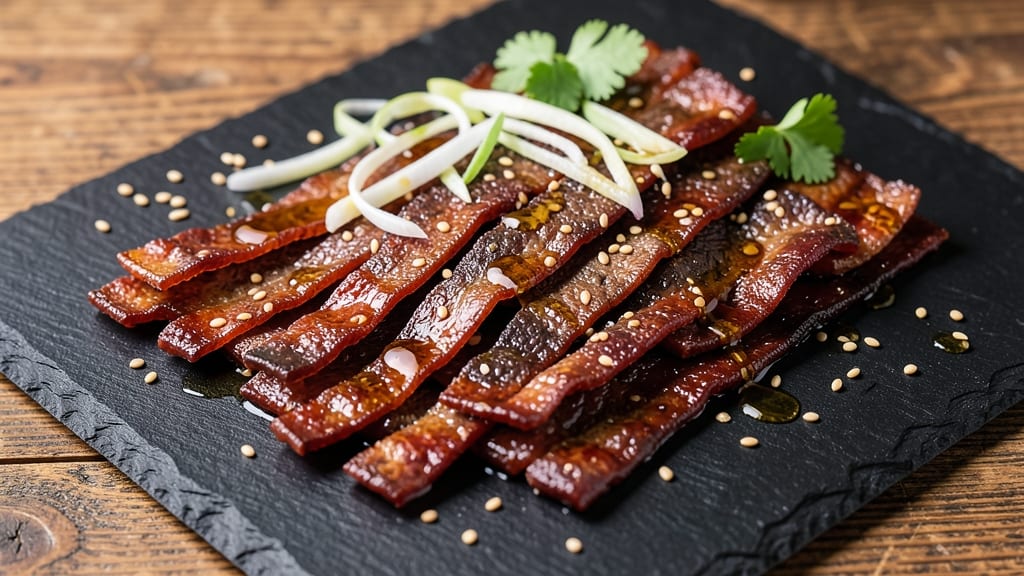
This dehydrator Asian beef jerky recipe transforms tough cuts into crispy, savory-sweet bites perfect for snacks or salads. The secret lies in a marinade blending soy sauce, fish sauce, and brown sugar for that signature umami-sweet balance.
I developed this method after years of testing—each slice delivers the perfect texture and flavor without the grease of traditional jerky.
The process is straightforward but requires precision: thinly sliced beef marinated for at least 4 hours (overnight for deeper flavor), then dehydrated at 160°F for 4-6 hours until leathery.
Food safety is critical—always use fresh, high-quality beef and avoid cross-contamination. This method ensures your jerky stays crispy and shelf-stable for weeks.
What sets this recipe apart is the crispy yet tender texture, achieved through careful dehydration and the right marinade ratio. The result? A snack that’s addictively flavorful, packed with protein, and versatile enough for travel, salads, or charcuterie boards. No smoker or oven needed—just your dehydrator and patience.
Serve with a side of sweet chili sauce or soy dipping sauce for the full experience. This recipe is a game-changer for jerky lovers who crave bold Asian flavors without the mess. Let’s get started!
Ingredients for asian beef jerky recipe dehydrator
High-quality beef and precise marinade ratios create addictively crispy, savory-sweet jerky without smoker or oven.
| Ingredient | Amount | Notes |
|---|---|---|
| Top-Round Roast Beef 🥩 | 1 ½ lb | Thinly sliced against grain (1/4-inch thick) |
| Kosher Soy Sauce 🍶 | ½ cup | High-quality, low-sodium preferred |
| Fish Sauce 🍜 | 2 tbsp | Red Boat brand recommended |
| Dark Brown Sugar 🍚 | ¼ cup | Packed firmly, no substitutes |
| Rice Vinegar 🍶 | 2 tbsp | Seasoned variety for depth |
| Sesame Oil 🫒 | 1 tbsp | Toasted, for aroma (not cooking) |
| Fresh Ginger 🧄 | 1 tbsp | Finely grated, aromatic |
| Garlic Cloves 🧄 | 4 cloves | Minced, for umami punch |
| Diamond Crystal Kosher Salt 🧂 | 1 tsp | For final seasoning adjustment |
| Ground Black Pepper 🌶️ | ½ tsp | Freshly cracked for heat |
| Cornstarch 🌾 | 1 tbsp | For crispy texture coating |
| Sesame Seeds 🌰 | 1 tbsp | Toasted, for garnish |
| Lemon Juice 🍋 | 1 tbsp | Fresh, for brightness |
The beef cut is non-negotiable—top-round roast delivers the perfect balance of lean protein and connective tissue for that signature jerky texture. Ask your butcher to slice it against the grain at 1/4-inch thickness for even drying. I source mine from Whole Foods or local butchers who handle it properly; pre-sliced vacuum-sealed beef often has uneven thickness. Freshness matters: use within 3 days of purchase. For larger batches, freeze the raw slices in a single layer before marinating to maintain shape.
Fish sauce is the umami powerhouse—Red Boat brand is my go-to for consistent quality, but Red Boat Red works too if you prefer less funk. No fish sauce? Double the soy sauce and add 1 tsp of Worcestershire (ensure it's vegan if needed). The brown sugar should be dark and packed—light sugar won't caramelize properly. Sesame oil adds aroma but isn't for cooking; toast it in a dry pan for 30 seconds before using to deepen its flavor. Fresh ginger and garlic can be swapped for powdered (1/2 tsp each), but the fresh versions deliver superior complexity. The cornstarch coating is optional but creates that signature crispy exterior—pat it on after marinating.
Marinated beef stays fresh in the fridge for 3 days before dehydrating—longer marinating doesn't improve flavor, just risks bacterial growth. Dehydrate at 160°F for 4-6 hours until edges are dry but centers remain pliable. Store finished jerky in an airtight container with parchment paper between layers for 2 weeks at room temperature or 3 months frozen. For extra crispiness, reheat slices in a dry skillet for 10 seconds before serving. The cornstarch-coated pieces will regain their crunch instantly.
Why You'll Love This Recipe
- No-Fuss Prep: I swear by this—just slice the beef thin, toss it in a bowl, and let the marinade (soy, fish sauce, and brown sugar) do the work. No chopping, no fuss, and no fancy equipment beyond a dehydrator or even your oven set to its lowest.
- Umami Bomb: That combo of fish sauce and soy sauce? It’s like a flavor explosion in your mouth. The rice vinegar adds this bright, tangy kick that keeps it from being too heavy, and the sugar caramelizes just enough to make every bite addictive.
- Snack Attack Ready: I keep a stash of this in my gym bag, lunchbox, or even as a quick snack while grading papers. It’s protein-packed, shelf-stable, and way better than store-bought jerky—no weird additives, just real ingredients that taste incredible.
- Budget Stretch: Top round roast is affordable, and this recipe stretches it into a ton of jerky. Honestly, it’s one of my go-to ways to use up a big cut of meat without breaking the bank, and it lasts for weeks in the pantry. Win-win.
Step-by-step instructions for Asian beef jerky
Transform lean top-round beef into tender, crispy jerky with bold Asian flavors using precise technique.
Prep and Marinate the Beef for Maximum Flavor
Begin by slicing the 1.5 lb top-round roast beef against the grain into ¼-inch thick strips. This cut ensures the jerky remains tender while maximizing surface area for flavor absorption. Pat each strip dry with paper towels—removing excess moisture is critical for even drying and crispy texture.
In a large mixing bowl, combine the 0.5 cup kosher soy sauce, 2 tbsp fish sauce, 0.25 cup dark brown sugar, 2 tbsp rice vinegar, 1 tbsp toasted sesame oil, 1 tbsp finely grated fresh ginger, and 4 minced garlic cloves. Whisk until the sugar fully dissolves, creating a glossy marinade. Add the beef strips and toss gently to coat evenly. Cover and refrigerate for at least 8 hours—ideally overnight—for deep flavor penetration. The longer it marinates, the more intense the umami and sweet-savory balance will be.
Coat and Cure for Optimal Texture
Remove the beef from the marinade and transfer it to a clean bowl. In a small dish, mix the 1 tbsp cornstarch with 1 tsp Diamond Crystal kosher salt and 0.5 tsp freshly cracked black pepper. Lightly toss the beef strips in this mixture until evenly coated—this creates a crispy exterior while preventing excessive stickiness during dehydration. For extra brightness, drizzle with 1 tbsp fresh lemon juice and toss again, ensuring every strip is thoroughly coated.
Arrange the coated strips on dehydrator trays, leaving ½-inch between each piece to promote even air circulation. Overcrowding leads to uneven drying and potential spoilage. Place a wire rack over a baking sheet and set aside—this will help prevent soggy jerky if you need to pause the process.
Dehydrate at Low Heat for Perfect Crispiness
Preheat the dehydrator to 160°F—this low temperature ensures the beef dries slowly and evenly without cooking. Place the trays inside and dehydrate for 6-8 hours, checking periodically for doneness. The jerky is ready when it’s leather-like but still pliable—it should bend slightly without snapping. If using an oven method, prop the door open 2 inches and bake at 175°F for 4-5 hours, rotating trays halfway through for uniform drying.
Here’s the critical test: press a strip between your fingers—it should feel firm with no moisture, but not brittle. If any pieces remain slightly damp, return them to the dehydrator for an additional 1-2 hours. Over-drying makes jerky tough, while under-drying risks spoilage. Once fully dehydrated, let the jerky cool completely on a wire rack before handling.
Finish with Toasted Sesame Seeds and Storage
While the jerky is still warm, sprinkle 1 tbsp toasted sesame seeds evenly over the strips. Gently toss to adhere—this adds a nutty crunch and visual appeal. Allow the jerky to cool to room temperature before storing in an airtight container with a silica gel packet to absorb any residual moisture. Properly stored, it will keep for up to 3 months at room temperature or 6 months in the freezer.
For serving, cut into 1-inch lengths and enjoy as a snack, trail mix addition, or protein-packed appetizer. The combination of crispy texture, sweet-savory marinade, and umami depth makes this jerky stand out from traditional versions. If you prefer a softer texture, reduce dehydration time by 30 minutes—but don’t sacrifice crispiness unless absolutely necessary.
Pro Tips For Making Asian Beef Jerky Recipe Dehydrator
- Slice Thin, No Thinner: I learned this the hard way—jerky thicker than ¼-inch dries unevenly, leaving you with chewy centers. Use a sharp knife and slice against the grain consistently, or your dehydrator will fight you all day. (Yes, even if you’re impatient like me.)
- Marinate Overnight, Not Just Hours: Fish sauce and soy sauce need time to work their magic into tough top-round beef. Toss the meat in the marinade at least 12 hours—ideally 24—so the sugars and acids break down the fibers. Rushing this step means jerky that tastes like seasoning on top of raw beef.
- Preheat Dehydrator to 160°F: Starting too hot (like 175°F) will crisp the edges before the center dries, leaving you with jerky that’s brittle on the outside and damp inside. Crank it to 160°F first, then bump to 170°F after 2 hours if your jerky isn’t drying fast enough. (Your future self will thank you.)
- Pat Dry Before Dehydrating: Wet beef sticks to trays and traps moisture, turning your jerky into a science experiment. After marinating, lay the slices on paper towels and press firmly with another towel—really press. This isn’t the prettiest method, but it’s the tastiest. (Skip this, and you’ll end up with gummy jerky.)
Perfect pairings for these flavors
Crispy Snack Platter
Arrange your jerky on a platter with toasted peanuts and dried seaweed snacks for a satisfying crunch contrast. I love adding wasabi peas for a spicy kick—about ½ cup of each balances the sweet-savory jerky perfectly.
Garnish with edible gold leaf for a festive touch, especially for gatherings. Serve with a small bowl of chili oil on the side for dipping. 🥜
Asian-Inspired Salad Topper
Chop the jerky into ½-inch pieces and sprinkle over a cucumber salad with shredded carrots, green onions, and a dressing of rice vinegar, sesame oil, and a touch of honey.
The jerky adds protein and umami that elevates the dish. For extra flair, toss in crispy fried shallots—just 1 tbsp adds a delightful crunch. 🥗
Sweet Chili Sauce Dip
Warm ½ cup sweet chili sauce (like Maesri brand) in a small saucepan with 1 tsp grated ginger and 1 minced garlic clove for 3 minutes. The sauce’s tangy-sweetness complements the jerky’s savory depth.
Serve in a small crock pot or ceramic bowl for easy dipping. For a smoky twist, add ½ tsp liquid smoke to the sauce. 🍜
Trail Mix Fusion
Combine 1 cup jerky strips, ½ cup dark chocolate chips, ½ cup candied pecans, and ¼ cup dried cranberries for a protein-packed trail mix. The jerky’s saltiness cuts through the sweetness, creating a balanced snack.
Portion into resealable bags for on-the-go energy. Store in a cool, dry place for up to 2 weeks. 🥾
Sake Cocktail Pairing
Pair your jerky with a chilled glass of junmai sake (like Dassai brand) for a refreshing contrast. The sake’s clean, crisp profile cleanses the palate between bites.
For a festive touch, serve the jerky on skewers with cherry tomatoes and mini mochi bites. The combination feels like a mini Japanese izakaya experience. 🍶
Breakfast Charcuterie
Elevate your morning routine by adding jerky to a breakfast board with soft-boiled eggs, avocado slices, and everything bagel chips. The jerky’s savory punch pairs surprisingly well with cream cheese and smoked salmon. Serve with hot tea or black coffee for a protein-rich start. 🍳
Nutrition facts
Frequently asked questions
Can I use a different cut of beef for this recipe?
While top-round roast is ideal, you can use sirloin tip or flank steak in a pinch. Avoid fatty cuts like ribeye—they won't dry properly. For leaner options, slice slightly thinner (1/8-inch) to compensate. Always trim visible fat before marinating.
What if my dehydrator doesn't go below 165°F?
Use the lowest setting possible—165°F is critical for safe dehydration. If your dehydrator only goes to 175°F, reduce time to 4-5 hours and check frequently. For oven methods, prop the door open 2 inches and bake at 175°F with trays on the middle rack.
How do I know when the jerky is fully dehydrated?
The jerky is done when it's leather-like but still pliable—it should bend slightly without snapping. Press a strip between your fingers: if it feels firm with no moisture but doesn't crack, it's ready. Over-drying makes jerky tough, while under-drying risks spoilage. 4-6 hours at 160°F is standard.
Can I make this jerky without a dehydrator?
Yes! Use an oven on the lowest setting (175°F) with the door propped open 2 inches for airflow. Place wire racks on trays and bake for 4-5 hours, rotating trays halfway. For a smoky flavor, add 1 tsp liquid smoke to the marinade or place a small bowl of water with ½ tsp apple cider vinegar in the oven.
Why did my jerky turn out too chewy?
Chewy jerky usually means under-dehydration. Try these fixes: increase time by 1-2 hours next batch, ensure proper airflow (don't overcrowd trays), or reduce marinade moisture by patting slices extra dry before dehydrating. For extra crispiness, toss finished jerky in 1 tsp cornstarch before storing.