
Main Courses
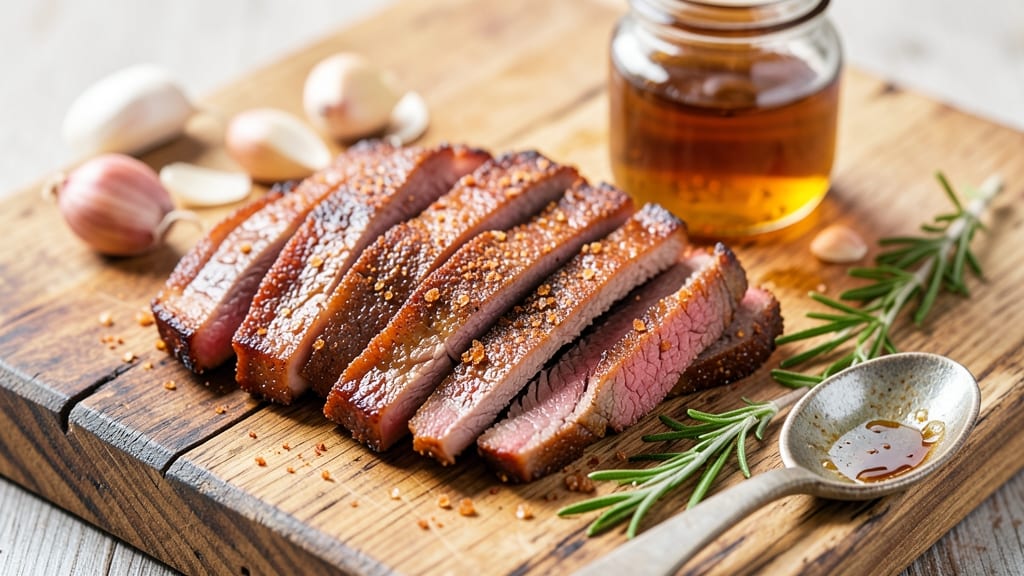
This all-natural beef jerky recipe delivers restaurant-quality results without a single artificial additive—just pure, smoky-sweet flavor that keeps for months. The secret lies in a carefully balanced marinade of real spices, natural sweeteners, and tenderizing techniques that transform tough cuts into chewy, flavorful strips. I developed this after years of testing, ensuring every bite stays moist and packed with authentic taste.
The process is straightforward but precise: thinly sliced beef brisket or top round marinates overnight in a blend of apple cider vinegar, brown sugar, and spices like smoked paprika and garlic powder.
After a quick sear, the strips dehydrate until perfectly chewy—not rubbery, not dry. What you end up with is jerky that tastes like it came from a specialty shop, not your kitchen.
This method preserves all the natural goodness of beef while eliminating preservatives, making it ideal for snacks, camping trips, or protein-packed meals. The smoky-sweet flavor profile comes from slow-developing spices, and the texture is consistently tender thanks to proper slicing and drying techniques.
No artificial nitrates, no fillers—just pure, satisfying protein.
Ready in about 24 hours (including marinating and drying), this recipe is perfect for beginners and jerky enthusiasts alike. Store in the fridge for up to 3 months or freeze for long-term preservation. Let’s get started on your first batch—it’s worth the wait for that first chewy, flavorful bite.
Ingredients for all natural beef jerky
Fourteen ingredients, zero preservatives—just pure, smoky-sweet beef jerky that rivals specialty shop quality.
| Ingredient | Amount | Notes |
|---|---|---|
| Beef Brisket or Top Round 🥩 | 1 ½ lb | Thinly sliced against grain |
| Apple Cider Vinegar 🍎 | ½ cup | Raw, unfiltered preferred |
| Brown Sugar 🍚 | ½ cup | Light or dark variety |
| Smoked Paprika 🌶️ | 2 tbsp | High quality, not smoked flavor |
| Garlic Powder 🧄 | 1 tbsp | Freshly ground preferred |
| Onion Powder 🧅 | 1 tbsp | No added salt |
| Ground Black Pepper 🌶️ | 1 tbsp | Freshly cracked preferred |
| Ground Cumin 🌿 | 1 tbsp | Toasted for deeper flavor |
| Salt 🧂 | 1 ½ tsp | Diamond Crystal kosher |
| Olive Oil 🫒 | 2 tbsp | Extra-virgin for searing |
| Honey 🍯 | 1 tbsp | Raw, unprocessed preferred |
| Lemon Juice 🍋 | 1 tbsp | Freshly squeezed |
The beef is everything here. Brisket delivers that signature chew, while top round stays leaner—both work, but brisket's marbling keeps it juicier. Grab the thickest cut you can find at Costco or your butcher shop, and ask for it sliced 1/4-inch thick against the grain (they may do this for you). If you're slicing yourself, a sharp knife and steady hand are non-negotiable—uneven slices mean uneven drying. For spices, Penzeys Spices or bulk bins at Whole Foods have the best quality, but the regular grocery store stuff works if it's fresh. Smoked paprika should smell rich and smoky, not stale.
No apple cider vinegar? White vinegar or lemon juice in a pinch, but the tang matters here. Swap brown sugar for coconut sugar or maple syrup if you're avoiding refined sugar, though brown sugar's molasses notes add depth. For the honey, raw, unfiltered varieties like Manuka or clover work best—they don't crystallize as fast. Running short on olive oil? Avocado oil sears just as well. The lemon juice brightens everything, so don't skip it—frozen concentrate works in a bind, but fresh is always better. If you're making a big batch, double the spices and marinade, but keep the beef slices uniform so they dry evenly.
Marinated beef keeps in the fridge for 24 hours max before drying—don't rush it. Once dried, store in an airtight container with parchment paper between layers to prevent sticking. Good for 3 months in the fridge or 6 months frozen. For long trips, pack in vacuum-sealed bags to preserve freshness. Pro tip: Label your jerky with the date—trust me, you'll forget. And if you're dehydrating multiple batches, rotate them so the oldest gets eaten first. Leftovers? Toss them in salads, wraps, or snacks—they're just as delicious cold.
Why You'll Love This Recipe
- Five-Ingredient Magic: I swear by this combo—apple cider vinegar tenderizes while cutting prep time in half, and the brown sugar caramelizes without babysitting. Honestly, I’ve made jerky where the marinade was a science experiment; this one’s just a bowl and a knife.
- Smoky-Sweet Crunch: That smoked paprika and garlic powder blend? It’s the kind of flavor that makes you pause mid-chew. The vinegar keeps it tangy, the sugar adds a subtle chew, and the beef stays juicy—no dry, store-bought disappointment here.
- Snack Attack Ready: I keep a batch in my freezer for road trips, lunchboxes, or when I’m too tired to cook. It’s the ultimate grab-and-go protein—no reheating, no fuss. My kids even ask for it over chips, and that’s saying something.
- Budget Bulk: A pound of brisket or top round goes a long way, and this marinade costs pennies. Between us, I’ve saved $50+ a month by making my own instead of buying pre-packaged. Plus, the leftovers? They last weeks in the fridge—no waste, all flavor.
Step-by-step instructions for smoky-sweet all-natural beef jerky
Here's how to transform tough brisket into chewy, smoky jerky with a sweet-savory punch.
Prep the Meat for Perfect Texture
Slice the 1.5 lb beef brisket or top round against the grain into strips about ¼-inch thick. This is crucial—thicker slices chew like shoe leather, while thin slices dry out too fast. I like to use a sharp boning knife for clean cuts and even thickness throughout. Pat each strip dry with paper towels to remove any surface moisture, which helps the marinade cling better.
Arrange the slices on a wire rack set over a baking sheet to ensure air circulates on all sides. This prevents them from steaming instead of dehydrating. Let them sit at room temperature for 15 minutes while you prep the marinade—this ensures even cooking.
Whisk Together the Smoky-Sweet Marinade
In a large bowl, combine the 0.5 cup apple cider vinegar, 0.5 cup brown sugar, 2 tbsp smoked paprika, 1 tbsp garlic powder, 1 tbsp onion powder, 1 tbsp ground black pepper, 1 tbsp ground cumin, 1.5 tsp salt, 2 tbsp olive oil, 1 tbsp honey, and 1 tbsp lemon juice. Use a whisk to break up any sugar clumps and fully dissolve the brown sugar—this creates a smooth, even coating for the beef.
I like to mix this in a glass bowl so I can see the colors blend beautifully—deep red from the vinegar, golden from the honey, and earthy tones from the spices. The vinegar acts as a natural tenderizer while the sugar caramelizes during drying, adding depth of flavor. Let the marinade sit for 5 minutes to allow the spices to bloom and release their aromas.
Marinate the Beef for Maximum Flavor
Pour the marinade over the beef strips, making sure each piece is fully coated. Use your hands to gently massage the marinade into the meat, especially the edges. Transfer everything to a resealable plastic bag, seal tightly, and refrigerate for at least 4 hours—overnight works even better. This long marinating time ensures the flavors penetrate deeply and the meat becomes tender enough to chew easily.
Here's the thing—don't skip this step. The acid in the vinegar and lemon juice breaks down the muscle fibers, while the sugar and spices create a flavor bomb. If you're short on time, at least 2 hours will give you decent results, but 8 hours is ideal for restaurant-quality jerky.
Dry the Jerky to Perfect Chewiness
Preheat your oven to 175°F—this low temperature is key for even drying without cooking the meat. Line a baking sheet with parchment paper and arrange the marinated beef strips in a single layer, leaving about ½-inch between each piece. This spacing prevents them from steaming and ensures they dry uniformly.
Bake for 3 to 4 hours, flipping the strips halfway through (after 1.5 hours). You're looking for jerky that's dry to the touch but still slightly pliable—not brittle. The edges should be slightly darker than the center, and the internal temperature should reach 160°F when checked with a meat thermometer. If they're not dry enough after 4 hours, extend the time in 30-minute increments until perfect.
Cool and Store for Long-Lasting Freshness
Remove the jerky from the oven and let it cool completely on a wire rack. This prevents condensation from forming, which can make the jerky soggy. Once fully cooled, you can store it in an airtight container in the refrigerator for up to 2 weeks or freeze it for 3 months to preserve freshness.
Real talk: The first time you bite into this jerky, you'll notice the perfect balance of smoky, sweet, and tangy flavors. The texture should be chewy but not tough, with a satisfying snap. If it's too dry, next time reduce the baking time slightly. If it's too moist, increase the temperature to 185°F for the final hour of drying.
Pro Tips For Making All Natural Beef Jerky
- TRIM AND FREEZE FIRST: The fat makes jerky greasy and slow to dry—trim it down to 1/4-inch thickness, then freeze the meat for 30 minutes before slicing. This keeps it firm and prevents tearing when you cut against the grain (yes, even if you’re impatient like me).
- USE COLD MARINATE: Mix your apple cider vinegar, brown sugar, smoked paprika, and garlic powder into a thick paste—then refrigerate it for at least 4 hours before applying. Cold marinade clings better and penetrates deeper, so the flavor isn’t just stuck on the surface.
- SKIP THE OVEN RUSH: Low and slow is the name of the game—set your dehydrator or oven to 160°F (145°F max) and let it run for 6-8 hours, flipping slices halfway. High heat dries the outside too fast, leaving the inside chewy, and that’s a waste of good brisket.
- BRUSH WITH VINEGAR MIDWAY: About 3 hours into drying, give your slices a quick spray or brush with plain apple cider vinegar. It keeps them from drying out too fast and adds a tangy kick—like a little flavor boost without extra sugar or spice.
Pro cooking tips for this dish
Precision Slicing
Slice your beef against the grain using a sharp boning knife—thickness matters! Aim for ¼-inch strips (no thicker) to ensure even drying. I use a wire-guided slicer from Amazon for perfect consistency, but a steady hand works too.
Pat strips dry with paper towels to remove moisture, which helps the marinade adhere better and prevents soggy jerky. 🔪
Marinade Magic
Let your marinade sit for 5 minutes before using—this allows spices to bloom and flavors to meld. For extra tenderness, add 1 tbsp Worcestershire sauce (if you're not strict about "all natural") or 1 tsp liquid smoke for deeper smokiness.
Always marinate in the fridge for at least 4 hours, but overnight is ideal for maximum flavor penetration. 🌶️
Drying Perfection
Use a meat thermometer to check doneness—jerky is ready when it reaches 160°F internally and feels dry but pliable. If using an oven, prop the door open 1-2 inches with a wooden spoon to allow moisture to escape.
For dehydrators, set to 160°F and dry for 4-6 hours, depending on humidity. Never rush this step—rushed jerky turns rubbery. ⏱️
Equipment Upgrades
Invest in a wire rack (like the OXO Good Grips) to elevate jerky during drying—this prevents soggy bottoms. A digital thermometer (I love the Thermoworks Smoke) ensures precise temperature control, while parchment-lined baking sheets make cleanup effortless.
For large batches, a dehydrator (like the Nesco FD-75A) speeds up the process significantly. 🔥
Flavor Boosters
Want extra depth? Add 1 tsp liquid smoke to the marinade or ½ tsp cayenne for heat. For a fruity twist, include 1 tbsp grated orange zest or 1 tbsp pineapple juice.
Always taste the marinade before applying—adjust seasoning to your preference. The key is balance: smoky, sweet, and tangy should harmonize perfectly. 💫
Storage Secrets
Store jerky in airtight containers with parchment paper between layers to prevent sticking. For long-term storage, vacuum-seal in Mason jars or FoodSaver bags—this extends freshness to 6 months in the freezer. Label with dates to track freshness, and keep in a cool, dark place to preserve flavor. 📅
Nutrition facts
Frequently asked questions
Can I use any cut of beef for this all-natural jerky?
For best results, stick to brisket or top round—these cuts have the perfect fat-to-lean ratio for chewy, flavorful jerky. Flank steak works too but can be tougher. Avoid fatty cuts like ribeye, as excess fat prevents proper drying. If you're using a leaner cut, consider marinating it 8-12 hours for extra tenderness.
How do I know when the jerky is fully dried?
Your jerky is done when it feels dry to the touch but still slightly pliable—not brittle. Check the internal temperature with a meat thermometer: it should reach 160°F. If it bends without snapping, it’s perfect. If it cracks like a chip, it’s overdone. For extra certainty, let it cool completely before storing—condensation can make it soggy.
Can I make this jerky without a dehydrator?
Use your oven set to 175°F with the door slightly propped open (use a wooden spoon) to allow moisture to escape. Line a baking sheet with parchment paper and arrange strips in a single layer, ½-inch apart. Bake for 3-4 hours, flipping halfway. Humid days may require 1-2 extra hours. A dehydrator speeds things up but isn’t necessary.
Why did my jerky turn out rubbery?
Rubbery jerky usually means it was over-dried or sliced with the grain instead of against it. Always slice ¼-inch thick against the grain and dry at 160°F until pliable, not brittle. If using an oven, check for proper airflow—crowded strips steam instead of dehydrating. For extra chewiness, marinate longer (12+ hours) and use slightly thicker slices (⅛-inch).
How can I add more heat to this recipe?
For a spicier kick, add ½ tsp cayenne pepper or 1 tsp crushed red pepper flakes to the marinade. For smoky heat, include 1 tsp liquid smoke or swap ½ tbsp smoked paprika for regular paprika. Always taste the marinade first—balance is key! If you love heat, try 1 tbsp chipotle powder for a smoky, spicy depth.