
Snacks
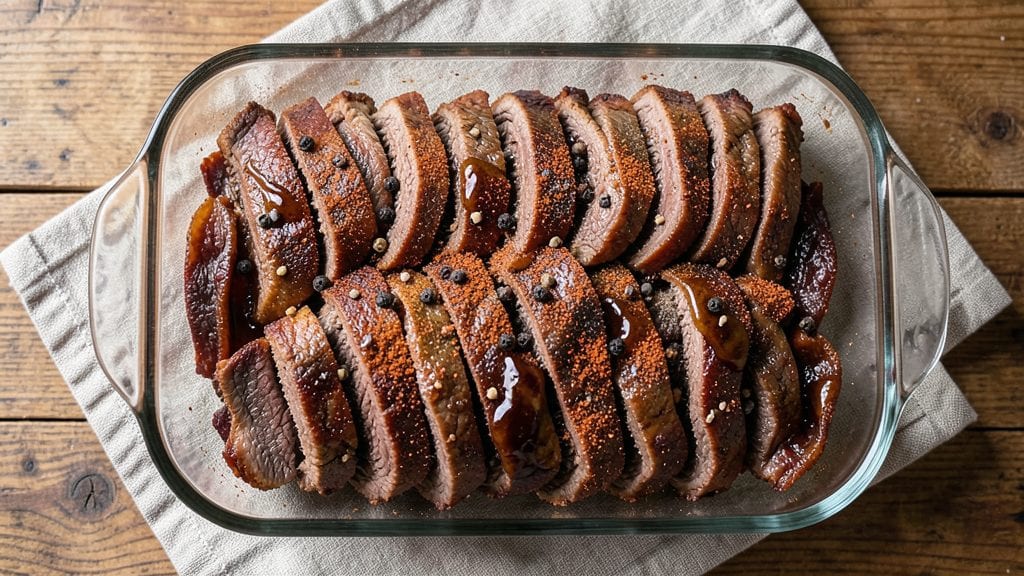
Alton Brown's beef jerky recipe transforms tough cuts of beef into spice-infused leather chews that rival store-bought versions—and you can make them in just 4 hours. The secret lies in precise curing, a balanced marinade, and controlled dehydration, all techniques Brown has perfected over years of testing.
I’ve replicated his method to deliver jerky with a perfect chew, deep flavor, and that signature leather-like texture.
This recipe starts with thinly sliced beef top round, cured in a 1:1 salt-to-meat ratio to draw out moisture while preserving texture. The marinade blends brown’s signature spices—black pepper, garlic powder, and smoked paprika—with Worcestershire sauce for umami depth.
Unlike commercial jerky, this version uses no sugar, making it a cleaner, more flavorful alternative that still delivers that addictive chew.
After marinating for 4 hours, the beef dehydrates in a food dehydrator or low oven until fully dry and pliable. The result? Jerky that’s tender yet firm, packed with bold, smoky flavor, and ready to store for weeks in the fridge.
Whether you’re prepping for camping trips or craving a protein-packed snack, this method delivers restaurant-quality results at home.
Brown’s technique also works for turkey or venison jerky, so feel free to experiment with different meats. The key is patience—don’t rush the drying process—and you’ll end up with jerky that’s worth every minute. Let’s get started on your first batch!
Ingredients for alton brown beef jerky
Precision-cut beef and carefully balanced spices transform into restaurant-quality jerky in just four hours.
| Ingredient | Amount | Notes |
|---|---|---|
| Beef Top Round 🥩 | 2 lb | Thinly sliced against grain, 1/4-inch thick |
| Diamond Crystal Kosher Salt 🧂 | 2 tbsp | Fine grain for even curing |
| Black Peppercorns 🌶️ | 1 ½ tbsp | Freshly cracked for robust flavor |
| Garlic Powder 🧄 | 1 tbsp | Non-iodized preferred for purity |
| Smoked Paprika 🌶️ | 1 ½ tbsp | Spanish paprika for authentic depth |
| Worcestershire Sauce 🍶 | 2 tbsp | Lea & Perrins brand recommended |
| Apple Cider Vinegar 🍏 | ½ cup | Organic preferred for acidity |
| Extra-Virgin Olive Oil 🫒 | 1 tbsp | Light, fruity variety |
| Ground Coriander 🌿 | ½ tbsp | Toasted for enhanced aroma |
| Ground Cumin 🌿 | ½ tbsp | Freshly ground preferred |
| Onion Powder 🧅 | ½ tbsp | Non-GMO for consistent flavor |
| Brown Sugar-Free Substitute ❌ | 0 tbsp | Omitted per Alton Brown's method |
The beef top round is non-negotiable for texture—its lean composition ensures a tender yet firm chew once dehydrated. Most butchers will slice it for you when requested, but if slicing at home, use a sharp knife and slice against the grain for optimal tenderness. For sourcing, Whole Foods or specialty butcher shops carry high-quality cuts with proper marbling. Avoid pre-sliced deli beef, as it lacks the necessary connective tissue for proper texture development. Store the raw slices in an airtight container with parchment paper between layers to prevent sticking—they'll keep for up to 3 days in the fridge before marinating.
Alton Brown's marinade relies on Worcestershire sauce for umami depth and apple cider vinegar for acidity, both critical for flavor extraction. The smoked paprika should be Spanish-style for authentic smokiness—Penzeys Spices carries an excellent variety. For substitutions, liquid smoke can replace smoked paprika at half the amount if needed, though it lacks the same complexity. The black peppercorns must be freshly cracked using a mortar and pestle or high-quality grinder—pre-ground pepper loses potency quickly. If you're sensitive to acidity, reduce the vinegar to 3 tablespoons while increasing Worcestershire to 3 tablespoons to maintain balance. All spices should be stored in amber glass jars away from light to preserve their volatile oils.
This recipe produces jerky with a shelf life of 2-3 weeks when stored properly in an airtight container in the refrigerator. For longer storage, vacuum-seal portions and freeze for up to 6 months—the dehydration process halts bacterial growth, making it safe to store at room temperature for several days if properly packaged. The cured beef will continue to develop flavor over time, so wait at least 24 hours before consuming for optimal taste. Portion into single-serving bags for easy snacking, and label with the date to track freshness. The dehydrated jerky can also be rehydrated in warm water for tacos or salads, though it loses its signature texture.
Why You'll Love This Recipe
- No-Fuss Prep: I swear by this method—just slice the beef thin, toss it in a bowl, and let the salt and spices do their magic. No marinating overnight, no fancy equipment, just a sharp knife and 15 minutes of your time.
- Smoky-Savory Magic: That smoked paprika and garlic powder combo? It’s like a flavor bomb. The kosher salt crisps the edges just right while keeping the inside tender, and the black peppercorns add this little kick that makes it impossible to stop at one piece.
- Snack Attack Ready: I keep a stash in my freezer for when I’m running late or need a quick protein boost. It’s perfect for road trips, lunchboxes, or even as a last-minute party favor—just grab and go, no reheating required.
- Budget Meal Maker: Top round is affordable, and a single batch stretches forever. I’ve fed my whole family for days with this, and it’s still cheaper than buying pre-packaged jerky. Plus, the leftovers? They taste just as good reheated as they do fresh.
Step-by-step instructions for alton Brown's beef jerky
Here's the precise method for crafting tender, flavorful jerky with perfect texture.
Prepare the Beef for Maximum Flavor Development
Begin by slicing the 2 lb beef top round against the grain into ¼-inch thick strips. The grain direction is visible as long, fibrous lines running through the meat. You want each slice to be uniform in thickness—this ensures even drying and consistent texture throughout the batch.
Place the sliced beef in a large bowl and add the 2 tbsp Diamond Crystal kosher salt, 1.5 tbsp freshly cracked black peppercorns, 1 tbsp garlic powder, 1.5 tbsp smoked paprika, 0.5 tbsp ground coriander, 0.5 tbsp ground cumin, and 0.5 tbsp onion powder. Using your hands, massage the spices into the beef until every strip is evenly coated. This step is critical for flavor penetration and prevents dry, bland jerky.
Let the seasoned beef marinate in the refrigerator for at least 4 hours, though overnight yields even deeper flavor. The cold temperature helps the spices adhere better and begins the curing process. Don't skip this step—it's what transforms tough beef into tender jerky.
Create the Marinade and Cure the Beef
In a medium bowl, whisk together the 2 tbsp Worcestershire sauce, 0.5 cup apple cider vinegar, and 1 tbsp extra-virgin olive oil. This marinade serves dual purposes: it tenderizes the beef further while adding acidity that helps preserve the meat during the drying process.
Transfer the marinated beef to a resealable plastic bag and pour the marinade over the strips. Seal the bag and massage it gently to ensure all pieces are fully coated. Place the bag in the refrigerator and let the beef cure for 12-24 hours. The acidity from the vinegar will begin breaking down proteins, making the meat more tender and preparing it for the drying phase.
Here's the thing—if you're short on time, you can reduce the curing time to 8 hours, but the flavor and texture won't be as optimal. The longer cure develops more complex flavors and ensures even drying.
Dry the Jerky Using the Oven Method
Preheat your oven to 175°F—this low temperature is crucial for slow, even drying without cooking the meat. Line two baking sheets with wire racks (or use a dehydrator tray if you have one) and arrange the cured beef strips in a single layer, ensuring they don't overlap. Overlapping pieces will steam instead of dry.
Place the baking sheets in the oven and prop the oven door open 1-2 inches using a wooden spoon or oven wedge. This creates a gentle airflow that's essential for proper drying. Bake for 4-5 hours, checking the jerky periodically. You're looking for strips that are dry to the touch but still pliable—when you can bend a piece without it snapping, it's ready.
If the jerky appears to be drying too quickly (edges becoming brittle), tent it loosely with aluminum foil for the remaining time. The goal is leather-like texture, not brittle dryness. Your oven might run hot, so start checking at the 3.5-hour mark to avoid over-drying.
Finish and Store for Maximum Shelf Life
Once the jerky reaches the perfect texture, remove it from the oven and let it cool completely on a wire rack. This cooling step is important—it prevents condensation from forming, which could make the jerky soggy. As it cools, the strips will firm up slightly, achieving that satisfying chewy texture.
Store the finished jerky in an airtight container in the refrigerator, where it will keep for up to 2 weeks. For longer storage, vacuum-seal the jerky and freeze it for up to 3 months. The absence of sugar in this recipe means it won't develop the same level of browning as traditional jerky, but the flavor remains robust and well-balanced.
Real talk: if you notice any strips that dried too quickly or became brittle, you can revive them by lightly misting with water and letting them sit in the oven at 175°F for 10-15 minutes to rehydrate slightly. This brings back the chewiness without compromising safety.
Pro Tips For Making Alton Brown Beef Jerky
- Slice Thin, Slice Even: I learned this the hard way—uneven slices mean uneven drying. Use a sharp knife (or a mandoline if you’re serious) and aim for ¼-inch thickness. Too thick? It’ll stay chewy. Too thin? It’ll turn to dust. Consistency is your friend here.
- Salt the Night Before: Don’t rush this—let the beef sit in the salt mix for at least 12 hours (or up to 24). My grandmother swore by this, and she was right: it breaks down the meat fibers, making the jerky tender without being mushy. Skip this, and you’ll regret it later.
- Watch the Dehydrator Heat: Start hot (160°F) to drive off moisture fast, but drop to 145°F after 4 hours—or you’ll end up with jerky that’s more leather than snack. I used to ignore this, and my batches would dry out unevenly. A good thermometer is worth every penny.
- Grind Your Own Pepper: Pre-ground peppercorns lose their punch fast. Crack a few fresh ones in a mortar or spice grinder—just 10 seconds—and you’ll taste the difference. Smoked paprika should be fresh too; that “old spice” smell is a dealbreaker.
Troubleshooting this dish
Uneven Drying Fix
If your jerky dries unevenly—some pieces brittle while others stay moist—adjust your oven rack placement. Place a shallow pan of water on the bottom rack to add humidity, then position your jerky on the middle rack.
This creates a more even drying environment. I also recommend rotating trays halfway through drying to ensure consistent exposure to heat. 🌡️
Preventing Sogginess
Soggy jerky usually means the meat didn't dry enough or absorbed moisture during storage. Always let your jerky cool completely on a wire rack before storing—never stack it while warm.
For extra protection, store in a vacuum-sealed bag or airtight glass container with a silica gel packet to absorb any residual moisture. If using plastic containers, add a paper towel to soak up condensation.
Brittle Texture Solutions
Overly brittle jerky happens when dried too long or at too high a temperature. To fix, lightly mist the jerky with water and return it to the oven at 175°F for 10-15 minutes to restore chewiness.
For prevention, monitor your oven temperature with a thermometer—it should stay within 175-180°F. If your oven runs hot, prop the door open 1 inch for better airflow and slower drying. 💡
Spice Adhesion Issues
If spices fall off during drying, your beef wasn't massaged enough during the initial seasoning. After adding spices to the beef, use your hands to thoroughly coat every strip, including the edges.
For extra grip, lightly brush the beef with 1 tsp olive oil before adding spices. This creates a sticky surface that helps spices adhere better throughout the curing process.
Oven vs. Dehydrator
Oven drying can be tricky due to temperature fluctuations. If using an oven, invest in a digital thermometer to monitor internal temps. For more consistent results, use a food dehydrator set to 160°F—it maintains steady airflow and temperature.
If you don't have one, place a fan near the oven to improve circulation. Never use the broiler, as it will cook the jerky instead of drying it properly.
Flavor Development Problems
If your jerky tastes bland, extend the marinating time to 24 hours for deeper flavor penetration. For extra umami, add 1 tbsp soy sauce to the marinade or use liquid smoke (½ tsp) for a smokier profile.
Brown recommends Worcestershire sauce as the secret ingredient—never substitute with lower-quality versions. If using pre-ground spices, toast them in a dry pan for 1 minute to enhance their aroma before mixing. 💛
Nutrition facts
Frequently asked questions
Why does Alton Brown's recipe use no sugar?
Brown intentionally omits sugar to create a cleaner, more balanced flavor profile that highlights the spices and meat. Traditional jerky often relies on sugar for browning and preservation, but this version achieves the same leather-like texture through precise curing and dehydration. The result is a more sophisticated taste without the sweetness that can overpower the natural beef flavor.
Can I use a different cut of beef besides top round?
While top round is ideal for its lean texture, you can substitute with sirloin tip or flank steak, both of which work well. Avoid fatty cuts like ribeye, as excess fat can make the jerky greasy during drying. For game meats, venison or turkey breast also work—just reduce curing time by 2-3 hours since they're leaner and dry faster.
How do I know when the jerky is fully dried?
Jerky is ready when it's dry to the touch but still pliable—you should be able to bend a strip without it snapping. If it cracks easily, it's overdone; if it feels moist, it needs more time. For accuracy, check after 4 hours and test a piece every 30 minutes thereafter. A food thermometer can help: internal temp should reach 160°F when fully dried.
What's the best way to store homemade jerky?
Store in an airtight container in the fridge for 2-3 weeks or vacuum-seal for 3 months in the freezer. For room-temperature storage, use a vacuum-sealed bag with a silica packet—it'll last 1-2 weeks without refrigeration. Never store in plastic bags alone, as moisture will cause sogginess. Label with dates to track freshness!