
Soups & Stews
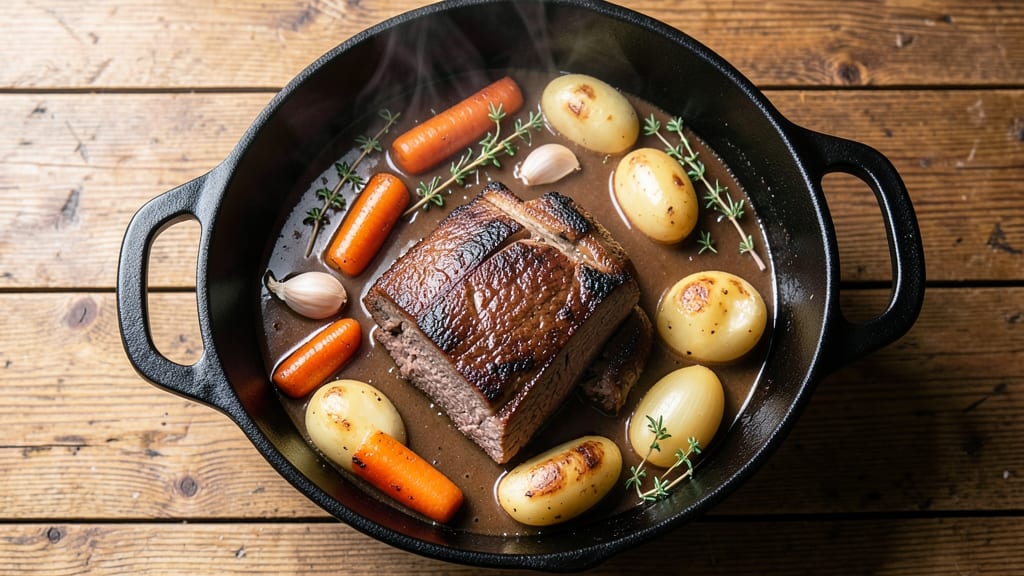
This 6-hour beef stew recipe transforms tough cuts into melt-in-your-mouth perfection through slow simmering and layered flavors. The secret lies in patience—allowing the beef to break down while vegetables absorb deep, savory essence.
Every bite delivers tender meat and caramelized vegetables in a rich, velvety broth that feels like a warm hug on cold days.
Professional results start with proper technique: browning the beef creates a flavorful crust, while deglazing captures every bit of meaty goodness. Aromatics like garlic and herbs infuse the broth, while red wine (or broth) adds complexity.
The long simmer reduces the liquid, intensifying flavors without overcooking the meat—just as restaurants do.
By the final hour, your stew will feature fork-tender beef, perfectly softened potatoes, and caramelized onions that melt in your mouth. The aroma alone will have everyone anticipating dinner. Serve with crusty bread to soak up every last drop of that flavorful broth.
This recipe scales beautifully for families or gatherings, and leftovers reheat even better the next day. The slow-cooked method ensures restaurant-quality depth without requiring fancy equipment—just time and attention to detail. Let's create a stew that becomes a weekly tradition.
Ingredients for 6 hour beef stew
Six ingredients form the foundation of this restaurant-quality beef stew—meat, aromatics, wine, broth, and time.
| Ingredient | Amount | Notes |
|---|---|---|
| Chuck Roast 🥩 | 3 lb | Well-marbled, cut into 1.5-inch cubes |
| Yellow Onions 🧅 | 2 whole | Chopped into even 1/2-inch pieces |
| Carrots 🥕 | 4 whole | Peeled, cut into 1-inch chunks |
| Russet Potatoes 🥔 | 3 lb | Peeled, cut into 1.5-inch cubes |
| Garlic Cloves 🧄 | 8 cloves | Minced, for aromatic depth |
| Fresh Thyme 🌿 | 2 tbsp | Leaves only, stems removed |
| Fresh Rosemary 🌿 | 1 tbsp | Needles only, finely chopped |
| Dry Red Wine 🍷 | 1 cup | Bold variety like Cabernet Sauvignon |
| Beef Broth 💧 | 6 cups | Low-sodium preferred, homemade if possible |
| Tomato Paste 🍅 | 2 tbsp | Smooth, not chunky |
| Olive Oil 🫒 | 2 tbsp | Extra-virgin for browning |
| Diamond Crystal Kosher Salt 🧂 | 1 ½ tsp | For seasoning and deglazing |
| Freshly Ground Black Pepper 🌶️ | 1 tsp | Coarse grind preferred |
| Bay Leaves 🍃 | 2 whole | Removed before serving |
| All-Purpose Flour 🌾 | 1 tbsp | For thickening if needed |
The chuck roast is non-negotiable—its marbling ensures tender results. Look for cuts with visible fat between the muscles at Whole Foods or your local butcher shop; they'll often trim it for you. If using frozen, thaw overnight in the fridge. The yellow onions and carrots should be firm with no soft spots—Trader Joe's carries pre-cut bags for convenience. For the potatoes, russets are ideal due to their high starch content, which breaks down beautifully during the long simmer. Garlic should smell pungent, not musty, and fresh herbs must have vibrant green leaves with no browning.
No red wine? Substitute with 1 cup beef broth plus 1 tbsp balsamic vinegar—it mimics the acidity and depth. The tomato paste can be replaced with 1 cup crushed tomatoes if unavailable, though it lacks the concentrated umami. For a meatier flavor without additional beef, mushrooms (8 oz, sliced) or lentils (1 cup, cooked) work well. Fresh thyme and rosemary can be swapped for 1 tbsp each of dried, but reduce to one-third the amount to avoid overpowering. The bay leaves are optional but add subtle earthiness—omit if you prefer a cleaner flavor profile.
This stew improves with time—reheat gently on the stove or in a 350°F oven for 20 minutes to maintain texture. Store in an airtight container for up to 5 days in the fridge or 3 months in the freezer. For serving, crusty bread is essential—its texture contrasts perfectly with the velvety broth. Double the batch; the second day often tastes even better as flavors meld further. If the broth reduces too much, stir in a splash of beef broth or water before reheating.
Why You'll Love This Recipe
- Deep, Savory Magic: That slow simmer? It turns tough chuck roast into something ridiculously tender, while the onions caramelize into sweet, jammy pockets. Add the garlic cloves late, and boom—sudden, bright flavor that cuts through the richness like a knife.
- Leftovers That Beg for More: This stew tastes better the next day. I make a double batch on Sundays, and by Wednesday, my family’s already fighting over the last bowl. The potatoes soak up all the flavor, and the carrots stay crisp—no sad, mushy sides here.
- Budget-Friendly Crowd-Pleaser: A single chuck roast feeds six for under $20, and the veggies stretch it even further. Honestly, it’s the kind of meal that makes you feel like you’re feeding a dinner party without the stress—just throw in whatever’s on hand.
Step-by-step instructions for slow-simmered beef stew
Master this technique and you'll achieve restaurant-quality depth of flavor with tender meat every time.
Sear the Chuck Roast and Vegetables for Maximum Flavor
Heat a large Dutch oven over medium-high heat until hot. Add the 2 tablespoons olive oil and let it shimmer for 30 seconds. Working in batches if needed, add the 3 lb chuck roast cubes and sear for 3-4 minutes per side until deeply browned. This creates the Maillard reaction that forms the stew's flavor foundation.
Remove the beef and set aside. In the same pot, add the 2 whole yellow onions and 4 whole carrots cut into chunks. Cook for 5-6 minutes, stirring occasionally, until the onions soften and begin to caramelize. The potatoes will go in later—they need to cook longer and shouldn't brown at this stage.
Build the Aromatic Base with Wine and Herbs
Push the vegetables to one side of the Dutch oven and add the 8 cloves minced garlic to the empty space. Cook for 30 seconds until fragrant, stirring constantly to prevent burning. Add the 2 tablespoons tomato paste and cook for another 1 minute until it darkens slightly.
Deglaze the pot immediately by pouring in the 1 cup dry red wine. Scrape up all the browned bits from the bottom with a wooden spoon—these contain concentrated flavor. Add the 2 tablespoons fresh thyme and 1 tablespoon fresh rosemary, stirring to combine. Let the wine reduce by half (3-4 minutes) before adding the beef broth.
Combine and Simmer for Deep Flavor Development
Return the seared beef to the pot along with the 6 cups beef broth. Add the 1.5 teaspoons diamond crystal kosher salt, 1 teaspoon freshly ground black pepper, and 2 whole bay leaves. Bring to a gentle boil, then reduce heat to low so the liquid simmers steadily. The key is maintaining 180-190°F—this gentle simmer prevents the tough connective tissue from turning mushy.
Add the 3 lb russet potatoes cut into cubes. The potatoes should be fully submerged—if not, add a splash of water. Cover and cook for 4 hours, checking occasionally to ensure the liquid level hasn't evaporated too much. The beef should begin to pull away from the bone and become fork-tender during this time.
Finish with Thickening and Season Adjustment
After 4 hours, check the consistency. If the stew is too thin, sprinkle the 1 tablespoon all-purpose flour over the surface and stir gently to combine. Simmer uncovered for another 1-2 hours until the beef is fork-tender and the potatoes are fully cooked. The stew should coat the back of a spoon with a velvety texture.
Taste and adjust seasoning—you may need to add more salt or pepper. Remove the bay leaves before serving. This final simmering time is crucial for developing the rich, complex flavors that make this stew exceptional. The longer it cooks, the more the flavors meld together into a harmonious blend.
Pro Tips For Making 6 Hour Beef Stew
- SEAR THE CHUCK FIRST: After burning three batches of stew, I finally learned to sear the chuck roast in two batches—don’t crowd the pan. A deep, dark crust locks in flavor and keeps the meat from turning to mush later. Use about 2 tablespoons of oil and let it sit for 5 minutes at room temp first (yes, even if you're impatient like me).
- CUT POTATOES SMALLER: I used to add whole potatoes, thinking they’d soften faster—wrong. Cut them into 1-inch chunks so they absorb the beefy broth without turning to glue. Russets break down differently than Yukon Golds, so don’t skip this step if you want tender, not mushy, bites.
- LOW AND SLOW AFTER 2 HOURS: The first 2 hours at a rolling simmer build flavor, but after that, drop the heat to the lowest setting possible. I used to keep it at a medium simmer, and the carrots would turn to mush while the meat stayed tough. Cover it and let it barely bubble—this is where the magic happens.
- ADD GARLIC LATE: Tossing in the garlic with the onions at the start? You’ll just burn it. Wait until the onions are soft and the meat’s halfway cooked, then add the minced cloves with the potatoes. They’ll infuse the stew without turning bitter—trust me, I’ve ruined stews by doing it early.
Common mistakes when making this recipe
Overcrowding the Pot
One of the biggest mistakes is adding too much liquid or ingredients at once. When you overcrowd your Dutch oven, the stew won't simmer properly—it'll boil vigorously instead. This leads to tough meat and uneven cooking.
I've learned to keep the beef and vegetables fully submerged but with enough room to stir. If your pot looks packed, remove some vegetables and add them back later during cooking. 🌡️
Skipping the Sear
Many home cooks skip searing the beef, thinking it's not essential. Big mistake! Browning the meat creates the Maillard reaction, which builds deep, savory flavors. I always sear my beef in batches until deeply browned—it makes all the difference.
If you're short on time, at least sear the onions and garlic for that caramelized depth.
Adding Potatoes Too Early
Potatoes release starch quickly, which can turn your broth cloudy and gluey if added too soon. I wait until after the beef has cooked for 2 hours before adding them.
This ensures they absorb flavor without making the stew gummy. If you add them with the beef, they'll likely fall apart and thicken the broth prematurely.
Ignoring the Liquid Level
Many stews fail because the liquid evaporates too quickly, leaving the meat dry. I always check my stew every 30 minutes and add ½ cup beef broth if needed.
The liquid should just cover the ingredients—never let it reduce too much. A good rule: the broth should coat the back of a spoon when you dip it in.
Using the Wrong Cut of Beef
Not all beef cuts work equally well. Chuck roast is ideal because its marbling and connective tissue break down beautifully during slow cooking. I've tried using flank steak or sirloin, and while they cook faster, they never become tender. Stick with chuck, brisket, or short ribs for the best results.
Overcooking the Vegetables
Vegetables like carrots and onions can become mushy if left too long. I pull them out when they're just tender—not falling apart. For potatoes, I aim for creamy but firm texture. Overcooked veggies make the stew taste bland. Taste-test them as they cook to find the perfect moment.
Nutrition facts
Frequently asked questions
Can I use a slow cooker for this 6-hour stew? For a slow cooker version, sear the beef and vegetables first, then transfer everything to your slow cooker. Cook on low for 7-8 hours or high for 4-5 hours until the beef is fork-tender. The longer cook time actually enhances the flavor, so don't rush it. Just
What's the best way to reheat leftover beef stew?
Reheat gently on the stove over low-medium heat for 10-15 minutes, stirring occasionally. If using the microwave, cover with a damp paper towel and heat in 1-minute intervals until hot throughout. Never reheat to boiling—this can make the meat tough. For best results, reheat just enough to warm through and serve immediately.
Can I make this stew without red wine?
Yes! Replace the wine with 1 cup beef broth plus 1 tbsp balsamic vinegar for similar acidity and depth. Alternatively, use 1 cup apple cider vinegar or even 2 tbsp soy sauce for umami. The key is maintaining acidity—this helps tenderize the meat and balance flavors. Just adjust seasoning after cooking as vinegar can be stronger than wine.
How do I know when the beef is fully tender?
The beef should easily pull apart with a fork and look moist, not dry or stringy. Insert a fork into the thickest piece—if it slides in smoothly with minimal resistance, it's done. For chuck roast, this typically takes 4-5 hours of simmering. If you're unsure, let it cook 30 more minutes—the stew will only improve with more time.
What are good sides to serve with this beef stew?
Crusty bread is essential for soaking up the rich broth, but you could also serve it with mashed potatoes, buttered noodles, or steamed green beans. For a heartier meal, add a simple green salad with a tangy vinaigrette. The key is balancing textures—something soft like bread or potatoes complements the tender beef perfectly.