
Main Courses
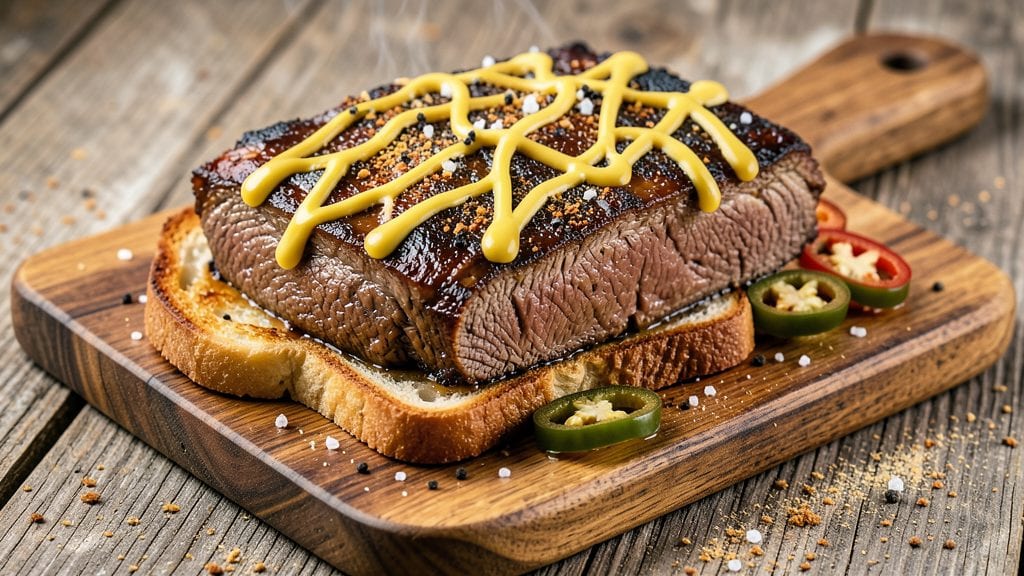
Mastering Texas smoked beef brisket transforms a simple cut of meat into a showstopping centerpiece that carries the soul of Central Texas BBQ traditions.
The key lies in patience—12 hours of low-and-slow smoking at 225°F—where post oak wood infuses the brisket with deep, smoky notes while the bark develops that coveted dark crust.
I’ve perfected this method over countless cookouts, ensuring tender meat that pulls apart effortlessly and a sauce so rich it deserves its own bowl.
What sets this recipe apart is the balance of simplicity and precision: a foolproof spice rub with just six ingredients, a strategic fat cap placement to protect the meat, and the critical 3-2-1 resting method that redistributes juices.
The result is brisket so tender it nearly melts in your mouth, with a smoky depth that lingers long after the first bite. This isn’t just a recipe—it’s a rite of passage for serious pitmasters and home cooks alike.
The magic happens during the final two hours of smoking, when the bark forms and the internal temperature reaches 203°F. That’s when you know the brisket is ready to rest, wrapped in butcher paper, where it absorbs its own juices and becomes irresistibly moist.
Serve it sliced against a bed of Texas toast, a crisp coleslaw, and a side of bark butter—the trifecta that makes every bite unforgettable.
Whether you’re hosting a backyard gathering or simply craving a taste of Central Texas, this recipe delivers restaurant-quality results at home. The secret? Paying attention to the details—timing, temperature, and that perfect bark—that turn a humble brisket into a masterpiece. Let’s get smoking.
Ingredients for texas smoked beef brisket
The foundation of Texas brisket lies in these twelve essential ingredients—where precision meets tradition for perfect bark-to-meat harmony.
| Ingredient | Amount | Notes |
|---|---|---|
| Packer Cut Beef Brisket 🥩 | 10 lb | Whole packer cut with fat cap intact |
| Yellow Mustard 🍯 | ¼ cup | For fat cap adhesion |
| Coarse Kosher Salt 🧂 | ½ cup | Diamond Crystal preferred |
| Coarse Black Pepper 🌶️ | ¼ cup | Freshly cracked preferred |
| Smoked Paprika 🌶️ | ¼ cup | High-quality Spanish paprika |
| Granulated Garlic Powder 🧄 | 2 tbsp | Freshly ground preferred |
| Granulated Onion Powder 🧅 | 2 tbsp | Freshly ground preferred |
| Post Oak Wood Chips 🌳 | 4 lb | Unseasoned, for authentic smoke |
| Apple Juice Concentrate 🍎 | 2 tbsp | For spritzing during smoke |
| Beef Tallow or High-Smoke-Point Oil 🫒 | ½ cup | For spritzing mix |
| Butcher Paper 📄 | 1 sheet | For wrapping post-smoke |
| Texas Toast Rolls 🍞 | 8 whole | For serving |
| Yellow Onions 🧅 | 2 whole | For serving, sliced |
| Fresh Pickles 🥒 | 1 cup | For serving, sliced |
The packer cut brisket is non-negotiable for authentic Texas results—its thick fat cap protects the meat during the long smoke and delivers unparalleled flavor. Source from a reputable butcher or Snake River Farms for optimal marbling. The fat cap must remain intact to create that signature dark bark while keeping the meat moist. For the spice rub, Penzeys or McCormick Gourmet offer premium coarse kosher salt and black pepper—critical for developing that coveted crust. Post oak wood chips are essential; Traeger and Pit Barrel Cookers sell authentic varieties that deliver the signature Central Texas smoke profile. Yellow mustard serves as the binder for your fat cap application, ensuring the rub adheres perfectly during the initial smoke.
Substitutions must prioritize authenticity. If post oak wood chips are unavailable, hickory or pecan (in equal parts) will suffice, though the flavor profile shifts slightly. For the spritz mix, apple juice concentrate can be replaced with white grape juice or even beef broth in a pinch, though apple adds subtle sweetness that complements the bark. The Texas toast rolls can be swapped for sourdough or crusty French bread, but the buttery, slightly sweet texture is ideal. For the onions and pickles, red onions add visual contrast, while dill pickles offer a tangier profile. Always use freshly ground spices—pre-ground powders lose potency quickly and won’t develop the same crust.
Store uncooked brisket in the coldest part of your refrigerator, wrapped tightly in butcher paper, for up to 5 days before smoking. Once smoked and wrapped, brisket reaches peak tenderness after 12-24 hours of resting—plan accordingly. Leftover brisket keeps for 5-7 days in the fridge, though it’s best consumed within 3 days for optimal texture. For long-term storage, slice against the grain and freeze in airtight containers for up to 3 months. The spice rub can be pre-mixed and stored in an airtight container for up to 6 months, while post oak wood chips remain viable indefinitely if kept dry in a sealed bag.
Why You'll Love This Recipe
- Four-Hour Hands-Off: I swear, the hardest part is waiting. Once you slather that packer cut with yellow mustard and smoked paprika, then hit it with salt and pepper, you’re basically done. The smoker does all the work while you sip sweet tea and watch the grill—no stirring, no babysitting.
- Smoky-Sweet Magic: That mustard base? It’s the secret weapon. It keeps the brisket tender while the smoked paprika gives it this deep, woodsy warmth that just hits different. Honestly, the first bite makes me close my eyes—it’s that good.
- Tailgate or Taco Night: Between us, this brisket works for everything. Shred it for tacos, slice it for sandwiches, or serve it whole with pickles and white bread. I’ve even fed a crowd of 12 with one packer cut—no leftovers, just happy people.
- Leftovers That Don’t Suck: The best part? The flavor gets better the next day. I always make extra because reheated slices on toast with a little mustard? That’s my lazy Sunday breakfast. And since brisket stretches far, it’s the only meat that actually saves money without feeling cheap.
Step-by-step instructions for Texas smoked beef brisket
Mastering this technique delivers unmatched bark-to-meat depth with precise temperature control.
Prepare the Brisket with Dry Rub and Mustard Base
Begin by trimming the fat cap of the 10 lb packer cut beef brisket to about ¼-inch thickness using a sharp boning knife. This thickness allows for proper smoke penetration while maintaining moisture. Pat the surface completely dry with paper towels to ensure maximum bark adhesion.
In a small bowl, combine the 0.5 cup coarse kosher salt, 0.25 cup coarse black pepper, 0.25 cup smoked paprika, 2 tbsp granulated garlic powder, and 2 tbsp granulated onion powder. Mix thoroughly to create a uniform dry rub. Spread 0.25 cup yellow mustard evenly over the trimmed brisket, then press the dry rub mixture firmly into every surface, including the fat cap. The mustard acts as a binder that helps the rub adhere and prevents it from falling off during the smoke.
Place the seasoned brisket on a wire rack set over a baking sheet and refrigerate uncovered for 12-24 hours. This dry-brining process enhances flavor penetration and creates an ideal surface for bark formation. The longer it rests, the deeper the flavor development.
Set Up the Smoker with Post Oak Wood Chips
Soak the 4 lb post oak wood chips in water for at least 30 minutes to prevent flare-ups. Preheat your smoker to 225°F using the soaked wood chips. Maintain this temperature consistently, as fluctuations can lead to uneven cooking. Add 2 tbsp apple juice concentrate to 0.5 cup beef tallow or high-smoke-point oil in a spray bottle to create a spritzing solution for later use.
Position the brisket fat-side up on the smoker grates. The fat cap should face upward to render slowly and baste the meat as it cooks. Close the smoker lid and resist the urge to open it during the initial 3-4 hours, as each time you do, you lose heat and extend cooking time. The smoke should appear clean and blue, indicating proper combustion and optimal flavor development.
Every 90 minutes, spritz the brisket generously with the apple juice and tallow mixture. This prevents the bark from drying out while maintaining moisture in the meat. The brisket is ready for the wrap when its internal temperature reaches 165-170°F, typically after 6-8 hours of smoking. This point is known as "the stall," where evaporation causes the temperature to plateau.
Wrap and Complete the Cook
When the brisket hits the stall, remove it from the smoker and place it on a clean section of the 1 sheet butcher paper. Fold the paper tightly around the brisket, sealing all edges completely. This "Texas crutch" technique allows the brisket to push through the stall while preserving the bark's texture. Return the wrapped brisket to the smoker and continue cooking until the internal temperature reaches 200-205°F, which typically takes an additional 4-6 hours.
Monitor the probe test by inserting a meat thermometer into the thickest part of the brisket. It should slide in easily with no resistance, indicating perfect tenderness. The total cooking time should be approximately 12 hours, including the stall and wrap phases. The bark should be dark mahogany with a crisp texture, while the meat beneath should be fork-tender.
Rest and Serve with Texas Toast Rolls
Remove the brisket from the smoker and place it on a cutting board. Tent loosely with foil and let it rest for at least 1 hour, ideally 2 hours, before slicing. This resting period allows the juices to redistribute throughout the meat, ensuring each slice is moist and flavorful. During this time, preheat the oven to 350°F and toast the 8 whole Texas toast rolls until golden brown.
Slice the brisket against the grain into ¼-inch thick pieces. The flat and point should be sliced separately, as their grain directions differ. Arrange the sliced brisket on a serving platter, accompanied by the toasted Texas toast rolls, sliced 2 whole yellow onions, and 1 cup fresh pickles. The combination of the smoky brisket, tangy pickles, and sweet onions creates a balanced flavor profile that highlights the depth of the bark and meat.
Pro Tips For Making Texas Smoked Beef Brisket
- Trim the Fat Cap: DESCRIPTION: That thick layer of fat on a packer cut isn’t just for looks—it’s your moisture shield. Use a sharp knife to trim it down to about ¼-inch thick on the top and sides. I learned this the hard way after my first brisket turned out dry because I left too much fat; now I do it right after bringing the meat home from the butcher.
- Mustard as Glue: DESCRIPTION: Yellow mustard isn’t just for flavor—it’s your secret weapon to keep the rub from falling off. Brush it on generously before applying the salt, pepper, and smoked paprika. After burning three batches where the seasoning slid off mid-smoke, I doubled the mustard and never looked back.
- Probe Like a Pro: DESCRIPTION: Don’t guess—use a meat thermometer to check the flat and the point. The flat should hit 195–203°F (probe between the lean and fat), while the point (thinner end) can go up to 210°F. I used to pull it when the point hit 200°F, only to end up with a tough flat. The flat dictates the cook time.
- Wrap When It Hits 165°F: DESCRIPTION: Foil-wrapping too early traps steam and turns your brisket into a sad, gray loaf. Wait until the internal temp hits 165°F, then wrap it snugly in butcher paper or heavy-duty foil. This keeps the crust crisp while letting the connective tissue break down properly—no more rubbery meat or soggy bark.
Regional styles of texas smoked beef brisket
Central Texas Tradition
The brisket you’ll smoke here is rooted in the Franklin Barbecue and Lockhart Smokehouse traditions of Central Texas, where post oak wood is sacred. The slow cook at 225°F mimics the historic pitmaster methods of the 1800s, where brisket was smoked in open pits for days.
This method creates the signature dark mahogany bark while keeping the meat tender enough to pull apart with a fork. The fat cap is left intact to render slowly, basting the meat as it cooks—just like the original Texas pitmasters did. 🌳
East Texas Twist
In East Texas, brisket often gets a sweeter, fruitier smoke profile due to the use of pecan wood alongside post oak. Pitmasters here tend to wrap their brisket earlier—around 160°F internal temperature—to speed up the cook.
They also favor a lighter rub with more brown sugar, creating a slightly sweeter bark. Try adding 1 tbsp brown sugar to the rub for this regional touch. The result is a brisket with a caramelized crust and a hint of molasses-like sweetness.
West Texas Style
West Texas brisket is all about bold, smoky intensity with minimal sweetness. Pitmasters here often use 100% post oak and skip the wrap entirely, letting the bark develop for 14-16 hours until the internal temp hits 210°F.
The meat is sliced thicker (½-inch) to handle the longer cook and served with spicy slaw and pickled jalapeños for heat. For this style, reduce the rub to just salt, pepper, and smoked paprika, and extend the smoke time by 2 hours for deeper flavor penetration.
Modern Texas Fusion
Today’s Texas brisket scene blends tradition with innovation. Urban pitmasters like those at Terry Black’s in Austin use reverse sear techniques—smoking the brisket to 140°F, then finishing in a 400°F oven for 15 minutes to develop bark. Others experiment with wood-fired grills or electric smokers for convenience.
For a modern twist, try spritzing with apple cider vinegar during the last hour of smoke to add brightness, or finish with a bark butter glaze (melted butter + cayenne + garlic) for extra depth. 🔥
Hill Country Legacy
The Hill Country of Texas—home to Franklin and Louie Mueller—is where brisket became an art form. Here, the focus is on low-and-slow precision with minimal intervention. Pitmasters use hand-split post oak for cleaner smoke and avoid peeling the bark after cooking, believing it’s part of the brisket’s character.
For this style, skip the wrap and let the brisket cook until the bark is crusty and slightly charred, then serve it whole with white bread and pickled onions for a true Hill Country experience.
North Texas Adaptation
In North Texas, brisket often gets a lighter touch with influences from Kansas City BBQ. Pitmasters here might inject the brisket with beef broth during the cook to keep it moist, or use a darker rub with chili powder for a subtle heat.
The serving style is more plated—sliced brisket over mashed potatoes or mac and cheese—reflecting the region’s love of comfort food. For this adaptation, add 1 tbsp chili powder to the rub and serve with creamy sides instead of classic Texas toast. 💫
Nutrition facts
Frequently asked questions
Can I use a different wood chip besides post oak?
While post oak is traditional for authentic Texas flavor, you can substitute with hickory or pecan (50/50 blend) for similar results. Avoid fruit woods like cherry or apple—they’ll overpower the beef’s natural taste. If using pecan, expect a slightly sweeter profile that pairs well with East Texas-style brisket.
Why does my brisket stall at 165°F?
The stall happens when moisture evaporates from the meat’s surface, creating a temporary temperature plateau. This is normal! Wrap the brisket in butcher paper at 165-170°F to trap steam and push through. Spritzing with apple juice every 90 minutes also helps maintain moisture. The wrap should add 2-3 hours to total cook time.
How do I know when the brisket is fully cooked?
Use a meat thermometer to check the thickest part—it should read 200-205°F with no resistance when probed. The bark should be dark mahogany and crisp. If the thermometer slides in easily, the meat is fork-tender. For extra confirmation, check if the point (leaner side) pulls apart effortlessly.
Can I make brisket in an oven instead of a smoker?
Yes! Use a 225°F oven with a water pan for indirect heat. Place the brisket on a rack over the pan, add wood chips to a foil tray below, and smoke for 12 hours total. For bark, finish under a broiler for 5 minutes after wrapping. The texture will be slightly less smoky but still tender.
How long can I store leftover brisket?
Wrap cooled slices tightly in butcher paper and refrigerate for up to 5 days. For longer storage, freeze sliced brisket in airtight containers for 3 months. Reheat gently in a 300°F oven until warm (never microwave). The bark stays crispy when reheated properly.