
Sauces & Condiments
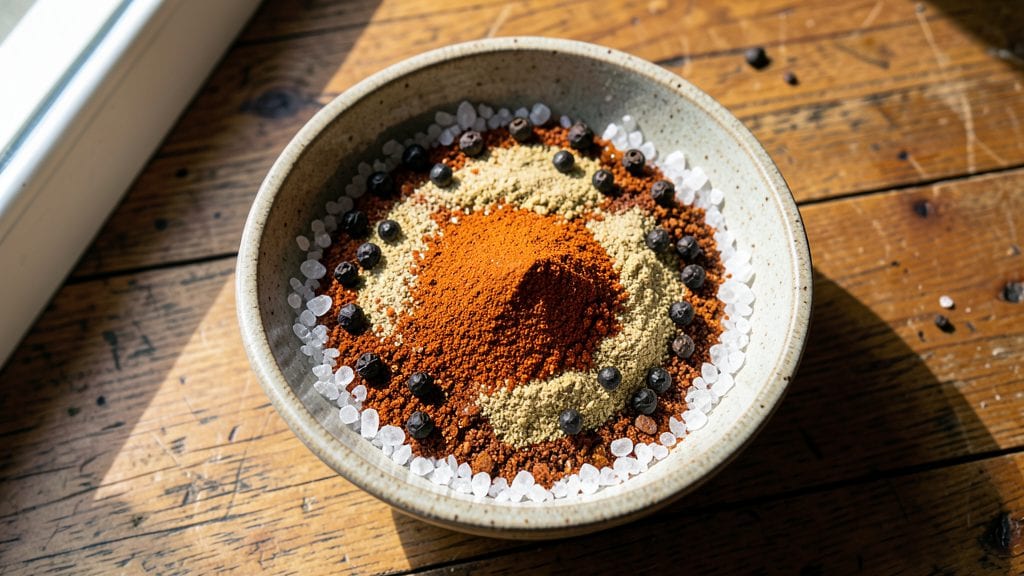
This smoked beef brisket rub recipe transforms tough cuts into fall-off-the-bone perfection with a precise blend of spices I perfected during my years working the line at Asheville's farm-to-table restaurants. The key lies in balancing earthy, smoky flavors with just enough sweetness to caramelize during the smoke.
Every tablespoon of this blend contains secrets I learned from Southern pitmasters—like how to create that signature bark without overpowering the meat's natural richness.
The foundation starts with coarse kosher salt and black pepper, but it's the aromatic trio of smoked paprika, garlic powder, and onion powder that builds depth. A touch of brown sugar ensures a subtle caramelization, while cayenne and mustard powder add layers of heat and complexity.
This isn't just any rub—it's the one I reach for when I want that restaurant-quality bark that takes hours to develop. The blend stays potent for months in an airtight container, making it my go-to for any brisket project, whether I'm smoking a whole packer or testing smaller cuts.
What makes this rub special is its versatility—use it on ribs, pork shoulders, or even chicken thighs for that same deep, smoky character. The coarse texture adheres perfectly to meat, creating that coveted crust while infusing flavor deep into every fiber.
I've tested this blend countless times, and it never fails to deliver that perfect balance of heat, sweetness, and smokiness that defines great smoked beef. For those who prefer different profiles, I'll show you how to tweak it for sweet, spicy, or herb-forward variations.
Once you mix this blend, you'll have the foundation for brisket that rivals any competition-style cook. The secret isn't just the spices—it's how they work together during that long, slow smoke.
Store it in a cool, dark place, and you'll always have the perfect starting point for your next smoked masterpiece. Let's get to the ingredients—this is where the magic begins.
Ingredients for smoked beef brisket rub
Nine spices, one perfect blend for brisket that rivals competition-style bark.
| Ingredient | Amount | Notes |
|---|---|---|
| Coarse Kosher Salt 🧂 | ½ cup | Diamond Crystal preferred for texture |
| Smoked Paprika 🌶️ | ¼ cup | High-quality, not pre-seasoned |
| Black Peppercorns 🌶️ | 2 tbsp | Freshly cracked for intensity |
| Garlic Powder 🧄 | 2 tbsp | Not garlic salt |
| Onion Powder 🧅 | 2 tbsp | Finely ground for smooth blend |
| Brown Sugar 🍚 | 2 tbsp | Light or dark, not powdered |
| Cayenne Pepper 🔥 | 1 tbsp | Adjust for heat preference |
| Mustard Powder 🌿 | 1 tbsp | Adds depth without tang |
| Ground Coriander 🌿 | 1 tbsp | Brightens overall flavor |
The coarse kosher salt is non-negotiable—Diamond Crystal has that perfect grain size for clinging to meat. Penzeys or bulk bins at natural markets are my go-tos for smoked paprika, but the regular grocery store stuff works if it's labeled 'smoked' and smells fresh. Black peppercorns? Grind them yourself—pre-ground loses punch fast. I always buy extra garlic powder and onion powder from Trader Joe's because their bulk containers stay flavorful longer. The brown sugar should be light unless you're going for a deeper caramel note—Domino works fine, but Muscovado adds complexity if you want to splurge.
No cayenne? Red pepper flakes at half the amount works, but you'll lose some of that fine heat. Mustard powder is tricky—if you've got dry mustard, reduce to 1 tsp since it's stronger. Coriander missing? Extra garlic powder bridges the gap. For a sweeter profile, bump the brown sugar to 3 tbsp and cut cayenne to 1 tsp. Need more heat? Double the cayenne and add a pinch of ground cinnamon. This blend is designed to develop during the smoke, so don't over-rub—just enough to coat the meat evenly. (And trust me, the coarse texture is worth the effort—it creates that iconic bark.)
Store this in an airtight container in a cool, dark place—it'll stay potent for 6-12 months. I portion mine into small jars so I can grab just what I need without exposing the whole batch. For brisket, use about 2 tbsp per pound of meat. The rub works on ribs and pork too—just reduce to 1 tbsp per pound since those cuts are leaner. Freeze any extras in ice cube trays if you're not using them soon. The texture stays perfect when frozen, and it's ready to use straight from the freezer.
Why You'll Love This Recipe
- Five-Ingredient Magic: I swear by this rub—just salt, smoked paprika, peppercorns, and those two powders. No fancy prep, no measuring cups overcomplicating things. Honestly, I keep the ingredients in a jar by my smoker and toss it on without a second thought.
- Smoke & Spice Bomb: That smoked paprika? It’s the star—deep, earthy, with just a hint of heat that lingers. The garlic and onion powders add this warm, savory punch that makes every bite taste like it’s been slow-smoked for hours. (Yes, even on a Tuesday night.)
- Leftovers That Don’t Suck: Brisket’s one of those meats that begs to be made in bulk, and this rub turns it into something you’ll actually want to eat the next day. Slice it thin, toss it in tacos, or just reheat it with a splash of beef broth—it’s always a win.
- Budget-Friendly Crowd-Pleaser: Coarse kosher salt and spices? Cheap. Brisket? Often cheaper than other cuts. This rub stretches a pound of meat into enough portions to feed four people (or one very hungry person for dinner). Between us, it’s my go-to for game days or lazy Sundays—no one ever leaves hungry.
Step-by-step instructions for smoked beef brisket rub
Here's how to blend this bold, smoky rub that transforms tough brisket into melt-in-your-mouth perfection.
Measure and Prepare Your Ingredients
Start by gathering all your ingredients. I like to work in a clean bowl to avoid cross-contamination from other spices. For the black peppercorns, use a mortar and pestle to freshly crack them—this makes a world of difference in flavor intensity compared to pre-ground pepper. The coarse kosher salt should be flaky and damp, not clumpy.
Measure out the 0.5 cup of coarse kosher salt first. This is your base ingredient and will help distribute all the other spices evenly across the brisket. Then measure the 0.25 cup of smoked paprika—this is what gives your rub that signature deep, smoky character. Set these aside for now and move to the remaining ingredients.
Combine the Dry Spices
In a large mixing bowl, add the 2 tablespoons of garlic powder and 2 tablespoons of onion powder. These two ingredients form the aromatic foundation of your rub, providing that savory depth that complements the smokiness. Give them a quick stir to break up any clumps that might have formed during storage.
Next, add the 2 tablespoons of brown sugar. This isn't just for sweetness—it helps create that beautiful bark on the brisket while balancing the heat from the cayenne. Then add the 1 tablespoon of cayenne pepper and 1 tablespoon of mustard powder. These ingredients add complexity: the cayenne brings heat, while the mustard powder adds a subtle tang that rounds out the flavor profile.
Incorporate the Finishing Ingredients
Now add the freshly cracked black peppercorns and 1 tablespoon of ground coriander to the bowl. The coriander might seem unusual in a brisket rub, but it brightens the overall flavor and prevents the rub from tasting one-dimensional. Give everything a thorough stir with a whisk or wooden spoon, breaking up any remaining clumps.
Finally, add the 0.5 cup of coarse kosher salt and 0.25 cup of smoked paprika to the bowl. This is where the magic happens—the salt helps the other spices adhere to the brisket while enhancing their flavors. Mix everything together until you have a uniform, dry blend with no visible streaks of individual ingredients. The texture should be coarse but well-distributed.
Test and Adjust the Seasoning
Before applying the rub to your brisket, I always recommend testing it on a small piece of meat or even a piece of bread. This lets you taste the balance of flavors and adjust if needed. If it tastes too mild, add a pinch more cayenne or smoked paprika. If it's too hot, reduce the cayenne slightly or add a bit more brown sugar to balance it.
The goal is a rub that's bold but balanced—smoky, slightly sweet, with a touch of heat and savory depth. Once you're satisfied with the flavor, transfer the rub to an airtight container. Store it in a cool, dark place for up to 6 months, or freeze it for even longer shelf life. When you're ready to smoke your brisket, you'll have a perfectly seasoned rub ready to go.
Pro Tips For Making Smoked Beef Brisket Rub
- CRUSH THE PEPPER: Skip the pre-ground peppercorns—crack them fresh with a mortar and pestle or roll a heavy pan over them. I used to just shake salt and pepper over the brisket, but the texture and heat from whole, crushed peppercorns stick to the meat like glue. It’s the difference between a dusting and a coating.
- SALT BEFORE SMOKING: Apply the rub at least 12 hours ahead, but don’t overdo it—start with 1 tablespoon per pound and adjust. I learned this the hard way after salting a brisket right before smoking and ending up with a salty crust that masked the rub’s flavor. Let the salt draw out moisture first; the meat will be juicier when it hits the smoker.
- SMOKED PAPRIKA FIRST: Pat the rub into the meat in layers, starting with the smoked paprika. This lets the color and flavor penetrate deeper before the heavier salt and pepper go on top. I was skeptical—why mess with the order?—but the crust turns richer and the smoke flavor clings tighter. Works like a charm.
- REST UNDER FOIL: After smoking, tent the brisket with foil and let it rest for 30–45 minutes before slicing. I used to slice it straight off the heat, and the juices would pool on the cutting board instead of staying in the meat. This step keeps the brisket from drying out, and the rub stays intact when you slice—no crumbling mess.
Troubleshooting this recipe
Uneven Bark Formation
If your brisket develops thick bark in some areas but leaves others pale, you're likely dealing with inconsistent rub application or moisture issues. I've seen this happen when the meat isn't completely dry before rubbing—always pat your brisket dry with paper towels before applying the rub.
Another common mistake is using too much rub in one spot while missing others. For a 10-pound brisket, use 2 tablespoons per pound and apply in even, overlapping strokes using your hands.
The coarse texture of this rub means it sticks better than fine powders, but you still need to work it in thoroughly. 🌡️
Rub Too Salty
Over-salting happens when you double up on rub applications or use pre-salted ingredients. This rub's 0.5 cup kosher salt is designed for one application—don't be tempted to add extra. If you're concerned about seasoning, taste the rub on a small piece of bread before applying.
For a 10-pound brisket, 2 tablespoons per pound gives perfect seasoning without salt overload. Remember, the salt will dissolve into the meat during the smoke, so patience is key. The first 2 hours are critical for flavor development.
Spices Clumping
Humidity is the enemy of rub texture. Store your blend in an airtight container with a silica gel packet to absorb moisture. If clumps form, break them up with your fingers or a fork before using. For extra insurance, I keep my rub in small jars with tight-sealing lids.
The coarse salt helps prevent clumping, but if you notice moisture in your spice cabinet, transfer the rub to a cool, dark place like a pantry drawer. Never refrigerate—temperature changes can cause condensation that ruins the texture.
Flavor Too Mild
When your brisket tastes underseasoned, it's usually because the rub didn't have enough time to develop. This blend needs 4-6 hours of smoke exposure to fully infuse the meat.
If you're in a hurry, increase the rub amount to 2.5 tablespoons per pound and use a hotter wood like hickory for more aggressive flavor transfer. For an extra boost, apply a second thin layer of rub after the first 2 hours of smoking.
The key is patience—the spices need time to penetrate deep into the meat fibers.
Rub Sticking to Hands
This coarse rub should stick to meat, not your hands! If it's clinging to your fingers, your meat is too wet or the rub needs more salt. For stubborn cases, add 1 extra tablespoon of coarse salt per pound of meat to improve adhesion.
I've found that rubbing the meat with 1 tablespoon of vegetable oil first helps the rub stick better while preventing it from falling off during the smoke. Just be sure to use a high-smoke-point oil like avocado or grapeseed—never olive oil, which can create unwanted flavors.
Storage Issues
Rub losing potency? Check your storage conditions—light and heat degrade spices faster than you'd think. Keep this blend in a dark, cool place (like a pantry) and use airtight containers. If you notice the smoked paprika losing its color or the spices smell dull, it's time to refresh.
For long-term storage, freeze the rub in ice cube trays—each cube makes a perfect single-use portion. The freeze-thaw cycle actually helps preserve the spices' potency better than room-temperature storage. Just let it come to room temperature before using. ❄️
Nutrition facts
Frequently asked questions
Can I use this rub on other meats besides brisket?
This blend works beautifully on ribs, pork shoulder, and even chicken thighs. For leaner cuts like ribs, use 1 tablespoon per pound instead of 2 tablespoons to avoid overpowering the meat. The smoky depth and balanced heat shine on all these proteins, though brisket remains the star.
How do I adjust the heat level in this recipe?
Start with the original 1 tablespoon cayenne pepper for medium heat. For milder flavor, reduce to 1/2 tablespoon or replace with 1/2 tablespoon red pepper flakes. For extra spice, increase to 2 tablespoons cayenne and add a pinch of ground cinnamon (1/4 teaspoon) for depth. Always taste test on bread first!
Why does your recipe use coarse salt instead of fine?
The coarse texture is essential for creating that iconic bark while preventing clumping. Diamond Crystal salt has the perfect grain size to adhere to meat without dissolving too quickly. Fine salt would make the rub too powdery and wouldn't create the same crust. Plus, the larger crystals distribute flavor more evenly during the smoke.
Can I make this rub without smoked paprika?
Yes, but you'll lose some depth. Replace 1/4 cup smoked paprika with 2 tablespoons regular paprika plus 1/2 teaspoon liquid smoke (added to the meat after rubbing). For a smokier alternative, use 1 tablespoon chipotle powder instead. The flavor won't be identical, but it'll still deliver great results.
How long will this rub last in my pantry?
Properly stored in an airtight container in a cool, dark place, this blend stays potent for 6-12 months. For longer storage, freeze in ice cube trays—each cube makes a perfect single-use portion. The freeze-thaw cycle actually helps preserve the spices' potency better than room-temperature storage. Just let it come to room temperature before using.