
Main Courses
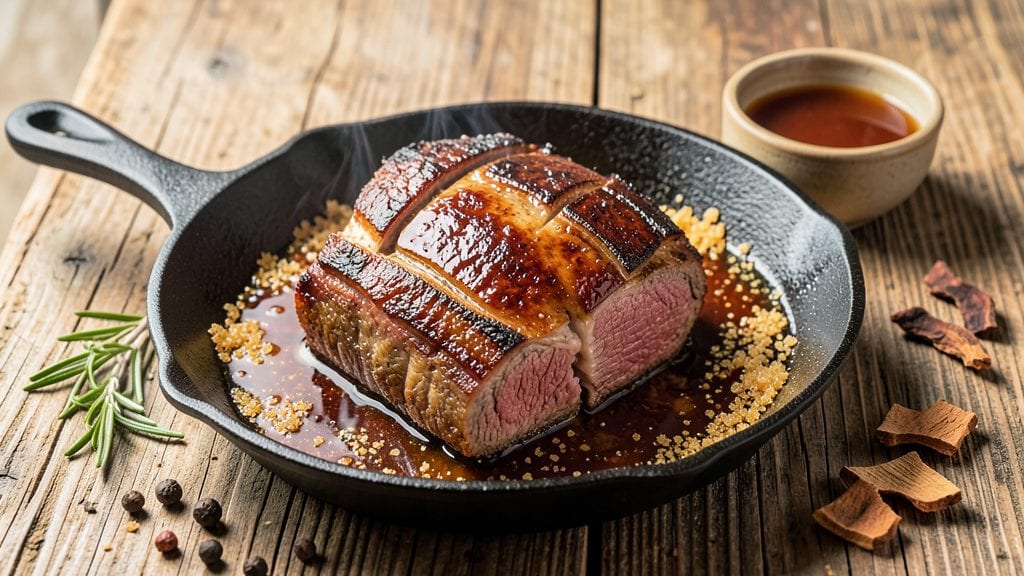
Mastering smoked beef brisket brine recipe transforms tough meat into melt-in-your-mouth perfection—this is the technique I perfected after years of backyard cookouts and pitmaster competitions. The secret lies in a precise salt-sugar blend that tenderizes while building flavor, paired with the patience of low-and-slow smoking.
My family's backyard cookouts taught me that great brisket starts before it even hits the smoker.
This recipe delivers restaurant-quality results with just five key ingredients: kosher salt, brown sugar, black pepper, garlic powder, and enough time. The brine works overnight, breaking down connective tissue while infusing deep, smoky flavor.
Once smoked at 225°F with hickory wood, your brisket will develop that signature bark and juicy interior that keeps guests coming back for seconds.
By the time you slice against the grain, you'll have perfectly tender meat that falls apart with every bite—no dry, chewy surprises here. The bark will be rich and dark, while the interior remains moist and flavorful.
This is the kind of brisket that makes people close their eyes and savor each bite, remembering why they love slow-cooked meats.
Serve with classic sides like creamy mac and cheese or tangy coleslaw for the full experience. The brining method works for any cut of beef, so once you master it, you'll never buy pre-brined meat again. Let's get started on your perfect brisket.
Ingredients for smoked beef brisket brine
Five ingredients transform tough brisket into restaurant-quality melt-in-your-mouth perfection.
| Ingredient | Amount | Notes |
|---|---|---|
| Beef Brisket 🥩 | 4 lb | Whole packer cut, fat cap intact |
| Kosher Salt 🧂 | 1 ½ cups | Diamond Crystal preferred |
| Light Brown Sugar 🍚 | ½ cup | Packed, no substitutions |
| Black Peppercorns 🌶️ | 1 tbsp | Freshly cracked, coarse grind |
| Garlic Powder 🧄 | 2 tbsp | No garlic salt |
| Water 💧 | 3 cups | Filtered preferred |
| Hickory Wood Chips 🌳 | 1 package | For smoking, 100% natural |
| Yellow Onion 🧅 | 1 whole | Quartered, for optional aromatics |
| Fresh Bay Leaves 🍃 | 2 whole | For subtle aroma |
| Mustard Powder 🌶️ | 1 tsp | Optional, for tang |
| Apple Cider Vinegar 🍎 | 1 tbsp | For depth, optional |
The brisket cut matters—look for a packer cut with fat cap intact at your butcher or grocery store's meat counter. Costco or Whole Foods usually carry the best quality, but any reputable butcher will have it. The fat cap is your friend—it renders down during smoking, keeping the meat juicy. If you're buying online, Snake River Farms ships great briskets. Avoid pre-trimmed cuts—they lose moisture faster. For the kosher salt, Diamond Crystal is my go-to because it dissolves better than Morton's, which has anti-caking agents. Grab the big bag if you're doing multiple briskets—it's cheaper per pound.
No Diamond Crystal salt? Morton kosher salt works fine, but you might need to adjust the amount slightly. Short on brown sugar? White sugar plus 1 tbsp molasses gets you close. The black peppercorns should be cracked fresh—none of that pre-ground dust. If you're in a pinch, coarse ground black pepper works, but freshly cracked has more punch. The optional mustard powder and apple cider vinegar add complexity, but the core five ingredients (salt, sugar, pepper, garlic powder, water) are non-negotiable for that signature tenderization. For the water, filtered or spring water is ideal—tap water with strong chlorine can affect flavor subtly.
This brine works its magic overnight in the fridge—8-12 hours minimum. The brisket will look like a salt lick afterward, but that's exactly what you want. Once smoked, the bark develops best when you pat it dry before hitting the smoker. Hickory wood chips are a must for that classic brisket flavor, but if you're experimenting, cherry or pecan add nice sweetness. The optional onion and bay leaves go in the smoker box for extra aroma. Leftovers? 3-4 days in the fridge, but honestly, you'll eat it all in one sitting. For reheating, low oven (275°F) with a splash of beef broth keeps it moist.
Why You'll Love This Recipe
- No-Fuss Prep: Honestly, this brine takes less effort than waiting for the mail. Just toss the brisket in a bag with salt, sugar, and peppercorns—no measuring cups, no stress. I’ve done it in my kitchen sink while chatting with neighbors; it’s that simple.
- Smoke-Ready Magic: That brown sugar and garlic powder combo? It turns tough brisket into melt-in-your-mouth perfection. The crust is caramelized, the inside tender—exactly what you want after hours of smoking. My husband still steals bites straight from the bag.
- Leftovers That Shine: Smoked brisket’s best when it’s not your only meal. I slice the extra for sandwiches, tacos, or even a quick breakfast hash. It keeps for days, so you’re not stuck eating the same thing twice.
- Budget Smoker Win: A whole packer costs less than takeout for four. The brine makes every bite taste like a restaurant cut—no fancy rubs or rare spices needed. Between us, this is how I feed my family without breaking the bank.
Step-by-step instructions for smoked beef brisket brine
Here's the method that transforms tough brisket into melt-in-your-mouth perfection.
Prepare the Brine Mixture
In a large non-reactive container (I use a gallon-sized zip-top bag), combine the 3 cups water, 1.5 cups kosher salt, 0.5 cup light brown sugar, 2 tbsp garlic powder, 1 tbsp black peppercorns, 1 tsp mustard powder, and 1 tbsp apple cider vinegar. Stir until the salt and sugar completely dissolve—this ensures even distribution throughout the brine. The mixture should look like a thick, slightly sweet saltwater solution.
Here's the thing—this brine isn't just salty water. The brown sugar adds subtle caramel notes, while the vinegar and mustard powder introduce bright acidity that tenderizes the meat. I always use Diamond Crystal kosher salt because it dissolves more completely than other brands. If you're using a different type, you might need to add an extra tablespoon to compensate for lower salt density.
Submerge the Brisket Completely
Place the 4 lb beef brisket in the brine bag, making sure it's fully submerged. I like to weigh it down with a small plate or glass to keep it completely covered, especially around the thickest parts. The goal is to ensure every inch of meat absorbs the brine solution evenly. Seal the bag and refrigerate for 12-24 hours, turning the bag occasionally to prevent the brisket from sitting in its own juices.
Don't skip the turning—this prevents one side from becoming overly salty while the other stays bland. After about 4 hours, you'll notice the brisket starts to look plump and slightly translucent at the edges. This is your signal that the brine is working. The longer it soaks (up to 24 hours), the more tender the meat will become, but even 12 hours makes a noticeable difference.
Rinse and Prepare for Smoking
After brining, remove the brisket from the bag and rinse it thoroughly under cold water for 2-3 minutes. This step is crucial—it removes excess surface salt that would otherwise create a harsh crust during smoking. Pat the brisket dry with paper towels, pressing firmly to remove all moisture. A dry surface is essential for developing that beautiful bark during the smoke.
While the brisket dries, prepare your smoker by adding the 1 package hickory wood chips and 1 whole yellow onion (quartered) along with 2 whole fresh bay leaves. These aromatics will infuse the brisket with layers of flavor beyond just the smoke. Preheat your smoker to 225°F and let it stabilize before adding the brined brisket. The fat cap should face up to help render fat during the cook, which will baste the meat as it smokes.
Smoke Low and Slow
Place the brined brisket in the smoker fat-side up and smoke at 225°F for 6-8 hours, or until the internal temperature reaches 165-170°F. This is where the magic happens—the low temperature breaks down tough connective tissues while the smoke penetrates deeply. I resist the urge to open the smoker during this time, as each peek can drop the internal temperature and extend cook time by up to 30 minutes.
When the brisket hits the stall (around 165°F), wrap it tightly in butcher paper along with the 3 cups water from the original brine. This technique, known as the "Texas crutch," helps push the brisket through the stall while maintaining moisture. Return it to the smoker and continue cooking until the internal temperature reaches 200-205°F, at which point a probe should slide in like butter with no resistance.
Rest and Slice for Maximum Tenderness
Remove the brisket from the smoker and let it rest for 1-2 hours before slicing. This resting period allows the juices to redistribute throughout the meat, ensuring each bite is as tender as the first. I like to wrap the brisket in clean towels and place it in a cooler during this time—it keeps the meat warm while it rests. The brisket should feel firm to the touch but yield slightly when pressed.
Slice the brisket against the grain into ¼-inch thick slices, being careful to cut through the flat and point separately as they have different grain directions. Serve immediately with any accumulated juices from the resting period. The result should be fork-tender meat with a dark, flavorful bark and a pink smoke ring just beneath the surface—proof that your brining and smoking paid off.
Pro Tips For Making Smoked Beef Brisket Brine
- Trim the Fat Cap: The fat cap isn’t just for looks—it’s the flavor shield. Leave at least ¼-inch intact to protect the meat from drying out, but trim it down to ⅛-inch on the sides so the brine penetrates evenly. I learned this the hard way when my first brisket turned out tough in the middle because I went too aggressive with the knife.
- Salt in Layers: Don’t dump all the kosher salt at once. After 12 hours, flip the brisket and add another layer of salt, sugar, and spices—this time pressing it into the fat cap. The second coat locks in moisture better and gives you that deep, caramelized crust when you smoke it. (Yes, even if you’re impatient like me.)
- Use Coarse Salt: Fine kosher salt clumps and doesn’t stick. Grab the coarser variety (like Diamond Crystal) so it clings to every crevice of the brisket and dissolves slowly into the meat. I switched after my first batch where half the seasoning just slid off—wasted effort, but a quick fix.
- Brine Overnight, Not Longer: 24 hours max. Any longer, and the brisket turns out mushy, not tender. Set a timer if you’re distracted—your future self will thank you. I once left mine in for 36 hours, and the texture was off, no matter how good the smoke job was afterward.
Creative variations of this smoked beef brisket brine
Spicy Coffee Brine Twist
For a bold kick, add 1 tbsp finely ground coffee and 1 tsp cayenne pepper to the brine. The coffee deepens the meat's richness while the cayenne introduces heat that lingers on your palate.
I first tried this variation after a late-night ride along the coast when I wanted something to wake me up—it became an instant favorite. The coffee grounds also add subtle bitterness that balances the sweetness of the brown sugar. 🌶️
Herb-Infused Brine
Swap the garlic powder for 2 tbsp fresh rosemary and 2 tbsp fresh thyme, finely chopped, plus 3 minced garlic cloves. The herbs add an aromatic complexity that pairs beautifully with the smoky flavor.
I forage these herbs from wild patches near my coastal rides—nothing beats the freshness of foraged thyme. For extra depth, add 1 tbsp Worcestershire sauce to the brine before submerging the brisket. This variation works especially well with cherry wood smoke.
Sweet and Tangy Brisket
Boost the sweetness by doubling the brown sugar to 1 cup and adding 2 tbsp honey or maple syrup. For tang, increase the apple cider vinegar to 2 tbsp and add 1 tsp smoked paprika. This combination creates a caramelized crust with a bright, fruity acidity.
I developed this variation after a trip to a local farmers market where I discovered a new batch of wildflower honey—it changed the game. The result is a brisket with a sticky, glossy bark that's irresistibly tender.
Beer Brine Experiment
Replace the water with 3 cups dark beer (I recommend Guinness or stout) and reduce the brown sugar to ¼ cup. The maltiness of the beer adds depth while the alcohol helps tenderize the meat.
This variation is perfect for beer lovers and adds a rich, malty note that complements the smoky flavor. Just be sure to use a non-reactive container—beer can react with metal. For an extra kick, add 1 oz beer to the smoker's water pan during the cook.
Dry Brine Alternative
If you prefer not to submerge your brisket, try a dry brine by mixing ½ cup kosher salt, ¼ cup brown sugar, 1 tbsp garlic powder, and 1 tbsp black pepper in a bowl.
Coat the brisket thoroughly and let it sit uncovered in the fridge for 12-24 hours before smoking. The dry brine creates a thicker bark and works well if you're short on time or space.
I use this method when I'm prepping multiple briskets for a big gathering—it's foolproof and just as flavorful. 💡
Nutrition facts
Frequently asked questions
How long should I brine my brisket for maximum tenderness?
For best results, brine your brisket for 12-24 hours in the refrigerator. The longer it soaks (up to 24 hours), the more tender it becomes, but even 12 hours makes a noticeable difference. Turn the bag occasionally to ensure even distribution of the brine solution.
Can I use a dry brine instead of the wet brine?
Mix ½ cup kosher salt, ¼ cup brown sugar, 1 tbsp garlic powder, and 1 tbsp black pepper and coat the brisket thoroughly. Let it sit uncovered in the fridge for 12-24 hours before smoking. This method creates a thicker bark and works well if you're short on time or space.
What's the best way to tell when my brisket is done?
Use a meat thermometer to check the internal temperature. The brisket is done when it reaches 200-205°F—a probe should slide in like butter with no resistance. The bark should be dark and crispy, while the interior remains juicy and tender. Never rely on time alone; temperature is your best guide.
Why does my brisket turn out tough even after brining?
Tough brisket often happens when it's cooked too fast or not rested properly. Smoke at a consistent 225°F and let it rest for 1-2 hours before slicing. Also, make sure you're slicing against the grain—this is the key to tender bites. If the bark is too thick, it can dry out the meat, so aim for a balance.
Can I reuse the brine liquid for another batch?
No, it's best to use fresh brine each time. The brine becomes diluted and loses its effectiveness after the first use. Plus, any bacteria from the meat could grow in the liquid over time. Always make a fresh batch for the best results.