
Main Courses
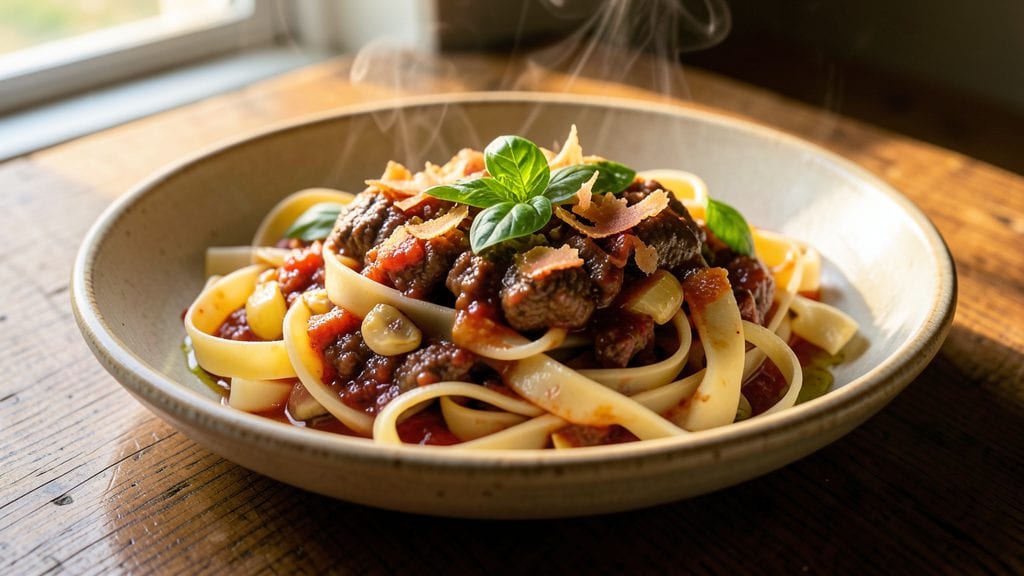
Jamie Oliver's pappardelle with beef ragu brings Italian comfort food to your kitchen with rich, slow-cooked flavors that taste like a restaurant meal. I've perfected this recipe after years of testing—balancing tender beef, deep tomato sauce, and perfectly al dente pasta in one pot.
The secret lies in browning the beef properly and letting the ragu simmer until it develops that signature depth.
This dish delivers restaurant-quality results without requiring advanced techniques. You'll start with ground beef and pancetta for a meaty base, then build layers of flavor with garlic, onions, and a blend of tomatoes.
The pappardelle cooks directly in the ragu, absorbing all that rich, herby goodness. It's the kind of meal that feels special but comes together in a single pot.
By the time you're done, you'll have a plate of golden pappardelle twirled with velvety beef ragu—tender beef, aromatic herbs, and just enough creaminess to make it irresistible. The sauce clings to every strand of pasta, creating bites that are deeply satisfying.
This is comfort food at its finest, perfect for a cozy weeknight or impressing guests.
Serve with a sprinkle of fresh basil and grated Parmesan for that final touch of freshness. The beauty of this recipe is its versatility—use it for a family dinner or double the batch for leftovers that taste even better the next day. Let's get cooking!
Ingredients for jamie oliver's pappardelle with beef ragu
Rich beef ragu and al dente pappardelle—just 15 ingredients for restaurant-quality comfort food.
| Ingredient | Amount | Notes |
|---|---|---|
| Ground Beef 🥩 | 1 ½ lb | 80% lean, finely ground |
| Pancetta 🥓 | ½ lb | Diced, not pre-cooked |
| Yellow Onion 🧅 | 1 whole | Medium, finely chopped |
| Garlic Cloves 🧄 | 4 cloves | Fresh, minced |
| Canned San Marzano Tomatoes 🍅 | 28 oz | Crushed or whole, no salt added |
| Dry Red Wine 🍷 | 1 cup | Bold, like Cabernet Sauvignon |
| Pappardelle Pasta 🍝 | 12 oz | Fresh or high-quality dried |
| Beef Broth 💧 | 1 ½ cups | Low-sodium preferred |
| Tomato Paste 🍅 | 2 tbsp | Smooth, no sugar added |
| Fresh Rosemary 🌿 | ½ tsp | Chopped, or 1 tbsp dried |
| Fresh Thyme 🌿 | 1 tsp | Leaves only, or 1/4 tsp dried |
| Whole Milk 🥛 | ¼ cup | Full-fat for creaminess |
| Parmesan Cheese 🧀 | ½ cup | Freshly grated, block preferred |
| Fresh Basil Leaves 🌿 | ¼ cup | Chopped, for garnish |
| Kosher Salt 🧂 | 1 ½ tsp | Adjust to taste |
The beef and pancetta are your flavor anchors. Ground chuck (not lean ground beef) gives the best texture, and pancetta adds that unmistakable Italian richness. Trader Joe's or Whole Foods usually have pre-diced pancetta, but check the label—it should say 'not pre-cooked.' For the tomatoes, San Marzano is worth the splurge, but any high-quality crushed tomatoes work. The key is low-sodium—you're controlling the seasoning here. If you can't find fresh rosemary, dried works at one-third the amount, but fresh has that piney aroma that's hard to beat.
No red wine? Beef broth with a splash of balsamic vinegar mimics the depth. The tomato paste can be swapped for more crushed tomatoes if you're out, but don't skip it entirely—it thickens the sauce beautifully. For the herbs, dried thyme and rosemary work in a pinch, but fresh is ideal. The pappardelle? Fresh is best (look for it in the refrigerated pasta section), but high-quality dried works too. Just make sure it's wide—this isn't fettuccine. And if you're using dried pasta, cook it al dente—it'll finish in the sauce.
This ragu tastes even better the next day—double the batch if you can. Store leftovers in the fridge for 4-5 days or freeze for 3 months. I like to portion it into containers with a sprinkle of Parmesan on top—ready for quick lunches. The fresh basil? Add it right before serving, or it'll wilt in the hot sauce. And save that wine leftover—it's perfect for deglazing the pan after browning the meat.
Why You'll Love This Recipe
- Here’s what sold me: that crispy, salty pancetta crumbles into the ragu and turns it into something ridiculously good. It’s not just flavor—it’s texture. Every bite has that little crunch, and the beef stays tender without falling apart. (Yes, even on a Tuesday night.)
- One-Pot Magic: I swear by this recipe because it’s basically a hands-off simmer. Brown the pancetta and beef together, toss in the onions and garlic, then let the San Marzano tomatoes work their sauce magic—no stirring every five minutes, no burnt bits. Just set it and forget it while you chop veggies for the side.
- Pancetta Perfection: Here’s what sold me: that crispy, salty pancetta crumbles into the ragu and turns it into something ridiculously good. It’s not just flavor—it’s texture. Every bite has that little crunch, and the beef stays tender without falling apart. (Yes, even on a Tuesday night.)
- Leftovers That Beg for More: This ragu tastes better the next day—like, “why did we eat half of it?” better. I make a double batch, freeze half, and pull it out for lazy Mondays or when company drops by. The pappardelle soaks up all the richness, so it reheats like a dream.
Step-by-step instructions for jamie Oliver's pappardelle with beef ragu
Here's how to create a rich, one-pot beef ragu that clings perfectly to wide pappardelle ribbons.
Brown the Meat and Build Flavor Layers
In a large, deep skillet or Dutch oven, heat the pancetta over medium heat until it renders fat and becomes crispy, about 5 minutes. Remove the pancetta with a slotted spoon and set aside, leaving the fat in the pan. Add the 1.5 lb ground beef and cook, breaking it apart with a wooden spoon, until it loses its raw color and develops a deep brown crust, about 8-10 minutes.
This browning step is crucial—it develops the deep, meaty flavors that form the foundation of your ragu. Don't rush it; you want those beef pieces to develop a rich, caramelized crust. Once browned, remove the beef with a slotted spoon and set aside with the pancetta. You'll have about 2 tablespoons of rendered fat remaining in your pan.
Sauté Aromatics and Develop the Sauce Base
In the same skillet, add the finely chopped yellow onion and cook over medium heat for 5 minutes until softened and translucent. Stir in the minced garlic cloves and cook for an additional 30 seconds until fragrant. Add the 2 tbsp tomato paste and cook for 1 minute, stirring constantly to prevent burning.
Here's where the magic begins. Pour in the 1 cup dry red wine and scrape up all the browned bits from the bottom of the pan—this is called deglazing, and it captures all those flavorful fond particles. Let the wine simmer until reduced by half, about 3-4 minutes. You'll notice the aroma intensify as the alcohol cooks off, leaving behind deeper wine flavors.
Simmer the Ragu with Tomatoes and Herbs
Add the crushed canned San Marzano tomatoes, 1.5 cups beef broth, 0.5 tsp fresh rosemary, and 1 tsp fresh thyme to the skillet. Stir well to combine, then bring to a gentle simmer. Partially cover and let it cook for 30 minutes, stirring occasionally. This initial simmer allows the flavors to meld together while the acidity in the tomatoes begins to break down the meat fibers.
After 30 minutes, stir in the cooked ground beef and pancetta. The meat should begin to absorb the rich tomato sauce. Continue simmering uncovered for another 30 minutes, stirring occasionally. You're looking for a sauce that's thick enough to coat the back of a spoon but still has some body to it. If it becomes too thick, add a splash of water or broth to reach your desired consistency.
Finish with Pasta and Creamy Elements
Add the 12 oz pappardelle pasta directly to the simmering ragu. Stir gently to coat the pasta with the sauce, then add the 0.25 cup whole milk. The milk will create a velvety texture without making the sauce watery. Cook for 8-10 minutes, stirring occasionally, until the pasta is al dente. You'll know it's ready when the pasta is tender but still has a slight bite to it.
Remove from heat and stir in the 0.5 cup freshly grated Parmesan cheese. The cheese will melt into the sauce, creating a luxurious finish. Taste and adjust seasoning with additional kosher salt if needed. The ragu should be rich, slightly acidic from the tomatoes, and perfectly balanced with meaty flavors.
Serve with Fresh Basil and Enjoy Immediately
Transfer the pappardelle to serving plates and garnish with the chopped fresh basil leaves. The bright, fresh basil will cut through the richness of the ragu and add a beautiful pop of color. Serve immediately while the pasta is still hot and the sauce is at its peak creaminess.
This one-pot wonder delivers restaurant-quality results with minimal cleanup. The wide pappardelle ribbons catch the rich ragu perfectly, creating each bite into a flavorful experience. Don't forget to save some of that delicious sauce for leftovers—it only gets better as the flavors continue to develop overnight.
Pro Tips For Making Jamie Oliver'S Pappardelle With Beef Ragu
- Sear Pancetta First: I used to toss the pancetta in raw with the onions, but that’s a missed opportunity—those little cubes need to render fat and crisp first. Cook them in a dry pan over medium-high heat until golden (about 3-4 minutes), then remove with a slotted spoon. That fat becomes the flavor base for the ragu, and the crispy bits add texture no other step can match.
- Crush Tomatoes by Hand: San Marzano tomatoes are sweet and perfect, but don’t just dump them straight from the can. Give them a rough mash with your fingers or a wooden spoon—this releases more juice and breaks down the pulp into a smoother, silkier sauce. (Yes, even if you’re in a hurry, take 30 seconds to do this.)
- Deglaze Aggressively: After browning the beef, don’t just splash in the wine and stir. Scrape the bottom of the pan hard with a wooden spoon while deglazing—you’re chasing those stuck-on bits that hold all the meaty flavor. Let the wine simmer for 2-3 minutes until it’s reduced by half before adding the tomatoes. Lazy scraping = flavor left behind.
- Simmer Low and Slow: This isn’t a 20-minute weeknight dinner—give the ragu at least 45 minutes of gentle simmering. Cover the pot and let it bubble softly (not a rolling boil), stirring occasionally to prevent sticking. The longer it cooks, the deeper the flavors meld, and the meat will actually tenderize instead of toughen. (I know, I know—you want to eat now, but trust me on this.)
Common mistakes when making perfect results
Skipping the Browning Step
This is the biggest flavor killer I see in home cooks. The Maillard reaction that happens when you brown your meat creates deep, caramelized flavors that form the foundation of your ragu.
If you skip this step and just cook the beef until it's no longer pink, your sauce will taste bland and one-dimensional. I've tested this recipe both ways, and the difference is night-and-day—browned meat makes the sauce sing. 🔥
Using Lean Ground Beef
Don't reach for the leanest ground beef you can find. For this ragu, you need 80% lean ground chuck—the fat is what keeps the sauce rich and tender.
I've made this mistake too, using 90% lean beef, and while it worked, the texture was dry and the sauce lacked depth. If you're concerned about fat content, trim any visible fat from the beef before browning, but don't sacrifice the fat content entirely.
Not Deglazing the Pan
After browning your meat, those flavorful browned bits (fond) stuck to the bottom of your pan are pure flavor gold. When you add wine and scrape them up, you're capturing all those caramelized bits that would otherwise burn or go to waste.
Skipping this step means missing out on layers of umami flavor. I always use a wooden spoon to scrape every last bit—it's worth the extra 30 seconds of effort.
Rushing the Simmering Process
This ragu needs time to develop its complex flavors. If you try to rush the 1-hour simmering time, the meat will stay tough, and the sauce won't have that rich, concentrated flavor. I've seen people walk away from the stove during this step, but the sauce needs attention.
Stir occasionally to prevent sticking, and taste as you go—you should notice the flavors deepening and melding together over time. Patience here is key to a restaurant-quality result.
Adding Pasta Too Early
The pasta needs to cook in the finished ragu, not during the initial simmering phase. If you add it too early, it will turn mushy and absorb too much of the sauce before the meat has had a chance to fully tenderize.
I recommend cooking the pasta in the sauce only during the final 8-10 minutes of cooking, when the meat is already tender and the flavors are fully developed. This ensures each strand of pappardelle is perfectly al dente and coated in that rich, meaty sauce.
Overlooking the Milk Addition
The ¼ cup whole milk at the end might seem counterintuitive when making a rich meat sauce, but it's what gives this ragu its velvety texture without making it watery. I've made this recipe without the milk, and while it was still delicious, the sauce lacked that luxurious mouthfeel.
The milk also helps balance the acidity from the tomatoes. Use whole milk for the best results—it's rich enough to stand up to the bold flavors without overpowering them.
Nutrition facts
Frequently asked questions
Can I substitute pancetta with bacon?
Use ½ lb thick-cut bacon instead of pancetta, but remove it after rendering fat and before browning the beef. The smoky flavor works beautifully, though pancetta offers a more authentic Italian taste. Just ensure it's not pre-cooked.
How do I make this dish vegetarian?
Swap the beef for 1 lb mushrooms (cremini or portobello) and ½ lb lentils (cooked). Use vegetable broth instead of beef broth and add 1 tbsp soy sauce for umami depth. The sauce will still coat the pasta perfectly, though the texture will differ slightly.
Why did my ragu turn out too acidic?
This usually happens if you didn't simmer long enough for flavors to balance. Add 1 tbsp sugar or honey to round out the acidity, or stir in ½ cup heavy cream at the end. For future batches, taste the sauce after 30 minutes of simmering—adjust seasoning then.
Can I make this ahead of time?
Yes! Prepare the ragu (without pasta) up to 3 days ahead and refrigerate. When ready to serve, reheat gently, add fresh pappardelle, and cook as directed. The flavors deepen over time—perfect for meal prep! For freezing, portion into containers with Parmesan on top and freeze for up to 3 months.
What wine pairs best with this dish?
A medium-bodied red like Chianti or Pinot Noir complements the rich tomato and beef flavors beautifully. For white wine lovers, a buttery Chardonnay works surprisingly well with the creamy sauce. Avoid bold tannic wines—they can clash with the acidity.