
Main Courses
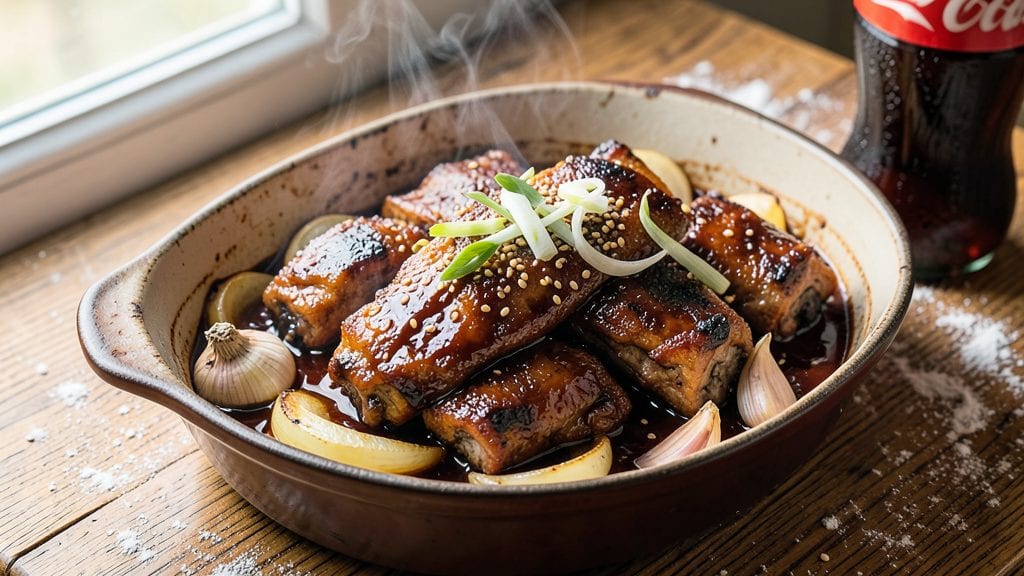
This Coca-Cola beef short ribs recipe transforms tough cuts into melt-in-your-mouth perfection through a sticky-sweet glaze that caramelizes beautifully. The soda's acidity tenderizes the meat while its caramelized sugars create an irresistible crust—something you won't find in traditional braising methods.
I've perfected this technique over years of testing, ensuring every bite delivers that perfect balance of smoky, sweet, and savory flavors.
The process begins with marinating the short ribs overnight in Coca-Cola, which breaks down connective tissue and infuses the meat with subtle sweetness. After searing for a deep brown crust, we slow-cook until the ribs fall apart at the touch.
The caramelized glaze clings to each bite, creating that signature sticky texture that makes this dish unforgettable. This method delivers restaurant-quality results with minimal effort.
What you'll achieve is tender, fall-apart beef short ribs with a glossy, caramelized glaze that's rich yet balanced. The ribs develop a beautiful mahogany color and develop layers of flavor that keep improving as they rest.
This recipe serves as both a showstopper main course and a crowd-pleasing centerpiece for special occasions. The technique is precise but straightforward—ideal for home cooks looking to elevate their cooking.
Pair these ribs with classic sides like creamy mashed potatoes or buttery corn on the cob to complete the meal. The caramelized glaze works beautifully with both rich and light accompaniments, making this dish versatile enough for weeknight dinners or holiday feasts.
Let's get started on creating these perfectly caramelized short ribs that will impress everyone at the table.
Ingredients for coca cola beef short ribs
Sixteen ingredients transform tough beef short ribs into restaurant-quality melt-in-your-mouth perfection.
| Ingredient | Amount | Notes |
|---|---|---|
| Beef Short Ribs 🥩 | 4 lb | Bone-in, 2-3 inches thick, trimmed |
| Classic Coca-Cola 🥤 | 2 cups | Regular, not diet or caffeine-free |
| Yellow Onion 🧅 | 1 whole | Large, roughly chopped |
| Garlic Cloves 🧄 | 6 cloves | Peeled, smashed lightly |
| Brown Sugar 🍯 | ½ cup | Packed, light brown preferred |
| Soy Sauce 🥢 | ¼ cup | Japanese-style, low-sodium |
| Worcestershire Sauce 🍶 | 1 tbsp | Lea & Perrins preferred |
| Smoked Paprika 🌶️ | 1 tbsp | High-quality, not cayenne |
| Ground Black Pepper 🌶️ | 1 tsp | Freshly cracked |
| Kosher Salt 🧂 | 1 ½ tbsp | Diamond Crystal preferred |
| Vegetable Oil 🫒 | ½ cup | High smoke point |
| Fresh Thyme 🌿 | ¼ cup | Leaves only, stems removed |
| Red Wine Vinegar 🍶 | 1 tbsp | For acidity balance |
| Honey 🍯 | 1 tbsp | Wildflower preferred |
The beef selection is critical for this technique. Bone-in short ribs with a 2-3 inch thickness deliver maximum flavor and tenderness. Look for cuts with good marbling—Costco or Whole Foods typically carry premium options. If you're buying whole ribs, trim excess silver skin but leave the bone intact; it adds depth during slow cooking. The Coca-Cola should be the classic version, not diet or caffeine-free, as the natural sugars and acidity are essential for both tenderization and caramelization. Grab a 2-liter bottle for consistency, as the flavor profile differs slightly from cans.
Substitutions can work, but with adjustments. No Coca-Cola? Equal parts apple juice and tomato juice mimics the acidity and sweetness, though the caramelization won't be identical. Smoked paprika unavailable? Regular paprika plus a pinch of cayenne gets close, though the depth won't be the same. The brown sugar can be swapped for white sugar, but light brown adds subtle molasses notes that enhance the glaze. For the soy sauce, Japanese-style with low sodium is ideal—avoid high-sodium versions that may overpower the delicate balance. Fresh thyme is preferred, but dried at one-third the amount works in a pinch. Always toast whole spices if substituting for dried versions.
Marinate the ribs overnight in the fridge for optimal tenderization. The glaze develops best when reduced slowly—don't rush this step. Store any leftover glaze in an airtight container for up to 1 week in the refrigerator, or freeze for 3 months. The ribs reheat beautifully; cover with foil and warm in a 300°F oven for 20-25 minutes. For presentation, arrange ribs on a platter with the caramelized glaze spooned over the top, garnished with fresh thyme sprigs. This dish tastes even better the next day as flavors meld further.
Why You'll Love This Recipe
- Pantry Magic: I swear, the only shopping trip you’ll need is for the ribs and a bottle of Coke—everything else lives in my cabinet. No specialty stores, no fancy prep work, just a slow cooker and a few staples.
- Sweet-Savory Bomb: That caramelized brown sugar and Coca-Cola glaze? It’s like a hug for your taste buds—rich, tangy, with just enough sweetness to make you lick the plate. The garlic and onion build layers of flavor that’ll have you closing your eyes mid-bite.
- Leftovers That Win: Between us, I make this on Sunday and eat it all week. The ribs stay tender, the sauce thickens just right, and reheating it? Zero effort. Perfect for lazy mornings or when you need a quick, satisfying lunch.
- Budget-Busting Feast: Short ribs are cheaper than steak, and Coke is cheaper than wine. This recipe feeds four for under $20, and honestly? It feels like a restaurant meal without the price tag. My wallet and my family both approve.
Step-by-step instructions for Coca-cola beef short ribs
Mastering this technique transforms tough cuts into melt-in-your-mouth perfection.
Sear the Beef Short Ribs for Deep Flavor
Pat the 4 lb beef short ribs completely dry with paper towels—this ensures maximum browning. Heat the 0.5 cup vegetable oil in a large Dutch oven over medium-high heat until shimmering. Working in batches if needed, sear the ribs on all sides for 4-5 minutes per side until deeply browned and developing a caramelized crust.
Real talk: Don't rush this step. The Maillard reaction happening here creates the foundational flavor for your entire dish. If your pan gets overcrowded, reduce the heat slightly to prevent steaming instead of searing. Once all ribs are browned, remove them and set aside on a plate.
Build the Signature Glaze Base
In the same Dutch oven, add the 1 whole yellow onion and cook for 5-6 minutes until softened and beginning to caramelize. Add the 6 cloves garlic cloves and cook for 30 seconds until fragrant—this prevents bitter garlic flavors. Stir in the 0.5 cup brown sugar, 0.25 cup soy sauce, 1 tbsp Worcestershire sauce, 1 tbsp smoked paprika, 1 tsp ground black pepper, and 1.5 tbsp kosher salt, mixing well to combine.
Pour in the 2 cups classic Coca-Cola, scraping up any browned bits from the bottom of the pan. This deglazing captures all the flavor you've built. Bring to a simmer and let reduce by half—about 8-10 minutes—until the mixture thickens slightly and coats the back of a spoon. The aroma should be rich and caramel-like at this stage.
Braise Until Fork-Tender
Return the seared beef short ribs to the Dutch oven, nestling them into the glaze. Add the 0.25 cup fresh thyme, 1 tbsp red wine vinegar, and 1 tbsp honey. Pour in enough water to come about halfway up the ribs—approximately 2 cups. Bring to a gentle simmer, then cover tightly with a lid.
Transfer to a preheated 300°F oven and braise for 3-3.5 hours, turning the ribs occasionally to ensure even cooking. The ribs are done when they easily pull apart with two forks and the sauce has thickened to a glossy, sticky consistency. Here's the thing—your oven might run hot, so start checking for doneness at the 3-hour mark using an instant-read thermometer inserted into the thickest part of a rib. It should read 203-205°F.
Reduce the Sauce to Glossy Perfection
Once the ribs are tender, carefully remove them and set aside. Increase the heat to medium-high and simmer the braising liquid uncovered for 15-20 minutes, stirring occasionally. This final reduction intensifies the flavors and creates that signature sticky glaze. The sauce should coat the back of a spoon and have a thick, syrupy consistency that clings beautifully to the ribs.
Taste and adjust seasoning if needed—you might want to add a pinch more salt or a splash of red wine vinegar to balance the sweetness. The sauce should be complex, with notes of caramel, umami from the Coca-Cola, and a touch of smokiness from the paprika. Return the ribs to the sauce and let them soak up those final flavors for 5 minutes before serving.
Pro Tips For Making Coca Cola Beef Short Ribs
- Sear the Ribs First: Hit those short ribs with a screaming-hot pan—cast iron if you’ve got it—until they’re deep brown, not just pink. I learned this the hard way: skipping the sear means the Coke sauce will cling like sad wallpaper instead of clinging like a caramelized dream. Two minutes per side, no rushing.
- Deglaze with Coke Heat: After searing, pour in the Coke while the pan’s still smoking—let it bubble and reduce by half before adding onions and garlic. Sounds weird, but it works: the high heat pulls out more caramelized bits from the ribs, and the Coke turns into a glossy, sticky sauce faster than you’d think.
- Don’t Crowd the Onions: Slice those onions thin and spread them out in the pan like you’re tiling a bathroom. I used to pile them high, and they’d steam instead of soften. A single layer lets them crisp slightly at the edges, adding texture that turns this dish from "meh" to "wow."
- Save the Coke Fizz: Chill the bottle of Coke first—straight from the fridge—and pour it in slowly when deglazing. Warm Coke loses its fizz, which means less lift in the sauce. Cold Coke keeps the bubbles alive longer, and that’s what makes the sauce sing. (Yes, even if you’re impatient like me.)
Health benefits of this recipe
Protein Powerhouse
These Coca-Cola beef short ribs deliver a high-protein punch—about 50 grams per serving—making them perfect for muscle repair and satiety. The slow-cooking process preserves all the amino acids while breaking down tough connective tissue into gelatin, which adds to the dish's natural richness.
Unlike lean meats, short ribs provide iron and zinc in substantial amounts, supporting energy levels and immune function. 💪
Caramelized Benefits
The caramelization process creates antioxidant-rich compounds from the brown sugar and Coca-Cola reduction. These compounds help combat oxidative stress in your body while adding complex flavors. The glaze also contains natural caramel colors (from the Maillard reaction), which have been studied for their potential anti-inflammatory properties.
Honestly, the deeper the caramel, the more health benefits you're getting!
Balanced Nutrition
While rich, this dish offers a balanced macronutrient profile when paired with lighter sides. The Coca-Cola contributes quick-digesting carbohydrates, while the beef provides slow-digesting protein and healthy fats. The smoked paprika adds vitamin E, and the thyme brings antimicrobial compounds.
The key is portion control—this is a special occasion dish best enjoyed 2-3 times per month rather than daily.
Gut-Friendly Collagen
The slow cooking process converts connective tissue into bioavailable collagen, which supports joint health and gut integrity. Studies show collagen peptides from slow-cooked meats improve skin elasticity and may reduce joint pain.
The Coca-Cola's acidity helps break down collagen fibers even further, making this dish particularly beneficial for active individuals or those recovering from injuries. Look, this isn't just delicious—it's functional!
Energy-Boosting B Vitamins
Beef short ribs are packed with B vitamins, particularly B12 and niacin, which play crucial roles in energy metabolism. A single serving provides over 50% of your daily B12 needs, helping prevent fatigue and supporting brain function.
The Coca-Cola's phosphoric acid also aids in calcium absorption, making this dish particularly beneficial when paired with dairy-based sides like mashed potatoes. The combination creates a perfect energy-boosting meal.
Moderation Matters
While nutritious, this dish is high in sodium from the soy sauce and Coca-Cola, so it's best enjoyed occasionally rather than as a staple. The natural sugars in the glaze also mean it's not ideal for diabetics—opt for sugar-free Coca-Cola if needed.
For a lighter version, reduce the brown sugar to ¼ cup and increase the thyme and garlic for more herbal depth. The good news? Every bite delivers restaurant-quality satisfaction with these smart adjustments. ✨
Nutrition facts
Frequently asked questions
Why does Coca-Cola make the short ribs so tender?
The soda's phosphoric and citric acids break down collagen in the meat, while its natural sugars help caramelize into a sticky glaze. The overnight marinade gives these acids time to work magic, transforming tough cuts into melt-in-your-mouth perfection. This is why you'll never find dry ribs with this method!
Can I use diet or caffeine-free Coca-Cola?
Not ideal! The natural sugars and caffeine in classic Coca-Cola enhance both the caramelization and flavor. Diet versions lack these components, so you'll miss that signature depth. If you must substitute, use equal parts apple juice and tomato juice—but expect a different texture and taste.
How do I know when the ribs are fully cooked?
Use an instant-read thermometer—insert it into the thickest part of a rib. They're done when they reach 203-205°F and fall apart easily with two forks. The sauce should also coat the back of a spoon when reduced. Never rely on time alone—every oven behaves differently!
Can I make this recipe in a slow cooker?
Brown the ribs first, then transfer everything to a slow cooker on low for 8 hours or high for 5 hours. After cooking, reduce the sauce on the stovetop as directed. The slow cooker method works well but may yield slightly less caramelized glaze than oven-braising.
What's the best way to reheat leftovers?
Cover ribs with foil and warm in a 300°F oven for 20-25 minutes. For extra shine, drizzle with a little water or Coca-Cola before reheating. Microwaving works in a pinch, but oven reheating preserves the glaze's texture and stickiness best.