
Soups & Stews
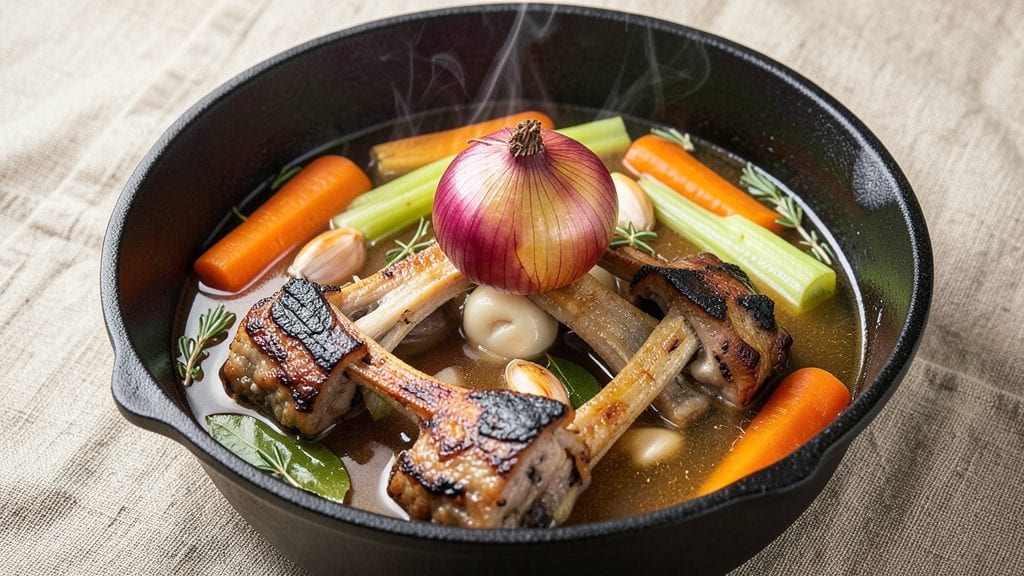
Creating beef bone marrow broth from scratch delivers a depth of flavor that transforms ordinary dishes into something extraordinary. This traditional French bouillon technique unlocks rich umami notes that elevate soups, braises, and even cocktails to restaurant-quality levels.
The secret lies in slow simmering beef bones and marrow, which infuse the liquid with unmatched complexity and body.
What sets this broth apart is its versatility—whether you're using a classic stockpot or a modern pressure cooker, the method remains foolproof. The marrow adds a velvety richness while the bones contribute essential minerals and gelatin for a silky texture.
With proper technique, you'll achieve a golden, deeply aromatic broth that serves as the foundation for countless recipes.
By the end of this process, you'll have a concentrated, flavor-packed liquid that can be strained for clarity or left unfiltered for added depth. The result is a broth so robust it reduces beautifully into sauces or enhances the simplest vegetable soup.
This isn't just a cooking technique—it's a flavor transformation.
Ready to master this essential kitchen skill? The process requires patience, but the reward is a pantry staple that will change how you approach cooking. Let's begin with the ingredients and precise methods that create this umami powerhouse.
Ingredients for beef bone marrow broth
Four pounds of marrow-rich bones and fresh aromatics create this French-inspired umami powerhouse.
| Ingredient | Amount | Notes |
|---|---|---|
| Beef Bones (Knuckle or Marrow Bones) 🦴 | 4 lb | Raw, uncooked, marrow-rich preferred |
| Beef Bone Marrow 🧈 | 1 cup | Freshly extracted from bones |
| Yellow Onion 🧅 | 1 whole | Peeled, roughly chopped |
| Carrots 🥕 | 4 whole | Organic preferred, scrubbed clean |
| Celery Stalks 🌿 | 4 whole | Stringy parts trimmed |
| Garlic Cloves 🧄 | 6 cloves | Peeled, smashed lightly |
| Fresh Thyme Sprigs 🌿 | 4 whole | Stems intact for easy removal |
| Fresh Parsley Stems 🌿 | 2 whole | For bouquet garni |
| Bay Leaves 🍃 | 2 whole | Dried, standard size |
| Black Peppercorns 🌶️ | 1 tbsp | Crushed lightly |
| Kosher Salt 🧂 | 1 tbsp | Diamond Crystal preferred |
| Cold Water 💧 | 16 cups | Filtered preferred |
| Apple Cider Vinegar 🍏 | 2 tbsp | For initial acidulation |
| Extra-Virgin Olive Oil 🫒 | 2 tbsp | For initial searing |
The bones are the foundation—knuckle or marrow bones from a quality butcher yield the richest results. Whole Foods Market or local farms often carry them fresh, but frozen works if thawed properly. Look for bones with visible marrow cavities and minimal surface fat. The marrow itself should be a creamy yellow-white color, not discolored. For optimal flavor extraction, roast the bones at 400°F for 30 minutes before simmering to deepen their caramelized notes. This step transforms the broth from good to extraordinary.
No fresh marrow available? Substitute with an additional 1/2 cup of high-quality beef fat, though the texture won't be identical. The bouquet garni—thyme, parsley stems, and bay leaves—can be swapped for 1 tbsp each of dried thyme and parsley, though fresh imparts superior depth. For vinegar, white wine vinegar works in a pinch, but apple cider adds subtle fruitiness. The olive oil should be cold-pressed extra-virgin—cheap oils won't withstand the high heat needed for proper rendering. If using frozen bones, thaw overnight in the fridge to prevent surface bacteria contamination.
This broth develops complexity over time—reheat gently if storing, never boiling. Properly made, it keeps 5-7 days refrigerated or 6 months frozen. For long-term storage, use amber glass jars to preserve color and flavor. The unstrained version has a luxurious mouthfeel from natural particulates—ideal for sauces. For crystal-clear stock, strain through a fine-mesh sieve or cheesecloth. Portion into ice cube trays for easy single-use servings, perfect for finishing dishes.
Why You'll Love This Recipe
- Just Four Ingredients: The base is ridiculously simple—bones, marrow, onion, carrots, celery. That’s it. No fancy prep, no hidden steps. Honestly, I’ve made it while scrolling through my phone because it’s that hands-off.
- Rich Without Effort: The marrow melts into the broth like velvet, turning every sip into pure satisfaction. Between us, that deep, savory umami? It’s the kind of flavor that makes you pause mid-slurp and think, “Why don’t I do this more?”
- Weeknight to Holiday Hero: I use it for quick pasta, slow-cooked stews, or even as a base for fancy dinners. Freeze leftovers in ice cube trays—perfect for when I’m too tired to cook but still want restaurant-quality taste. (Yes, even on a Tuesday night.)
- Budget Goldmine: Beef bones and marrow are cheaper than you’d think, especially if you buy in bulk. One batch stretches into three meals, and the marrow? That’s the secret weapon that makes everything taste like it cost twice as much. My wallet and taste buds thank me.
Step-by-step instructions for beef bone marrow broth
This method extracts maximum flavor from bones and marrow through precise timing and temperature control.
Sear Bones and Marrow for Deep Flavor Foundation
Preheat your largest stockpot over medium-high heat until hot. Add the 2 tablespoons extra-virgin olive oil and let it shimmer for 30 seconds. Working in batches if needed, add the 4 lb beef bones and sear for 4-5 minutes per side until deeply browned and caramelized.
While the bones sear, carefully scoop the 1 cup beef bone marrow from the bones using a spoon, being sure to scrape out all the rich marrow. Add this to the pot immediately after the bones. The searing creates a flavorful crust (fond) that dissolves into the broth, while the marrow adds unmatched richness. Don't crowd the pot—this prevents even browning.
Build the Aromatic Base with Vegetables and Herbs
Remove the seared bones and set aside. In the same pot, add the 1 whole yellow onion (roughly chopped), 4 whole carrots (scrubbed clean), and 4 whole celery stalks (trimmed). Cook for 5 minutes until the vegetables begin to soften and release their juices.
Add the 6 cloves garlic cloves (smashed lightly), 4 whole fresh thyme sprigs, 2 whole fresh parsley stems (tied together), and 2 whole bay leaves. Stir gently to combine, then pour in the 2 tablespoons apple cider vinegar. The vinegar helps dissolve minerals from the bones and brightens the final flavor. Cook for another 2 minutes until the garlic is fragrant but not browned.
Deglaze and Combine All Ingredients
Return the seared bones to the pot. Add the 16 cups cold water and bring to a boil over high heat. Once boiling, reduce heat to low to maintain a gentle simmer. Skim off any foam or impurities that rise to the surface during the first 15 minutes of cooking—this ensures clarity in the finished broth.
Add the 1 tablespoon black peppercorns (lightly crushed) and 1 tablespoon kosher salt. The salt should be added later in the process to prevent premature dissolution of collagen. Let the broth simmer uncovered for 3-4 hours, maintaining a gentle bubble. The longer simmer time extracts maximum gelatin and umami compounds from the bones and marrow.
Strain and Finish for Maximum Clarity
After simmering, carefully strain the broth through a fine-mesh sieve or cheesecloth-lined colander, pressing gently on the solids to extract all the liquid. Discard the vegetables and herbs. Return the strained broth to the pot and skim off any remaining fat if you prefer a clearer broth.
The finished broth should have a deep amber color and rich, complex flavor with noticeable umami depth from the marrow. Taste and adjust seasoning if needed—you may need to add a pinch more salt, as the broth will concentrate as it cools. Let it cool to room temperature before refrigerating, where it will develop even more flavor overnight.
Pro Tips For Making Beef Bone Marrow Broth
- Char the Bones First: Toss your knuckle or marrow bones in a 450°F oven for 20-30 minutes before simmering—this caramelizes the surface and unlocks deeper flavor. I used to skip this, and the broth always tasted a step behind. The bones don’t need to be crispy; just dark and slightly sticky.
- Split the Marrow Cleanly: Use a sharp boning knife to slice the marrow out of the bones in one long, thin strip—no scraping. This keeps the marrow intact for later use and prevents it from breaking into tiny pieces that turn the broth greasy. (Yes, even if you’re impatient like me.)
- Don’t Rush the Simmer: Once everything’s in the pot, bring it to a boil once, then reduce to a gentle simmer—low enough that only tiny bubbles break the surface. I learned this the hard way after a broth turned cloudy from aggressive boiling. Patience here means a clear, rich result.
- Save the Scraps: Chop the onion, carrot, and celery into rough chunks (no need to peel the carrots) and toss them in whole—no chopping board required. These are your "soup scraps," and they’ll infuse flavor without overpowering. Toss them in a freezer bag for next time, too. (Your future self will thank you.)
Perfect pairings for beef bone marrow broth
Soup Elevation
Use this marrow-rich broth as the base for French-style beef consommé or rich potato leek soup. For consommé, strain the broth through a double-layered cheesecloth for crystal clarity, then chill overnight to remove fat.
For soup, simmer with ½ cup pearl onions and 1 lb Yukon Gold potatoes until tender. The marrow adds a luxurious creaminess without dairy. 🥘
Sauce Perfection
Reduce this broth by half on the stovetop to create a glazed sauce for roasted meats. Deglaze with 2 tbsp dry sherry and finish with 1 tbsp unsalted butter, then drizzle over seared beef tenderloin or braised short ribs.
The umami depth transforms ordinary sauces into restaurant-worthy masterpieces. 🍷
Cocktail Infusions
Strain the broth and chill completely, then use it as a base for umami cocktails. Mix 2 oz broth with 1 oz gin, ½ oz lemon juice, and ½ oz honey syrup for a bone broth martini.
Garnish with a lemon twist and black pepper grind for a sophisticated aperitif. The marrow’s richness balances the cocktail’s acidity beautifully. 🍸
Risotto Luxury
Use 2 cups broth to cook 1 lb Arborio rice into a creamy bone marrow risotto. Toast the rice in 2 tbsp olive oil until golden, then deglaze with ½ cup white wine.
Stir in 1 cup grated Parmigiano-Reggiano and ¼ cup fresh thyme at the end. The broth’s gelatinous texture creates a naturally velvety finish without heavy cream. 🍚
Braising Magic
Replace water with this broth when braising beef chuck roast or lamb shanks. The marrow’s richness tenderizes the meat while infusing it with deep flavor. Simmer for 3-4 hours until fork-tender, then reduce the braising liquid by half to create a glossy pan sauce.
Perfect for Sunday dinner centerpieces. 🍖
Garnish Game-Changers
Finish dishes with crispy marrow toast—slice marrow into ¼-inch rounds, toast in a 350°F oven for 8-10 minutes, then place on top of soups or salads.
Alternatively, swirl 1 tbsp reduced broth into crème fraîche for a luxurious drizzle on roasted vegetables. These touches elevate any dish to fine-dining status. ✨
Nutrition facts
Frequently asked questions
Why does marrow make this broth richer than regular beef stock?
Bone marrow contains concentrated fat and collagen that create a velvety texture and deep umami flavor. When simmered, it emulsifies into the liquid, adding a luxurious mouthfeel that regular bone broth simply can't match. The fat also helps carry flavors more effectively, making every sip more complex.
Can I use leftover bones from a roast instead of fresh marrow bones?
Yes, but with one key adjustment: roast the bones first at 400°F for 30 minutes to deepen their flavor before making broth. Leftover bones work well, but they may lack the marrow's richness. For best results, add ½ cup extra beef fat to compensate. The longer simmer time will help extract all available flavor.
How do I know when the broth is done simmering?
The broth is ready when it has reduced by about 25% and the bones are completely tender (they should fall apart easily). For maximum gelatin extraction, aim for 3-4 hours of simmering. The color should be deep amber, and you'll notice a rich, meaty aroma. Taste it before straining—it should be intensely savory with no bitterness.
What's the best way to store and reheat this broth?
Store in amber glass jars in the fridge for 5-7 days or freeze for 6 months. When reheating, warm gently on low heat—never boil—to preserve its delicate flavors. For best results, thaw overnight in the fridge before reheating. The broth actually improves overnight as flavors meld further.
Can I make this in a pressure cooker to save time?
Use the same ingredients but reduce simmering time to 1.5-2 hours on high pressure. After pressure cooking, strain and let it cool before refrigerating. The pressure method extracts collagen faster but may yield slightly less gelatin. For extra richness, add 1 extra tablespoon of marrow before sealing.