
Main Courses
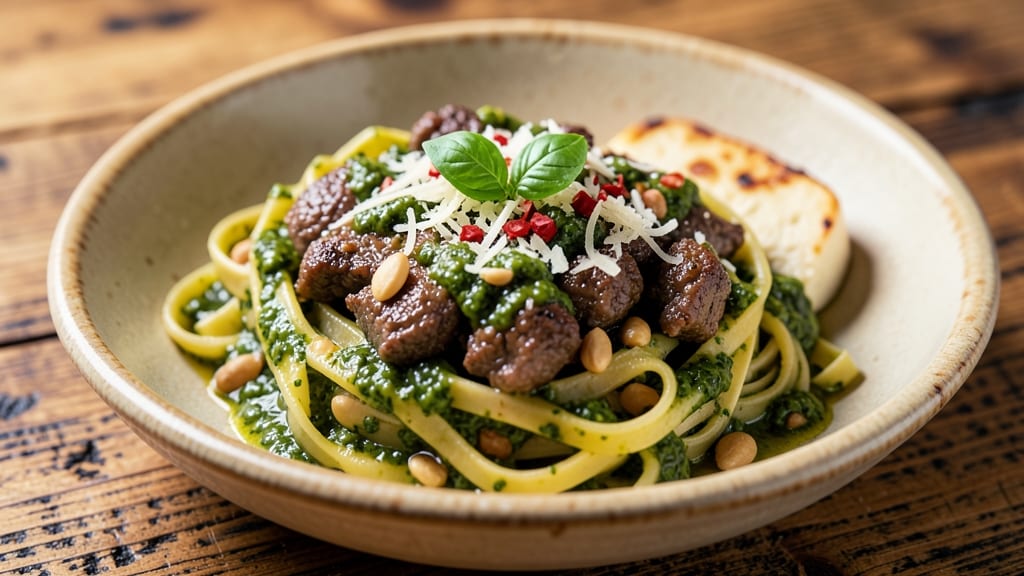
This beef basil pesto pasta recipe reimagines classic comfort food with a vibrant herb twist that transforms an ordinary weeknight dinner into something special.
The secret lies in balancing rich ground beef with bright, fresh basil pesto—creating a sauce that's both creamy and herbaceous, with just the right amount of savory depth.
I developed this recipe after craving something hearty yet light, and the combination of tender beef, al dente pasta, and that signature pesto flavor delivers every time.
The beauty of this dish is its simplicity: just 20 minutes of active prep and 30 minutes of cooking time, yet it feels like a restaurant-quality meal.
The beef cooks down with aromatic garlic and onions, absorbing flavors while staying tender, while the homemade pesto (or store-bought shortcut) adds that signature freshness. The key is toasting the basil and garlic in the pesto for maximum flavor—this step elevates the sauce from ordinary to extraordinary.
What you'll end up with is a plate of perfectly al dente pasta coated in a rich, herby sauce, topped with tender beef that's been seasoned just right. The bright green pesto peeks through the creamy sauce, adding visual appeal and a fresh contrast to the savory beef.
It's the kind of dish that feels indulgent yet balanced, perfect for feeding a family or impressing guests without spending hours in the kitchen.
Serve with a sprinkle of fresh basil and a drizzle of olive oil for extra brightness, or add a side of garlic bread to soak up every last bit of that flavorful sauce. This recipe proves that comfort food can be exciting—let's get cooking!
Ingredients for beef basil pesto pasta
Rich beef meets vibrant basil pesto in this comforting yet elevated pasta dish.
| Ingredient | Amount | Notes |
|---|---|---|
| Ground Beef 🥩 | 1 lb | 80/20 fat ratio preferred |
| Fresh Basil Leaves 🌿 | 2 cups | Packed, stems removed |
| Garlic Cloves 🧄 | 4 cloves | Peeled, roughly chopped |
| Extra-Virgin Olive Oil 🫒 | ½ cup | High quality, fruity |
| Parmesan Cheese 🧀 | ¾ cup | Freshly grated from block |
| Firm Tofu 🥬 | 8 oz | Pressed for creaminess |
| Yellow Onion 🧅 | 1 whole | Medium size, diced |
| Pasta 🍝 | 12 oz | Fettuccine or penne |
| Lemon Juice 🍋 | 1 tbsp | Freshly squeezed |
| Salt 🧂 | 1 ½ tsp | Kosher or sea salt |
| Black Pepper 🌶️ | ½ tsp | Freshly ground preferred |
| Dried Oregano 🍃 | ½ tsp | Or 1 tbsp fresh |
| Pine Nuts 🥜 | ¼ cup | Toasted for richness |
| Red Pepper Flakes 🌶️ | ¼ tsp | Optional for heat |
| Butter 🧈 | 2 tbsp | Unsalted, for finishing |
The beef is where this dish starts strong—80/20 ground chuck stays juicy while absorbing flavors. Costco or local butchers often have the best prices for bulk packs, but the grocery store works too. Fresh basil is non-negotiable here; Trader Joe's or farmers markets have the brightest leaves. For the pesto, toast your pine nuts in a dry pan until golden—this step makes all the difference. The Parmesan should be freshly grated from a wedge; pre-grated clumps up and lacks flavor. If you're short on time, store-bought pesto works, but homemade gives that restaurant-quality depth.
No fresh basil? Dried oregano at half the amount keeps the flavor profile intact. Swap pine nuts for walnuts or cashews if budget is tight—they're heartier but still delicious. The tofu adds creaminess without dairy; if you prefer a meatier texture, substitute with ricotta cheese. For extra richness, stir in 1 tbsp heavy cream at the end. The lemon juice brightens everything, so don't skip it—even bottled works in a pinch. If you love heat, add red pepper flakes; if not, omit them completely.
Store leftover pesto with a thin layer of olive oil on top to preserve color for up to 1 week. The cooked pasta reheats best with a splash of water or broth—microwave 1 minute, stir, repeat. For meal prep, portion the sauce separately and toss with fresh pasta when ready to eat. The beef sauce keeps 3-4 days in the fridge, while the pesto freezes beautifully for up to 3 months. Double the pesto recipe—it's perfect on sandwiches or roasted veggies.
Why You'll Love This Recipe
- Pantry-Friendly Magic: I swear by this when I’ve got nothing but beef, a handful of basil, and a jar of pesto in the fridge. No fancy prep—just brown the meat, pulse the basil with olive oil and garlic, toss it all together. That’s it. Zero special ingredients, zero stress.
- Umami Bomb: The ground beef adds this deep, savory richness that turns regular pesto into something next-level. Fresh basil brightens it up, garlic gives it that punchy kick, and Parmesan ties it all together with salty, nutty perfection. It’s the kind of flavor that makes you pause mid-bite.
- Weeknight & Weekend: Between us, this is my go-to for both lazy Tuesdays and when I’ve got friends over. Double the batch, serve it with crusty bread, and suddenly you’ve got a meal that feels fancy but takes 20 minutes. (Yes, even on a Tuesday night.)
- Leftovers That Don’t Suck: Unlike most pasta, this actually tastes better the next day—if there’s any left. The beef soaks up the pesto flavors, and the sauce clings to the noodles like it’s glued on. Pack it for lunch, freeze half, or just reheat it with a splash of water. No sad, mushy leftovers here.
Step-by-step instructions for beef basil pesto pasta
Here's the professional method for crafting this herb-infused comfort dish with perfect texture balance.
Prepare the Herb Pesto Base
In a food processor, combine the 2 cups fresh basil leaves (stems removed), 4 cloves garlic cloves (peeled), 0.25 cup pine nuts, 0.25 tsp red pepper flakes, and 1.5 tsp salt. Pulse until finely chopped but not completely pureed.
With the processor running, slowly drizzle in the 0.5 cup extra-virgin olive oil until the mixture forms a thick paste. Stop occasionally to scrape down the sides. This gradual addition ensures the pesto emulsifies properly. Transfer to a bowl and stir in the 0.75 cup freshly grated Parmesan cheese and 1 tbsp lemon juice.
Cook the Protein Components
In a large skillet over medium-high heat, add the 1 lb ground beef and 1 whole yellow onion (diced). Cook for 5-6 minutes, breaking apart the beef with a wooden spoon, until the beef loses its raw color and the onion softens. Drain excess fat, leaving about 1 tablespoon in the pan.
In a separate pan, press the 8 oz firm tofu between paper towels to remove excess moisture. Heat 1 tablespoon olive oil in a non-stick skillet over medium heat and cook the tofu for 4-5 minutes per side until golden brown. Season with 0.25 tsp black pepper and 0.25 tsp dried oregano during the last minute of cooking.
Cook the Pasta Al Dente
Bring a large pot of salted water to a rolling boil. Add the 12 oz pasta and cook according to package instructions until 1 minute before al dente. Reserve 1 cup pasta water before draining. The starchy water is essential for creating the proper sauce consistency.
While the pasta cooks, return the beef mixture to the skillet and stir in 2 tbsp butter. Add the prepared pesto and toss gently to combine, allowing the flavors to meld. The mixture should coat the back of a spoon but remain loose enough to cling to the pasta.
Combine and Finish
Add the drained pasta to the skillet with the beef-pesto mixture. Toss vigorously for 1-2 minutes until every strand is evenly coated. If the sauce appears too thick, add reserved pasta water 1 tablespoon at a time until it reaches your desired consistency.
Divide the pasta among serving plates and top each portion with the crispy tofu. Garnish with additional Parmesan cheese and a sprinkle of fresh basil leaves for presentation. Serve immediately while the tofu is still warm and crispy.
Pro Tips For Making Beef Basil Pesto Pasta
- COOK THE BEEF LOW AND SLOW: Skip the high-heat sear—ground beef releases juices fast, and if you rush it, you’ll end up with dry, rubbery crumbles. Cook over medium-low heat until just browned (about 5-6 minutes), stirring occasionally, so the fat renders evenly. This keeps the texture tender and the flavor rich, especially when mixed with the pesto later.
- STACK THE BASIL LEAVES: Don’t just toss whole basil leaves into the pesto—they’ll turn to mush and ruin the texture. Stack 8-10 leaves, roll tightly, then slice into thin ribbons. This keeps the pesto vibrant and prevents that sad, soggy aftermath. (Yes, it looks like you’re making a tiny basil burrito, but trust me.)
- SALT THE PASTA WATER LATE: I used to salt the water early, thinking it didn’t matter. Wrong. Add salt after the water boils and the pasta is in—about 1 minute in. This ensures even seasoning and prevents the water from tasting flat by the time the pasta’s done. Also, don’t skimp: aim for a taste like the sea.
- RESERVE THE PASTA WATER: That starchy pasta water isn’t just for emergencies—it’s the glue that makes this dish sing. Before draining, scoop out ½ cup of the hot water and toss it with the cooked pasta. It’ll help the pesto cling better and keep everything silky smooth. (Your future self will curse you if you skip this.)
Pro cooking tips for beef basil pesto pasta
Pesto Emulsification
For a silky-smooth pesto, pulse the basil and garlic in your food processor until finely chopped but not pureed—this ensures texture. I use my Cuisinart DLC-2BC processor because it handles nuts and leaves better than budget models.
Slowly drizzle in the ½ cup olive oil while processing—this gradual addition prevents separation. If your pesto looks oily, add 1 tsp lemon juice to help bind it. 💫
Beef Browning
Don’t rush the beef—cook it over medium-high heat for 5-6 minutes until deeply browned. This Maillard reaction builds rich flavor. Use a 12-inch cast-iron skillet (like Lodge) for even heat distribution. Break the beef into ¼-inch crumbles with a wooden spoon to maximize surface area for browning.
Tofu Texture Hack
Pressing tofu is key for crispy results. Wrap the 8 oz block in paper towels and place a heavy pan on top for 15 minutes. Then, cut into ½-inch cubes before cooking.
For extra crunch, I pan-fry them in 1 tbsp olive oil over medium heat for 4-5 minutes per side. A sprinkle of ½ tsp dried oregano while cooking adds depth.
Pasta Water Rescue
Never drain all that starchy pasta water! Reserve 1 cup before draining—it’s liquid gold for emulsifying the sauce. If your pesto-pasta mix looks dry, add the water 1 tbsp at a time until silky.
I keep a ladle handy while cooking to scoop up the water before it disappears down the drain. 💡
Sauce Consistency
The ideal sauce should coat the back of a spoon but still cling to pasta. If too thick, add pasta water; if too thin, simmer uncovered for 2-3 minutes to reduce.
I test consistency by tossing a forkful—it should glide smoothly. For extra richness, stir in 2 tbsp butter at the end, but don’t overdo it or the pesto’s brightness fades.
Garnish Like a Pro
Fresh basil leaves and shaved Parmesan cheese elevate presentation. I use a microplane for cheese and tear basil leaves by hand for texture. A final drizzle of olive oil adds gloss and ties all flavors together. Serve immediately—the tofu stays crispy for 10 minutes before softening. 🌿
Nutrition facts
Frequently asked questions
Can I use ground turkey or chicken instead of beef?
Ground turkey or chicken works beautifully—just reduce cooking time to 4-5 minutes to avoid overcooking. Use 93% lean turkey for best results, as higher fat content helps with flavor. For chicken, season with an extra pinch of dried oregano to compensate for its milder taste.
How do I make this dish vegetarian?
Swap the beef for mushrooms or lentils—sauté 1 cup sliced cremini mushrooms for 8 minutes with the onions, or use 1 cup cooked lentils for a heartier texture. Keep the tofu as-is for that creamy contrast. The pesto will still shine, and you'll get all the herby goodness without meat.
Why does my pesto turn oily or separate?
Oily pesto happens when too much oil is added too quickly. Pulse the basil and garlic first, then drizzle oil slowly while processing. If it separates, stir in 1 tsp lemon juice or 1 tbsp pasta water to help emulsify. For extra insurance, add 1 tsp cornstarch to the pesto base before blending.
Can I make this ahead of time?
Prep the pesto and cook the beef up to 2 days ahead, storing them separately in the fridge. Reheat the beef gently in a skillet, then toss with fresh pasta and warmed pesto. The tofu should be cooked fresh for best texture. For make-ahead convenience, freeze the pesto in 1-tbsp portions—thaw and stir into the sauce when ready.
What's the best pasta shape for this recipe?
Fettuccine or penne work perfectly, but don't limit yourself! Ribbon shapes like tagliatelle or linguine catch the pesto sauce beautifully, while tubular pasta like rigatoni holds onto the beef mixture. For extra flair, try farfalle—the bowtie shape adds visual appeal while keeping the sauce clingy.