
Soups & Stews
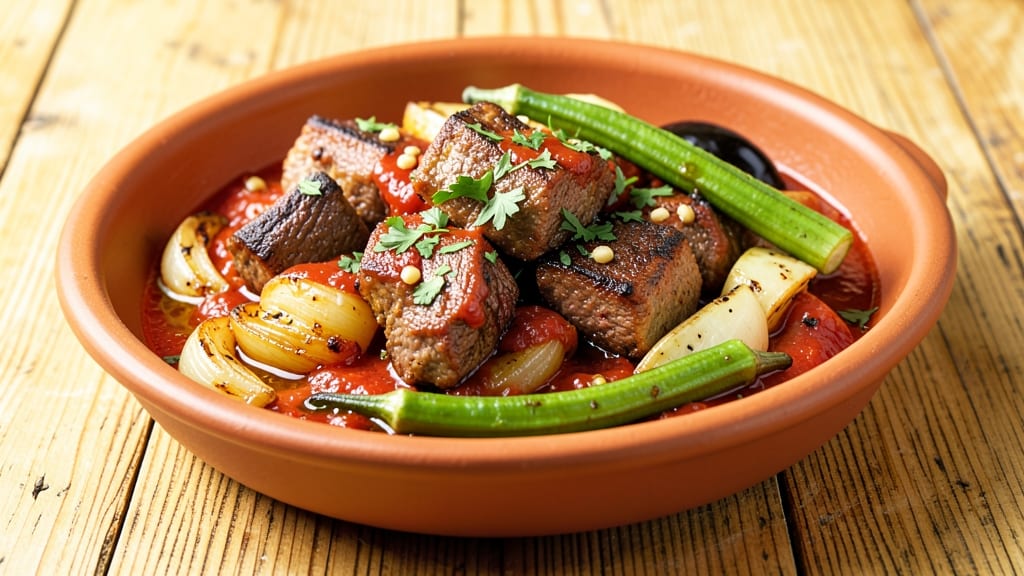
This beef bamia recipe brings the rich, hearty flavors of Cypriot cuisine to your kitchen with tender beef and tender vegetables in a deeply aromatic stew.
The key to perfecting this dish lies in the careful preparation of the okra and eggplant—parboiling them first ensures they stay tender without turning mushy, while browning the beef creates deep, caramelized flavors that form the stew's foundation.
What makes this recipe special is how it balances textures and flavors: silky okra, creamy eggplant, and succulent beef all simmer together in a tomato-based broth infused with garlic, onions, and warm spices.
The traditional approach calls for slow simmering, allowing the flavors to meld and the beef to become fork-tender while the vegetables absorb the rich, savory broth. This method transforms simple ingredients into a restaurant-quality dish that feels both comforting and celebratory.
The result is a stew that’s hearty enough to stand alone but also pairs beautifully with crusty bread or steamed rice, making it perfect for a family dinner or a cozy weeknight meal.
What sets this beef bamia apart is its depth of flavor—each bite delivers a harmonious blend of tender beef, slightly slimy okra (a texture loved in Cypriot cooking), and the earthy sweetness of eggplant, all enveloped in a sauce that’s tangy, slightly sweet, and aromatic.
The dish is a testament to how thoughtful preparation and patience can turn a humble stew into something truly extraordinary, worthy of being served at gatherings or enjoyed as a satisfying solo meal.
For those looking to modernize the recipe, adding potatoes or fresh herbs like parsley can enhance the dish without compromising its traditional roots.
The beauty of beef bamia lies in its versatility—whether you stick to the classic version or add your own twists, the result is always a comforting, flavorful stew that feels like a warm embrace in a bowl.
Ingredients for beef bamia
Sixteen ingredients transform into a restaurant-worthy Cypriot stew with tender beef and silky vegetables.
| Ingredient | Amount | Notes |
|---|---|---|
| Beef Chuck Roast 🥩 | 2 lb | Cut into 1.5-inch cubes |
| Fresh Okra Pods 🌿 | 1 ½ lb | Trimmed and sliced into 1-inch pieces |
| Eggplant 🍆 | 2 medium | Peeled and cut into 1-inch cubes |
| Yellow Onions 🧅 | 2 medium | Thinly sliced |
| Garlic Cloves 🧄 | 6 cloves | Minced |
| Canned Tomato Sauce 🍅 | 2 cups | San Marzano preferred |
| Tomatoes 🍅 | 4 medium | Diced, Roma preferred |
| Olive Oil 🫒 | ½ cup | Extra-virgin for richness |
| Red Wine 🍷 | 1 cup | Dry red like Cabernet |
| Fresh Dill 🌿 | ¼ cup | Chopped, stems removed |
| Fresh Parsley 🌿 | ¼ cup | Chopped, for garnish |
| Ground Cumin 🌶️ | 1 tsp | Toasted for depth |
| Ground Coriander 🌿 | 1 tsp | Freshly ground preferred |
| Salt 🧂 | 1 ½ tsp | Kosher or sea salt |
| Black Pepper 🌶️ | ½ tsp | Freshly ground |
The beef is non-negotiable—chuck roast breaks down beautifully into tender bites. Look for good marbling at Whole Foods or your local butcher; pre-cut cubes save time but cost more. Okra and eggplant need tender handling—young, firm pods work best, and avoid anything with blemishes. For the tomatoes, San Marzano cans from Trader Joe's deliver the sweetest flavor, but any good-quality canned tomatoes will do. The fresh herbs? Buy them the day you cook—they wilt fast, and dried just won't cut it here.
No red wine? Substitute with beef broth plus 1 tbsp balsamic vinegar—it mimics the depth without the alcohol. Short on okra? Zucchini works in a pinch, but texture will differ. The eggplant can be swapped for potatoes if you prefer, though traditionalists will notice. For the spices, toast the cumin seeds whole in a dry pan for 30 seconds before grinding—game-changer. And if you're using dried herbs, reduce to one-third the amount of fresh. The olive oil matters too—use the fruity, peppery kind, not the bland supermarket stuff.
This stew tastes even better the next day as flavors meld. Store in the fridge for up to 5 days, or freeze portions for 3 months. The vegetables soften further when reheated, so plan accordingly. For serving, I like to garnish with extra fresh dill and parsley right before eating—brightens up the dish. Pair with crusty bread or warm pita to soak up every last bit of that rich sauce.
Why You'll Love This Recipe
- One-Pot Magic: I swear by this recipe when I’m too tired to scrub pots—just brown the beef, toss in chopped okra and eggplant whole, and let the slow simmer do the work. The onions caramelize right in the pan while the garlic infuses everything, so you’re basically hands-off after the initial chop.
- Deep Umami Love: That beef chuck roast? It gets tender and soaks up all the garlic and onion flavors until the stew is rich, almost like a cross between a hearty tagine and a comforting stew. The okra adds this weirdly addictive texture—crispy edges with a silky center—that makes it impossible to stop eating.
- Weeknight to Potluck: I make this when I need a meal that feeds a crowd but doesn’t require fancy prep—double the batch, and it’s still easy. Bring it to a dinner party, and people will ask for the recipe (or just seconds). Honestly, it’s the kind of dish that makes you look like a hero without trying.
- Budget-Friendly Feast: A chuck roast stretches forever, and eggplant and okra are cheap staples that turn into something ridiculously satisfying. Leftovers? Even better reheated the next day—if there are any, because my family clears the pot faster than I can say “second helping.”
Step-by-step instructions for beef bamia stew
Create a rich, hearty stew where tender beef meets Mediterranean vegetables in a fragrant tomato-wine sauce.
Sear the Beef Chuck Roast
Heat 0.25 cup of the olive oil in a heavy Dutch oven over medium-high heat. Add the 2 lb beef chuck roast, cut into 1.5-inch cubes, in a single layer. Let them sear undisturbed for 3-4 minutes until deeply browned on all sides.
This initial searing develops the deep, caramelized flavors that form the stew's foundation. Don't crowd the pan—work in batches if needed. Once browned, remove the beef and set aside on a plate. You'll add it back later after building the flavor base.
Build the Flavor Base with Onions and Aromatics
In the same Dutch oven, add another 0.25 cup of olive oil and reduce heat to medium. Add the 2 medium yellow onions, sliced thinly, and cook for 5-6 minutes until softened and beginning to caramelize at the edges.
Add the 6 cloves minced garlic and cook for 30 seconds until fragrant—don't let it brown. Stir in the 1 tsp ground cumin, 1 tsp ground coriander, 1.5 tsp salt, and 0.5 tsp black pepper, toasting the spices for 1 minute to release their aromas. This aromatic base will infuse the entire stew.
Cook the Vegetables Until Tender
Add the 2 medium eggplant, peeled and cut into 1-inch cubes, and the 1.5 lb fresh okra pods, sliced into 1-inch pieces. Stir to coat with the spiced oil mixture. Cook for 8-10 minutes until the eggplant begins to soften and the okra releases its characteristic slimy texture—this is normal and desirable for bamia.
Add the 4 medium tomatoes, diced, and the 2 cups canned tomato sauce. Stir well to combine, then pour in the 1 cup red wine. Bring to a gentle simmer, then reduce heat to low and let it cook uncovered for 15 minutes to allow the alcohol to evaporate and the flavors to meld.
Simmer the Stew to Perfection
Return the seared beef to the Dutch oven, along with any accumulated juices from the plate. Add enough water to just cover the ingredients—about 2 cups. Bring to a gentle simmer, then reduce heat to low and cover partially. Let it cook for 1.5 to 2 hours, stirring occasionally, until the beef is fork-tender and pulls apart easily.
Check the seasoning after 1 hour of cooking and adjust with additional salt or pepper if needed. The stew should be thick enough to coat the back of a spoon but still have a sauce-like consistency. If it's too thick, add a splash of water or broth to reach your desired texture.
Finish with Fresh Herbs and Serve
Once the beef is tender, stir in the 0.25 cup chopped fresh dill and 0.25 cup chopped fresh parsley. Simmer uncovered for another 5 minutes to allow the herbs to infuse their bright flavors into the stew. Taste and adjust seasoning one final time.
Serve the beef bamia hot, ladled over steamed rice or crusty bread to soak up the rich sauce. The dish should have a balance of tender beef, slightly slimy okra, creamy eggplant, and a deep, savory tomato-wine broth. Garnish with additional fresh parsley if desired.
Pro Tips For Making Beef Bamia
- SEAR THE CHUCK ROAST: DESCRIPTION: Slather that beef chuck in olive oil and hit it with a 450°F oven immediately—no slow start. I learned the hard way that rushing the sear means flavor gets stuck in the meat instead of caramelizing on the outside. Let it brown 15 minutes uncovered, then add the onions and garlic to the same pan (yes, dirty pan = more flavor).
- SLICE THE OKRA LENGTHWISE: DESCRIPTION: Cut those okra pods into ½-inch thick half-moons, not rounds. Whole pods turn to mush, and rounds release too much sliminess. Lengthwise slices keep them intact while soaking up the sauce—trust me, your bamia will thank you.
- SALT THE EGGPLANT FIRST: DESCRIPTION: Toss eggplant chunks in 1½ teaspoons of salt and let them sit 20 minutes before cooking. This pulls out the bitterness and excess water, so they absorb the sauce instead of turning soggy. Rinse and pat very dry afterward—wet eggplant ruins the texture.
- LOW AND SLOW FOR THE SAUCE: DESCRIPTION: After browning everything, cover the pot and simmer on low heat for at least 2 hours. High heat = scorched sauce and tough beef. I used to rush it, but this dish rewards patience—let the flavors meld, and the chuck will fall apart like it’s supposed to.
Troubleshooting this recipe
Okra Texture Issues
If your okra turns mushy instead of staying tender and slightly slimy, it likely didn't get enough pre-cooking. Before adding to the stew, blanch okra in boiling water for 3-4 minutes then shock in ice water.
This stops cooking and preserves texture. Also, avoid overcrowding the pot—cook in batches if needed. 🌿
Beef Too Tough
Tough beef usually means not enough simmering time. For chuck roast, plan for 1.5-2 hours on low heat. If you're short on time, try a pressure cooker (60 minutes high pressure) or slow cooker (6-8 hours low). Never rush the cooking—this is a patience-based dish where slow wins.
Sauce Too Thin
If your sauce is watery, reduce it by simmering uncovered for 10-15 minutes while stirring occasionally. For extra thickness, mash 1-2 eggplant cubes directly into the sauce with a fork.
Another trick: add 1 tbsp cornstarch mixed with water as a slurry at the end—stir in and simmer just until thickened.
Vegetables Overcooked
Eggplant and okra cook at different rates. Add eggplant first (it takes longer) and okra last (it cooks fastest). For extra insurance, parboil both vegetables separately for 2-3 minutes before adding to the stew. This gives you more control over their final texture while building flavor in the sauce.
Flavor Too Mild
Boost depth by toasting your spices longer—2 minutes for cumin and coriander releases more aroma. Add 1 tsp smoked paprika or ½ tsp cinnamon to the initial sear for complexity.
For acidity, stir in 1 tbsp lemon juice at the end. A splash of red wine vinegar during cooking also helps brighten flavors.
Okra Sliminess Disappeared
The slimy texture is intentional in bamia! If yours vanished, your okra was likely overcooked. For next time, add okra only 10 minutes before the beef is done.
The residual heat will finish cooking while preserving that signature texture. If all else fails, stir in 1 tbsp okra powder (available at Mediterranean markets) for authenticity. 💫
Nutrition facts
Frequently asked questions
Why does traditional beef bamia include okra if some people dislike its slimy texture?
In Cypriot cuisine, that signature sliminess is actually a mark of quality! The okra's natural mucilage thickens the stew naturally while adding a unique texture that balances the tender beef and creamy eggplant. If you're new to okra, try younger pods (they're less slimy) or add them later in cooking to preserve that characteristic texture.
Can I make beef bamia without red wine?
Yes! Replace the 1 cup red wine with 1 cup beef broth plus 1 tablespoon balsamic vinegar for similar depth of flavor. The vinegar adds acidity that helps brighten the dish, while the broth maintains the rich, savory base. For extra richness, add 1 teaspoon soy sauce to the initial sear.
How do I know when the beef is perfectly tender?
The beef should easily pull apart with a fork and be fork-tender after 1.5-2 hours of simmering. For a quick test, pierce a piece with your fork—if it slides in effortlessly and the meat separates cleanly, it's ready. If it's still slightly chewy, return it to the pot for another 20-30 minutes covered.
What's the best way to store leftover beef bamia?
Store in an airtight container in the fridge for up to 5 days or freeze for 3 months. Reheat gently on the stove over low heat, adding a splash of water or broth if the sauce thickens too much. The flavors actually improve after the first day as everything melds together!
Can I make beef bamia in a slow cooker?
Brown the beef and build the flavor base as directed, then transfer everything to a slow cooker. Add 1 cup water or broth, cover, and cook on low for 6-8 hours or high for 3-4 hours. The slow cooker's gentle heat ensures the beef becomes tender without overcooking the vegetables.