
Soups & Stews
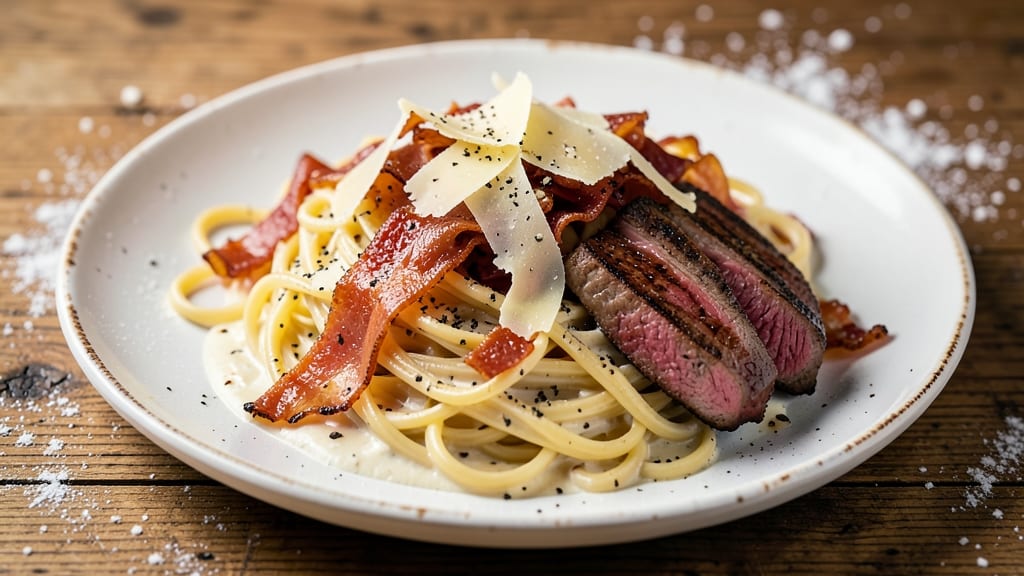
This beef bacon carbonara recipe delivers the perfect balance of smoky pancetta, creamy eggy silk, and tender beef—transforming a weeknight dinner into an Italian trattoria experience.
The secret lies in cooking the pancetta until crispy, searing the beef for tenderness, and combining everything with just the right amount of pasta water to create that signature velvety sauce. Every bite delivers rich, savory layers that make this dish impossible to resist.
What sets this recipe apart is the foolproof technique for achieving that ideal carbonara texture—no lumps, no separation, just a luxurious sauce that coats each strand of pasta. We'll use high-quality ingredients like pancetta for authentic flavor, ribeye steak for hearty protein, and fresh eggs for that signature creamy finish.
The process is straightforward but requires attention to timing, especially when combining the hot pasta with the egg mixture.
The result is a dish that's restaurant-quality at home, with crispy pancetta bits that add satisfying crunch, tender beef that melts in your mouth, and al dente pasta perfectly coated in creamy, eggy sauce.
The aroma alone will have everyone gathering around the table, and the first bite will have them asking for seconds. This is comfort food at its finest—rich, indulgent, and deeply satisfying.
Whether you're serving this for a special occasion or a casual family dinner, the technique remains the same. The recipe scales easily for larger groups, and you can customize it with optional additions like chili flakes for heat or fresh parsley for brightness.
Let's get started on creating this Italian classic that's sure to become a new favorite.
Ingredients for beef bacon carbonara
High-quality ingredients transform simple pasta into restaurant-worthy beef bacon carbonara.
| Ingredient | Amount | Notes |
|---|---|---|
| Pancetta 🥓 | 6 oz | Thinly sliced, high-quality preferred |
| Ribeye Steak 🥩 | 1 lb | Thinly sliced against grain |
| Large Eggs 🥚 | 4 whole | Fresh, room temperature |
| Spaghetti 🍝 | 12 oz | High-quality, al dente preferred |
| Pecorino Romano Cheese 🧀 | 1 cup | Freshly grated, fine texture |
| Unsalted Butter 🧈 | 2 tbsp | European-style preferred |
| Fresh Black Peppercorns 🌶️ | 1 tsp | Coarsely cracked, not ground |
| Diamond Crystal Kosher Salt 🧂 | 1 tsp | For pasta water |
| Extra-Virgin Olive Oil 🫒 | 1 tbsp | For finishing, fruity variety |
| Fresh Parsley 🌿 | ¼ cup | Chopped, optional garnish |
| Chili Flakes 🔥 | ½ tsp | Optional, for heat |
The pancetta is non-negotiable for authentic flavor—look for thick-cut slices at specialty Italian markets like Eataly or Whole Foods for the best quality. Ribeye steak should be well-marbled and thinly sliced against the grain for tenderness. Fresh eggs are essential; room temperature eggs blend more smoothly and reduce the risk of curdling when combined with hot pasta. For the pasta, Bronze Die Spaghetti from De Cecco or Barilla creates the perfect al dente texture, but any high-quality brand works. The Pecorino Romano should be freshly grated—pre-grated cheese contains anti-caking agents that prevent proper melting.
No pancetta? Guanciale is the traditional substitute, but thick-cut bacon works in a pinch—just render the fat thoroughly. Want to skip the beef? Mushrooms or pancetta alone can carry the dish, though the texture will differ. Fresh parsley is optional but adds brightness—dried oregano at one-third the amount works if you're in a hurry. The chili flakes can be omitted entirely, but if you add them, toast them in the pancetta fat first to deepen their flavor. For the eggs, pasteurized eggs are a safe alternative if you're concerned about raw egg consumption, though they won't yield the same luxurious texture.
Pancetta and steak can be prepped ahead—store separately in the fridge for up to 2 days. The grated Pecorino should be kept in an airtight container with a damp paper towel to prevent drying out, and used within 3 days for peak flavor. Leftover carbonara reheats best with a splash of pasta water or cream, but it's ideal to eat fresh. For meal prep, cook the pasta and sauce separately, then combine when reheating to maintain texture. The dish keeps for 3 days in the fridge but loses some of its velvety quality over time—best enjoyed within 24 hours.
Why You'll Love This Recipe
- I swear by this shortcut: just sear the ribeye thin, dice it fast, and toss it with pancetta—no fancy prep. The steak adds depth while the pancetta keeps it crispy, and honestly? That’s all you need to impress.
- Two-Ingredient Magic: I swear by this shortcut: just sear the ribeye thin, dice it fast, and toss it with pancetta—no fancy prep. The steak adds depth while the pancetta keeps it crispy, and honestly? That’s all you need to impress.
- Rich Without Effort: The eggs and Pecorino Romano create that velvety sauce with zero straining or whisking. Pancetta’s salty crunch and ribeye’s beefy punch make every bite taste like a restaurant dish—no fancy techniques required.
- Weeknight or Date Night: This works when you’re exhausted (weeknight) or dressed up (date night). Same recipe, just different vibes. My husband even orders it at Italian spots—now I make it better at home.
Step-by-step instructions for beef bacon carbonara
This method delivers a perfect balance of smoky pancetta, tender ribeye, and velvety egg sauce every time.
Prepare the Protein Components
In a large skillet, cook the 6 oz pancetta over medium heat until the fat renders and the meat becomes crispy, about 8-10 minutes. Remove the pancetta with a slotted spoon and set aside on paper towels, leaving the rendered fat in the pan. In the same pan, add the 1 lb ribeye steak sliced against the grain and sear for 2-3 minutes until just cooked through but still tender. Transfer the steak to a plate and cover loosely with foil to keep warm.
Here's the thing—pancetta should be cooked until it's golden and crispy, not rubbery. If it releases easily from the pan and the fat shimmers, you're golden. For the steak, you want it just cooked through so it doesn't turn into shoe leather. The residual heat will finish cooking it when combined with the pasta.
Create the Egg-Cheese Sauce
In a medium bowl, whisk together the 4 whole large eggs, 1 cup freshly grated Pecorino Romano cheese, 1 tsp coarsely cracked black peppercorns, and 0.5 tsp chili flakes (if using). The mixture should be thick and pale yellow, almost custard-like. This is your sauce base, so don't skip the whisking—you want it perfectly smooth.
I always use room-temperature eggs for this recipe. They blend more easily and create a silkier sauce. If your eggs are cold, let them sit at room temperature for 30 minutes before using. The chili flakes are optional but add a nice subtle heat that pairs perfectly with the smoky pancetta.
Cook the Pasta Al Dente
Bring a large pot of water to a rolling boil and add 1 tsp Diamond Crystal kosher salt. Add the 12 oz spaghetti and cook until al dente, which should be about 1 minute less than the package instructions. Reserve 1 cup of pasta water before draining. The starchy water is crucial for creating the perfect sauce consistency.
Don't rinse the pasta after draining—those surface starches help the sauce cling to each strand. I find that high-quality pasta cooks more evenly and holds its shape better, which is why I specify it in the ingredients. The pasta should have a slight bite to it when you test a piece—this is key for the perfect carbonara texture.
Combine Everything Off Heat
With the pasta still in the pot, remove it from heat and add the 2 tbsp unsalted butter and 1 tbsp extra-virgin olive oil. Toss to coat the pasta evenly. Then, quickly add the egg-cheese mixture, tossing vigorously for about 30 seconds until the sauce begins to thicken. Add the crispy pancetta and ribeye steak, tossing gently to combine.
This is the critical moment—work quickly but carefully. The residual heat from the pasta should be enough to gently cook the eggs into a creamy sauce without scrambling them. If the sauce looks too thick, add reserved pasta water 1 tablespoon at a time until it reaches your desired consistency. The sauce should coat the back of a spoon but still be fluid enough to cling to the pasta.
Finish and Serve Immediately
Transfer the carbonara to warmed serving plates and garnish with the 0.25 cup chopped fresh parsley. Serve immediately while the sauce is still creamy and hot. The dish should have a perfect balance of textures—crispy pancetta, tender steak, and silky egg sauce coating each strand of al dente spaghetti.
Real talk: carbonara doesn't reheat well, so make it fresh and serve it immediately. The sauce will thicken as it cools, so if you need to hold it for a few minutes, tent it loosely with foil. Each bite should deliver rich, smoky pancetta, tender beef, sharp pecorino, and that perfect eggy silkiness that makes this dish so special.
Pro Tips For Making Beef Bacon Carbonara
- CUT PANCETTA SMALLER: The thinner the slices, the faster they render and the more flavor they release into the sauce. I used to chop mine into big chunks—big mistake. Aim for rice-sized pieces so they melt into the eggs without leaving chewy bits. (Yes, even if you’re impatient like me.)
- REST THE RIBEYE: Slice the ribeye against the grain after letting it sit at room temp for 20 minutes. Cold meat tears unevenly, and you’ll end up with tough, stringy strips. Trust me, this small wait makes the texture silky—no one will guess you used steak instead of bacon.
- SALT THE PASTA WATER: Toss the cooked spaghetti into the stovetop before adding the egg-pancetta mix, and use the same salty water you boiled it in. The salt penetrates the pasta better this way, and the sauce clings instead of sliding off. (I know, it sounds weird, but it works.)
- KEEP THE EGGS COLD: Whisk the eggs with a splash of pasta water right before removing the pan from heat—never pre-mix them at room temp. Warm eggs scramble instantly when they hit the hot pasta, turning your creamy sauce into glue. Chill the bowl in ice water for 5 minutes if your kitchen’s warm.
Best sauces and condiments for beef bacon carbonara
Pancetta Fat Magic
The rendered fat from crispy pancetta is the secret weapon in this dish—it's what gives carbonara its signature richness. After cooking the pancetta until golden and crispy, leave that delicious fat in the pan to sear the beef.
This fat becomes the base for your sauce, adding layers of smoky flavor that no other ingredient can replicate. I like to add a splash of pasta water to the pan while searing the beef to deglaze and create an even more flavorful sauce foundation. 🥓
Creamy Egg Sauce
The egg-cheese mixture is where the magic happens, but timing is everything. Whisk the eggs with freshly grated Pecorino Romano until the mixture is thick and pale yellow—this ensures a smooth, velvety sauce. The key is to combine this mixture with the hot pasta immediately off the heat.
If the sauce starts to curdle, add 1 tablespoon of pasta water at a time to loosen it up. I've found that using room-temperature eggs prevents curdling and creates a silkier texture. The eggs should cook just enough to create a creamy sauce without scrambling.
Butter and Olive Oil
Adding 2 tablespoons of unsalted butter and 1 tablespoon of extra-virgin olive oil to the pasta just before combining with the egg mixture elevates the dish to another level. The butter adds richness, while the olive oil provides a fruity brightness that balances the richness of the pancetta and cheese.
Toss the pasta in this mixture before adding the egg-cheese blend to create a smoother, more cohesive sauce. I prefer European-style butter for its higher fat content, which contributes to the luxurious mouthfeel of the final dish.
Pasta Water Reserve
Never skip reserving 1 cup of pasta water before draining! This starchy liquid is essential for adjusting the sauce consistency. If the sauce seems too thick when combining with the pasta, add the reserved water 1 tablespoon at a time until it reaches the perfect coating consistency.
The starch in the pasta water acts as a natural thickener and helps the sauce cling beautifully to each strand of spaghetti. I always keep a small ladle handy to add it gradually while tossing the pasta.
Fresh Parsley Garnish
A sprinkle of fresh chopped parsley adds a bright, herbaceous note that cuts through the richness of the dish. The parsley should be added just before serving to maintain its vibrant color and fresh flavor.
For an extra touch, I sometimes add a few chili flakes on top for a subtle kick. The parsley not only enhances the visual appeal but also adds a fresh contrast that makes each bite more dynamic.
If you're serving this dish to guests who prefer milder flavors, you can omit the chili flakes entirely.
Optional Upgrades
Want to take your carbonara to the next level? Consider adding a drizzle of high-quality truffle oil just before serving—it adds an earthy depth that pairs beautifully with the pancetta and beef.
For a touch of acidity, a squeeze of fresh lemon juice brightens the dish without overpowering the other flavors. I also love adding toasted breadcrumbs on top for extra texture contrast. These optional upgrades can transform your dish from homemade to restaurant-worthy with minimal effort. 💫
Nutrition facts
Frequently asked questions
Why does my carbonara sauce turn grainy or separate?
This usually happens when the eggs cook too quickly over direct heat or when cold eggs are used. Always use room-temperature eggs and combine them with the hot pasta off the heat—never add the egg mixture to the boiling pasta. If it starts to curdle, immediately add 1 tablespoon of reserved pasta water at a time while stirring vigorously. The residual heat from the pasta should gently cook the eggs into a creamy sauce.
Can I make this recipe ahead of time?
Carbonara is best served immediately, but you can prep components ahead. Cook the pancetta and beef separately and store in the fridge for 2 days. Grate the cheese fresh and keep it in an airtight container with a damp paper towel. Cook the pasta al dente and store separately. When ready to serve, reheat the pasta with a splash of pasta water, then combine with the pre-cooked proteins and fresh egg-cheese mixture off the heat.
What's the difference between pancetta and bacon?
Pancetta is the traditional Italian choice—it's a cured pork belly with a delicate, sweet flavor and minimal salt. Regular bacon (especially thick-cut) can work in a pinch, but it's saltier and has a smokier taste. For authentic flavor, use pancetta or guanciale (cured pork cheek). If substituting bacon, render the fat thoroughly and reduce the added salt in the pasta water to balance the flavors.
How do I make this dish vegetarian?
Swap the beef for mushrooms or crispy chickpeas and use vegetable broth instead of water for cooking the pasta. For the egg mixture, add 1 tablespoon nutritional yeast to mimic the umami depth of Pecorino. Some people also replace eggs with a silken tofu base (blended with cheese and pasta water) for a vegan version, though the texture will differ slightly.
Can I use a different type of pasta?
While spaghetti is traditional, you can use other long pasta shapes like linguine or bucatini. For shorter pasta like penne or rigatoni, the sauce might pool at the bottom—toss it more vigorously to coat each piece. Avoid thick, dense pastas like fettuccine, as they'll absorb too much sauce. The key is choosing pasta that holds its shape while still allowing the sauce to cling beautifully.