
Soups & Stews
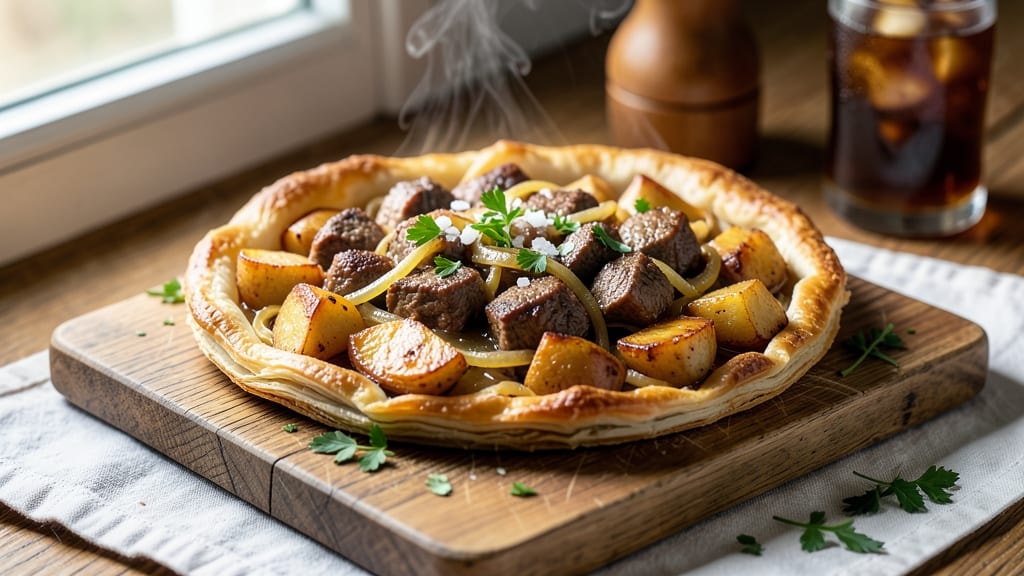
This beef and potato pasty recipe delivers the ultimate comfort food experience with a flaky crust that encases tender beef and hearty potatoes in perfect harmony.
Inspired by traditional Cornish pasties, this recipe brings rustic charm to your table with a method that ensures a golden, crisp exterior and a savory, juicy filling. The secret lies in the dough—layered and rolled just right—to create that signature shatteringly crisp crust while keeping the filling moist and flavorful.
What sets this recipe apart is the balance of textures and flavors: the crisp, buttery pastry contrasts beautifully with the tender beef and potatoes, while herbs and onions add depth to every bite.
Unlike many recipes that rely on shortcuts, this version stays true to tradition with a proper lard crust (or a buttery shortcrust alternative) that delivers that unmistakable flakiness.
The filling is rich with seasoned beef, potatoes, and onions, all wrapped in a way that ensures no leaks—just pure, satisfying comfort food.
The result is a pasty that’s as impressive as it is delicious, with a crust so crisp it could stand up to any bakery version. The filling stays moist and flavorful thanks to the careful sealing technique, while the crust achieves that coveted golden-brown finish.
Whether you're making a classic full-sized pasty or mini versions for appetizers, this recipe delivers restaurant-quality results at home.
Perfect for a hearty lunch or dinner, this pasty freezes beautifully too, making it an ideal make-ahead meal. Ready in about an hour, it’s the kind of dish that transforms a simple meal into a memorable experience. Let’s get started on creating your own flaky, golden pasty.
Ingredients for beef and potato pasty
This flaky crust and hearty filling combo needs just 12 ingredients for a restaurant-style pasty.
| Ingredient | Amount | Notes |
|---|---|---|
| Beef Chuck Roast 🥩 | 1 ½ lb | Cut into 1-inch cubes |
| Russet Potatoes 🥔 | 3 medium | Peeled and sliced thin |
| Yellow Onion 🧅 | 1 whole | Thinly sliced |
| Lard (or Unsalted Butter) 🧈 | ¾ cup | Chilled for flaky crust |
| All-Purpose Flour 🌾 | 3 cups | Plus 1 tbsp for dusting |
| Ice Water 💧 | ½ cup | For dough elasticity |
| Salt 🧂 | 1 ½ tsp | Kosher or sea salt |
| Ground Black Pepper 🌶️ | 1 tsp | Freshly ground preferred |
| Dried Thyme 🌿 | 1 tsp | Or 1 tbsp fresh |
| Garlic Powder 🧄 | ½ tsp | Not garlic salt |
| Vegetable Oil 🫒 | 1 tbsp | For greasing |
| Egg 🥚 | 1 whole | For egg wash |
The lard is non-negotiable for that signature flaky texture—Costco sells it in bulk for cheap, or grab unsalted butter if you prefer. For the beef, chuck roast is key—it stays tender even after baking. If you can't find chuck, stew beef works in a pinch. Potatoes should be Russet for their fluffy texture, and peeling them ensures a clean, professional look. Thinly slicing the onions (about 1/8-inch thick) makes them caramelize beautifully without overpowering the filling.
No lard? Unsalted butter works just fine—it’ll be slightly less flaky but still delicious. Fresh thyme? Dried is perfect here at one-third the amount. For the dough, Diamond Crystal kosher salt gives the best flavor, but any fine sea salt works. The egg wash is optional but worth the extra minute—it gives that golden-brown finish. If you’re making mini pasties, halve everything and use a pastry cutter for precision. The filling ratio is crucial: 1.5 lbs beef to 3 potatoes keeps it balanced.
Dough keeps for 3 days wrapped in plastic in the fridge, or freeze it for up to 3 months. The filling can be prepped ahead and baked fresh, or freeze the assembled pasties (unbaked) for up to 2 months. For a shortcut, par-bake the crust for 10 minutes before adding filling—just cover with foil to prevent over-browning. Leftovers reheat beautifully in a 350°F oven for 15 minutes with foil, then uncovered for crispiness.
Why You'll Love This Recipe
- I swear by this: just dice the beef, peel the potatoes, and roll the dough without overthinking it. The lard crust seals in all the juices while you’re still chopping onions—no fancy techniques, just reliable results.
- No-Fuss Assembly: I swear by this: just dice the beef, peel the potatoes, and roll the dough without overthinking it. The lard crust seals in all the juices while you’re still chopping onions—no fancy techniques, just reliable results.
- Hearty Flavor Bomb: That slow-cooked chuck roast turns fork-tender, while the potatoes stay creamy inside with a golden, almost crispy crust outside. Honestly, the first bite makes you forget you’re eating something "simple"—it’s just that good.
- Lunchbox Magic: Between us, this is my go-to for meal prep. Slice it up, pack it in containers, and reheat for days—whether it’s a workday lunch or a picnic. The crust holds up, and the filling stays warm (or cold, if you’re not a reheating fan).
Step-by-step instructions for beef and potato pasty with flaky crust
Here's how to create that perfect flaky crust and hearty filling for an authentic-tasting pasty.
Prepare the Filling with Perfect Texture
In a large skillet, heat the 1 tablespoon vegetable oil over medium-high heat. Add the 1-inch beef chuck roast cubes and cook for 5-6 minutes, stirring occasionally, until they develop a deep brown crust. This browning is crucial—it builds rich flavor that carries through the entire pasty.
Push the beef to one side of the skillet and add the thinly sliced yellow onion. Cook for 3-4 minutes until softened and translucent. Stir the onions into the beef, then add the thinly sliced russet potatoes, spreading them evenly. Sprinkle with the 1.5 teaspoons salt, 1 teaspoon ground black pepper, 1 teaspoon dried thyme, and 0.5 teaspoon garlic powder. Toss everything together and cook for another 5 minutes until the potatoes begin to soften slightly but aren't mushy. Remove from heat and let cool for 5 minutes—this prevents the filling from steaming the crust later.
Make the Flaky Crust Dough
In a large mixing bowl, combine the 3 cups all-purpose flour and 1.5 teaspoons salt. Cut in the 0.75 cup chilled lard (or unsalted butter) using a pastry cutter or your fingers until the mixture resembles coarse crumbs with pea-sized fat pieces. This texture is key for that signature flaky layering.
Gradually add the 0.5 cup ice water, one tablespoon at a time, mixing gently with a fork until the dough just comes together. Avoid overmixing—just until it forms a shaggy mass that holds when pressed. Turn the dough out onto a lightly floured surface and knead 4-5 times just to smooth it. The dough should be cool and slightly tacky but not sticky. Wrap it in plastic wrap and refrigerate for 30 minutes to firm up.
Assemble the Pasty with Crisp Edges
Preheat your oven to 425°F. Roll out about ⅓ of the chilled dough on a lightly floured surface into a 12x18-inch rectangle about ⅛-inch thick. Brush the entire surface with the whole egg, beaten lightly with 1 teaspoon water, leaving a ½-inch border unbrushed around the edges.
Spread the cooled beef and potato filling evenly over the brushed dough, leaving the ½-inch border clear. Fold the long sides of the dough inward over the filling, then fold the short sides inward to completely enclose the filling. Press the edges firmly to seal, crimping with a fork for extra security. Brush the top with more egg wash for a golden finish.
Bake Until Golden and Crisp
Place the assembled pasty on a parchment-lined baking sheet and bake for 45-50 minutes until the crust is deep golden brown and crisp. The internal temperature of the beef should reach 160°F—this ensures it's fully cooked through while staying tender.
For that perfect pasty texture, I like to tent loosely with foil after 30 minutes if the crust is browning too quickly. The pasty is done when the crust sounds hollow when tapped and the filling is bubbling through the slits. Let it rest for 10 minutes before cutting—this lets the juices redistribute for maximum flavor in every bite.
Pro Tips For Making Beef And Potato Pasty
- CRUSH THE POTATOES: Use a potato masher or fork to break them into rough, uneven chunks—no need for perfect slices. This keeps them tender fast while letting the filling stay juicy, and they’ll soak up the beef juices better than thin layers.
- SEAR THE CHUCK HOT: Get that beef chuck roast screaming in a dry cast-iron or heavy skillet before it hits the pasty dough. A quick 2–3 minutes per side builds deep flavor—skip this, and you’re left with bland, gray meat that won’t hold up to the long bake.
- DON’T OVERWORK THE DOUGH: Handle the flour-lard-butter mix just until it holds together. Over-kneading makes the crust tough, and you’ll regret it when you’re left with a chewy wrapper instead of a flaky, golden shell. Pat it into the pan, don’t fight it.
- SALT THE POTATOES FIRST: Toss the raw potato chunks with ½ teaspoon salt before they go in the pan. It draws out moisture early, so they crisp up better and don’t turn to mush later—trust me, your pasty’s texture will thank you.
Health benefits of this beef and potato pasty
Protein-Packed Power
This beef and potato pasty delivers a whopping 30-35 grams of high-quality protein per serving—thanks to the lean beef chuck roast. That's about half your daily protein needs in one satisfying meal! The slow cooking method preserves all those essential amino acids while making the beef incredibly tender. 💪
Complex Carbs for Energy
The russet potatoes provide complex carbohydrates that fuel your body with sustained energy, perfect for a hearty lunch or dinner. Each serving contains about 45 grams of carbs, with a good balance of fiber from the potato skins (if left on) and the flaky crust.
This combo keeps you full for hours without the blood sugar spikes of refined carbs.
Heart-Healthy Fats
While lard might sound indulgent, it's actually rich in monounsaturated fats that support heart health when consumed in moderation. The crust uses just 0.75 cup of lard for the entire recipe, which translates to about 1 tablespoon per serving—a reasonable amount when balanced with the lean beef.
For an even healthier option, the recipe suggests using unsalted butter which contains beneficial omega-3s.
Vitamin and Mineral Boost
This pasty is packed with vitamin C from the onions (about 15% of your daily value per serving) and potassium from the potatoes (around 20% daily value). The beef contributes iron and zinc, while the thyme adds antioxidant properties.
Together, these nutrients support everything from immune function to muscle recovery. The crust itself provides small amounts of B vitamins from the flour.
Balanced Meal in One
What makes this pasty so nutritious is how it combines all three macronutrients—protein, carbs, and fats—in one satisfying package. The fiber from potatoes and whole wheat flour (if you substitute) helps digestion, while the lean beef provides iron without excessive saturated fat.
It's essentially a one-bowl meal that checks all the nutritional boxes for a balanced diet. ✨
Portion Control Made Easy
Each serving size in this recipe is naturally portion-controlled at about one-quarter of the full pasty, making it perfect for meal prep. The flaky crust helps you feel satisfied with smaller portions, which is great for mindful eating.
Plus, the high protein and fiber content helps prevent overeating by keeping you full longer. I find this especially helpful when I'm trying to manage portions without feeling deprived.
Nutrition facts
Frequently asked questions
Can I make this pasty without lard for the crust?
For a lighter option, replace the lard with unsalted butter—just use the same 0.75 cup measurement. The crust will still be flaky but slightly less rich. For a vegetarian version, try coconut oil or vegetable shortening, though texture may differ slightly. Always keep ingredients chilled for best results.
How do I prevent the filling from leaking during baking?
Proper sealing is key! After folding the dough, press edges firmly and use a fork to crimp them tightly. For extra security, brush the folded edges with egg wash before baking. Also, make sure your filling isn't too wet—pat potatoes dry before adding to the pan, and avoid overcooking them before assembly.
Can I make mini pasties instead of one large one?
Yes! Divide the dough and filling into 8 equal portions and shape into 4-inch circles. Fold each into a half-moon shape, seal edges, and bake for 25-30 minutes at 425°F. Mini pasties are perfect for appetizers or party platters—they're also great for freezing individual portions.
What's the best way to reheat leftovers?
For crispy results, wrap cooled pasties in foil and reheat at 350°F for 15 minutes. Then remove foil and bake 5-10 more minutes to restore crispness. Microwave reheating works but will make the crust soggy—best avoided. Leftovers keep well for 3 days refrigerated or 2 months frozen.
Can I add other vegetables to the filling?
Certainly! Try adding ½ cup of diced swede (rutabaga) or ½ cup of frozen peas to the filling. For extra flavor, include 2 tablespoons of lardons or ½ cup of grated cheddar. Just adjust cooking times slightly—swede needs 5 extra minutes to soften properly. Keep the total filling volume similar to the original recipe.