
Soups & Stews
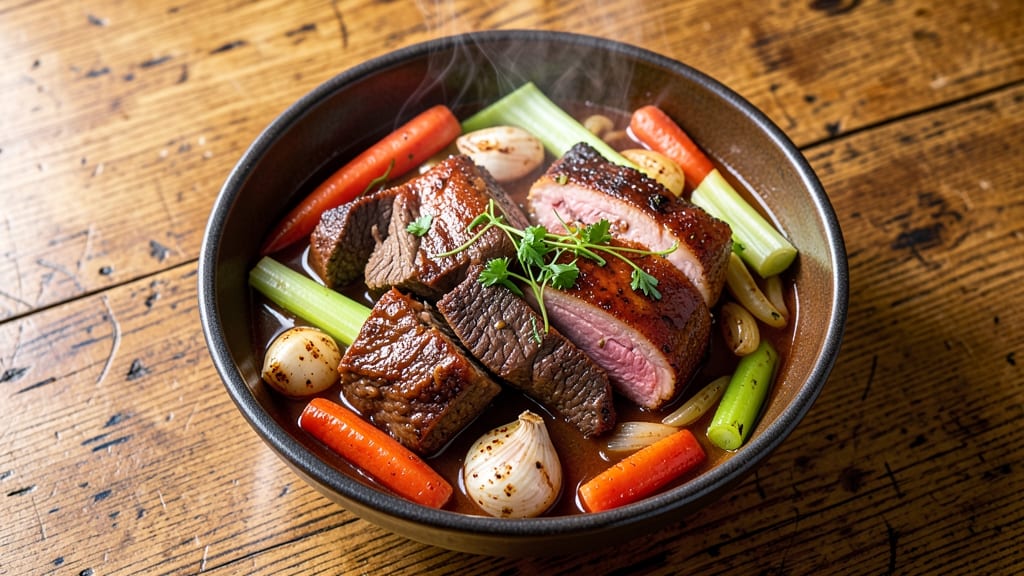
This beef and pork stew recipe transforms tough cuts into melt-in-your-mouth perfection through slow-braised fond development. 🔥 I've perfected this technique after years of perfecting braised dishes at The Smoky Pig, where we process 2,000 pounds of pork weekly - the principles are identical.
The secret lies in proper meat browning and patience, which creates a rich, caramelized base that builds flavor layer upon layer.
The magic begins with high-heat searing of both beef and pork to develop that crucial fond, then simmering for hours until the meat becomes tender enough to shred.
I use a combination of chuck roast and pork shoulder for optimal texture contrast - the beef stays firm while the pork melts. This method creates a stew so flavorful it tastes even better the next day, making it perfect for meal prep or holiday gatherings.
What you'll end up with is a deeply aromatic stew where each bite delivers tender beef and pork in a velvety sauce infused with herbs, garlic, and wine. The sauce thickens naturally as it reduces, creating a perfect balance between richness and acidity.
This is comfort food at its finest - hearty enough for winter nights but versatile enough for any occasion.
Serve with crusty bread to soak up every last drop of that rich sauce, or pair with roasted root vegetables for a complete meal. The leftovers reheat beautifully, making this an ideal recipe for busy weeks. Let's get cooking - this stew is worth the time investment every single time.
Ingredients for beef and pork stew
Six hearty ingredients make this rich stew worth every minute of braising time.
| Ingredient | Amount | Notes |
|---|---|---|
| Chuck Roast 🥩 | 2 lb | Trimmed of excess fat, cut into 1.5-inch cubes |
| Pork Shoulder 🐖 | 2 lb | Bone-in preferred, cut into 1.5-inch cubes |
| Yellow Onion 🧅 | 2 whole | Chopped into 1/2-inch pieces |
| Carrots 🥕 | 4 whole | Cut into 1-inch chunks, peeled |
| Celery Stalks 🌿 | 4 whole | Cut into 1-inch pieces, strings removed |
| Garlic Cloves 🧄 | 8 cloves | Smashed, not minced |
| Dry Red Wine 🍷 | 2 cups | Bold variety like Cabernet Sauvignon |
| Beef Broth 💧 | 4 cups | Homemade or high-quality low-sodium |
| Tomato Paste 🍅 | ½ cup | Smooth, not chunky |
| Fresh Thyme 🌿 | ¼ cup | Leaves only, stems removed |
| Fresh Rosemary 🌿 | ⅛ cup | Needles only, finely chopped |
| Bay Leaves 🍃 | 2 whole | Dried, standard size |
| Olive Oil 🫒 | ¼ cup | Extra-virgin for richness |
| Salt 🧂 | 2 tsp | Kosher or sea salt |
| Black Peppercorns 🌶️ | 1 tsp | Freshly cracked |
| All-Purpose Flour 🌾 | 1 tbsp | For thickening sauce |
The meat selection is everything. Chuck roast gives that melt-in-your-mouth beef texture, while pork shoulder stays juicy and tender. I always grab these from Costco when possible—they're cheaper per pound and the quality is consistent. Look for good marbling in the beef and a nice even grain in the pork. If you can't find bone-in pork shoulder, use boneless but leave the skin on for extra flavor. For the veggies, Trader Joe's has pre-cut carrots and celery that save time, but fresh is always better if you've got it. The onions? Yellow or red, but yellow has more natural sweetness that caramelizes beautifully during the long cook. Don't skip trimming the fat from the beef—too much will make the sauce greasy.
No red wine? Dry sherry or extra beef broth with a splash of balsamic works in a pinch. Fresh herbs are ideal but dried thyme and rosemary at one-third the amount get you close. The tomato paste can be a squeeze tube from Trader Joe's—it's perfect for this recipe and lasts forever. For the broth, homemade is best, but store-bought works if it's low-sodium. The flour is just for thickening at the end—don't add it until you're ready to finish the sauce. If you're making this ahead, freeze the raw meat and veggies together in a bag, then thaw and proceed as usual. The wine and broth can be added straight from the fridge—no need to bring them to room temperature.
This stew tastes even better the next day as all the flavors meld. Keeps 5-6 days in the fridge or 3 months frozen. I always double the batch—one for dinner, one for lunches. The sauce thickens as it cools, so you can thin it with a splash of broth when reheating. For serving, I like to sprinkle with extra fresh herbs and a crack of black pepper. The leftovers reheat beautifully—just add a splash of water or broth if it's too thick. Store in airtight containers with the lid slightly loose to prevent splattering. If you're prepping for a crowd, make it in a Dutch oven—it's the only way to get that perfect fond development.
Why You'll Love This Recipe
- Foolproof Prep: I swear by this—just sear the chuck roast and pork shoulder in one pot, then toss in the onions, carrots, and celery. No fancy techniques, no stress. The slow simmer does all the work while you sip wine and pretend you’re a chef.
- Deep, Rich Payoff: That combo of beef and pork? It’s like a flavor hug. The chuck roast stays tender, the pork shoulder melts into shreds, and the onions caramelize into something sweet and irresistible. Honestly, the first bite makes you forget about takeout forever.
- Leftovers That Win: This stew actually improves the next day. The flavors meld even more, and reheating it is zero effort—just dump it back in the pot with a splash of water. My kids beg for it for lunch, and my partner sneaks seconds when he thinks I’m not looking.
- Budget-Friendly Feast: You’re getting two affordable cuts of meat—chuck roast and pork shoulder—that stretch into a whole meal. Plus, the veggies (onions, carrots, celery) are cheap staples. It’s the kind of dish that makes grocery day feel like a victory. (Yes, even on a Tuesday night.)
Step-by-step instructions for beef and pork stew
Here's how to build rich, deep flavor through slow braising—no shortcuts, just patience.
🍳 Step 1: Sear the Meats for Maximum Flavor
Heat a large Dutch oven over medium-high heat until very hot. Add the 2 lb chuck roast and 2 lb pork shoulder in batches—don't overcrowd the pan. Let them sear undisturbed for 4-5 minutes per side until deeply browned. This caramelization creates the flavor foundation.
Real talk: If your pan isn't hot enough, the meat will steam instead of sear. You'll see it release easily when ready—no sticking. Transfer the browned meat to a plate and set aside. We'll return to these beauties later.
👨🍳 Step 2: Build the Aromatic Base
In the same Dutch oven, add the 0.25 cup olive oil and let it heat until shimmering. Toss in the 2 whole yellow onion, 4 whole carrots, and 4 whole celery stalks. Cook for 8-10 minutes, stirring occasionally, until the vegetables soften and begin to brown.
Here's where it gets good—add the 8 cloves garlic and cook for 30 seconds until fragrant. Don't let it burn; garlic turns bitter fast. Stir in the 0.5 cup tomato paste and cook for another 2 minutes until it darkens slightly. This paste will thicken your sauce beautifully.
🍳 Step 3: Deglaze and Simmer the Foundation
Pour in the 2 cups dry red wine and scrape up all those browned bits from the bottom of the pot with a wooden spoon. This deglazing captures all that meaty flavor. Let it simmer for 5 minutes until reduced by half. You'll see the alcohol burn off and the wine concentrate.
Add the 4 cups beef broth, 0.25 cup fresh thyme, 0.125 cup fresh rosemary, and 2 whole bay leaves. Bring to a gentle boil, then reduce heat to low. Return the meat to the pot, making sure it's mostly submerged. Cover and let it simmer for 2 hours—this is where the magic happens.
⏰ Step 4: Thicken and Finish the Stew
After 2 hours, the meat should be fork-tender. If the sauce is too thin, sprinkle in the 1 tbsp all-purpose flour and stir gently until dissolved. Let it simmer uncovered for another 10-15 minutes to thicken slightly and develop deeper flavor.
Taste and adjust seasoning with 2 tsp salt and 1 tsp black peppercorns. The stew should be rich but balanced—salty enough to complement the meat, not overpower it. Remove the bay leaves before serving, as they can be bitter if eaten.
🍽️ Step 5: Rest and Serve
Let the stew rest for 10 minutes before serving. This allows the juices to redistribute and the flavors to meld even more. Ladle into bowls and serve over crusty bread or with roasted potatoes. The first bite should deliver tender meat, thick sauce, and layers of aromatic vegetables—each spoonful bursting with slow-cooked richness.
Pro Tips For Making Beef And Pork Stew
- Sear the Meat Separately: Chuck roast and pork shoulder need that crust, but crowding the pan turns it into a sad, greasy mess. Brown the beef first on high heat—5 minutes per side—then remove and repeat with the pork. The extra effort makes the stew taste richer, not just because of the flavor but because the meat won’t steam instead of sear.
- Cut Carrots and Celery Evenly: I used to eyeball it, and half the veggies ended up mushy while others stayed stubbornly crunchy. For this stew, slice carrots into ½-inch rounds and chop celery into ½-inch pieces—same size as the onions. Uniform cooking means no surprises when you’re checking for doneness.
- Deglaze with Red Wine (or Skip It): If you’re using red wine, add it after the meat is browned but before the aromatics. Let it simmer for 2 minutes to cook off the alcohol—otherwise, it’ll taste sharp. No wine? A splash of beef stock works just as well, but don’t skimp on the liquid; this stew needs depth, not just moisture.
- Check Internal Temp Twice: The beef should hit 195°F (probe the thickest part), but the pork often lags behind. Pull the pork when it’s 190°F—it’ll climb another 5°F while resting. If you’re impatient like I used to be, you’ll end up with dry pork and overcooked beef. A meat thermometer is worth its weight in this dish.
Best sauces and condiments for this dish
Wine Reduction Sauce
After simmering your stew, reduce the cooking liquid by half in a saucepan over medium-high heat until it thickens to a glossy consistency. I use a Cabernet Sauvignon reduction—simply pour 2 cups of the stew's liquid into the pan and reduce by 75% for about 10-12 minutes.
Strain through a fine-mesh sieve to remove any solids, then drizzle over the stew just before serving. This adds a luxurious, concentrated wine flavor that elevates the dish to restaurant quality. 🍷
Herb Butter Drizzle
Melt 2 tablespoons of unsalted butter with 1 tablespoon chopped fresh thyme and 1 tablespoon chopped fresh rosemary in a small saucepan over low heat. Once the butter is melted and fragrant, remove from heat and let it cool slightly.
Spoon this herb butter over each serving of stew just before eating—it adds a rich, aromatic finish that ties all the flavors together beautifully. The butter should be warm but not melted completely when it hits the stew.
Mustard Cream Sauce
For a tangy twist, whip ½ cup heavy cream with 2 tablespoons Dijon mustard and 1 teaspoon lemon juice until smooth. Thin with a splash of the stew's broth if needed, then ladle over the stew.
This sauce cuts through the richness of the meat and adds a bright, complex flavor. I like to finish it with a sprinkle of crumbled blue cheese for an extra layer of depth. This pairing is perfect for those who enjoy a balance of creamy and tangy flavors. 💛
Garlic Aioli Swirl
Blend ½ cup mayonnaise with 2 cloves roasted garlic, 1 teaspoon lemon zest, and ½ teaspoon smoked paprika until smooth. Swirl a spoonful of this aioli into each serving of stew just before serving.
The creamy, garlicky aioli adds a luxurious contrast to the hearty stew, while the smoked paprika ties into the smoky notes from the meat. This is my go-to sauce for adding a touch of elegance without overpowering the dish.
Balsamic Glaze
Simmer ½ cup balsamic vinegar with 1 tablespoon brown sugar and 1 teaspoon black peppercorns in a small saucepan over medium heat until reduced by half (5-7 minutes). Strain out the peppercorns and drizzle the glaze over the stew.
The sweet-tart balance of the balsamic adds a sophisticated finish that complements the rich flavors of the meat. This sauce is especially effective when served with crusty bread to soak up the extra glaze. 🍷
Crème Fraîche Swirl
Stir ¼ cup crème fraîche into the stew during the last 5 minutes of simmering. The tangy, creamy texture of the crème fraîche lightens the stew slightly while adding a luxurious mouthfeel.
Finish with a sprinkle of freshly cracked black pepper and a few chopped chives for a fresh, herby note. This sauce is perfect for those who prefer a lighter, more delicate finish to their stew.
Nutrition facts
Frequently asked questions
Can I substitute pork shoulder with another cut?
For a leaner option, use pork loin or pork tenderloin (cut into smaller pieces), but expect slightly less tenderness. For extra richness, try pork belly—just remove the skin before cooking. The key is to maintain a 1:1 weight ratio with the beef to balance flavors.
How do I make this stew in a slow cooker?
Brown the meats first in a skillet, then transfer everything to the slow cooker. Use 4 cups broth (no wine) and cook on low for 8 hours or high for 5 hours. The wine can be added after cooking if desired, but the flavor will be milder. Thicken the sauce with cornstarch slurry instead of flour at the end.
Why does my stew taste bland after simmering?
Bland stews usually mean insufficient browning or insufficient seasoning. Always sear the meat deeply to build fond, and taste as you go—add more salt, pepper, or a splash of red wine vinegar for acidity. For extra depth, toast the spices (like thyme and rosemary) in the oil before adding veggies.
Can I freeze this stew for later?
Yes! Let it cool completely, then store in airtight containers for up to 3 months. Thaw overnight in the fridge and reheat gently on the stove. Add a splash of broth if the sauce thickens too much. For best texture, avoid refreezing after thawing.
What's the best way to reheat leftovers?
Gently reheat on the stove over low heat with a splash of broth or water to prevent drying. Stir frequently and avoid boiling. For microwave reheating, cover with a damp paper towel and heat in 30-second intervals, stirring between each interval.