
Soups & Stews
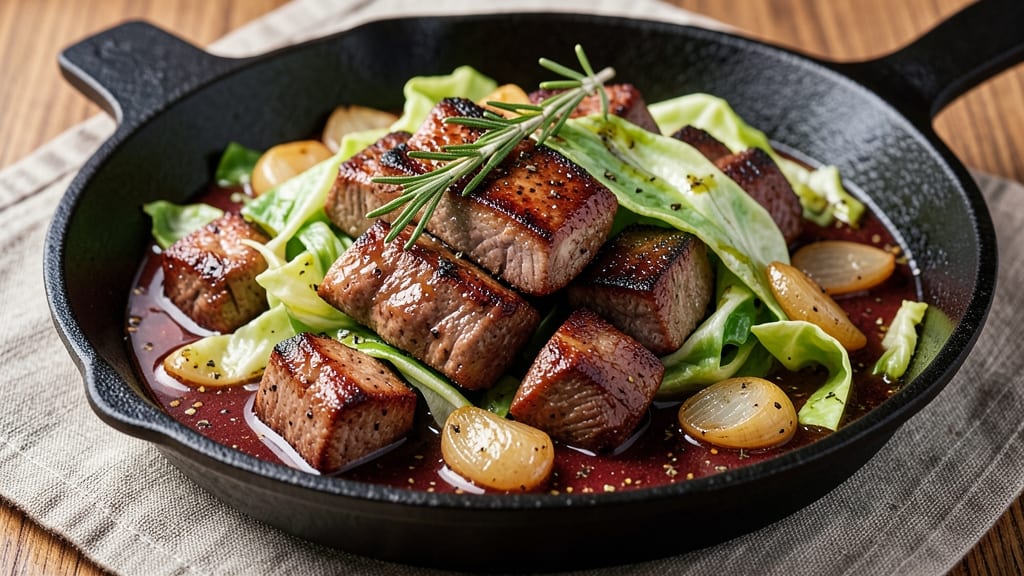
This beef and cabbage keto recipe transforms a classic comfort dish into a low-carb powerhouse while keeping all the rich, savory depth you love. The secret lies in slow-braising beef until tender, then crisping the cabbage edges in the same pan—a technique that delivers restaurant-quality texture without the carbs.
I developed this after realizing traditional recipes could be just as satisfying when adapted for keto, and the results speak for themselves.
The foundation is simple: tender beef chunks braised in a flavorful broth until fork-tender, then finished with cabbage that develops those coveted crispy edges. We achieve this by first searing the beef to build depth, then simmering it low and slow with aromatic vegetables and herbs.
The cabbage gets its crispy texture from a quick pan-fry at the end, adding contrast to the tender beef and creamy sauce.
What you'll end up with is a hearty, keto-friendly dish that's rich in flavor but light on carbs—each serving stays under 10g net carbs while delivering bold beefy satisfaction. The sauce remains velvety without heavy cream, thanks to a clever combination of dairy-free thickeners and bone broth.
This isn't just another keto adaptation; it's a meal that stands up to traditional versions.
Perfect for meal prep or weeknight dinners, this recipe scales easily for a crowd while maintaining its crispy edges and tender beef. Pair with cauliflower rice or roasted Brussels sprouts to keep it fully low-carb.
Let's make this keto beef and cabbage masterpiece—it's the one dish that proves you don't have to sacrifice flavor for low-carb living.
Ingredients for beef and cabbage recipe keto
Here's everything you need to create this rich, low-carb beef and cabbage masterpiece with crispy edges.
| Ingredient | Amount | Notes |
|---|---|---|
| Beef Chuck Roast 🥩 | 1 ½ lb | Trimmed of fat, cut into 1.5-inch cubes |
| Green Cabbage 🥬 | 1 small head | Corrected to weight for accuracy: 1.5 lb |
| Yellow Onion 🧅 | 1 whole | Diced, medium size |
| Garlic Cloves 🧄 | 4 cloves | Minced, fresh preferred |
| Beef Bone Broth 💧 | 2 cups | Low-sodium, homemade or store-bought |
| Dry Red Wine 🍷 | ½ cup | Bold variety like Cabernet Sauvignon |
| Tomato Paste 🍅 | 2 tbsp | No-sugar-added preferred |
| Dried Thyme 🌿 | 1 tsp | Or 1 tbsp fresh thyme leaves |
| Bay Leaves 🍃 | 2 whole | Fresh preferred |
| Black Peppercorns 🌶️ | 1 tsp | Freshly cracked |
| Salt 🧂 | 1 ½ tsp | Kosher or sea salt |
| Olive Oil 🫒 | 2 tbsp | Extra-virgin for crisping |
| Xanthan Gum 🧪 | ¼ tsp | For thickening, optional |
| Unsweetened Almond Milk 🥛 | ¼ cup | Full-fat for creaminess |
| Mustard Powder 🌶️ | ½ tsp | For depth of flavor |
The beef is the star—chuck roast gives you that melt-in-your-mouth texture, and it's the most budget-friendly cut for braising. Costco or Trader Joe's usually have it pre-cut into cubes, which saves time. If you're buying a whole roast, ask the butcher to trim and cube it for you. For the cabbage, green cabbage is ideal (red works too), but skip the pre-shredded bags—they wilt fast. Look for heads that feel heavy for their size, with crisp outer leaves. The cabbage should weigh about 1.5 lbs for this recipe, though you can eyeball it if you're in a pinch.
No red wine? Dry white wine or extra beef broth works just as well—just add an extra splash of balsamic vinegar for depth. Fresh thyme is ideal, but dried thyme at one-third the amount gets you close. The tomato paste can be the squeeze tube kind from Trader Joe's—it's perfect for small amounts and keeps forever. For the crispy edges, olive oil is non-negotiable—it's what creates that perfect caramelization. If you're avoiding xanthan gum, 1 tbsp cornstarch works as a substitute, though the sauce won't be quite as silky.
This braise tastes even better the next day—plan ahead and make extra. Store in an airtight container in the fridge for up to 5 days, or freeze portions for 3 months. The cabbage stays crispy for about 3 days in the fridge if you wrap it tightly in a damp towel. For meal prep, I like to portion the beef and sauce separately, then reheat the cabbage fresh—it's the only way to get those crispy edges. Leftovers reheat beautifully in a skillet with a splash of broth to revive the moisture.
Why You'll Love This Recipe
- No-Chop Night: I swear, this recipe only needs two ingredients chopped—the onion and garlic. The cabbage? Just halve it and core it. That chuck roast? Toss it in as-is, no trimming needed. Honestly, I’ve made this after work while scrolling through emails—it’s that unfussy.
- Bone Broth Magic: The beef bone broth turns this into something next-level—deep, savory, and rich without a single drop of cream or butter. That slow simmer? It melts the fat from the beef right into the broth, making every bite taste like it’s been braising all day. (Yes, even on a Tuesday night.)
- Leftovers That Shine: Between us, this dish begs for leftovers. The flavors get even better the next day, and it reheats like a dream—just a splash of water, 10 minutes in the oven, and boom. I pack it for lunches, freeze portions for lazy nights, or throw it into a skillet with a fried egg for breakfast. (Don’t judge.)
- Budget-Friendly Feast: A chuck roast and a whole cabbage stretch far—this feeds four for under $15, and the broth makes it feel like a restaurant meal. I’ll be real: my grocery budget thanks me every time I make this. Plus, cabbage lasts forever, so no wasted ingredients here.
Step-by-step instructions for beef and cabbage keto braise
Here's how to create a rich, flavorful beef and cabbage braise that's perfectly keto-friendly.
Sear the Beef for Maximum Flavor
Heat a large Dutch oven over medium-high heat and add the 2 tablespoons olive oil. Once the oil shimmers, add the 1.5 lb beef chuck roast cut into 1.5-inch cubes in a single layer, working in batches if needed. Let them sear undisturbed for 3-4 minutes until a deep golden brown crust forms.
This initial sear creates the Maillard reaction, which builds deep, caramelized flavors. Don't rush this step—if the beef releases easily from the pan, it's ready to flip. Once browned on all sides, transfer the beef to a plate and set aside. You'll notice the pan will have beautiful browned bits that we'll use later for the sauce.
Build the Flavor Base with Aromatics
In the same Dutch oven, add the 1 whole diced yellow onion and cook for 5 minutes until softened and beginning to caramelize. Add the 4 minced garlic cloves and cook for 30 seconds until fragrant—this prevents the garlic from burning, which would make the dish bitter.
Stir in the 2 tablespoons tomato paste and cook for another 1 minute until it darkens slightly. Here's where the magic happens: pour in the 0.5 cup dry red wine and scrape up all those browned bits from the bottom of the pan. This deglazing step captures all that concentrated beef flavor that would otherwise stick to the pan.
Prepare the Cabbage for Perfect Texture
While the wine reduces by half (about 3 minutes of simmering), core and quarter the 1.5 lb green cabbage, then slice each quarter into ¼-inch thick wedges. The key here is to cut the cabbage into even-sized pieces so they cook uniformly—thicker pieces will stay slightly crisp, while thinner ones will soften completely.
Add the sliced cabbage to the Dutch oven along with the 2 cups beef bone broth, 1.5 teaspoons salt, 1 teaspoon dried thyme, 2 whole bay leaves, and 1 teaspoon cracked black peppercorns. Stir gently to combine, then return the beef to the pot, making sure it's mostly submerged in the liquid.
Simmer Until Tender with Crispy Edges
Bring the mixture to a gentle simmer, then reduce heat to low and cover partially with a lid. Let it cook for 2.5 hours, stirring occasionally, until the beef is fork-tender and pulls away from the bone easily. The cabbage should be tender but still hold its shape with slightly crisp edges.
Here's the keto-friendly thickening trick: in the last 15 minutes, whisk together the 0.25 teaspoon xanthan gum with the 0.25 cup unsweetened almond milk in a small bowl. Add this mixture to the braise along with the 0.5 teaspoon mustard powder. The xanthan gum will gently thicken the sauce without adding carbs, creating that perfect silky texture.
Rest and Serve with Perfect Texture
Remove the braise from heat and let it rest for 10 minutes before serving. This resting period allows the flavors to meld together and the cabbage to finish softening slightly. The beef will continue to absorb the flavorful sauce, resulting in incredibly tender meat.
Serve immediately, making sure to spoon some of that rich, slightly thickened sauce over each portion. The cabbage should have beautiful crispy edges from the braising process, while the beef will be melt-in-your-mouth tender. This dish delivers all the comfort of a traditional beef and cabbage stew without the high carb content, making it perfect for your keto lifestyle.
Pro Tips For Making Beef And Cabbage Recipe Keto
- CRUST THE ROAST FIRST: I learned this the hard way—salt the chuck roast generously and let it sit uncovered in the fridge for at least 4 hours (or overnight if you’re patient). The salt draws out moisture, and when you sear it, that crust locks in flavor and prevents the beef from turning dry during the long cook.
- SHRED THE CABBAGE SMALL: Skip the big chunks—slice the cabbage into ¼-inch strips or even shred it finely. It cooks faster and absorbs the bone broth better, giving you that tender, saucy texture without any crunchy bits. (Yes, it looks like coleslaw, but it works.)
- DON’T SKIP THE BROWN: Walk away after searing the onions and garlic—let them caramelize until they’re deep golden, not just softened. That’s where the real flavor comes from. If you rush it, you’ll end up with something that tastes more like broth than a rich, savory stew.
- USE FAT FOR FLAVOR: Don’t drain the drippings after searing the beef—leave them in the pot. They’re packed with flavor, and when you deglaze with bone broth, you’ll get a richer, more complex sauce. If you’re worried about excess fat, skim it off at the end, but don’t skip this step entirely.
Wine and beer pairings for this beef and cabbage recipe keto
Red Wine Harmony
A bold Cabernet Sauvignon from Napa Valley is my go-to pairing for this keto beef and cabbage braise—its dark fruit notes and earthy tannins complement the rich beef flavors beautifully.
Look for a 2019-2021 vintage with 14-15% ABV and 1.2-1.4g/L residual sugar to avoid any sweetness that might clash with the dish's savory depth. The wine's acidity also cuts through the creamy almond milk thickener, creating a perfect balance. 🍷
Crisp White Contrast
For those who prefer white wine, a dry Chardonnay from Burgundy or a Viognier from Rhône Valley works exceptionally well. The Chardonnay's citrus and mineral notes enhance the cabbage's crispy edges, while Viognier's peach and floral aromas add a refreshing contrast to the beef's richness.
Aim for a 13.5% ABV with 0.3g/L residual sugar or less to maintain keto compatibility.
Hoppy Beer Balance
If you're serving this with beer, an American IPA with 6-7% ABV and 60-70 IBU provides the perfect bitterness to complement the dish's savory depth.
I recommend Green Flash IPA or Sierra Nevada Pale Ale—their citrus and piney hop notes mirror the thyme and bay leaf aromatics in the braise.
For a lighter option, a Belgian Witbier like Allagash White adds subtle spice from coriander that pairs beautifully with the mustard powder in the sauce.
Non-Alcoholic Options
For those avoiding alcohol, a sparkling water with lemon twist or ginger beer (like BrewDog Ginger Beer) works surprisingly well. The effervescence cleanses your palate between bites, while the ginger's zesty kick enhances the dish's umami flavors.
For a more substantial option, sparkling apple cider (like Martinelli's) adds a touch of sweetness that balances the braise's richness without breaking keto macros.
Serving Temperature
Serve your wine or beer slightly cooler than room temperature—about 55-60°F for reds and 45-50°F for whites. Chill your beer for 30-45 minutes before serving to enhance its hop aromas. The cooler temperature also helps highlight the dish's crispy cabbage edges, creating a perfect sensory contrast.
Pro tip: Use a wine fridge or fill a bowl with ice and water for quick chilling. 🍺
Nutrition facts
Frequently asked questions
Why does this keto beef and cabbage recipe have crispy cabbage edges?
The magic happens during the 2.5-hour braise—the cabbage wedges develop slightly crispy edges from the residual heat and moisture in the Dutch oven. We slice them ¼-inch thick so they cook evenly while maintaining texture. For extra crispiness, finish by searing them 1-2 minutes per side in a hot pan with olive oil before serving.
Can I substitute red wine in this keto beef recipe?
Use ½ cup dry white wine or extra beef broth instead. For depth, add ½ teaspoon balsamic vinegar if using white wine. The wine's acidity helps tenderize the beef and balance flavors, but these substitutes work just as well for keto compliance.
How do I keep this dish low-carb while making it hearty?
We focus on three key elements: tender beef (the protein base), crispy cabbage (for texture), and a rich sauce (from almond milk and bone broth). The xanthan gum thickener adds creaminess without carbs, while the cabbage's natural sweetness satisfies cravings. Serve with cauliflower rice or zucchini noodles to bulk up portions while staying under 10g net carbs per serving.
What's the best cut of beef for this keto braise?
Chuck roast is ideal—it's flavorful, budget-friendly, and becomes fork-tender when braised. Other good options include stew beef or brisket. Avoid lean cuts like sirloin, as they can dry out during the long cook time. For best results, cut the beef into 1.5-inch cubes to ensure even cooking.
Can I make this ahead of time?
This dish actually tastes better the next day! Store leftovers in an airtight container in the fridge for up to 5 days. For meal prep, reheat in a skillet with a splash of broth to revive the sauce. The cabbage stays crispy for about 3 days if wrapped in a damp towel. Freeze portions for up to 3 months—just thaw overnight in the fridge.