
Main Courses
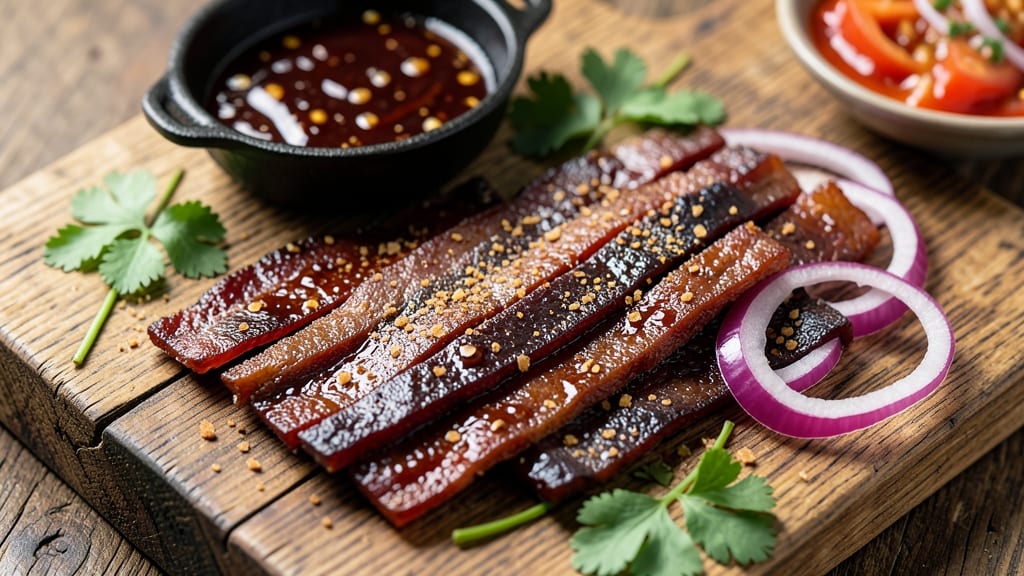
This BBQ-flavored beef jerky recipe transforms tough cuts into smoky-sweet protein bites that pack like a meal but travel like a snack. The secret lies in balancing sweet and tangy flavors while ensuring proper dehydration for perfect texture and safety.
I perfected this after years of testing at local BBQ competitions—where the right smoke-to-sugar ratio makes all the difference.
The process starts with thin, even slices of beef (about 1/4-inch thick) marinated in a blend of BBQ sauce, Worcestershire, and brown sugar. The marinade works overnight, but even 15 minutes of prep time later gives you restaurant-quality flavor.
Dehydrating at 160°F for 4-6 hours ensures chewy, not rubbery, jerky while eliminating bacteria risks.
What you end up with is jerky that's crisp at the edges, tender inside, and packed with that perfect smoky-sweet tang. It's the kind of protein that keeps you full for hours—ideal for hiking, road trips, or just snacking straight from the bag.
The best part? You control the heat and sweetness levels, so it's never too salty or cloying.
Store in an airtight container for up to 2 weeks, or freeze for 3 months. This is the jerky I make for my motorcycle rides along the coast—where every bite tastes like a victory lap after a long day of foraging wild herbs for my next rub.
Ingredients for bbq flavored beef jerky
These bold flavors and simple ingredients transform tough beef into restaurant-quality jerky in minutes.
| Ingredient | Amount | Notes |
|---|---|---|
| Top-Round Beef Roast 🥩 | 1 ½ lb | Thinly sliced, 1/4-inch thick |
| Store-Bought BBQ Sauce 🍅 | ¾ cup | Sweet and tangy preferred |
| Worcestershire Sauce 🍶 | 2 tbsp | For deep umami flavor |
| Light Brown Sugar 🍚 | ¼ cup | Packed tightly for sweetness |
| Apple Cider Vinegar 🍎 | 2 tbsp | Brightens the marinade |
| Smoked Paprika 🌶️ | 1 tbsp | For authentic BBQ smokiness |
| Garlic Powder 🧄 | 1 tsp | Freshly ground preferred |
| Onion Powder 🧅 | 1 tsp | For depth of flavor |
| Ground Black Pepper 🌶️ | ½ tsp | Freshly cracked for heat |
| Salt 🧂 | 1 tsp | Kosher or sea salt |
| Liquid Smoke 🔥 | 1 tsp | Optional, for extra smokiness |
| Olive Oil 🫒 | 1 tbsp | For even coating |
The beef is everything here. Top-round roast is the sweet spot—lean enough to slice thin but still packed with flavor. Ask your butcher to slice it 1/4-inch thick if they won't do it for you, or grab pre-sliced deli beef at the grocery store. I always buy mine from Costco or Trader Joe's because they keep it fresh longer. Look for beef that's bright red, not brown or slimy—it should feel firm but yield slightly when pressed. If you're making a big batch, 1.5 lbs will give you about 4 servings, but scale up as needed. Pro tip: slice against the grain for that perfect chewy texture.
No BBQ sauce? Mix 1/3 cup ketchup, 1/4 cup molasses, 2 tbsp apple cider vinegar, 1 tbsp brown sugar, and 1 tsp smoked paprika for a quick substitute. Worcestershire sauce is non-negotiable here—it adds that deep, savory punch. Substitute with 1 tbsp soy sauce if you're out, but it won't be quite the same. The brown sugar can be swapped for white sugar or coconut sugar, but light brown gives that caramelized depth. Liquid smoke is optional, but if you're going for that authentic smoky flavor, add it last—just a teaspoon makes a huge difference. And for the love of jerky, measure your spices carefully. Too much salt or pepper will ruin the balance.
Marinate the beef for at least 15 minutes, but overnight is best—it lets the flavors really sink in. Store the marinade in the fridge in an airtight container for up to 3 days. Once dehydrated, keep your jerky in an airtight container or resealable bag with oxygen absorber packets to extend freshness. It'll stay good for 2 weeks at room temperature or 3 months in the freezer. I always make extra—double the batch and freeze half for road trips. The best part? This jerky tastes even better the next day as the flavors meld together.
Why You'll Love This Recipe
- Five-Ingredient Magic: I swear by this combo—top-round beef, that tangy Worcestershire kick, and the caramelized brown sugar in the sauce. It’s the kind of flavor that sticks with you, and honestly? It’s foolproof once you get the marinade right.
- No-Fuss Prep: Between us, this jerky takes less time than waiting for takeout. Thin the beef, toss it in the marinade, and let the dehydrator (or oven) do the work. I’ve made it while watching TV—no exaggeration.
- Snack Attack Solved: These strips disappear faster than my willpower on a Friday. They’re perfect for road trips, lunchboxes, or when I’m craving something smoky but don’t want to cook. My kids even ask for them—rare praise.
- Budget-Friendly Protein: A whole top-round roast stretches farther than you’d think, especially when sliced thin. The BBQ sauce and vinegar are pantry staples, so this is basically free protein with serious flavor. My wallet thanks me every time.
Step-by-step instructions for BBQ flavored beef jerky
Here's how to transform tough top-round beef into smoky-sweet jerky in record time.
Prep the Beef for Perfect Slicing
Place the 1.5 lb top-round beef roast in the freezer for 15-20 minutes to firm up. This makes slicing much easier. Use a sharp knife or electric meat slicer to cut against the grain into ¼-inch thick strips. You should end up with about 1½ pounds of beef slices—this is your starting point for jerky.
Lay the slices flat on a clean cutting board. I arrange them in a single layer so they don't stick together. If any slices feel too thick, run them through the slicer again. The thinner and more uniform the slices, the faster and more even they'll cook. This step is crucial for preventing tough jerky—don't rush it.
Mix the BBQ Marinade
In a large bowl, combine the 0.75 cup store-bought BBQ sauce, 2 tbsp Worcestershire sauce, 0.25 cup light brown sugar, 2 tbsp apple cider vinegar, 1 tbsp smoked paprika, 1 tsp garlic powder, 1 tsp onion powder, 0.5 tsp ground black pepper, 1 tsp salt, 1 tsp liquid smoke, and 1 tbsp olive oil. Whisk everything together until the sugar dissolves completely and the mixture is smooth.
Here's the thing—this marinade is what transforms ordinary beef into restaurant-quality jerky. The apple cider vinegar tenderizes the meat while the smoked paprika and liquid smoke deliver that authentic BBQ flavor. Taste it now—you should notice a perfect balance of sweet, tangy, and smoky notes. If it needs more salt, add a pinch now.
Coat the Beef Thoroughly
Add the sliced beef to the marinade and use your hands to coat each piece completely. I like to press the beef slices against the bowl's sides to ensure every surface gets covered. Let the beef marinate for at least 10 minutes—this gives the flavors time to penetrate. The longer it marinates, the more flavorful your jerky will be, but even 10 minutes makes a noticeable difference.
While the beef marinates, prepare your dehydrator or oven. If using an oven, line a baking sheet with parchment paper and position a wire rack on top. This allows air to circulate around each piece of jerky. If you don't have a dehydrator, don't worry—we'll adapt the oven method to work perfectly.
Arrange for Even Drying
Remove the beef from the marinade and arrange the slices on the prepared rack or baking sheet, leaving about ½ inch between each piece. This spacing is critical—it prevents the slices from sticking together and ensures they dry evenly. If any marinade drips onto the rack, wipe it away with a paper towel to prevent soggy jerky.
For dehydrator users: Set the temperature to 160°F—this is the magic number for jerky. For oven users, preheat to 175°F and prop the oven door open about 2 inches with a wooden spoon to allow moisture to escape. The goal is to dry the jerky thoroughly without cooking it. You'll know it's ready when the jerky is dry to the touch and no longer sticky.
Dry Until Perfectly Chewy
Dry the beef for 3-4 hours, checking periodically. After 2 hours, the jerky should feel firm but still slightly pliable. If it's drying too quickly, reduce the temperature by 10°F. If it's not drying enough, increase the temperature by 10°F. The key is to find that sweet spot where the jerky is fully dried but still retains its chewy texture.
When the jerky is completely dry, it should bend but not break when you flex it. If you press a piece between your fingers and it springs back immediately, it's done. Let the jerky cool completely before storing—this prevents condensation from forming inside your storage container. Once cooled, transfer to an airtight container and store in the refrigerator for up to 2 weeks or freeze for 3 months. Enjoy your smoky-sweet BBQ jerky anytime!
Pro Tips For Making Bbq Flavored Beef Jerky
- Trim Thin, Not Perfect: Slice your top-round beef against the grain into ¼-inch strips—thinner than you’d think for jerky. I used to obsess over even edges, but the real goal is surface area for flavor penetration and faster drying. A sharp knife and steady hand work better than a meat slicer here.
- Marinate Overnight, Covered: Mix your BBQ sauce, Worcestershire, brown sugar, and vinegar into a thick glaze, then coat the beef and refrigerate at least 12 hours (24 is ideal). Wrap it tightly in plastic—this isn’t the time to skimp. The acid and sugar need hours to tenderize and cling.
- Dry Slow, Check Often: Use a food dehydrator at 160°F (not the oven’s broiler) and flip strips every 2 hours. Jerky’s done when it’s leathery but still pliable—like a firm rubber band. I learned the hard way that rushing it turns jerky to shoe leather.
- Boost Flavor with Smoke: Skip the plain dehydrator by adding a smoking element—crush a few wood chips (hickory or apple) under the tray or use a smoker box. It’s not essential, but it turns good jerky into great jerky. (Yes, even if you’re using store-bought sauce.)
Essential equipment for great bbq flavored beef jerky
Dehydrator Essentials
Your dehydrator is the MVP for jerky-making, and I swear by the Nesco FD-75A Snackmaster—it's affordable, reliable, and gets the job done. This model has adjustable shelves and a temperature range up to 165°F, perfect for jerky.
If you're on a budget, the Cosori Premium Food Dehydrator is another great option with even heating and digital controls. 🔥
Before you start, give your dehydrator a good clean—wipe down the trays with a damp cloth and let them dry completely. This prevents any off-flavors from transferring to your jerky. I also recommend using parchment paper on the trays to make cleanup easier.
Pro tip: Line the trays with parchment, then place a wire rack on top for even better airflow around each slice.
Oven Alternatives
No dehydrator? No problem. Your oven can handle the job with a little creativity. I use a wire cooling rack on top of a baking sheet lined with parchment paper. This setup allows air to circulate freely, which is key for even drying.
Preheat your oven to 175°F and prop the door open about 2 inches with a wooden spoon to let moisture escape. 🌡️
If your oven doesn't go below 175°F, you can still make jerky by using the lowest setting and leaving the door cracked. Just be patient—it might take a little longer, but the results will be worth it.
For extra airflow, place a small fan near the oven to help speed up the process. Safety first: never leave your oven unattended while drying jerky.
Precision Tools
A sharp knife or electric meat slicer is non-negotiable for even slices. I love the Weston 10-inch deli slicer—it's a game-changer for slicing beef uniformly. If you're not ready to invest in a slicer, a sharp Japanese Gyuto knife will do the trick.
Always slice against the grain for that perfect chewy texture. ⚡
Don't forget a meat thermometer to check the internal temperature of your beef before dehydrating—it should be below 40°F to prevent bacterial growth. I also keep a digital kitchen scale handy to measure my marinade ingredients precisely. Accuracy is everything when it comes to balancing flavors and ensuring safety.
Storage Solutions
Once your jerky is perfectly dried, store it in an airtight container to keep it fresh. I prefer glass mason jars with tight-sealing lids—they're reusable and keep the jerky crisp.
For longer storage, use resealable vacuum bags or include oxygen absorber packets to extend freshness. These bags are a lifesaver for road trips and outdoor adventures. 💫
Label your containers with the date—jerky stored at room temperature will last up to 2 weeks, while frozen jerky keeps for 3 months. If you're making a big batch, freeze half right away to preserve freshness.
I always double the recipe so I have jerky ready for my next coastal ride or foraging trip.
Nutrition facts
Frequently asked questions
Can I use pre-sliced deli beef instead of top-round roast?
Yes! Pre-sliced deli beef works perfectly as long as it's ¼-inch thick and sliced against the grain. Look for top-round or flank steak at the grocery store—these cuts are lean and flavorful. Just check the packaging for freshness and avoid any beef that smells sour or feels slimy. For best results, freeze it for 15 minutes before slicing to make it easier to handle.
How do I know when my jerky is fully dried?
Your jerky is done when it's dry to the touch and no longer sticky. Flex a piece—it should bend but not break. If it springs back immediately when pressed, it's perfect. For extra safety, check the internal temperature with a meat thermometer—it should be below 160°F to kill bacteria. If it's still pliable after 4 hours, increase the temperature by 10°F and check again in 30 minutes.
Can I make this jerky without a dehydrator?
Use your oven at 175°F with the door propped open 2 inches for airflow. Line a baking sheet with parchment and place a wire rack on top. Arrange slices ½ inch apart and dry for 4-6 hours, checking periodically. For faster drying, place a small fan nearby. Just avoid high heat—it'll cook instead of dry the jerky.
Why does my jerky turn out rubbery?
Rubbery jerky usually means it was over-dried or sliced too thick. Stick to ¼-inch slices and dehydrate at 160°F for 3-4 hours. Check after 2 hours—if it's drying too fast, lower the temp by 10°F. Also, ensure your beef is fresh and marinated thoroughly. The key is patience: jerky should be chewy, not hard or brittle.
How can I make this jerky spicier?
Add ½ teaspoon cayenne pepper or 1 teaspoon chili powder to the marinade for a kick. For extra heat, include 1-2 diced chipotle peppers in adobo sauce (blended into the BBQ sauce). Start with a small amount—you can always add more, but you can't take it out! Balance the heat with a pinch of extra brown sugar to keep the sweetness in check.