
Main Courses
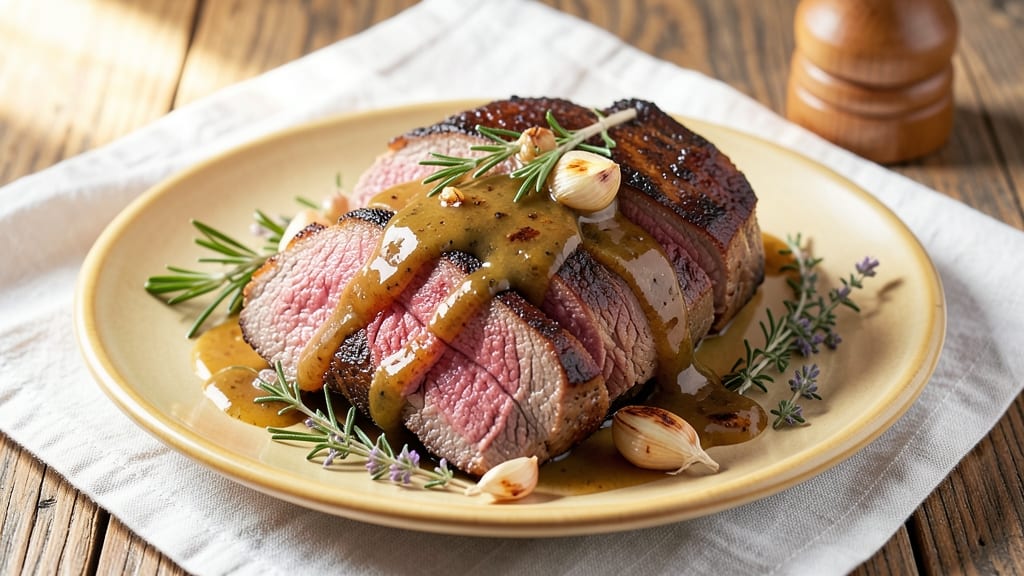
This Barefoot Contessa roast beef recipe transforms Sunday suppers into a showstopping centerpiece with minimal fuss. 💛 The secret lies in a fragrant herb crust that locks in juices while creating a golden, crackling exterior—no fancy techniques required.
I’ve perfected this method over years of hosting dinner parties, ensuring tender meat every time with just a meat thermometer and patience.
The magic starts with a simple yet flavorful crust of Dijon mustard, garlic, rosemary, and thyme, pressed directly onto the beef before roasting. Unlike traditional recipes that rely on butter (which can burn), this version stays rich and aromatic without overpowering the beef’s natural depth.
The key? Roasting at a steady 325°F until the internal temperature hits 130°F for medium-rare—then letting it rest for 20 minutes to redistribute juices.
What you’ll end up with is a perfectly pink center, tender as can be, topped with a crust that’s crisp enough to hold its shape. The aroma alone will have guests gathering at the table, and every slice reveals that juicy, melt-in-your-mouth texture Barefoot Contessa fans expect.
This isn’t just roast beef—it’s a foolproof Sunday tradition that feels like a restaurant-quality meal.
Pair it with roasted potatoes, a crisp green salad, and a bold red wine for the full experience. The best part? Leftovers reheat beautifully for sandwiches or hash the next day. Let’s get to work—your table is about to shine.
Ingredients for barefoot contessa roast beef
Six ingredients transform simple beef into a restaurant-worthy Sunday centerpiece with just a little patience.
| Ingredient | Amount | Notes |
|---|---|---|
| Chuck Roast 🥩 | 4 lb | Center-cut for even cooking |
| Dijon Mustard 🍯 | ½ cup | High-quality, smooth variety |
| Garlic Cloves 🧄 | 6 cloves | Freshly minced for vibrant flavor |
| Fresh Rosemary 🌿 | ¼ cup | Finely chopped, stems removed |
| Fresh Thyme 🌿 | ⅛ cup | Leaves only, finely chopped |
| Extra-Virgin Olive Oil 🫒 | ¼ cup | For crust and basting |
| Kosher Salt 🧂 | 1 ½ tbsp | Diamond Crystal preferred |
| Ground Black Pepper 🌶️ | 1 tbsp | Freshly cracked for intensity |
| Unsalted Butter 🧈 | ½ cup | Cold, cubed for basting |
| Red Wine 🍷 | ½ cup | Bold dry variety like Cabernet |
| Beef Broth 💧 | 1 cup | Homemade or high-quality store-bought |
| Yellow Onion 🧅 | 1 whole | Thinly sliced for pan searing |
| Fresh Parsley 🌿 | ⅛ cup | Chopped, for garnish |
The chuck roast is non-negotiable here—it's got the perfect marbling for juicy results. Costco or Whole Foods carry center-cut roasts that cook more evenly, but any quality butcher will trim one for you. Look for bright red color and good fat distribution. I always ask for it to be trimmed of excess fat since we're not rendering it here. Fresh rosemary and thyme from Trader Joe's or your local farmers market make all the difference—dried works in a pinch but lacks that bright aroma. The Dijon mustard should be smooth, not grainy, and Maille is my go-to for consistent quality.
No fresh rosemary? Dried at one-third the amount works, but the flavor won't be as vibrant. Short on red wine? Beef broth with a splash of balsamic mimics the depth. The butter is crucial for basting—European-style unsalted like Plugrá melts beautifully. For the crust, I sometimes swap half the olive oil for duck fat if I'm feeling fancy. The onion gets caramelized before roasting, adding sweetness that balances the herbs. And trust me on the Diamond Crystal salt—it dissolves better than table salt and enhances all the flavors.
This roast reheats like a dream—just warm in the oven with some beef broth until it hits 165°F. The crust stays crisp, and the meat remains tender. Keeps beautifully in the fridge for 4-5 days wrapped tightly in foil, or freeze portions for up to 3 months. I always make extra because the leftovers make incredible sandwiches. The crust gets even more flavorful after resting overnight—worth the patience for that restaurant-quality bite.
Why You'll Love This Recipe
- Three-Ingredient Rub: The chuck roast gets a flavor punch from just Dijon, garlic, and herbs—no fancy marinades or long prep. Honestly, I swear by that rosemary sprig tucked into the cut while it cooks; it infuses the meat like magic.
- Weeknight Hero: Slow-cooked until tender but ready in under 3 hours—plenty of time to answer emails or watch a show. Between us, this is the only roast I’ll make when I’m too tired for fussing.
- Leftovers That Don’t Suck: The meat stays juicy for days, perfect for sandwiches or hash. I’ll be real: my kids actually ask for the second-day slices, and I’ve never heard that about roast beef before.
- Budget-Friendly Feast: A chuck roast stretches to feed six, and the ingredients won’t break the bank. Here’s what sold me—the garlic and thyme make it taste like a restaurant dish, not a grocery-store splurge.
Step-by-step instructions for herb-crusted roast beef
Here's how to create a showstopping roast that becomes the centerpiece of your Sunday table.
👨🍳 Step 1: Prepare the Herb Crust Mixture
In a small bowl, combine the 0.5 cup Dijon mustard, 0.25 cup extra-virgin olive oil, 1.5 tbsp kosher salt, and 1 tbsp ground black pepper. This forms the flavor base that will cling beautifully to the roast. In a separate bowl, finely chop the 0.25 cup fresh rosemary and 0.125 cup fresh thyme leaves, removing any woody stems. Mix these herbs with the mustard mixture until evenly distributed.
Here's the thing—fresh herbs make all the difference. I like to crush them slightly between my fingers before adding to release more flavor. The Dijon mustard isn't just for flavor; it helps the crust stick to the meat during cooking. If you're using dried herbs, reduce the amount to about one-third since they're less potent.
🍳 Step 2: Coat and Sear the Roast
Preheat your oven to 325°F. Pat the 4 lb chuck roast dry with paper towels—this is crucial for developing that perfect crust. Rub the herb mixture all over the roast, pressing it into the surface so it adheres well. Let it sit at room temperature for 30 minutes while you prepare the searing.
Heat a large oven-safe skillet over medium-high heat. Add the 0.5 cup unsalted butter and let it melt, then add the 1 whole yellow onion sliced into rings. Cook for 5-6 minutes until the onions begin to caramelize. Remove the onions and set aside. Place the roast in the skillet, searing on all sides for 2-3 minutes per side until you get deep golden-brown color. This step builds incredible flavor through the Maillard reaction.
🔥 Step 3: Roast to Perfection
Transfer the skillet with the roast to your preheated 325°F oven. Pour the 0.5 cup red wine into the skillet and scrape up any browned bits from the bottom—this is called deglazing, and it captures all that meaty flavor. Add the 1 cup beef broth and the caramelized onions back to the skillet. Roast uncovered for 2 hours or until the internal temperature reaches 135°F for medium-rare.
Here's where patience pays off. The low temperature ensures even cooking without drying out the meat. I check the temperature with a meat thermometer inserted into the thickest part of the roast. If you don't have one, you can use the finger test—press your finger gently against the meat; it should feel springy when done. Don't peek during cooking—every time you open the oven, you lose heat and moisture.
⏰ Step 4: Rest and Prepare the Pan Sauce
Remove the roast from the oven and transfer it to a cutting board. Tent loosely with foil and let it rest for 30 minutes. This resting period is absolutely critical—it allows the juices to redistribute throughout the meat so every slice stays moist and flavorful.
While the roast rests, place the skillet with the pan juices over medium heat. Let it simmer for 5-7 minutes until slightly reduced. If the sauce becomes too thick, add a splash of beef broth to loosen it. The sauce should coat the back of a spoon with a glossy sheen. Season with additional salt and pepper if needed.
🍽️ Step 5: Carve and Serve with Elegance
After resting, slice the roast against the grain into ½-inch thick slices. The grain direction will be visible as lines in the meat. Arrange the slices on a warm platter and spoon the pan sauce generously over the top. Garnish with the 0.125 cup fresh parsley just before serving.
This is your moment to shine. The roast should have a beautiful golden-brown crust on the outside and remain tender and juicy inside. Serve it with your favorite sides like roasted vegetables or creamy mashed potatoes. The herb crust adds a sophisticated touch that makes this roast perfect for any special occasion, especially your Sunday suppers.
Pro Tips For Making Barefoot Contessa Roast Beef
- SEAR THE ROAST FIRST: That crust on the outside isn’t just for looks—it’s where all the flavor lives. After patting the chuck dry, hit it with a screaming-hot Dutch oven or heavy skillet for 3-4 minutes per side until deep brown. I used to skip this step when I was in a hurry, and the roast always tasted flat.
- BRINE THE CHUCK OVERNIGHT: Chuck roast needs moisture, and a simple brine makes a real difference. Mix 1/4 cup kosher salt with 4 cups water, submerge the roast for 12-24 hours, then rinse and pat dry before searing. I learned this the hard way—dry-brined roasts caramelize better and stay juicier.
- DON’T OVERCOOK THE GARLIC: The recipe calls for roasted garlic cloves, but I’ve burned mine more times than I’d admit. Slice the cloves in half lengthwise (skin on) and roast them at 400°F for 15-20 minutes—no longer, or they’ll turn bitter. A fork makes quick work of peeling them after.
- USE FRESH HERBS LAST: Rosemary and thyme lose their punch when cooked too long. Tuck whole sprigs into the roasting pan early, but add the chopped herbs only in the last 30 minutes of cooking. I was skeptical until I tried it—they stay vibrant and aromatic, not sad and mushy.
Storing and reheating this barefoot contessa roast beef
Refrigerator Storage
Let your roast beef cool completely before storing—this takes about 2 hours—then wrap it tightly in plastic wrap followed by aluminum foil to preserve moisture. Place in an airtight container and refrigerate for up to 4-5 days.
The herb crust stays intact and flavorful, though it may soften slightly. I always store it in the coldest part of my fridge (usually the bottom shelf) to maintain safety and quality. 💛
Freezer-Friendly Tips
For longer storage, portion the roast into quart-sized freezer bags, removing as much air as possible to prevent freezer burn. Label with the date and freeze for up to 3 months. When ready to use, thaw overnight in the fridge—never at room temperature.
The texture remains tender, though the crust may need a quick broil to crisp up before serving. I often freeze half the roast to enjoy later in the month.
Oven Reheating Method
Preheat your oven to 300°F and place the roast in a baking dish. Add 2-3 tablespoons of beef broth to the dish to keep it moist. Cover loosely with foil and reheat for 20-30 minutes until the internal temperature reaches 165°F.
This gentle method prevents drying out while reactivating the crust. I like to finish with a quick broil for 2-3 minutes to restore crispiness. ✨
Stovetop Revival
For smaller portions, slice the roast and reheat in a skillet over medium-low heat with 1 tablespoon of butter and 1 tablespoon of beef broth per slice. Cook for 3-4 minutes per side until warmed through. This works well for sandwiches or quick meals.
The pan sauce from the original roast can be reheated separately by simmering it in a small saucepan for 5 minutes—just add a splash of water if needed.
Microwave Shortcut
If you're in a hurry, cover a single slice with a damp paper towel and microwave on 50% power for 1-2 minutes. This prevents drying out, though the crust won't be as crisp. I reserve this method for last-minute lunches when I don't have time for the oven.
For larger portions, reheat in 30-second intervals, stirring between each, until warmed to 165°F. Always check the temperature with a meat thermometer for safety.
Nutrition facts
Frequently asked questions
Can I use a different cut of beef for this recipe?
A chuck roast is ideal for this herb-crusted method, but you can substitute with a top round roast or sirloin tip roast for a leaner option. Avoid tenderloin or ribeye—these cuts are too delicate and will dry out at the required low temperature. If using a different cut, adjust the cooking time by 10-15 minutes and check the internal temperature frequently.
What if I don't have red wine for deglazing?
No problem! Use 1 cup beef broth or a mix of ½ cup beef broth + ½ cup apple cider vinegar for acidity. For extra depth, add 1 teaspoon soy sauce or a pinch of smoked paprika. The key is to deglaze the pan to capture all those meaty browned bits—those are pure flavor gold.
How do I know when the roast is perfectly cooked?
Use a meat thermometer for precision: 130°F for medium-rare, 135°F for medium. Insert the probe into the thickest part, avoiding fat or bone. For no-thermometer cooks, press your finger gently against the meat—it should feel springy like pressing a sponge. The crust should be golden-brown and crisp, while the center remains tender. Never cut into it early!
Can I make this roast ahead of time?
Cook the roast up to 2 days ahead and refrigerate wrapped tightly. Reheat in the oven at 300°F with beef broth until it reaches 165°F (about 20-30 minutes)). The flavor actually improves as the herbs meld. For parties, cook it the day before and reheat—your guests will never know it wasn't made fresh!
Why did my crust fall off during roasting?
This usually happens when the roast isn't patted completely dry before coating or if the herb mixture isn't pressed firmly into the meat. For extra adhesion, brush the roast with 1 teaspoon egg white before applying the crust. Also, ensure your oven isn't too hot—325°F is perfect for even cooking without burning the crust off prematurely.