
Main Courses
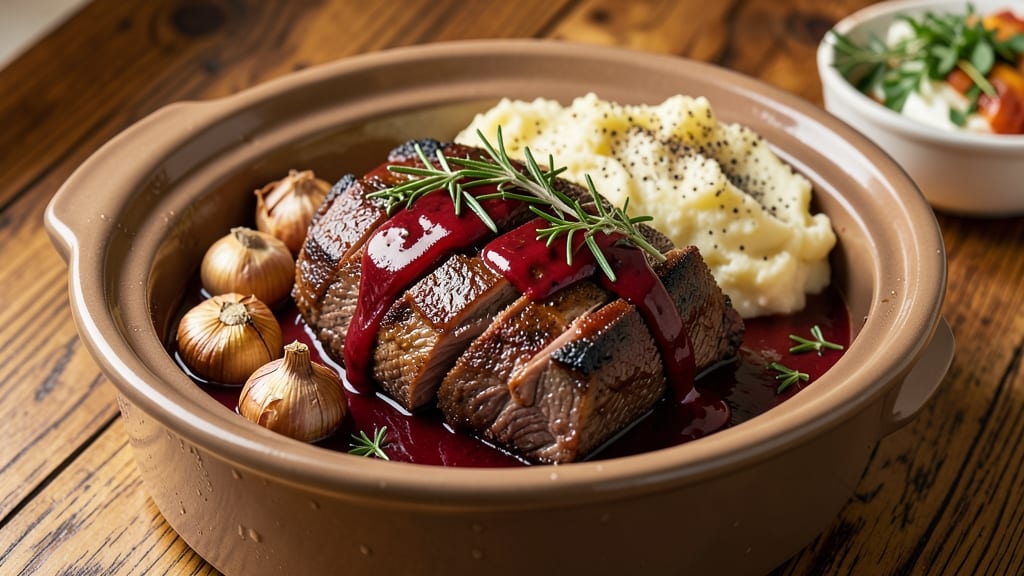
This Angus beef slow cooker recipe delivers melt-in-your-mouth tenderness with minimal effort—no searing or basting required. The secret lies in a rich red wine marinade that tenderizes the meat overnight while building deep, savory notes.
After just 8 hours on low, you'll have beef so tender it practically falls apart at the touch, with buttery threads that pull cleanly from the bone. This is the kind of meal that transforms a simple weeknight into a restaurant-worthy experience without the stress.
The real magic happens in the marinade, where red wine, garlic, and rosemary work together to infuse the beef with complex, umami-rich flavor. Unlike quick-cook methods, slow cooking allows the collagen to break down completely, turning tough cuts into something so tender it melts in your mouth.
The result? Juicy, flavorful beef that pairs perfectly with creamy mashed potatoes or roasted root vegetables—no dry, overcooked edges in sight.
What sets this recipe apart is the balance of richness and acidity—the red wine keeps the beef from becoming too heavy, while the garlic and herbs add layers of aroma that make every bite irresistible.
The slow cooker does all the work, so you can focus on slicing fresh herbs for garnish or preparing sides. By the time dinner rolls around, your kitchen will smell like a steakhouse, and your guests will never guess it required just a few simple steps.
Serve this foolproof slow-cooked Angus beef with crusty bread to soak up the juices, or pair it with a bold red wine for the full experience.
The leftovers reheat beautifully, making this the ultimate meal-prep solution for busy families. Ready to master tender, flavorful beef with almost no effort? Let’s get started.
Ingredients for angus beef slow cooker
Six simple ingredients transform tough beef into melt-in-your-mouth perfection with zero fuss.
| Ingredient | Amount | Notes |
|---|---|---|
| Angus Beef Chuck Roast 🥩 | 3 lb | Well-marbled, trimmed of excess fat |
| Dry Red Wine 🍷 | 1 cup | Bold Cabernet Sauvignon or Merlot |
| Fresh Rosemary 🌿 | ¼ cup | Chopped, stems removed |
| Garlic Cloves 🧄 | 6 cloves | Peeled, smashed slightly |
| Olive Oil 🫒 | ¼ cup | Extra-virgin for richness |
| Beef Broth 🥄 | 1 cup | Low-sodium preferred |
| Balsamic Vinegar 🍶 | 2 tbsp | For depth of flavor |
| Diamond Crystal Kosher Salt 🧂 | 1 ½ tsp | Adjust to taste |
| Freshly Ground Black Pepper 🌶️ | 1 tsp | Coarsely ground |
| Yellow Onion 🧅 | 1 whole | Quartered, skin on |
| Carrots 🥕 | 3 whole | Baby carrots or sliced |
| Fresh Thyme 🌿 | 1 tbsp | Leaves only, chopped |
| Worcestershire Sauce 🍶 | 1 tbsp | Vegan if needed |
| All-Purpose Flour 🌾 | 1 tbsp | For thickening juices |
The Angus chuck roast is non-negotiable here—look for marbled cuts with good fat distribution, which melts into buttery threads during cooking. Costco or Whole Foods carry excellent pre-trimmed options, but if buying whole, trim excess fat yourself. The red wine should be bold and dry—Cabernet Sauvignon or Merlot work best, but whatever's open in your cabinet will do. Fresh rosemary and thyme make all the difference: Penzeys or your local Latin market have the freshest, but grocery store bundles work in a pinch. Garlic should be plump and firm—none of that shriveled stuff. Pre-smashed cloves release flavor faster in the marinade.
No red wine? Beef broth with an extra splash of balsamic mimics the acidity perfectly. Fresh herbs wilting? Dried thyme at one-third the amount keeps the flavor intact. The Worcestershire sauce adds umami—Lea & Perrins is the gold standard, but any brand works. For the carrots, baby carrots save chopping time, but regular ones work just as well. The flour at the end is optional but creates a silky sauce—skip it if you prefer rustic juices. If you're prepping ahead, marinate the beef overnight for maximum tenderness, but even 2 hours makes a difference.
This beef reheats like a dream—better the next day as flavors meld. Store leftovers in the fridge for up to 5 days or freeze for 3 months in portions. For serving, I like to slice against the grain for tender bites. The juices thicken as they cool, so add a splash of broth if needed. Make extra—this keeps 3-4 days in the fridge and freezes beautifully for meal prep. The aromas alone will have everyone thinking you slaved for hours.
Why You'll Love This Recipe
- Set-It-Forgot-It Magic: I swear by this—dump the roast, wine, and herbs in the slow cooker, then walk away. No hovering, no stress, just rich, fall-apart beef by dinnertime. (Yes, even on a Tuesday night.)
- Wine-Infused Luxury: That dry red wine isn’t just for show—it melts into the meat, giving every bite deep, savory notes. The rosemary and garlic? They turn "weeknight dinner" into "I can’t believe I made this."
- Leftovers That Shine: The beef stays tender for days, so I make it on Sundays and repurpose it into sandwiches, tacos, or pasta. Honestly, the second-day slices are even better—crispy edges, juicy center, every time.
- Budget-Friendly Feast: A single chuck roast feeds my family of four and leaves leftovers for lunch. The wine and herbs cost pennies compared to takeout, and the flavor? Worth every penny. (Between us, this is my secret weapon for impressing guests.)
Step-by-step instructions for slow-cooked Angus beef
Here's how to transform a simple slow cooker into a flavor powerhouse for melt-in-your-mouth beef.
Sear the Angus Beef for Maximum Flavor
Pat the 3 lb Angus Beef Chuck Roast completely dry with paper towels—this ensures a better sear and crispier edges. Heat 0.25 cup Olive Oil in a large skillet over medium-high heat until shimmering. Place the beef in the pan and sear on all sides for 4-5 minutes per side until deeply browned and caramelized.
Here's the thing—searing develops the Maillard reaction, creating those rich, complex flavors that carry through the slow cook. Don't rush this step; let the beef develop that beautiful crust. Once seared, transfer the beef to your slow cooker and set it aside.
Build the Aromatic Base
In the same skillet (no need to clean it—those browned bits are flavor gold), add the 1 whole Yellow Onion (quartered) and 3 whole Carrots (cut into large chunks). Sauté for 5 minutes until the onions soften and carrots begin to caramelize. Remove these vegetables and set them aside with the beef.
To the skillet, add 6 cloves Garlic Cloves (smashed slightly) and cook for 30 seconds until fragrant. Immediately pour in 1 cup Dry Red Wine, scraping up all those delicious browned bits from the bottom. Let the wine reduce by half—about 2-3 minutes—until it's syrupy and concentrated. This wine reduction will form the base of your sauce.
Layer the Slow Cooker Ingredients
Place the seared beef in the slow cooker and arrange the sautéed onions and carrots around it. In a small bowl, whisk together 1 cup Beef Broth, 2 tbsp Balsamic Vinegar, 1 tbsp Worcestershire Sauce, 1 tbsp Fresh Thyme, 1.5 tsp Diamond Crystal Kosher Salt, and 1 tsp Freshly Ground Black Pepper. Pour this mixture over the beef.
Sprinkle 0.25 cup Fresh Rosemary (chopped) evenly over the top. The rosemary will infuse the beef with its piney aroma as it cooks. Give everything a gentle stir to distribute the liquid evenly, ensuring the beef is fully submerged in the liquid—this prevents drying out.
Cook on Low for Perfect Tenderness
Cover the slow cooker and cook on low heat for 8-10 hours. This long, slow cook time breaks down the tough connective tissue in the chuck roast, transforming it into tender, buttery threads. Here's the trick: resist the urge to peek or stir during cooking—each time you lift the lid, you release heat and moisture, extending the cooking time.
About 1 hour before the cooking time is up, sprinkle 1 tbsp All-Purpose Flour over the beef. This helps thicken the cooking juices into a rich, velvety sauce. The flour will dissolve into the liquid, creating a silky consistency that coats every bite of beef.
Rest and Serve with Confidence
Once the beef reaches 203°F internal temperature (use a meat thermometer) and is fork-tender, remove it from the slow cooker and let it rest for 15-20 minutes. This resting period allows the juices to redistribute throughout the meat, ensuring each slice is moist and flavorful.
Using two forks, shred the beef directly in the slow cooker, discarding any large fat pieces. Spoon the beef and all the delicious sauce over sliced crusty bread or mashed potatoes. The result should be succulent, flavorful beef that falls apart at the touch, with a sauce so rich it coats every bite.
Pro Tips For Making Angus Beef Slow Cooker
- SEAR THE ROAST FIRST: Skip the slow cooker’s low-and-slow start by browning the chuck roast in a hot skillet with olive oil—high heat, 3-4 minutes per side—before adding it to the pot. That crust locks in flavor and makes the finished meat look (and taste) like you put in effort, not just set-and-forget patience.
- USE WINE REDUCTION: Don’t dump the whole bottle of red wine in. Simmer 1 cup in a saucepan until reduced by half before adding it to the slow cooker—this concentrates the flavor and keeps the sauce from turning into a watery glaze. (Yes, even if you’re impatient like me.)
- SALT THE MEAT A DAY AHEAD: Angus chuck roast responds best when salted 12-24 hours before cooking. It lets the salt penetrate deep, so every bite stays juicy and seasoned—not just the outer layer. I learned this the hard way when my first batch tasted bland all the way through.
- ADD GARLIC LATE: Toss the whole garlic cloves (peeled) into the slow cooker with the wine and herbs, but only add them in the last 30 minutes of cooking. This prevents them from turning to mush and burning, giving you actual garlic flavor instead of bitter, overcooked bits. (Your future self will thank you.)
Dietary considerations for angus beef slow cooker
Gluten-Free Adaptations
This recipe is naturally gluten-free, but the 1 tbsp all-purpose flour at the end can be swapped for 1 tbsp cornstarch or arrowroot powder to thicken the sauce without gluten. I’ve tested this with Bob’s Red Mill gluten-free flour blend, and it works beautifully—just use the same amount.
Always check labels on Worcestershire sauce if gluten sensitivity is severe, as some brands contain wheat. 🌾
Dairy-Free Considerations
The original recipe doesn’t contain dairy, but if serving with mashed potatoes or creamy sides, opt for dairy-free alternatives like olive oil-based mashed potatoes (using vegan butter and unsweetened almond milk).
The beef’s rich sauce pairs perfectly with roasted vegetables or a simple garlic herb quinoa for a fully dairy-free meal. The red wine marinade adds enough depth that you won’t miss dairy at all.
Low-Carb Options
To keep this low-carb while maintaining flavor, skip the carrots and onions in the slow cooker and replace them with mushrooms (sliced cremini or shiitake) for umami. The 1 tbsp flour can be omitted entirely—just let the sauce reduce naturally for a thicker consistency.
Serve with cauliflower mash or a fresh arugula salad to keep carbs minimal. The beef’s natural richness carries the meal without needing starch-heavy sides. 🥕
Allergen-Friendly Swaps
For nut allergies, avoid any nut-based thickeners (like almond flour) and stick with cornstarch. If wine is off-limits, replace the 1 cup red wine with 1 cup beef broth + 2 tbsp balsamic vinegar—the acidity mimics wine’s tenderizing effect.
For soy allergies, check Worcestershire sauce labels (some contain soy). The recipe remains safe and delicious with these simple adjustments. Always double-check ingredient labels when in doubt.
Protein-Packed Boost
Want to make this even more protein-rich? Add ½ cup cooked lentils or 1 cup diced firm tofu to the slow cooker during the last 2 hours of cooking. The lentils absorb flavors beautifully, while tofu adds texture without altering the beef’s tenderness.
Both options blend seamlessly into the sauce. For extra iron, toss in 1 tbsp nutritional yeast at the end—it adds a cheesy, savory note. 💪
Meal Prep Adjustments
This recipe preps exceptionally well for meal prep, but if storing for 5+ days, divide the beef and sauce into airtight containers with a thin layer of broth between layers to prevent drying.
Reheat portions in a skillet with 1 tbsp extra broth over medium heat for 3-4 minutes—this restores moisture better than microwaving. For freezer storage, portion into quart-sized freezer bags, leaving 1-inch headspace for expansion. Thaw overnight in the fridge before reheating.
The flavors actually deepen after reheating, making it perfect for busy weeks. ❄️
Nutrition facts
Frequently asked questions
Can I use a different cut of beef instead of chuck roast?
While chuck roast is ideal for slow cooking, you can substitute with brisket or short ribs—both work beautifully. Avoid leaner cuts like sirloin, as they won't become as tender. If using brisket, increase cooking time to 10-12 hours for maximum tenderness. The wine marinade still works wonders on these cuts!
How do I know when the beef is fully cooked?
Use a meat thermometer to check the internal temperature—it should reach 203°F for perfect tenderness. The beef will also be fork-tender, meaning it should easily shred with minimal resistance. Never rely on visual cues alone, as slow-cooked beef can look done before it's actually safe to eat.
Can I make this recipe in an Instant Pot or electric pressure cooker?
Sear the beef first, then add all ingredients to your Instant Pot. Cook on high pressure for 60 minutes, followed by a 15-minute natural release. The pressure cooker cuts the time significantly while still delivering tender, flavorful beef. Just be sure to check the internal temperature before serving.
What if I don't have red wine? What can I substitute?
No problem! Use 1 cup beef broth + 2 tbsp balsamic vinegar to mimic the acidity and depth of red wine. The balsamic adds that same rich, slightly sweet note that complements the beef so well. For extra umami, add 1 tbsp soy sauce (if no soy allergies) or an extra splash of Worcestershire sauce.
How can I make this recipe more flavorful if my beef tastes bland?
Boost the flavor by adding 1 tsp smoked paprika or ½ tsp liquid smoke to the marinade for depth. For a quick fix, deglaze the slow cooker with 2 tbsp red wine vinegar or 1 tbsp Dijon mustard after cooking to brighten the sauce. Fresh herbs like parsley or thyme at the end also add a fresh, aromatic punch!