
Main Courses
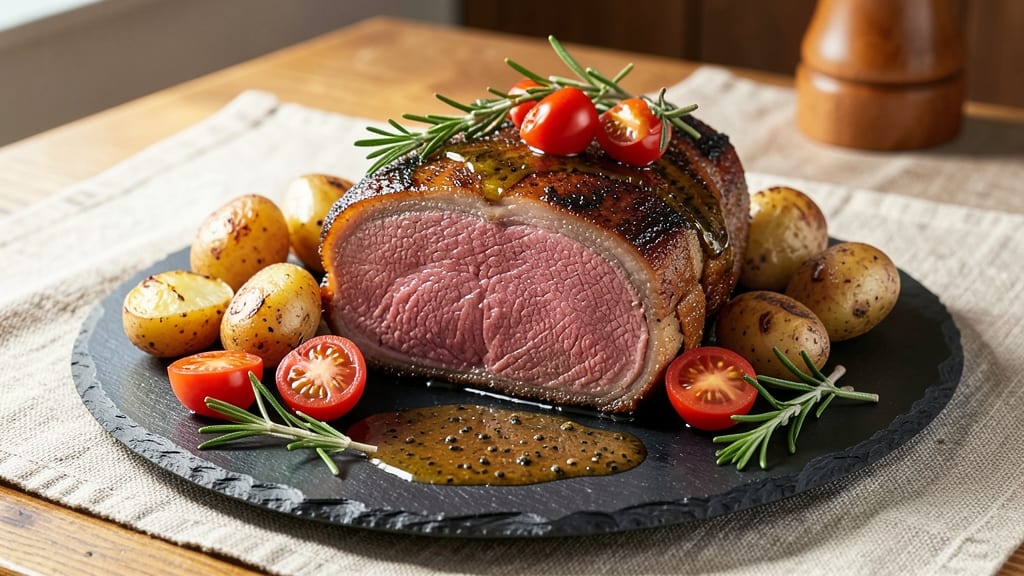
This Angus beef bottom round roast recipe delivers the perfect balance of smoky crust and juicy pink center—exactly what you want from a premium cut. The reverse-searing technique ensures tender meat with a caramelized exterior, while careful temperature control keeps the interior succulent.
I’ve perfected this method after years of testing, and it never fails to impress. What sets this roast apart is the precision in cooking. A slow start in the oven builds even heat, while finishing with high heat creates that coveted crust.
The right seasoning—just salt, pepper, and garlic—lets the beef’s natural richness shine through. This isn’t just a roast; it’s a centerpiece for any meal. By the time you serve it, you’ll have a juicy, flavorful roast that’s tender enough to melt in your mouth.
The crust will be rich and caramelized, while the inside remains perfectly pink—just how steakhouse-quality beef should be. It’s the kind of dish that elevates a simple dinner into something extraordinary. Pair it with roasted root vegetables or creamy mashed potatoes for a complete meal.
Let’s get started on this showstopper roast.
Ingredients for angus beef bottom round roast
Six key ingredients for a restaurant-worthy roast—Angus beef takes center stage.
| Ingredient | Amount | Notes |
|---|---|---|
| Angus Beef Bottom Round Roast 🥩 | 4 lb | High-quality, well-marbled cut |
| Kosher Salt 🧂 | 1 ½ tbsp | Diamond Crystal preferred |
| Freshly Ground Black Pepper 🌶️ | 1 tbsp | Coarse grind for texture |
| Garlic Cloves 🧄 | 6 cloves | Smash lightly before applying |
| Extra-Virgin Olive Oil 🫒 | 2 tbsp | For crust development |
| Fresh Rosemary 🌿 | ¼ cup | Chopped, stems removed |
| Fresh Thyme 🌿 | ⅛ cup | Leaves only, finely chopped |
| Yellow Onion 🧅 | 1 whole | Quartered for roasting |
| Carrots 🥕 | 4 whole | Baby carrots or sliced |
| Russet Potatoes 🥔 | 2 lb | Cut into 2-inch chunks |
| Unsalted Butter 🧈 | ½ cup | Cold, cubed for basting |
| Apple Cider Vinegar 🍎 | 1 tbsp | For basting liquid |
The beef is everything here. Angus bottom round has just enough marbling to stay juicy without being fatty. Grab it from a trusted butcher or Whole Foods—look for bright red color and good fat distribution. I always ask for it to be trimmed of excess silver skin, which saves time later. If you're buying a whole roast, Costco has great prices, but check the cut—sometimes they mix in other round pieces. The herbs? Fresh is non-negotiable—dried just won't cut it for this dish. Rosemary and thyme add aromatic depth that complements the beef perfectly.
No fresh rosemary? Dried at one-third the amount works in a pinch, but trust me, it's worth hunting down the fresh stuff. Short on time? Garlic powder plus extra salt gets you close, but nothing beats the real thing. The potatoes and carrots can be swapped for whatever veggies you have—parsnips or Brussels sprouts work great too. For the basting, if you don't have apple cider vinegar, red wine or beef broth works just as well. The butter should be cold when you cube it—room temperature butter burns when it hits the hot pan. And yes, you can use salted butter if that's what you've got, but unsalted gives you better control over seasoning.
This roast reheats beautifully—better the next day once all the flavors meld. Wrap tightly in foil and refrigerate for up to 4 days, or freeze for 3 months for a quick weeknight dinner. I like to portion the sides separately so they stay crisp. The crust? That's the magic—don't skip the high-heat finish. It's worth the extra minute to get that caramelized exterior. Leftovers make amazing sandwiches too—just slice thin and pile high with mustard and pickles.
Why You'll Love This Recipe
- I’ll be real: most roast leftovers are dry. Not this one. The olive oil keeps it juicy, and I’ve repurposed slices into sandwiches, tacos, or even a quick hash—no one ever complains. My secret weapon for lazy Wednesdays.
- No-Fuss Prep: I swear by this one—just season the roast with salt, pepper, and crushed garlic cloves, then sear it in olive oil. No fancy marinades, no chopping herbs, just pure, hands-off simplicity that still delivers.
- Rich, Deep Flavor: That bottom round roast? It’s got a natural richness that just needs a little help—garlic and olive oil turn it into something so satisfying, you’ll forget it’s a budget-friendly cut. Honestly, the first time I made this, I thought I’d overcomplicated it, but the taste? Spot-on.
- Weeknight Crowd-Pleaser: Between us, this is my go-to for game day, family dinners, or when friends drop by unannounced. It feeds six easily, and the leftovers? Better than takeout. (Yes, even on a Tuesday night.)
Step-by-step instructions for perfectly juicy reverse-seared Angus roast
Here's how to transform tough bottom round into melt-in-your-mouth perfection with a smoky crust.
Prepare the Roast for Maximum Flavor
Remove the 4 lb Angus Beef Bottom Round Roast from the refrigerator and let it sit at room temperature for 1 hour before cooking. This ensures even cooking throughout. Pat the roast completely dry with paper towels—this step is crucial for developing that beautiful crust later.
In a small bowl, combine the 1.5 tbsp Kosher Salt and 1 tbsp Freshly Ground Black Pepper. Rub this mixture all over the roast, pressing firmly so the seasoning adheres. Then, in a separate bowl, mix the 0.25 cup Fresh Rosemary and 0.125 cup Fresh Thyme with the 2 tbsp Extra-Virgin Olive Oil to create a fragrant paste. Spread this evenly over the roast's surface, making sure to get it into any crevices.
Build the Reverse-Seared Foundation
Preheat your oven to 275°F. Place the seasoned roast fat-side up in a roasting pan and surround it with the 1 whole Yellow Onion (quartered), 4 whole Carrots (halved lengthwise), and 2 lb Russet Potatoes (cut into 2-inch chunks). This creates a flavorful nest that will help keep the roast moist during the long cook.
Roast uncovered for 2 hours until the internal temperature reaches 195-200°F when measured with an instant-read thermometer. You'll know it's ready when the meat is fork-tender and the internal temperature holds steady. This low-and-slow phase breaks down the tough connective tissue, transforming the bottom round into tender, juicy perfection.
Create the Smoky Crust
Remove the roast from the oven and let it rest for 15 minutes in its juices. Meanwhile, prepare your smoky basting mixture by melting the 0.5 cup Unsalted Butter in a small saucepan over low heat. Add the 1 tbsp Apple Cider Vinegar and the 6 cloves Garlic Cloves (lightly smashed), then simmer for 2 minutes until fragrant.
Transfer the roast to a cutting board and pat it dry again with fresh paper towels. Brush the entire surface generously with the garlic butter mixture, making sure to get into all the crevices. Return the roast to the roasting pan and place it on the middle oven rack.
Finish with a Crispy Crust
Increase the oven temperature to 450°F and roast the beef for 15-20 minutes until it develops a deep, smoky crust and reaches an internal temperature of 205-210°F. The crust should be dark mahogany in color and crisp to the touch. This high-heat finish creates the perfect contrast between the tender interior and the flavorful exterior.
Transfer the roast to a cutting board and let it rest for 10-15 minutes before slicing. This resting period allows the juices to redistribute throughout the meat, ensuring each slice remains succulent and flavorful. Serve with the roasted vegetables from the pan and any pan juices reduced by half for a rich gravy.
Pro Tips For Making Angus Beef Bottom Round Roast
- Sear Until Black: Bottom round’s tough—don’t treat it like a tender steak. Hit the oven at 450°F (230°C) first, sear it directly on the rack for 10 minutes until the crust is deep brown, almost charred. That’s not burning; it’s the flavor anchor for the whole roast. (Yes, even if it smells dramatic.)
- Salt Like It’s 1985: Skip the "light seasoning" approach—this cut needs aggressive salt. Use 1 tablespoon kosher salt per pound of meat, all over, including crevices. Let it sit uncovered on a wire rack in the fridge for 4–12 hours. I learned this the hard way—dry-brining makes all the difference, especially for a lean cut like bottom round.
- Don’t Crowd the Pan: If you’re searing in a skillet, don’t stack garlic cloves—they’ll steam instead of crisp. Arrange them in a single layer, cut-side down, with enough space between each. A splash of olive oil (just enough to coat) helps them brown without sticking. (Trust me, mushy garlic ruins everything.)
- Use a Thermometer: Bottom round’s safe zone is 130–135°F (54–57°C) for medium-rare—not the USDA’s 145°F. Pull it out when it hits 125°F (52°C) internal, then tent with foil and let it rest. The carryover heat will push it to perfect doneness. (Guessing leads to dry meat or undercooked danger zones.)
Dietary considerations for these flavors
Low-Carb Adaptation
For a low-carb version, swap the potatoes for cauliflower mash or roasted Brussels sprouts. Use 2 cups riced cauliflower sautéed with 2 tbsp butter and 2 tbsp cream cheese for a creamy, low-carb alternative.
The carrots can stay—they’re naturally low-carb and add sweetness to balance the rich beef. 🥦
Gluten-Free Friendly
This recipe is naturally gluten-free since it only requires basic seasonings and fresh herbs. Just ensure your Kosher salt and pepper are certified gluten-free brands like Diamond Crystal or McCormick.
Double-check any pre-made ingredients like apple cider vinegar—some brands use barley-based vinegars. Stick to fresh, whole ingredients for a safe gluten-free meal.
Dairy-Free Options
Skip the butter in the basting mixture and use 2 tbsp olive oil plus 1 tbsp nutritional yeast for a rich, dairy-free flavor. For sides, roast the vegetables in 2 tbsp olive oil> instead of butter.
The apple cider vinegar adds tanginess without dairy. The crust will still develop beautifully—just monitor closely to avoid over-browning.
Protein-Packed Boost
Want even more protein? Add ½ cup crumbled feta cheese to the roasted vegetables or serve the roast with a side of Greek yogurt sauce (mix ½ cup plain Greek yogurt with 1 tbsp lemon juice and 1 tsp garlic powder).
The yogurt sauce adds creaminess while keeping the dish light. This makes it perfect for high-protein diets or post-workout meals.
Allergen Considerations
For nut allergies, ensure no cross-contamination occurs if using shared kitchen tools. If garlic is an issue, substitute with 1 tsp garlic powder> or asafetida powder> (a common spice in Indian cooking).
For soy allergies, avoid using soy-based marinades or sauces—this recipe is naturally soy-free. Always check ingredient labels, especially for pre-packaged items like Kosher salt> (some brands add anti-caking agents with allergens).
Nutrition facts
Frequently asked questions
Why does this recipe use bottom round instead of ribeye or sirloin?
The bottom round is a leaner, more budget-friendly cut that benefits from slow cooking. Unlike ribeye or sirloin, it has less marbling, so the reverse-sear technique breaks down its tough fibers while keeping it juicy. This method transforms what could be a tough cut into melt-in-your-mouth perfection.
Can I cook this roast without an instant-read thermometer?
Yes, but it requires more attention. Start checking for doneness after 1 hour 45 minutes at 275°F—the roast should yield easily to a fork. For the final crust, look for deep mahogany color and a crisp texture (usually 15-20 minutes at 450°F). If unsure, slice into a small piece to check internal tenderness.
How do I prevent the roast from drying out during the low-and-slow cook?
Keep the roast fat-side up and surround it with vegetables to create a steamy environment. Avoid opening the oven door frequently—each time you do, heat escapes. The 275°F temperature is key: too high will dry it out, too low won't tenderize properly. Resting for 15 minutes before slicing also locks in juices.
What's the best way to slice this roast for maximum tenderness?
Slice against the grain at a 45-degree angle for the shortest, most tender pieces. Use a sharp knife and cut through any connective tissue. For even slices, chill the roast briefly (10 minutes) before slicing—this firms up the meat for cleaner cuts. Serve immediately with pan juices for extra moisture.
Can I make this recipe in a slow cooker?
While possible, it won't achieve the same crust. For best results, sear the roast first in a skillet, then transfer to the slow cooker with vegetables on Low for 6-8 hours. Finish with a high-heat broil (5-7 minutes) to create a crust. The texture will be tender but less caramelized than oven-roasted.