
Soups & Stews
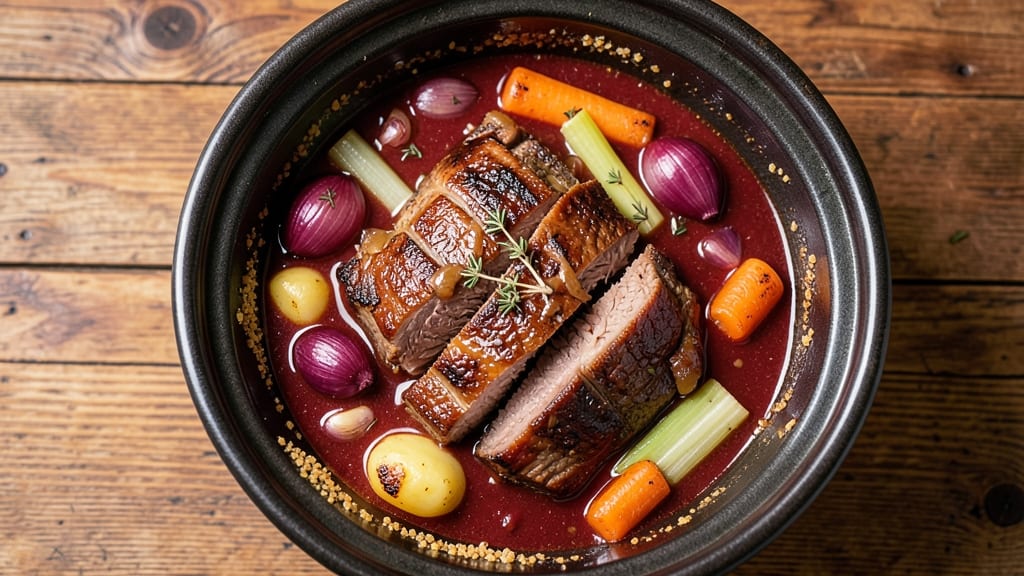
This amazing crock pot beef stew transforms tough cuts into melt-in-your-mouth perfection with just a few hours of hands-off cooking. The secret? Searing the beef first to build deep, caramelized flavor before letting red wine and herbs work their magic in the slow cooker.
I’ve perfected this recipe after years of trial and error—no more bland, watery stews here.
What makes this stew truly special is the rich, velvety sauce that develops from the wine reduction and beef fond. The slow cooker does all the heavy lifting while you prep sides or relax, ensuring tender beef, caramelized onions, and perfectly softened vegetables.
It’s the kind of meal that smells like comfort food the second you walk in the door.
By the time you’re ready to serve, you’ll have a steaming pot of hearty stew with layers of flavor—savory, slightly sweet, and deeply aromatic. The beef falls apart at the touch of a fork, and every spoonful delivers that perfect balance of winey depth, herby brightness, and tender meat.
This is the kind of dish that makes weeknights feel like a cozy restaurant dinner.
Pair it with crusty bread for soaking up every last drop of that caramelized fond richness, or serve alongside roasted potatoes for a complete meal. The best part? Leftovers taste even better the next day. Let’s get cooking—your slow cooker is about to become your new best friend.
Ingredients for amazing crock pot beef stew
Six ingredients transform tough beef into restaurant-quality stew—just slow cooker magic.
| Ingredient | Amount | Notes |
|---|---|---|
| Chuck Roast 🥩 | 3 lb | Tough cut for deep flavor |
| Yellow Onions 🧅 | 2 whole | Sliced into half-moons |
| Carrots 🥕 | 4 whole | Baby or regular, peeled |
| Celery Stalks 🧆 | 4 whole | Chopped into 1-inch pieces |
| Garlic Cloves 🧄 | 6 cloves | Minced for depth |
| Dry Red Wine 🍷 | 1 ½ cups | Bold like Cabernet Sauvignon |
| Beef Broth 💧 | 2 cups | Low-sodium preferred |
| Tomato Paste 🍅 | ½ cup | Smooth, not chunky |
| Fresh Thyme 🌿 | 2 tbsp | Leaves only, stems removed |
| Fresh Rosemary 🌿 | 1 tbsp | Chopped sprigs |
| Olive Oil 🫒 | 2 tbsp | Extra-virgin for searing |
| All-Purpose Flour 🌾 | 2 tbsp | For dusting beef |
| Salt 🧂 | 1 ½ tsp | Kosher or sea salt |
| Black Pepper 🌶️ | 1 tsp | Freshly cracked |
| Bay Leaves 🍃 | 2 whole | Removed before serving |
The beef is everything here. Chuck roast from the butcher counter—look for good marbling—gives you that melt-in-your-mouth texture. I grab mine from Whole Foods or the local meat shop when I can, but the pre-packaged stuff at Costco works perfectly for weeknight meals. Slice those onions and carrots evenly—they should be about the same size so they cook at the same rate. Fresh herbs make all the difference, but dried thyme at half the amount works in a pinch. The wine? Any bold red—Cabernet Sauvignon or Merlot both work beautifully.
No red wine? Beef broth with 2 tbsp balsamic vinegar mimics that depth perfectly. Fresh thyme and rosemary wilt fast, so add them later if you're prepping ahead. The tomato paste can be the squeeze-tube kind from Trader Joe's—it's perfect for this. If you're in a hurry, swap the carrots for frozen (no need to peel). The beef broth? Low-sodium is key—you don't want to over-salt the whole pot. And trust me on the flour—it's not just for dusting. It helps build that caramelized fond when you sear the beef.
This stew tastes even better the next day—honestly, I make it on Sundays so we have leftovers for the week. Store it in the fridge for up to 5 days, or freeze portions for 3 months. I always portion mine into containers with a little extra broth on top to keep everything moist. The fond at the bottom? That's the good stuff—deglaze it with a splash of water and stir it back in before serving. Game-changer!
Why You'll Love This Recipe
- Dump-and-Go Magic: I swear by this recipe because the hardest part is chopping the onions—that’s it. Chuck roast, carrots, celery, and garlic go right into the pot with broth, and the crock pot does the rest while I’m folding laundry or scrolling through my phone. Honestly, I’ve made it with pre-diced veggies from the store, and it still turns out rich and tender.
- Deep, Savory Payoff: The chuck roast practically melts into the broth, soaking up all the caramelized onion and garlic flavors until every bite has that perfect balance—tender beef with a hint of crispy edge. Between us, the slow cook transforms cheap cuts into something that tastes like it cost a fortune. My husband licks his plate clean, and he’s not easily impressed.
- Leftovers That Don’t Suck: This stew actually improves the next day. The flavors meld even more, and the beef gets even more fork-tender. I freeze half the batch in portions because reheating it is just as easy as the first time—perfect for busy nights when I’m too tired to cook. (Yes, even on a Tuesday night.)
- Budget-Friendly Crowd-Pleaser: A single chuck roast feeds six for under $20, and I’ve served this at potlucks, game days, and even my in-laws’ house without breaking the bank. The veggies stretch the beef, and the garlic-onion base makes it taste like a restaurant dish. My daughter picks out the carrots first but still asks for seconds—proof it works for picky eaters too.
Step-by-step instructions for slow-cooked beef stew
This method transforms tough chuck roast into melt-in-your-mouth beef with a rich, caramelized fond that makes every bite unforgettable.
Sear the Chuck Roast for Deep Flavor
Pat the 3 lb chuck roast completely dry with paper towels—this ensures a proper sear. Heat a large Dutch oven over medium-high heat and add 2 tablespoons olive oil. Once shimmering, place the roast in the pan and sear for 4-5 minutes per side until deeply browned. You're building flavor here, so don't rush—those crusty edges will dissolve into the stew later.
While the roast sears, sprinkle 2 tablespoons all-purpose flour evenly over both sides. Lift the roast and shake off any excess flour, then return it to the pan. The flour creates a light crust that thickens the stew naturally. Once golden brown all over, remove the roast and set it aside on a plate.
Build the Aromatic Vegetable Base
In the same Dutch oven, reduce heat to medium and add 2 whole yellow onions sliced into half-moons, 4 whole carrots peeled and cut into 1-inch chunks, and 4 whole celery stalks chopped into 1-inch pieces. Cook for 8-10 minutes, stirring occasionally, until the vegetables soften and begin to caramelize. This step develops their natural sweetness and forms the stew's foundation.
Add 6 cloves garlic cloves minced, 2 tablespoons fresh thyme leaves, and 1 tablespoon fresh rosemary chopped. Stir for 1 minute until fragrant—you should smell that earthy, piney aroma. Here's where it gets good: Pour in 1.5 cups dry red wine and scrape up any browned bits from the bottom of the pan. These bits, called fond, are packed with flavor that will deepen as the stew cooks.
Deglaze and Thicken the Stew
Bring the wine mixture to a simmer and let it reduce by half, about 3-4 minutes. Stir in 0.5 cup tomato paste and cook for another 2 minutes to blend flavors. Sprinkle the roast with 1.5 teaspoons salt and 1 teaspoon black pepper, then return it to the pot. Add 2 cups beef broth and 2 whole bay leaves, then bring everything to a gentle boil.
Once boiling, reduce heat to low and cover partially. Let it simmer for 10 minutes to let the flavors meld. This initial simmer helps the roast begin to tenderize while the vegetables cook down. Here's the thing—don't skip this step. It ensures your stew starts with a proper flavor base before the slow cooking begins.
Slow Cook to Perfection
Transfer the entire Dutch oven contents to a 6-quart slow cooker. The liquid should come about halfway up the roast. Cover and cook on LOW for 8 hours or HIGH for 5-6 hours. The slow cooking breaks down the tough muscle fibers in the chuck roast, transforming it into tender, fork-tender beef. Resist the urge to peek or stir—this disrupts the cooking process and can make the stew grainy.
About 30 minutes before serving, check the internal temperature of the beef with a meat thermometer. It should reach 195-200°F—this is the magic zone where connective tissue melts into gelatin, creating that luxurious, silky texture. If it's not quite there, continue cooking for another 30 minutes to an hour. The stew will only get better as it sits.
Finish and Serve with Fond
Remove the beef from the slow cooker and place it on a cutting board. Let it rest for 10 minutes before slicing against the grain into ¼-inch thick pieces. Return the sliced beef to the stew and discard the bay leaves. The stew should be thick and rich, but if it's too thin, remove the lid and simmer on the stovetop for 5-10 minutes to reduce the liquid slightly.
For that restaurant-quality touch, spoon out about ½ cup of the stew liquid and place it in a small saucepan. Simmer over medium heat until it reduces by half, creating a glossy, concentrated fond. Drizzle this back over the stew just before serving. The fond adds a beautiful sheen and intensifies the flavors. Serve immediately with crusty bread to soak up every last drop of this amazing, deep red wine braise.
Pro Tips For Making Amazing Crock Pot Beef Stew
- SEAR THE ROAST FIRST: Skip the slow start—brown that chuck roast in a hot skillet with oil until it’s deep golden. The Maillard reaction kicks in, adding layers of flavor the crock pot alone can’t match. (Yes, even if you’re impatient like me, take the 5 minutes—it’s worth it.)
- CHOP VEGETABLES UNIFORM: Onions into ½-inch chunks, carrots and celery cut to similar sizes—no tiny celery bits or giant onion wedges. Even cooking means no mushy bits or crunchy surprises. (I learned this the hard way when my stew looked like a vegetable buffet.)
- LOW AND SLOW IS NON-NEGOTIABLE: Set your crock pot to low for 8+ hours—high heat makes tough meat. The collagen melts gradually, turning into rich, silky sauce. (No, "low" isn’t lazy—it’s the thing that makes stew melt-in-your-mouth tender.)
- ADD POTATOES LATE: Toss in diced potatoes in the last 30 minutes—they’ll soak up broth and soften perfectly without turning to mush. (Your future self will thank you for not overcooking them into oblivion.)
Common mistakes when making this dish
Undercooked Beef
Skipping the initial sear or rushing the slow cook time often leaves beef tough and undercooked. Always sear the 3 lb chuck roast for 4-5 minutes per side until deeply browned—this builds flavor and helps tenderize.
In the slow cooker, LOW for 8 hours is non-negotiable for chuck roast; HIGH for 5-6 hours only works if you start with pre-seared, thin-cut beef. Check internal temp with a meat thermometer—195-200°F is the magic zone where collagen melts into silky texture. 🌡️
Overcrowding the Pot
Packing the slow cooker too tightly traps steam, which can make the beef mushy instead of tender. Your 6-quart slow cooker should have liquid reaching only halfway up the roast. If the pot looks crowded, reduce other ingredients slightly—especially onions and carrots.
I've learned the hard way that crammed stews turn out watery and bland. Leave about 1 inch of headspace at the top for proper heat circulation.
Skipping the Fond
The browned bits (fond) at the bottom of your Dutch oven are flavor gold—don't pour them away! These bits contain concentrated Maillard reaction flavors that deepen your stew's complexity. When you deglaze with wine, scrape every last bit off the pan.
For extra richness, reduce ½ cup of stew liquid into a glossy fond before serving. This simple step transforms good stew into restaurant-quality. 💛
Adding Potatoes Too Early
Potatoes release starch quickly and can turn your stew gluey if added too soon. If including potatoes, add them only during the final 1-2 hours of cooking. For best results, use Yukon Gold potatoes cut into 1-inch chunks—they hold their shape better than russets.
Pro tip: Add them directly to the slow cooker with the beef in the last hour to prevent mushiness.
Ignoring Liquid Levels
Too much liquid = watery stew. Too little = burned vegetables. Aim for a balance where the liquid covers the beef by about halfway. If your stew looks thin after cooking, remove the lid and simmer on the stovetop for 5-10 minutes to reduce.
For extra thickness, mix 1 tbsp cornstarch with 2 tbsp cold water and stir in during the last 5 minutes of cooking. This slurry works wonders without altering texture.
Over-Salting Early
Adding all the salt at once can make your stew taste bland as flavors develop. Instead, sprinkle 1 tsp salt during the initial sear, then add the remaining ½ tsp with the beef broth. Taste as you go—stews often need more salt at the end.
Remember, you can always add salt, but you can't take it out. I've ruined stews by over-salting early, so I now add most of the salt during the final seasoning step. ✨
Nutrition facts
Frequently asked questions
Can I use a different cut of beef instead of chuck roast?
Yes, but with adjustments! Stew meat or round roast work well—they're leaner and cook faster. For ribeye or sirloin, reduce cooking time by 1-2 hours on LOW to avoid dryness. The key is reaching 195-200°F internal temp. Never use tender cuts like filet mignon—they'll turn to mush.
What if I don't have red wine? What's the best substitute?
No problem! Use 2 cups beef broth + 2 tbsp balsamic vinegar for depth, or swap for 1.5 cups beef broth + 1 tbsp soy sauce. For umami, add 1 tsp Worcestershire sauce. The wine's acidity helps tenderize the beef, so these subs mimic that tang. Avoid white wine—it lacks the bold flavor profile.
How do I make this stew in an Instant Pot instead of a slow cooker?
Transfer the seared beef and sautéed veggies to your Instant Pot with all liquids. Cook on HIGH PRESSURE for 45 minutes, then quick-release. For extra richness, finish with 10 minutes on SAUTE to reduce the sauce. The pressure method cooks 3x faster but requires the same searing step for depth.
Can I prep this stew ahead of time for meal prep?
Prep all ingredients (sear beef, sauté veggies) and store in the fridge for 2 days or freeze for 3 months. When ready to cook, transfer everything to the slow cooker and add ½ cup extra broth (liquids evaporate during storage). The flavors actually improve overnight—perfect for busy weeknights.
Why does my slow cooker stew sometimes turn out watery?
This usually happens from overcrowding or too much liquid. Leave 1 inch headspace in your 6-quart slow cooker and reduce broth by ½ cup if needed. For thickness, mix 1 tbsp cornstarch with 2 tbsp cold water and stir in during the last 5 minutes of cooking. The fond reduction step also helps concentrate flavors.