
Soups & Stews
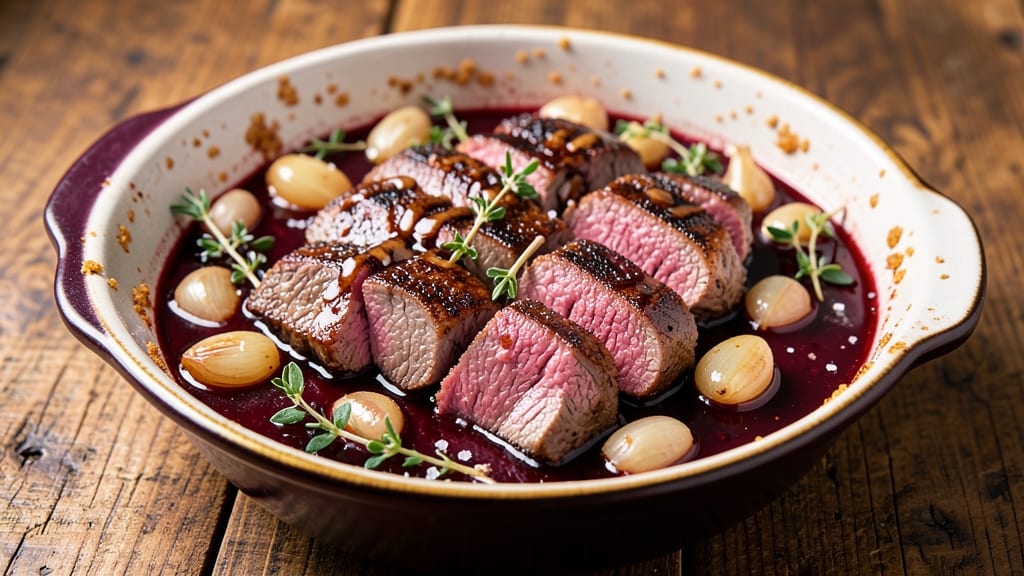
This beef au vin recipe transforms tough cuts into melt-in-your-mouth tenderness using a 2-hour braise that balances deep red wine richness with earthy mushrooms. The secret lies in slow cooking—where the wine reduces into a velvety sauce while the beef becomes fork-tender, absorbing all the aromatic flavors.
I’ve perfected this classic French technique to deliver restaurant-quality results at home, using simple ingredients and a method that’s both impressive and approachable.
The beauty of beef au vin is its versatility—it’s hearty enough for a weeknight dinner but elegant enough for company. Start with a searing step to build flavor, then let the wine and broth work their magic in the oven.
The mushrooms add umami depth, while shallots and garlic provide a subtle sweetness that rounds out the dish. By the time you plate it, every bite will be rich, tender, and infused with the complex notes of red wine and herbs.
Pair this dish with creamy mashed potatoes or buttery egg noodles to soak up the sauce, and roasted vegetables for a well-rounded meal. The sauce thickens beautifully as it sits, making leftovers even more flavorful—ideal for meal prep or feeding a crowd.
Whether you’re a seasoned cook or new to braising, this recipe delivers foolproof results that taste like you’ve been cooking for years.
Ready to elevate your weeknight dinners? This beef au vin is the ultimate comfort food—warm, satisfying, and full of depth. Let’s get started with a technique that’s as rewarding as it is delicious.
Ingredients for beef au vin
Bold red wine, earthy mushrooms, and tender beef—this braise delivers restaurant-quality depth with just 15 ingredients.
| Ingredient | Amount | Notes |
|---|---|---|
| Chuck Roast 🥩 | 2 lb | Pre-cut into 1.5-inch cubes |
| Dry Red Wine 🍷 | 1 ½ cups | Bold Cabernet Sauvignon or Merlot |
| Beef Broth 💧 | 1 cup | Low-sodium preferred |
| Shallots 🧅 | 3 whole | Minced, about 0.25 cup |
| Garlic Cloves 🧄 | 4 cloves | Minced, about 1 tbsp |
| Fresh Thyme 🌿 | 2 sprigs | Or 1 tsp dried thyme |
| Fresh Rosemary 🌿 | 1 sprig | Or 0.5 tsp dried rosemary |
| White Mushrooms 🍄 | 16 oz | Sliced, about 2 cups |
| Tomato Paste 🍅 | 1 tbsp | Squeeze tube preferred |
| All-Purpose Flour 🌾 | 1 tbsp | For thickening sauce |
| Unsalted Butter 🧈 | 2 tbsp | For finishing sauce |
| Olive Oil 🫒 | 2 tbsp | For searing beef |
| Kosher Salt 🧂 | 1 ½ tsp | Adjust to taste |
| Black Pepper 🌶️ | 1 tsp | Freshly ground |
| Fresh Parsley 🌿 | ¼ cup | Chopped, for garnish |
The beef is non-negotiable here—chuck roast is your best bet for that melt-in-your-mouth texture. Costco or Whole Foods usually carry it pre-cut, but if you're buying a whole roast, ask the butcher to cube it for you. Look for good marbling—those little fat streaks are what make the meat tender. For the red wine, any bold, dry variety works—Cabernet Sauvignon or Merlot are classic choices, but whatever's open in your fridge will do. The mushrooms? Baby bella or cremini add the most flavor, but white mushrooms work in a pinch. Just slice them evenly so they cook at the same rate as the beef.
No red wine? Beef broth with a splash of balsamic vinegar gets you close—just add an extra 0.5 cup of broth to compensate. Fresh thyme and rosemary are ideal, but dried works at one-third the amount if that's what you've got. The tomato paste might feel like overkill for just one tablespoon, but trust me on this—it adds a depth that's worth the effort. If you're short on time, Trader Joe's squeeze tubes make this easy. For the shallots, if you can't find fresh, jarred minced shallots (the kind in the canning aisle) are a lifesaver—just drain them well.
This dish tastes even better the next day, so plan ahead. The sauce thickens as it sits, so if it's too thin after cooking, just reheat it uncovered for 5-10 minutes to reduce. Store in an airtight container for up to 5 days in the fridge, or freeze for 3 months. I always make a double batch—leftovers reheat beautifully and make for an easy lunch. For serving, a sprinkle of fresh parsley brightens everything up, and a dollop of crème fraîche (or vegan crème if needed) adds a luxurious touch. The beef will be fork-tender, so slice against the grain for the best texture.
Why You'll Love This Recipe
- Slow-Simmer Magic: The chuck roast practically melts into tender perfection while you sip your wine—no babysitting required. I swear, the longer it cooks, the richer the sauce gets, and that’s the kind of reward that makes weeknights feel special.
- Wine Cabinet Upgrade: That dry red wine isn’t just for drinking—it’s the secret weapon here. One bottle transforms a simple pot roast into something restaurant-worthy, with deep, earthy notes that pair shockingly well with the caramelized shallots.
- Leftover Luxury: Between us, this dish tastes better the next day. The flavors meld into something even more complex, and reheating it is just a matter of warming through—no sad, dry meat here. Honestly, I’ve turned it into tacos, sandwiches, and even a hearty soup.
- Budget-Friendly Feast: Chuck roast is the unsung hero of affordable cuts, and this recipe stretches it across multiple meals without breaking the bank. Plus, using basic pantry staples (like that dusty bottle of red you’ve been saving) makes it feel fancy without the grocery bill.
Step-by-step instructions for beef au vin
This classic French braise delivers melt-in-your-mouth beef and rich red wine sauce in just two hours.
Sear the Chuck Roast for Maximum Flavor
Heat a heavy Dutch oven over medium-high heat. Add the 2 tablespoons olive oil and swirl to coat the bottom. Once shimmering, add the 2 lb chuck roast in a single layer, working in batches if needed. Let each piece sear undisturbed for 3-4 minutes until deeply browned on all sides—this creates the flavor foundation.
I press down gently on each piece during the first minute to prevent curling. If the pan gets too crowded, reduce to medium heat to avoid steaming. Transfer the browned beef to a plate and set aside. You'll notice the pan will have beautiful browned bits—don't scrape them out yet, as they'll form the sauce base.
Build the Aromatic Base with Shallots and Garlic
In the same Dutch oven, reduce heat to medium and add the 3 whole shallots and 4 cloves garlic cloves. Cook for 3-4 minutes until the shallots soften and turn golden brown—this should happen before they actually brown, or they'll burn quickly. Stir occasionally to prevent sticking.
Add the 1 tablespoon tomato paste and stir for 30 seconds until it darkens slightly. This step deepens the sauce's complexity. Immediately pour in the 1.5 cups dry red wine, scraping up all those delicious browned bits from the bottom. Let it simmer for 3-4 minutes until reduced by about half—you'll see the liquid transform from ruby red to a deeper, more concentrated hue.
Develop the Sauce with Mushrooms and Herbs
Add the 16 oz sliced white mushrooms to the Dutch oven and cook for 5-6 minutes until they release their moisture and begin to soften. Stir occasionally to ensure even cooking. The mushrooms should be tender but still hold their shape—overcooking will make them mushy.
Add the 2 sprigs fresh thyme, 1 sprig fresh rosemary, 1.5 teaspoons kosher salt, and 1 teaspoon black pepper. Stir everything together and let it cook for 1-2 minutes until the herbs release their aromatic oils. The kitchen should smell like a French bistro at this point—this is where the magic happens.
Braise the Beef Until Tender
Return the seared beef to the Dutch oven along with any accumulated juices. Pour in the 1 cup beef broth, then sprinkle the 1 tablespoon all-purpose flour over the top. Stir gently to combine, making sure the flour dissolves completely into the sauce.
Bring the mixture to a gentle simmer, then reduce heat to low. Cover with a tight-fitting lid and let it cook for 1 hour to 1 hour 15 minutes, until the beef is fork-tender. You'll know it's ready when a knife slides in easily and the beef pulls apart with gentle pressure. If the sauce reduces too much before the beef is tender, add a splash of water or broth to maintain moisture.
Finish with Butter and Garnish
Once the beef is tender, remove the lid and increase heat to medium. Stir in the 2 tablespoons unsalted butter and let it melt completely, about 1-2 minutes. This adds luxurious richness to the sauce. Taste and adjust seasoning with additional salt or pepper if needed.
Remove the beef to a serving platter and spoon the sauce over the top. Garnish with the 0.25 cup chopped fresh parsley and serve immediately with crusty bread or mashed potatoes. The sauce should coat the back of a spoon with a velvety texture, and each bite of beef should be tender with deep, complex flavors from the wine and herbs.
Pro Tips For Making Beef Au Vin
- SEAR THE ROAST FIRST: I learned this the hard way—skipping the initial sear means a pale, flavorless sauce. Use a cast-iron or heavy pot and let it brown deep on all sides (5-7 minutes per side) before touching the wine. The crust isn’t just for looks; it’s where the beef’s natural juices turn into rich, caramelized flavor that dissolves into the sauce.
- DEGLAZE WITH PATIENCE: Don’t rush the wine addition right after searing. Let the pan cool for exactly 30 seconds—just until you can safely pour the wine without it splattering everywhere. Then, let it bubble away for 2-3 minutes before scraping up those browned bits with a wooden spoon. Those bits are pure flavor, and skipping the wait means losing half of them.
- SALT THE BROTH: This isn’t just about seasoning—it’s about balancing the acidity of the wine. Add a generous pinch of salt (about ½ teaspoon per cup of broth) when you combine it with the wine and shallots. The beef will release its own salt as it cooks, and without this, the sauce can taste flat or one-dimensional. Trust me, your taste buds will notice the difference.
- SKIP THE CHEAP WINE: I was skeptical until I tried it: a $12-$15 bottle of dry red (like a basic Burgundy or Chianti) makes a real difference compared to cooking wine from the grocery store. The tannins and acidity in a decent bottle cut through the richness of the beef and broth, while the cheaper stuff just tastes like vinegar with a hint of regret. Splurge here—your sauce will thank you.
Wine and beer pairings for beef au vin
Classic Red Wine Pairings
The bold, earthy flavors of beef au vin demand a wine that can stand up to its richness while complementing the dish’s depth. A French Bordeaux or Cabernet Sauvignon is my go-to—look for a 2018 or newer vintage with notes of blackcurrant, cedar, and subtle oak.
The tannins in these wines mirror the dish’s structure, while their acidity cuts through the sauce’s richness. For a more affordable option, a Washington State Cabernet or Italian Chianti delivers similar depth without breaking the bank. 🍷
Beer Pairings for Balance
If wine isn’t your thing, a dark ale or porter bridges the gap beautifully. I love pairing this dish with a Belgian Dubbel like Westmalle Trappist—its caramel and spice notes harmonize with the mushrooms and thyme.
For something lighter, a German Dunkel (like Paulaner Dunkel) adds malt sweetness that contrasts the wine’s acidity. Avoid hoppy IPAs; their bitterness clashes with the dish’s richness.
Unexpected White Wine Twist
Here’s a secret: a dry Riesling (off-dry styles work too) can be a revelation. The wine’s bright acidity and citrus notes refresh your palate between bites of rich beef.
I reach for a German Spätlese—its stone fruit flavors play off the mushrooms’ earthiness. Serve it slightly chilled (50-55°F) to highlight its crispness. 💫
Non-Alcoholic Alternatives
Don’t skip the pairing just because you’re avoiding alcohol. A sparkling cranberry mocktail (mix 1 cup cranberry juice, ½ cup ginger ale, and a splash of lime) mimics wine’s acidity.
For a savory option, try sparkling water with a twist of black pepper—it cleanses the palate without overpowering. Even a chilled hibiscus tea adds floral notes that complement the thyme and rosemary.
Serving Temperature Matters
Wine should be served at 60-65°F for reds and 45-50°F for whites to preserve their aromas. I decant red wines for 30-60 minutes before serving to soften tannins—this makes the beef’s flavors even more pronounced.
For beer, serve at 45-50°F to avoid muting its malt profile. Pro tip: Use a wine fridge or even a bowl of ice water for quick chilling.
Nutrition facts
Frequently asked questions
Can I substitute red wine with something else if I don't have any?
Yes! Use 1.5 cups beef broth plus 1 tablespoon balsamic vinegar for depth. For extra richness, add 1 teaspoon soy sauce or ½ teaspoon Worcestershire sauce. The dish will still be flavorful, though the wine's complexity will be missing. The key is maintaining the same liquid volume.
How do I know when the beef is fully tender?
Test with a fork or knife—it should slide in easily with no resistance. When pulled apart, the meat should separate into fork-tender strands rather than requiring chewing. If it's still tough after 1 hour 15 minutes, add ¼ cup water or broth and cook 15 more minutes covered. Never rush this step!
Can I make this recipe in a slow cooker? Sear the beef first, then transfer everything (including the wine and broth) to your slow cooker. Cook on low for 6-8 hours or high for 3-4 hours. The slow cooker's gentle heat works perfectly for tenderizing the beef. Just
Why did my sauce turn out too thin?
This usually happens if the beef wasn't fully sealed in the Dutch oven or the lid wasn't tight. The sauce should reduce naturally during braising. To fix it, remove the beef and simmer the sauce uncovered for 5-10 minutes to thicken. If that doesn't work, mix 1 teaspoon cornstarch with 1 tablespoon cold water, stir into the sauce, and simmer until thickened.
What's the best way to reheat leftovers?
Place the entire dish (beef + sauce) in a skillet over medium-low heat and warm through gently for 5-7 minutes. Add a splash of water or broth if needed. Avoid microwaving—it makes the sauce watery. For extra richness, stir in 1 tablespoon butter while reheating. Leftovers actually improve as the flavors meld further!