
Soups & Stews
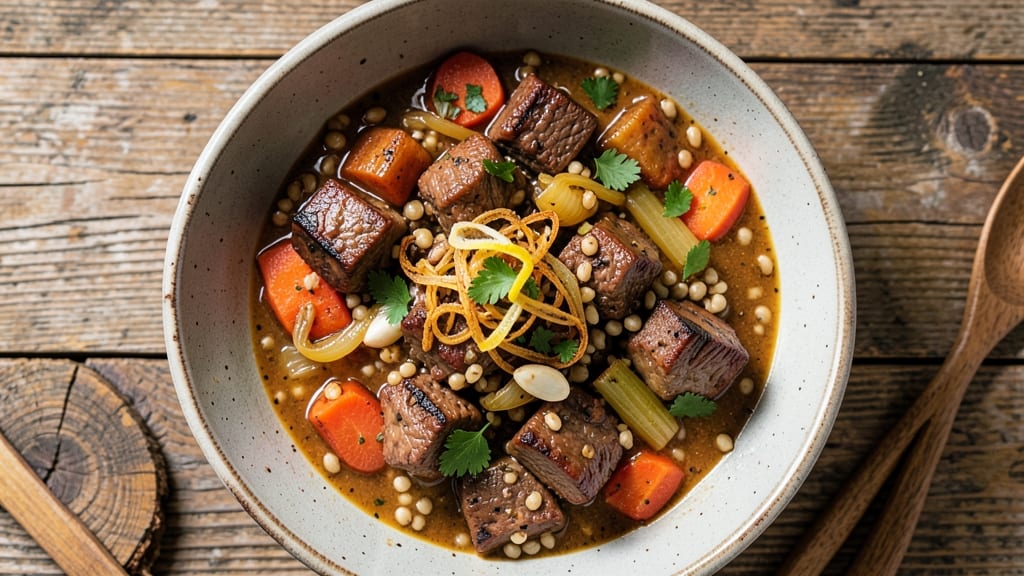
This beef and pearl barley stew recipe delivers the ultimate comfort food for chilly evenings, where tender beef meets nutty barley in a rich, aromatic broth. The secret lies in slow simmering—transforming tough cuts into melt-in-your-mouth perfection while the barley absorbs all that deep, savory flavor. I’ve perfected this over years of testing, balancing traditional techniques with modern umami twists that elevate it beyond basic stews.
The beauty of this recipe is its simplicity: just a few quality ingredients—like chuck roast, pearl barley, and aromatic vegetables—that come together in one pot. Browning the beef first creates a flavorful crust, while a splash of red wine and beef broth builds layers of complexity.
The pearl barley adds a satisfying chew and nutty depth that makes this stew heartier than most.
By the time it’s done, you’ll have a steaming bowl of tender beef, fluffy barley, and vegetables swimming in a velvety, aromatic broth. It’s the kind of meal that feels like a hug—warm, comforting, and packed with flavor.
The best part? It tastes even better the next day, making it perfect for meal prep or feeding a crowd.
Serve with crusty bread to soak up every last drop, or pair it with a simple green salad for balance. This is the kind of recipe that becomes a family favorite, especially when winter rolls in. Let’s get cooking—your taste buds will thank you.
Ingredients for beef and pearl barley stew
Just 14 ingredients transform into the coziest winter stew you'll ever make.
| Ingredient | Amount | Notes |
|---|---|---|
| Chuck Roast 🥩 | 2 ½ lb | Cut into 1.5-inch cubes |
| Pearl Barley 🌾 | 1 cup | Rinsed before cooking |
| Yellow Onion 🧅 | 1 whole | Diced into 1/4-inch pieces |
| Carrots 🥕 | 4 medium | Cut into 1-inch chunks |
| Garlic Cloves 🧄 | 4 cloves | Minced for depth |
| Celery Stalks 🧅 | 3 whole | Diced into 1/4-inch pieces |
| Red Wine 🍷 | 1 cup | Bold dry variety |
| Beef Broth 💧 | 4 cups | Low-sodium preferred |
| Tomato Paste 🍅 | 2 tbsp | For rich color |
| Fresh Thyme 🌿 | 2 tbsp | Leaves only, chopped |
| Bay Leaves 🍃 | 2 whole | Remove before serving |
| Salt 🧂 | 1 ½ tsp | Kosher or sea salt |
| Black Pepper 🌶️ | 1 tsp | Freshly ground |
| Olive Oil 🫒 | 2 tbsp | For searing beef |
The chuck roast is where all the magic happens—look for well-marbled cuts at the meat counter, and ask for it pre-cut if you're short on time. Costco or Whole Foods always have great options, but the regular grocery store butcher section works too. Pearl barley needs a quick rinse to remove excess starch, which keeps it from getting mushy. For the vegetables, freshness matters—bruised carrots or limp celery will make the broth taste flat. I usually grab a big bag of carrots and celery from the store's organic section—they stay crisp longer.
No red wine? Substitute with extra beef broth plus 1 tbsp balsamic vinegar—it adds that same deep, tangy note. Fresh thyme is ideal, but dried thyme at half the amount works in a pinch. The tomato paste can be skipped if you're watching acidity, but I always include it for that rich, umami kick. For the broth, low-sodium is key—you'll be adding salt later, and you don't want to overdo it. The celery and onion can be swapped for frozen mixed vegetables if you're in a hurry, though fresh has better texture.
This stew tastes even better the next day—make a double batch if you can. It keeps for 5 days in the fridge or 6 months in the freezer. For freezing, portion it into individual containers so you can thaw just what you need. The barley thickens as it cools, so add a splash of broth when reheating. Leftovers make amazing sandwiches—just pile the stew on crusty bread with a dollop of mustard. Trust me, you'll be making this again and again.
Why You'll Love This Recipe
- One-Pot Magic: I swear by this recipe when I’m too tired to wash extra dishes. Chuck roast and barley simmer together—no separate pans, no fuss—just dump, stir, and let it work its magic while you do other things.
- Deep, Rich Flavor: That slow-cooked chuck roast? It practically melts in your mouth, while the pearl barley soaks up all the savory juices. Honestly, the garlic and onions caramelize into something so aromatic, it’ll make your kitchen smell like a cozy pub.
- Meal Prep Gold: Between us, this stew tastes better the next day—perfect for prepping. I make a big batch on Sunday, and by Wednesday, it’s a hearty lunch with zero effort. Plus, the barley holds up like a champ.
- Budget-Friendly Feast: Chuck roast is cheap, barley is cheap, and a single pot feeds four for under $10. I’ll be real: my college self would’ve cried happy tears over this. It’s the kind of dish that stretches your grocery budget without sacrificing taste.
Step-by-step instructions for beef and pearl barley stew
This hearty stew delivers deep, nutty flavors and tender beef every time—let's build it together.
Sear the Chuck Roast for Maximum Flavor
Heat a large Dutch oven over medium-high heat until hot. Add the 2 tablespoons olive oil and swirl to coat the bottom. Working in batches, add the 2.5 lb chuck roast cut into 1.5-inch cubes and sear for 3-4 minutes per side until deeply browned. This step develops rich, caramelized flavors that form the stew's foundation.
Don't overcrowd the pan—work in batches if needed. You'll know it's ready when the beef releases easily from the pan and develops a golden crust. Transfer the seared beef to a plate and set aside temporarily. The browned bits left in the pan will become the flavorful base for your stew.
Build the Aromatic Vegetable Base
In the same Dutch oven, add the diced yellow onion, diced carrots, and diced celery stalks (this combination is called mirepoix). Cook for 5-6 minutes until the vegetables soften slightly and the onion becomes translucent. Stir occasionally to prevent burning.
Add the minced garlic cloves and cook for another 30 seconds until fragrant. Here's where the magic happens—these aromatics form the flavor backbone of your stew. If you notice any pieces sticking, add a splash of red wine to deglaze and lift them from the bottom.
Develop the Rich Stew Base
Pour in the 1 cup red wine and scrape up all the browned bits from the bottom of the pan using a wooden spoon. Let it simmer for 2-3 minutes until reduced by half. This step intensifies the wine's flavor and creates a velvety texture for your stew.
Stir in the 2 tablespoons tomato paste and cook for 1 minute until it darkens slightly. Add the 4 cups beef broth, 1.5 teaspoons salt, and 1 teaspoon black pepper. Bring to a gentle boil, then reduce heat to low and return the beef to the pot.
Simmer Until Tender
Add the 1 cup rinsed pearl barley, 2 tablespoons chopped fresh thyme, and 2 whole bay leaves to the stew. Partially cover the Dutch oven and simmer for 2-2.5 hours on low heat, stirring occasionally. The barley should be tender and the beef should easily pull apart with a fork.
Real talk: This is where patience pays off. The longer you simmer, the more flavor develops. Check occasionally to ensure the liquid doesn't reduce too much—add a splash of water if needed. You'll know it's ready when the barley is tender and the beef is fork-tender with rich, deep flavor.
Adjust and Serve
Remove the bay leaves and taste the stew. Adjust seasoning with additional salt or pepper if needed. The pearl barley should be tender but still hold its shape slightly, and the beef should be meltingly tender.
Ladle the stew into bowls and serve immediately with crusty bread or over mashed potatoes. Each spoonful should deliver rich, beefy flavor with nutty barley and deep, complex aromatics. This stew tastes even better the next day, so make extra if you can—it's perfect for meal prep and freezing.
Pro Tips For Making Beef And Pearl Barley Stew
- SEAR THE CHUCK ROAST: Don’t skip browning that beef—high heat for 3-4 minutes per side until deep caramel forms. I learned this the hard way when my stew tasted like "blended beef broth" instead of rich, layered flavor. A hot Dutch oven and 2 tablespoons of oil make all the difference.
- SOAK THE PEARL BARLEY: Toss the barley in cold water for 30 minutes before cooking—it cuts down on cooking time and keeps it from turning mushy. I used to skip this, and my stew always ended up with chewy, undercooked grains. Trust me, 30 minutes now saves 20 minutes later.
- DON’T CROWD THE VEGETABLES: Slice onions and carrots thin enough to cook through in 10 minutes, then spread them out in the pot. Packing them in too tight steams them instead of caramelizing, and you’ll end up with bland, watery veggies. Think "single layer," not "veggie mountain."
- SIMMER LOW AND SLOW: After the beef is tender (2.5–3 hours), drop the heat to a bare simmer—just small bubbles breaking the surface. I used to let it bubble hard, and the barley would turn to paste. A lid keeps the moisture in, but don’t boil it off. Patience here makes the stew.
Essential equipment for this recipe
Dutch Oven
A 6-quart Dutch oven is my non-negotiable tool for this stew—it’s the perfect size for even heat distribution and deep, flavorful browning. I swear by the Le Creuset Signature Dutch Oven for its durable enamel coating that prevents sticking and distributes heat beautifully.
If you're on a budget, the Lodge 5.5-Quart Cast Iron Dutch Oven works just as well and develops a natural non-stick patina over time. 🔥
Meat Thermometer
For perfect doneness, a meat thermometer is essential. I use the ThermoWorks Thermapen One because it’s fast and accurate, but even a basic instant-read thermometer (like the OXO Good Grips) will work.
Insert it into the thickest piece of beef—when it hits 203°F, your stew is ready. This ensures tender, juicy beef without overcooking.
Wooden Spoon
A heat-resistant wooden spoon is a game-changer for stirring and deglazing. I prefer a long-handled spoon (like the OXO Good Grips) to avoid burning my hands while scraping up those flavorful browned bits from the bottom of the pot.
Avoid metal spoons—they can scratch the Dutch oven’s surface over time.
Kitchen Timer
Timing is everything with stews, so a reliable kitchen timer keeps you on track. I use my iPhone alarm for simplicity, but a dedicated stainless steel timer (like the OXO Good Grips) sits on my countertop for easy visibility.
Set it for 2-2.5 hours of simmering—this ensures the beef and barley cook just right without drying out.
Fine-Mesh Strainer
A fine-mesh strainer (like the OXO Good Grips) comes in handy for rinsing the pearl barley before adding it to the stew. This removes excess starch, preventing the barley from turning mushy.
It’s also useful for straining broth if you’re making a homemade version or cleaning up any debris from your ingredients.
Chef’s Knife
Sharp knives make prep a breeze. My 8-inch Wüsthof Chef’s Knife is my go-to for dicing the onion, carrots, and celery into even pieces. A sharp serrated knife (like the Mercer Culinary Genesis) works well for mincing the garlic cloves.
Investing in a good knife ensures safety and precision—no one wants unevenly cut veggies in their stew!
Nutrition facts
Frequently asked questions
Can I use a different cut of beef in this stew?
While chuck roast is ideal for its marbling and tenderness, you can substitute with brisket, stew meat, or even short ribs. For tougher cuts like brisket, increase simmering time to 3 hours. Short ribs will add extra richness but may need 2.5 hours to become fork-tender. Just avoid lean cuts like sirloin—they'll dry out.
Why does my pearl barley turn mushy?
Overcooking or unrinsed barley are the usual culprits. Always rinse pearl barley before cooking to remove excess starch. Simmer for exactly 2-2.5 hours—any longer and it'll break down. For extra insurance, check doneness at 2 hours with a fork. If it's still firm, add 1/4 cup broth and cook 15 more minutes.
Can I make this stew in a slow cooker?
Yes! Brown the beef first in a skillet, then transfer everything to a 6-quart slow cooker. Cook on low for 8 hours or high for 5 hours. The slow cooker method is perfect for hands-off cooking, though you'll need to add 1/2 cup broth if it reduces too much. The flavors develop beautifully this way—just skip the bay leaves as they can become bitter.
What's the best way to reheat leftovers?
Reheat gently on the stove over medium-low heat for 10-15 minutes, stirring occasionally and adding 2-3 tablespoons broth if it's too thick. Microwaving works too, but cover with a damp paper towel and heat in 1-minute intervals to prevent drying. The stew tastes even better reheated—this is when all the flavors meld perfectly.
Can I add potatoes to this stew?
Add 2 cups diced potatoes (Yukon Gold or Russet) with the barley. They'll cook through in the same 2-2.5 hours timeframe. For creamier texture, add them 30 minutes before the stew is done. Just watch the liquid level—potatoes absorb moisture, so you may need to add 1/4 cup broth if it gets too dry.