
Soups & Stews
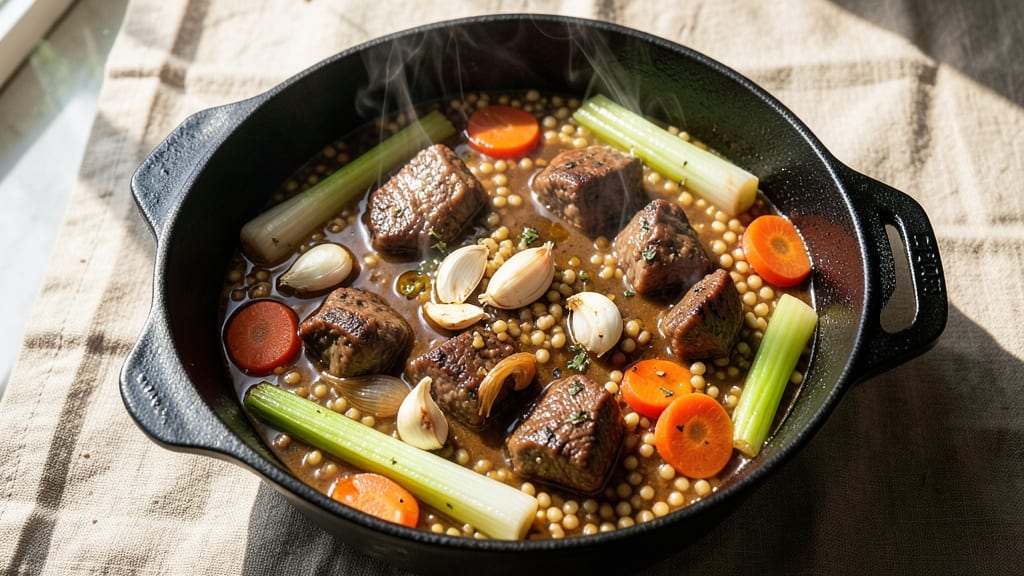
This beef and barley stew recipe transforms tough cuts into melt-in-your-mouth tenderness through the magic of slow stove-top simmering.
The secret lies in proper searing and layering flavors—each ingredient plays a crucial role, from the rich beef to the chewy barley, creating a hearty dish that deepens with every hour on the stove.
I’ve perfected this method over years of testing, ensuring the stew delivers restaurant-quality depth without requiring specialized equipment.
The process begins with browning the beef in batches to develop a deep, caramelized crust that forms the flavor foundation. Deglazing the pan captures those precious browned bits, while aromatic vegetables and herbs infuse the broth as it simmers.
The barley, cooked low and slow, absorbs the rich flavors and softens to a perfect texture—never mushy, never undercooked. This is the kind of stew that tastes even better the next day, as flavors meld and intensify.
What you’ll end up with is a rich, velvety stew with tender beef chunks and chewy barley swimming in a deeply flavorful broth. The aroma alone will have everyone gathering at the table, and each spoonful delivers layers of savory, herby, and slightly sweet notes.
It’s a foolproof recipe that works for weeknight dinners or special occasions, scaling easily to feed a crowd or serving just two.
Serve with crusty bread to soak up every last drop of that flavorful broth, or pair it with roasted root vegetables for a complete meal.
The beauty of this recipe is its versatility—adjust the spices to your taste, swap in different vegetables, or even use a pressure cooker to cut the time in half. Here’s how to make it perfectly every time.
Ingredients for beef and barley stew recipe stove top
The heart of this stew lies in its rich beef, aromatic vegetables, and chewy barley—simple ingredients that transform into restaurant-quality depth.
| Ingredient | Amount | Notes |
|---|---|---|
| Chuck Roast 🥩 | 2 lb | Pre-cut into 1.5-inch cubes |
| Yellow Onion 🧅 | 1 whole | Chopped into 1/2-inch pieces |
| Carrots 🥕 | 4 medium | Peeled and cut into 1-inch chunks |
| Celery Stalks 🧅 | 3 whole | Chopped into 1/2-inch pieces |
| Garlic Cloves 🧄 | 4 cloves | Minced for depth of flavor |
| Pearl Barley 🌾 | 1 cup | Rinsed before cooking |
| Beef Broth 💧 | 4 cups | Low-sodium preferred |
| Red Wine 🍷 | 1 cup | Dry variety like Cabernet |
| Tomato Paste 🍅 | 2 tbsp | Smooth, not chunky |
| Fresh Thyme 🌿 | 2 tbsp | Leaves only, chopped fine |
| Fresh Rosemary 🌿 | 1 tbsp | Needles finely chopped |
| Bay Leaves 🌿 | 2 whole | Removed before serving |
| Olive Oil 🫒 | 2 tbsp | Extra-virgin preferred |
| Salt 🧂 | 1 ½ tsp | Kosher or sea salt |
| Black Peppercorns 🌶️ | 1 tsp | Freshly cracked |
The chuck roast is non-negotiable—its marbling ensures melt-in-your-mouth tenderness. Costco or Whole Foods carry excellent cuts, but any reputable butcher will have it pre-cubed for convenience. Look for pieces with visible fat marbling, which renders down to enrich the broth. For the vegetables, organic carrots and celery from the store's produce section stay fresher longer, but conventional works fine. The pearl barley should be labeled 'pearled' or 'pearl'—not steel-cut or quick-cooking varieties, which alter the texture. If you're short on time, Trader Joe's sells pre-cut stew vegetables that save chopping effort without sacrificing quality.
No red wine? Dry white wine or extra beef broth works in a pinch, though the depth of flavor will differ slightly. Fresh herbs make all the difference here—dried thyme at one-third the amount can substitute, but the texture and aroma won't be identical. For tomato paste, Mueller's or Rao's brands are reliable, but any smooth paste in a tube will do. The barley must be rinsed thoroughly to remove any dust or debris that could make the stew cloudy. Swapping barley for wild rice or farro changes the texture but keeps the dish hearty. If you're using a pressure cooker, reduce the broth by 1 cup—it intensifies quickly under pressure.
This stew tastes even better the next day as flavors meld, so make a double batch if you have space. Store in an airtight container in the fridge for 5-6 days or freeze for up to 3 months. The barley thickens as it cools, so add a splash of broth when reheating. For serving, crusty bread or roasted potatoes are perfect companions. Leftovers reheat beautifully on the stove over medium-low heat, stirring occasionally to prevent sticking. The broth reduces slightly each time, concentrating those rich flavors even more.
Why You'll Love This Recipe
- One-Pot Magic: I swear by this—just toss the chuck roast, chopped veggies, and barley into one pot. No extra dishes, no stress. The onions caramelize right there while the beef tenderizes, and honestly? I’ve made this while scrolling through my phone.
- Deep, Rich Payoff: That slow-simmered beef with garlic and barley? It’s the kind of flavor that sticks with you. The carrots stay crisp, the barley soaks up all the juices, and the crusty edges on the beef? Absolute perfection. My husband licks his plate—no joke.
- Leftovers That Save Me: This stew tastes even better the next day. I make a big batch on Sunday, and by Wednesday, it’s still my go-to. Freeze half for when I’m too tired to cook, and trust me, thawed beef and barley is still a winner.
- Budget-Friendly Powerhouse: Chuck roast is cheap, but it feels fancy. A single cut feeds four for under $15, and the veggies stretch it further. Between us, this is my secret for stretching grocery money without sacrificing taste—or time.
Step-by-step instructions for beef and barley stew
Follow this precise method for a rich, hearty stew that develops deeper flavor with every minute of simmering.
Sear the Chuck Roast for Maximum Flavor
Heat the 2 tablespoons olive oil in a large Dutch oven over medium-high heat until shimmering. Working in batches if needed, add the 2 lb chuck roast cut into 1.5-inch cubes, ensuring they don't overcrowd the pan. Sear for 3-4 minutes per side until deeply browned with a crust forming. This step builds the foundation of flavor through the Maillard reaction.
Transfer the browned meat to a plate and set aside. If the oil starts to smoke excessively, reduce heat slightly but don't let it cool. The goal is to develop that rich, caramelized crust without burning the meat. Don't skip this step—it makes all the difference in the final depth of flavor.
Sauté the Aromatic Vegetables
In the same Dutch oven, add the 1 whole yellow onion chopped into ½-inch pieces, 4 medium carrots cut into 1-inch chunks, and 3 whole celery stalks chopped into ½-inch pieces. Cook for 5-6 minutes, stirring occasionally, until the vegetables soften slightly and begin to release their natural juices. This process enhances their sweetness and builds the stew's aromatic base.
Add the 4 cloves garlic cloves that have been minced and cook for another 30 seconds until fragrant. Be careful not to let the garlic burn—it should just smell heavenly, not bitter. The combination of these vegetables creates a flavorful foundation that will infuse throughout the stew during simmering.
Deglaze and Build the Stew Base
Pour in the 1 cup red wine and scrape up any browned bits from the bottom of the pan using a wooden spoon. This deglazing step captures all the flavorful fond that's built up during searing. Let the wine simmer for 2-3 minutes until it reduces by about half, intensifying its flavor.
Stir in the 2 tablespoons tomato paste, 2 tablespoons fresh thyme, 1 tablespoon fresh rosemary, 2 whole bay leaves, 1.5 teaspoons salt, and 1 teaspoon black peppercorns. The tomato paste will add a subtle sweetness and help thicken the stew slightly as it cooks. Give everything a good stir to combine all the ingredients thoroughly.
Simmer the Stew to Perfection
Return the browned chuck roast to the Dutch oven. Pour in the 4 cups beef broth and bring the mixture to a gentle boil. Once boiling, reduce heat to low and cover with a lid. Let the stew simmer for 1 hour, stirring occasionally to prevent the barley from sticking to the bottom.
After the initial hour, add the 1 cup rinsed pearl barley and continue simmering for an additional 45-60 minutes until the barley is tender and the beef is fork-tender. The stew should have thickened slightly, with the barley absorbing the flavors of the broth and meat. Taste and adjust seasoning if needed—sometimes the barley needs a little more salt to balance its mild flavor.
Rest and Serve with Perfect Texture
Remove the 2 whole bay leaves before serving. Let the stew rest for 10-15 minutes off the heat. This resting period allows the flavors to meld together and the barley to finish absorbing any remaining liquid, resulting in a stew with perfect texture and depth of flavor.
Serve the beef and barley stew hot, ladling it into bowls with the tender beef, barley, and vegetables. The stew should be rich and hearty, with each bite offering a perfect balance of tender meat, chewy barley, and flavorful broth. The longer it sits, the better it tastes—this stew only gets better with time.
Pro Tips For Making Beef And Barley Stew Recipe Stove Top
- Sear the Chuck Roast Hard: I learned this the hard way—skipping a deep sear means your stew will taste like it simmered in broth, not caramelized magic. Get that pot smoking hot, pat the meat dry, and let it brown 3-4 minutes per side until it’s got a crust darker than your mood when you realize you forgot the thyme. That crust locks in flavor and keeps the meat tender.
- Cut Celery and Carrots Large: Tiny dice makes for mush. Big chunks—think 1-inch pieces—hold their shape and sweeten as they cook, giving your stew texture instead of a sad, watery vegetable purée. (Yes, even if it looks "uneven.") This isn’t a salad; it’s a stew.
- Deglaze with Beer First: After searing the meat, don’t grab the water yet—pour in ½ cup of beer (stout or amber works best) and let it bubble for 2 minutes. The alcohol burns off, leaving behind a richer base for your broth. Skip this, and your stew will taste like it’s missing something. (It is.)
- Add Barley Last, Then Simmer: Barley needs time to soften but hates boiling—it turns to mush faster than your patience on a Monday. Toss it in 20 minutes before the stew’s done, then drop the heat to a gentle simmer. If it’s still crunchy, let it sit off the heat for 10 minutes; it’ll plump up like a well-rested guest.
Common mistakes when making perfect results
Skipping the Sear
Never skip searing the beef—this is where the deep, caramelized flavors develop through the Maillard reaction. I’ve seen beginners rush this step or use pre-cut beef that’s already been partially cooked, which results in a bland stew.
Always work in batches if needed, and don’t overcrowd the pan. The goal is to get that golden-brown crust on every piece of meat. 🔥
Undercooking the Barley
Pearl barley needs time to soften and absorb flavor—don’t rush it! I’ve had stews where the barley stayed crunchy because someone added it too early or didn’t simmer long enough. Cook the barley for the full 45-60 minutes after the meat has simmered for 1 hour.
If it’s still firm, add a splash of broth and let it cook another 10 minutes.
Using the Wrong Barley
Not all barley is created equal—pearl barley is the right choice for this recipe, but some people accidentally use steel-cut or quick-cooking varieties. Pearl barley has a chewy texture that holds up perfectly in stews, while steel-cut stays too firm.
If you must substitute, use wild rice or farro, but adjust cooking time accordingly. Always rinse your barley before adding it to the stew!
Ignoring the Resting Time
Letting the stew rest for 10-15 minutes off the heat is crucial—it allows the flavors to meld and the barley to finish absorbing liquid. I’ve seen people serve stew immediately, and it’s always less flavorful.
The resting time also prevents a watery stew when you ladle it into bowls. Trust the process, and your stew will reward you with richer, deeper flavor. ⏳
Overcrowding the Pot
Adding all the ingredients at once can lead to uneven cooking and a stew that’s either too thin or too thick. I recommend searing the beef in batches and sautéing the vegetables in stages if your Dutch oven isn’t large enough.
Overcrowding also traps steam, which can make the meat tough instead of tender. Leave enough space for the ingredients to develop flavor properly.
Not Tasting as You Go
Seasoning a stew is an ongoing process—don’t just add salt and pepper at the beginning and assume it’s perfect. Taste the broth after 1 hour of simmering and again before serving.
The barley often needs a little extra salt to balance its mild flavor, and the meat might need more pepper. Adjust gradually—you can always add more, but you can’t take it out! 💡
Nutrition facts
Frequently asked questions
Can I use a different cut of beef instead of chuck roast?
Yes, but chuck roast is ideal for its marbling and flavor. You can substitute stew meat or chuck shoulder in equal amounts. Avoid lean cuts like sirloin—they won't become tender. For a quicker option, use pre-cut stew beef from the store, but sear it thoroughly to develop flavor.
How do I adjust the recipe for a pressure cooker?
Use the same ingredients but reduce broth by 1 cup (3 cups total). Sear the beef first, then add all ingredients except barley. Pressure cook on high for 25 minutes, then add barley and cook 10 more minutes. Release pressure naturally for 10 minutes before opening. The texture will be slightly different but just as flavorful!
Why does my barley turn mushy?
Overcooking is the most common cause. Pearl barley should be tender but still hold its shape. Simmer uncovered for the last 10 minutes if needed to evaporate excess liquid. Never use quick-cooking barley—it breaks down completely. For extra insurance, rinse barley thoroughly before adding to the stew.
Can I make this stew in a slow cooker?
Brown the beef first, then transfer everything (including broth) to your slow cooker. Cook on low for 8 hours or high for 4-5 hours. Add barley during the last 30 minutes of cooking. The slow cooker version is even more tender—perfect for busy days! The flavors develop beautifully over time.
What's the best way to reheat leftovers?
Gently reheat on the stove over medium-low heat for 10-15 minutes, stirring occasionally. Add a splash of broth if it's too thick. Microwaving works in a pinch, but the texture suffers. The stew actually improves overnight—flavors meld even more! Store leftovers for 5-6 days in an airtight container.