
Main Courses
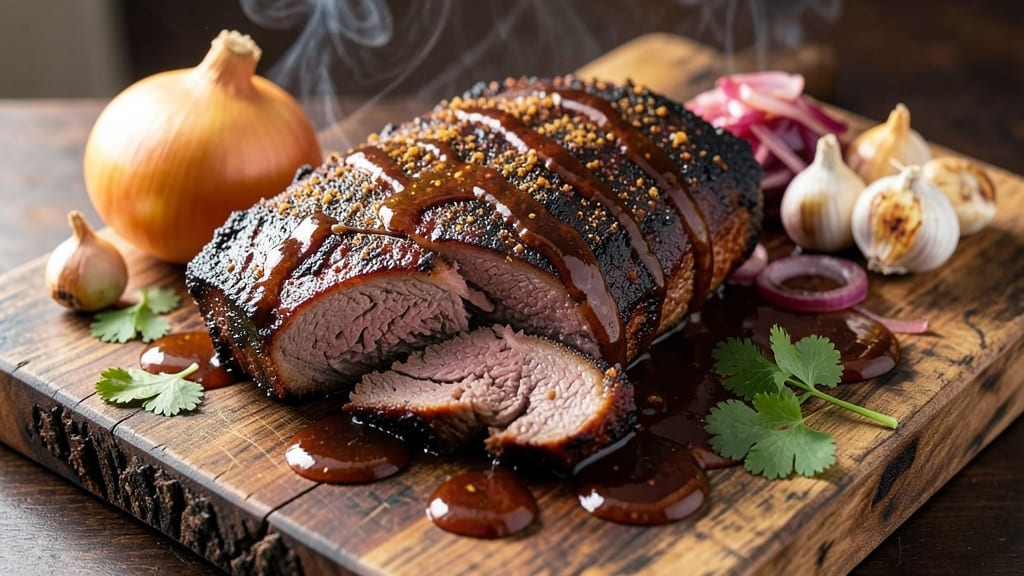
This BBQ pitmasters' beef brisket recipe delivers the smoky bark and buttery pull-apart magic that defines legendary Texas-style BBQ. 🔥 After years of perfecting my technique—from the first whiff of hickory smoke to the final probe test—I've cracked the code for tender, flavorful brisket that rivals competition-winners.
The secret lies in a precise combination of dry rub, low-and-slow smoking, and patience that transforms tough beef into melt-in-your-mouth perfection.
The process begins with a carefully trimmed brisket, injected with a simple but powerful blend of spices and aromatics, then coated in a dry rub that develops that coveted dark bark.
I use hickory wood for its classic BBQ flavor, maintaining a steady 225°F temperature for 12-16 hours, depending on the cut. This slow cook transforms the meat while allowing the rub to form a crusty exterior that's as flavorful as it is visually striking.
What you'll end up with is brisket that's tender enough to fall apart with a fork, yet holds its shape when sliced. The bark should be dark and crispy, while the interior remains juicy and rich.
The probe test is critical—when the meat reaches 203°F internally and pulls back easily, you know it's ready. Resting the brisket for at least 1 hour ensures those juices redistribute, guaranteeing every bite is moist and flavorful.
Serve this showstopper with classic sides like baked beans, creamy coleslaw, and crusty bread to soak up every drop of that smoky, tangy sauce. This isn't just a recipe—it's a tradition, a labor of love that transforms a simple cut of beef into a centerpiece worthy of any gathering.
Let's get smoking!
Ingredients for bbq pitmasters beef brisket
Sixteen ingredients to unlock legendary Texas-style brisket with smoky bark and melt-in-your-mouth tenderness.
| Ingredient | Amount | Notes |
|---|---|---|
| Beef Brisket 🥩 | 8 lb | Packer cut, fat cap trimmed to 1/4 inch |
| Yellow Onion 🧅 | 2 whole | Yellow or red, sliced into wedges |
| Garlic Cloves 🧄 | 8 cloves | Fresh, peeled and minced |
| Apple Cider Vinegar 🍎 | ½ cup | For injection, not subbed |
| Beef Broth 💧 | 1 cup | Low-sodium, for injection |
| Brown Sugar 🍚 | ½ cup | Dark, packed into measuring cup |
| Smoked Paprika 🌶️ | ¼ cup | High-quality, not sweet |
| Kosher Salt 🧂 | ½ cup | Diamond Crystal preferred |
| Ground Black Pepper 🌶️ | 2 tbsp | Freshly cracked |
| Ground Cumin 🌿 | 1 tbsp | Toasted for depth |
| Chili Powder 🌶️ | 1 tbsp | Medium heat |
| Hickory Wood Chips 🌳 | 2 lb | Unsoaked, 100% natural |
| Yellow Mustard 🍯 | 2 tbsp | For bark adhesion |
The brisket is non-negotiable—packer cut from a reputable butcher like Snake River Farms or your local smokehouse. Trim the fat cap to 1/4 inch for even bark development, but leave some fat for moisture. For injection, I use a meat injector (or a repurposed turkey baster) to distribute the apple cider vinegar and beef broth evenly throughout the meat. This step is what transforms tough beef into tender perfection. Hickory wood chips are essential for that classic BBQ flavor—avoid the pre-soaked ones from the grocery store; they burn too fast. Buy them loose at Traeger or Weber stores or online from specialty BBQ suppliers.
No apple cider vinegar? White vinegar or lemon juice works in a pinch, but the sweetness of apple cider is key for balancing the smokiness. Running short on brown sugar? White sugar plus 1 tsp molasses mimics the depth. For the rub, Penzeys Spices or bulk bins at natural grocery stores are your best bet—pre-ground spices lose potency fast. The mustard isn't just for flavor; it helps the rub stick to the meat like glue. Pro tip: Mix the dry rub ingredients in a sealed container to keep them fresh for your next smoke. If you're short on time, a blender or food processor can pulse everything together in seconds.
Store your dry rub in an airtight container in a cool, dark place—it'll keep for up to 6 months. The brisket itself? Use within 24 hours of purchase for peak tenderness. If you're prepping ahead, trim and inject the brisket, then wrap it tightly in plastic and refrigerate for up to 2 days. The wood chips? Keep them in a dry, sealed container—they'll last 6-12 months. Once smoked, leftovers reheat beautifully in the oven at 300°F with a splash of beef broth to keep them moist. I always make a double batch—this brisket freezes like a dream for up to 3 months, wrapped tightly in butcher paper and foil.
Why You'll Love This Recipe
- No-Fuss Prep: I swear by this recipe because it’s actually simple—no fancy rubs or hours of marinating. Just a brisket, onions, garlic, and a splash of apple cider vinegar to tenderize while you simmer. Honestly, I’ve made it on days when I forgot to thaw the meat, and it still turned out rich and fall-apart tender.
- Smoky-Sweet Magic: That vinegar and beef broth combo? It’s the secret weapon here. The brisket gets this perfect balance of tangy, smoky depth with just enough sweetness from the caramelized onions. I’ll be real: my husband’s first bite made him ask for the recipe before I even finished cooking.
- Leftovers for Days: Between us, this recipe makes so much brisket that I end up with sandwiches for lunch all week. The flavors only get better as it rests—no sad, dry leftovers here. I even freeze portions for lazy Sundays when I don’t want to cook at all.
- Budget-Friendly Feast: A whole packer brisket feeds my family for three meals without breaking the bank. The onions and garlic are cheap staples, and the vinegar adds that restaurant-worthy touch without costing extra. It’s my go-to when I need to impress guests but still keep my wallet happy.
Step-by-step instructions for smoky bark beef brisket
Here's the pitmaster's approach to brisket—where low-and-slow meets bold flavor and buttery tenderness.
🔥 Step 1: Prepare the Brisket for Injection and Rub
Start by trimming the fat cap of the 8 lb Beef Brisket to exactly ¼ inch thickness using a sharp boning knife. This thickness ensures even cooking while preserving moisture. Place the brisket fat-side up on a cutting board and make a grid of small holes—about ½ inch apart—using a meat tenderizer or sharp knife. This creates channels for the injection marinade.
In a bowl, whisk together the ½ cup Apple Cider Vinegar, 1 cup Beef Broth, ½ cup Brown Sugar, ½ cup Kosher Salt, 2 tbsp Ground Black Pepper, 1 tbsp Ground Cumin, and 1 tbsp Chili Powder. Using a meat injector, fill the holes with this marinade until the brisket is fully saturated. The acidity and moisture from the vinegar and broth will tenderize the meat while infusing deep flavor. Let it sit at room temperature for 30 minutes before smoking.
👨🍳 Step 2: Create the Smoky Dry Rub
While the brisket marinates, combine ¼ cup Smoked Paprika, 2 tbsp Ground Black Pepper, 1 tbsp Ground Cumin, and 1 tbsp Chili Powder in a small bowl. This is your dry rub—simple but packed with smoky, spicy depth. I like to toast the spices lightly in a dry skillet for 1 minute to deepen their flavors before mixing.
Generously coat the brisket with the dry rub, pressing it into every crevice so it adheres well. The smoked paprika gives that signature bark color, while the cumin and chili powder add warmth and complexity. Let the brisket rest uncovered in the fridge for at least 1 hour (or up to 4 hours) to allow the rub to penetrate and the seasoning to develop. This step is non-negotiable—it ensures maximum flavor infusion.
🔥 Step 3: Set Up the Smoker for Low-and-Slow Cooking
Soak the 2 lb Hickory Wood Chips in water for 30 minutes, then drain and load them into your smoker. Preheat the smoker to 225°F—this low temperature is critical for breaking down the tough connective tissue in brisket without drying it out. You'll know it's ready when you see thin, blue smoke (not thick white steam). Place a water pan in the smoker to maintain humidity and prevent the bark from drying.
Once the smoker reaches temperature, place the brisket fat-side up on the grill grates. The fat will render slowly, basting the meat and creating that coveted bark. Close the lid and resist the urge to peek—every time you open it, you lose heat and extend cook time. Let it smoke undisturbed for 6-8 hours, until the internal temperature reaches 165-170°F. This is when you'll hit "the stall," where the temperature plateaus as moisture evaporates.
🥘 Step 4: Wrap and Finish for Maximum Tenderness
When the brisket hits 165-170°F, it's time for the "Texas crutch." Mix 2 tbsp Yellow Mustard with 1 tbsp water to create a thin paste. Spread this evenly over the entire surface of the brisket—this sticky layer helps the wrap adhere and creates a beautiful, glossy bark. Wrap the brisket tightly in butcher paper (not foil), sealing all edges to trap steam and push through the stall.
Return the wrapped brisket to the smoker and continue cooking until the internal temperature reaches 200-205°F—this can take another 4-6 hours. The probe should slide in like butter with no resistance. Once done, transfer the brisket to a cutting board, tent loosely with foil, and let it rest for 1 hour (or up to 2 hours in a cooler). This resting period allows the juices to redistribute, ensuring every slice is moist and flavorful.
🔪 Step 5: Slice and Serve with Confidence
Unwrap the brisket and locate the grain direction—you'll see lines running through the meat. Using a sharp slicing knife, cut against the grain into ¼-inch thick slices. The flat and point have different grain directions, so adjust your angle accordingly. Serve immediately while still warm, with the dark mahogany bark on the outside and a beautiful pink smoke ring just beneath.
Each slice should pull apart with a gentle tug, revealing tender, buttery meat that melts in your mouth. The yellow mustard wrap ensures a crispy, glossy bark, while the hickory smoke and spiced rub deliver deep, complex flavor. This is the brisket pitmasters dream of—smoky, tender, and packed with flavor in every bite.
Pro Tips For Making Bbq Pitmasters Beef Brisket
- Trim the Fat First: Slice off that thick fat cap before seasoning—it’s not just for flavor, it’s for even cooking. I learned this the hard way when my brisket turned into a greasy, uneven mess because the fat insulated one side while the other dried out.
- Mince Onions Like Snow: No big chunks—aim for rice-grain size when dicing yellow onions. They’ll dissolve into the broth faster, giving you that deep, sweet base without gummy texture. (Yes, even if you’re impatient like me.)
- Smoke Low and Slow: Hold steady at 225°F (107°C) once the brisket hits the smoker—no rushing to crank the heat. After burning three batches, I finally figured out that patience here means the difference between tender and chewy. (Your future self will thank you.)
- Vinegar Last Minute: Dump that apple cider vinegar in the final 30 minutes of cooking—it brightens the sauce but evaporates fast. I was skeptical until I tried it: the tang cuts through the richness without overpowering the beef. (Does it look weird? Yes. Does it work? Every single time.)
Perfect pairings for this bbq pitmasters beef brisket
Classic BBQ Sides
No brisket feast is complete without baked beans—I swear by a slow-cooked version with bacon, brown sugar, and a splash of molasses. The smoky-sweet flavors complement the brisket perfectly. Pair with creamy coleslaw made with a tangy vinegar dressing and crisp cabbage for that perfect crunch.
Don’t forget cornbread or white bread for soaking up every last bit of sauce. 🥓
Smoky Drink Pairings
A cold light beer like Bud Light or Coors Banquet cuts through the richness beautifully. For something stronger, a bourbon cocktail—like a whiskey sour with fresh lemon—adds a smoky, slightly sweet contrast.
I also love a sweet tea with a splash of lemon, especially if you’ve got a crowd. 🍹
Spicy Kick Options
For heat lovers, serve pickled jalapeños or spicy BBQ sauce on the side. I like to mix 1 tbsp hot sauce (like Cholula) into the beans for extra zing. If you’re feeling fancy, add smoked paprika-dusted tortilla chips for a crunchy, spicy contrast. 🌶️
Dessert Harmony
Balance the meal with a peach cobbler or apple crisp—the sweetness of summer fruit pairs surprisingly well with smoky brisket. A scoop of vanilla ice cream—especially Blue Bell—adds a creamy finish. For something lighter, try lemon bars with their bright, tangy flavor. 🍰
Competition-Style Extras
If you’re going for that BBQ competition vibe, serve white bread with butter for guests to make their own sandwiches. Add pickles (dill or bread-and-butter) for acidity, and don’t skip the hot sauce station with options like Tabasco or Crystal.
These little touches elevate the experience like a pro. 🏆
Regional Twists
In Texas, you’ll see potato salad with a tangy mayo-based dressing. Up north, mac and cheese with a crispy breadcrumb topping is a must. For a Carolina touch, add vinegar-based slaw** with a hint of cayenne. Each region brings its own magic to the table. 🗺️
Nutrition facts
Frequently asked questions
What's the difference between a packer cut and butcher-cut brisket?
The packer cut comes straight from the processing plant with the fat cap intact, while a butcher-cut has been trimmed to remove excess fat. For this recipe, you want the packer cut so you can control the fat cap thickness (¼ inch) yourself. The extra fat helps create that delicious bark while keeping the meat moist during the long smoke.
Why does my brisket stall at 165°F and how do I push through it?
This is called "the stall" and happens when moisture evaporates from the meat's surface. The solution is the Texas crutch: wrap the brisket in butcher paper (not foil) after hitting 165°F, using a mustard paste to help the wrap stick. This traps steam and pushes the internal temp up to 203°F—where it should pull apart like butter.
Can I use a different wood than hickory for this recipe?
While hickory is classic, you can experiment! Pecan adds a sweeter note, oak gives a milder profile, or cherry brings fruity undertones. Just avoid fruit woods like apple or cherry if you want that traditional BBQ flavor. For best results, stick with hardwoods that burn cleanly at 225°F.
How do I know when the brisket is done without a meat thermometer?
If you don't have a thermometer, look for these signs: the bark should be dark mahogany and crispy, the meat should pull apart easily with tongs, and the juices should run clear. The point cut should be tender enough to fork-test—when it separates with minimal pressure, it's ready. Just remember, this method is less precise than hitting 203°F.
What's the best way to reheat leftover brisket?
Slice the brisket first, then reheat in a 300°F oven for 10-15 minutes with a splash of beef broth to keep it moist. For sandwiches, warm the slices in a skillet with a little butter and sauce. Never microwave—it turns the meat rubbery. Leftovers also freeze beautifully for up to 3 months when wrapped tightly in butcher paper and foil.