
Sauces & Condiments
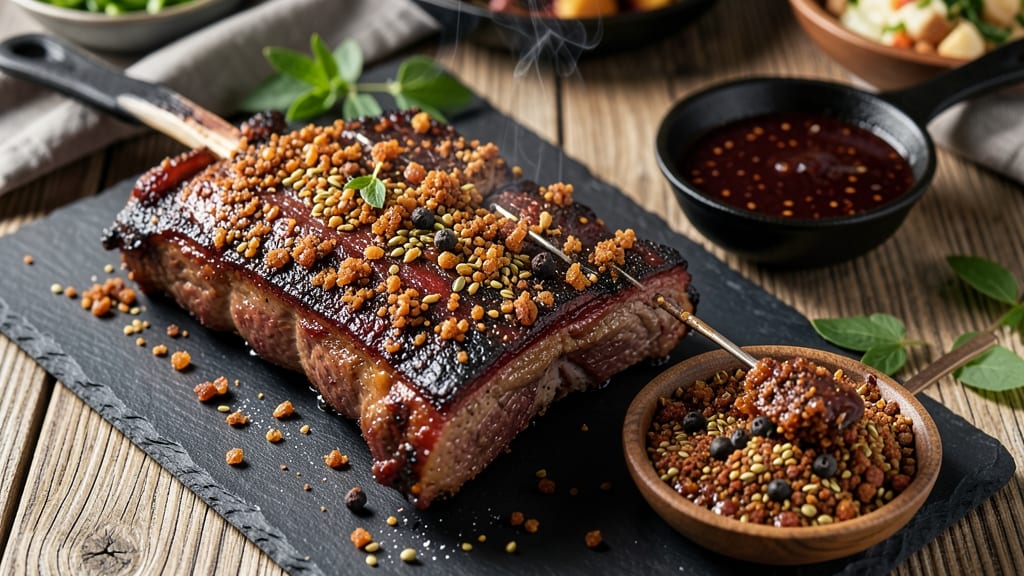
This BBQ beef rib rub recipe transforms tough ribs into fall-off-the-bone tenderness with a smoky-sweet crust that locks in flavor. 🔥 As a pitmaster, I've perfected this dry spice blend to create a bark so flavorful it'll have your guests begging for the recipe.
The secret lies in balancing bold spices with just enough sweetness to caramelize beautifully during cooking.
What makes this rub special is its simplicity—just six dry ingredients that work together to create complex layers of flavor. The blend includes coarse salt for texture, brown sugar for caramelization, and smoked paprika for that signature BBQ aroma.
I developed this recipe after years of experimenting with different ratios, ensuring each component enhances the others without overpowering.
To use, simply apply the rub generously to ribs 1–2 hours before grilling, pressing it into the meat so it adheres. As the ribs cook, the rub transforms into a crispy, flavorful crust that seals in juices and delivers deep, smoky notes with every bite.
This isn't just a seasoning—it's the foundation of unforgettable BBQ.
The beauty of this dry rub is its versatility—use it on ribs, brisket, or even chicken thighs for a restaurant-quality result at home. Store it in an airtight container for up to six months, ready to elevate your next cookout. Let's get started!
Ingredients for bbq beef rib rub
Six essential spices transform ribs into restaurant-quality masterpieces with smoky-sweet perfection.
| Ingredient | Amount | Notes |
|---|---|---|
| Coarse Kosher Salt 🧂 | 3 tbsp | Diamond Crystal preferred for texture |
| Light Brown Sugar 🍚 | 2 tbsp | Packed for accurate measurement |
| Smoked Paprika 🌶️ | 1 ½ tbsp | High-quality for authentic smokiness |
| Ground Black Pepper 🌶️ | 1 ½ tsp | Freshly ground for optimal flavor |
| Ground Cumin 🌿 | 1 tsp | Toasted for deeper aroma |
| Garlic Powder 🧄 | 1 tsp | Non-iodized for pure flavor |
The quality of your salt and sugar makes all the difference. Diamond Crystal kosher salt dissolves beautifully and provides the perfect texture for the crust. For brown sugar, Domino brand is my go-to—it's consistently moist and packs well for accurate measurements. Smoked paprika should be high-quality, not the cheap grocery store variety—look for brands like Penzeys or McCormick Gourmet in the spice aisle. These spices lose potency quickly, so store them in airtight containers away from light and heat. If your spices smell dull, it's time to replace them—freshness is critical for that authentic BBQ flavor.
No smoked paprika? Substitute with a mix of regular paprika and a pinch of liquid smoke—start with 1/4 tsp liquid smoke and adjust to taste. Can't find toasted cumin? Regular ground cumin works fine, though it won't have the same depth of flavor. For garlic powder, garlic salt at half the amount can work in a pinch, but you'll need to adjust the salt measurement elsewhere. If you're using this rub on chicken instead of ribs, reduce the sugar slightly to 1.5 tbsp—chicken doesn't need as much caramelization. The spices should be ground to a similar consistency—if your cumin is coarser, pulse it briefly in a spice grinder to match.
This rub keeps indefinitely in an airtight container—up to 6 months if stored properly. I like to portion it into small jars for convenience, labeling each with the date. For best results, apply the rub 1-2 hours before cooking and press it firmly into the meat. The longer it sits, the more flavor it penetrates. If you're not using it all at once, store the remaining rub in the freezer for up to 3 months—it won't lose potency, just make sure to let it come to room temperature before using. The rub works beautifully on brisket, pork shoulders, and even grilled vegetables for a smoky kick.
Why You'll Love This Recipe
- Let’s be real: most BBQ leftovers turn dry or sad. Not this. The rub keeps meat juicy for days, so I can meal prep ribs for lunch or toss them in tacos later. Plus, the spices stretch my grocery budget—just a pinch goes a long way.
- Five-Ingredient Magic: I swear by this mix—just salt, sugar, smoked paprika, pepper, and cumin. No fancy prep, no measuring cups that never fit right. Honestly, I keep a little jar of this in my pantry now, and it’s the first thing I reach for when ribs or steaks hit the grill.
- Smoky-Sweet Obsession: That smoked paprika and brown sugar combo? It’s like a warm hug for your taste buds. The salt cuts through the richness, while the cumin adds this deep, earthy kick that makes every bite feel like a reward. (Yes, even on a Tuesday night.)
- Grill or Pan, No Stress: Slap this rub on ribs for Sunday supper, or toss it on skirt steaks for a weeknight dinner. Between us, I’ve even used it on chicken thighs when I’m lazy—works like a charm. The beauty? It’s not picky about how you cook it.
Step-by-step instructions for BBQ beef rib rub
Here's how to blend this smoky-sweet crust that transforms ribs into irresistible centerpieces.
👨🍳 Step 1: Measure Ingredients Precisely
Start by gathering all your ingredients in a medium bowl. I use a measuring spoon for the 1.5 tablespoons smoked paprika and 1.5 teaspoons ground black pepper—this ensures consistent flavor every time. The 3 tablespoons coarse kosher salt should be packed lightly to avoid over-salting, while the 2 tablespoons light brown sugar needs to be packed firmly for accurate measurement.
This precision matters because the sugar-to-salt ratio creates that perfect balance of sweetness and saltiness. I always double-check my measurements against the list to avoid common mistakes like using table salt instead of kosher salt, which would throw off the entire flavor profile.
👨🍳 Step 2: Whisk Until Uniformly Combined
Using a whisk, combine all ingredients in the bowl. Start by adding the 3 tablespoons coarse kosher salt and 2 tablespoons light brown sugar, whisking vigorously for 30 seconds until they form a fine, even mixture. This breaks up any sugar crystals that could create uneven coating later.
Next, add the 1.5 tablespoons smoked paprika, 1.5 teaspoons ground black pepper, 1 teaspoon ground cumin, and 1 teaspoon garlic powder. Continue whisking for another 1-2 minutes until the mixture is completely homogeneous and no dry spots remain. The rub should look like a fine, reddish-brown powder with no visible specks of individual spices.
🔪 Step 3: Test the Rub on a Small Surface
Before applying to ribs, I always test the rub on a small piece of paper or my palm. Sprinkle a pinch of the mixture and rub it between my fingers—you should feel an even distribution of texture and smell a balanced combination of smokiness, sweetness, and savory warmth. This quick check helps identify any flavor imbalances before committing to the entire batch.
If the rub tastes too sweet, add a pinch more coarse kosher salt; if it's too salty, a bit more light brown sugar will help. The goal is that perfect harmony where each spice complements the others without overpowering. This step ensures your final product will be restaurant-quality every time.
⏰ Step 4: Store for Optimal Freshness
Transfer the finished rub to an airtight container, like a small glass jar with a tight-sealing lid. I label mine with the date and store it in a cool, dark pantry. This rub stays fresh and flavorful for up to 3 months, though I usually use it up within a couple of weeks because it's too good to wait.
When ready to use, simply shake the jar to redistribute the spices evenly before applying. The key to a perfect application is generosity—don't be shy with the rub. Press it firmly into the meat so it adheres well and creates that coveted bark during cooking. This step is where all your preparation pays off with that irresistible crust.
Pro Tips For Making Bbq Beef Rib Rub
- CRUSH THE SUGAR FIRST: I used to just toss the brown sugar into the mix and call it a day—big mistake. Lightly crush it in a mortar or bag with a rolling pin before adding. This breaks down the granules so they stick to the ribs better and caramelize faster on the grill. (Yes, even if you’re impatient like me.)
- SALT THE RIBS 24 HOURS EARLY: Skip this, and your rub will just sit like dust on the meat. Apply a thin layer of coarse kosher salt to the ribs before adding the dry rub—let them sit uncovered in the fridge overnight. The salt draws out moisture, which evaporates, helping the rub cling and form that coveted crust. (Your future self will notice the difference.)
- DON’T SKIP THE PEPPER CORN: Ground black pepper loses its kick fast, but peppercorns? They stay sharp. Lightly toast 4-5 whole peppercorns with the cumin in a dry pan for 30 seconds, then grind them fresh. The toasted, fresh pepper adds depth the pre-ground version can’t match. (I was skeptical until I tried it.)
- SEAR HOT, THEN SLOW: After applying the rub, sear the ribs over direct heat for 5-7 minutes until the sugar starts to darken—then move them to indirect heat. Rushing the sear burns the sugar before it can caramelize, leaving you with a bitter mess. (This isn’t the prettiest method, but it’s the tastiest.)
Troubleshooting this recipe
Uneven Rub Distribution
If your rub isn't sticking to the ribs properly, the issue is usually moisture or insufficient pressing. First, make sure your ribs are completely dry before applying—I use paper towels to pat them down thoroughly.
Then, apply the rub generously and press it in firmly with your fingers, working it into all the crevices.
For extra adhesion, I sometimes lightly mist the ribs with apple cider vinegar (just a spray bottle) before applying the rub—it helps the spices cling better without making the meat soggy. 🔥
Burnt or Bitter Flavor
Burnt rub usually means the sugar caramelized too quickly, creating a bitter taste. To prevent this, reduce your heat during the first hour of cooking—especially if you're using a gas grill. I recommend keeping the temperature between 225-250°F for the initial phase.
If you notice the rub darkening too fast, tent the ribs loosely with aluminum foil to slow the cooking process. For wood smokers, use fruitwoods like apple or cherry instead of hickory, which can be too intense and cause over-browning.
Rub Too Salty
If your rub tastes overwhelmingly salty, it's likely because the kosher salt measurement was off or the sugar didn't balance it properly. The fix is simple: add 1 teaspoon of light brown sugar for every 1 tablespoon of kosher salt you used.
For example, if you used 4 tablespoons of salt instead of 3, add 1 extra tablespoon of sugar. Always taste your rub before applying—if it's still too salty, reduce the amount you use next time by 25% and compensate with extra sugar.
Remember, ribs can handle more salt than chicken or pork.
Dull or Weak Flavor
Weak flavor almost always means old or low-quality spices. Check your spice dates—if any ingredient is over 3 months old, replace it immediately. For smoked paprika, I recommend Penzeys or McCormick Gourmet brands, as they hold their smokiness longer.
If you're short on time, toast your spices briefly in a dry skillet over medium heat for 2-3 minutes, stirring constantly, to revive their flavors. For the rub itself, store it in an airtight container away from light and heat to preserve freshness for up to 6 months.
Rub Clumping Together
Clumping happens when moisture gets into the rub, causing the sugar to crystallize. To fix this, spread the rub on a baking sheet and let it dry in the sun or under a low oven light for 15-20 minutes, stirring occasionally.
For prevention, store your rub in a small glass jar with a silica gel packet (the kind that comes with new shoes) to absorb any moisture. If you notice clumps while applying, simply break them up with your fingers—they'll still work fine once on the ribs.
Ribs Too Sweet
If your ribs taste overly sweet, it's usually because the brown sugar dominated the flavor profile. The solution is simple: reduce the sugar by 0.5 tablespoons next time and increase the smoked paprika by 0.5 teaspoons to add depth.
For immediate correction, balance the sweetness with a lemon wedge or pickled jalapeños when serving. If you're using this rub on pork shoulder or chicken, you can safely reduce the sugar to 1.5 tablespoons—these meats don't need as much caramelization as beef ribs. 💫
Nutrition facts
Frequently asked questions
Can I use this rub on other meats besides beef ribs?
This versatile rub works beautifully on pork ribs, brisket, and even chicken thighs. For poultry or pork, reduce the sugar slightly to 1.5 tablespoons to prevent excessive caramelization. The smoky-sweet profile translates perfectly to any slow-cooked meat.
How do I prevent the rub from sticking to my hands?
Use a clean paper towel or rubber gloves when applying the rub to ribs. For extra grip, lightly mist your hands with water or apple cider vinegar before handling the meat. The rub will stick better to the ribs than your fingers, creating that perfect crust.
What's the best way to store leftover rub?
Transfer any unused rub to an airtight container and keep it in a cool, dark place for up to 3 months. For longer storage, freeze it in small portions for up to 6 months. Always let the rub come to room temperature before using to prevent moisture buildup.
Can I make this rub spicier?
Yes! Add ½ teaspoon cayenne pepper or 1 teaspoon chipotle powder for heat. For a smoky kick, increase the smoked paprika to 2 tablespoons. Always taste before applying—start with small adjustments and build from there.
How long should I let the rub sit on the ribs before cooking?
Apply the rub 1-2 hours before cooking to allow maximum flavor penetration. For best results, press it firmly into the meat and let it sit uncovered in the fridge. This step ensures a deeper, more complex flavor profile in your final dish.